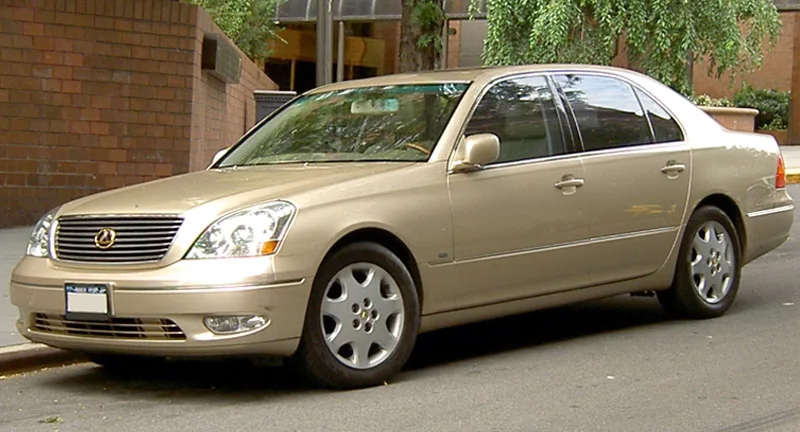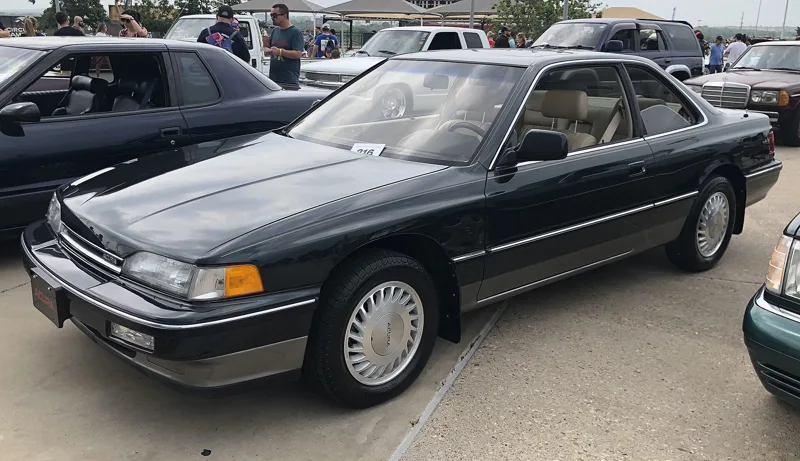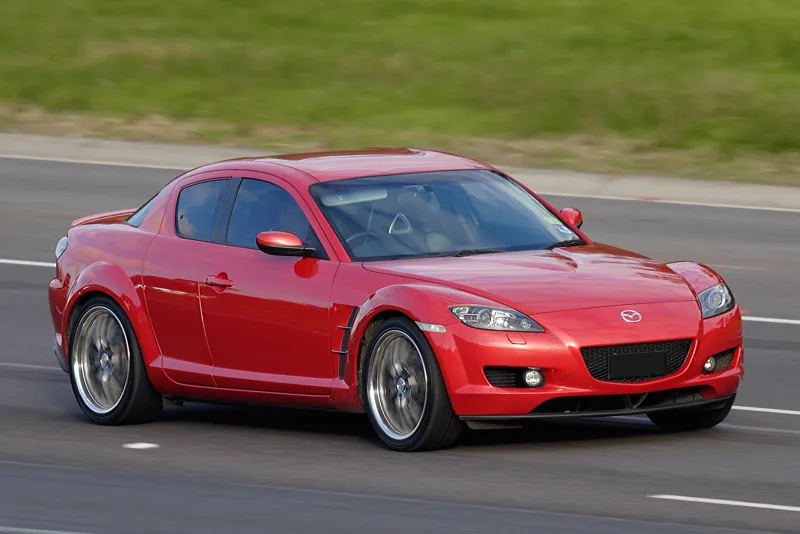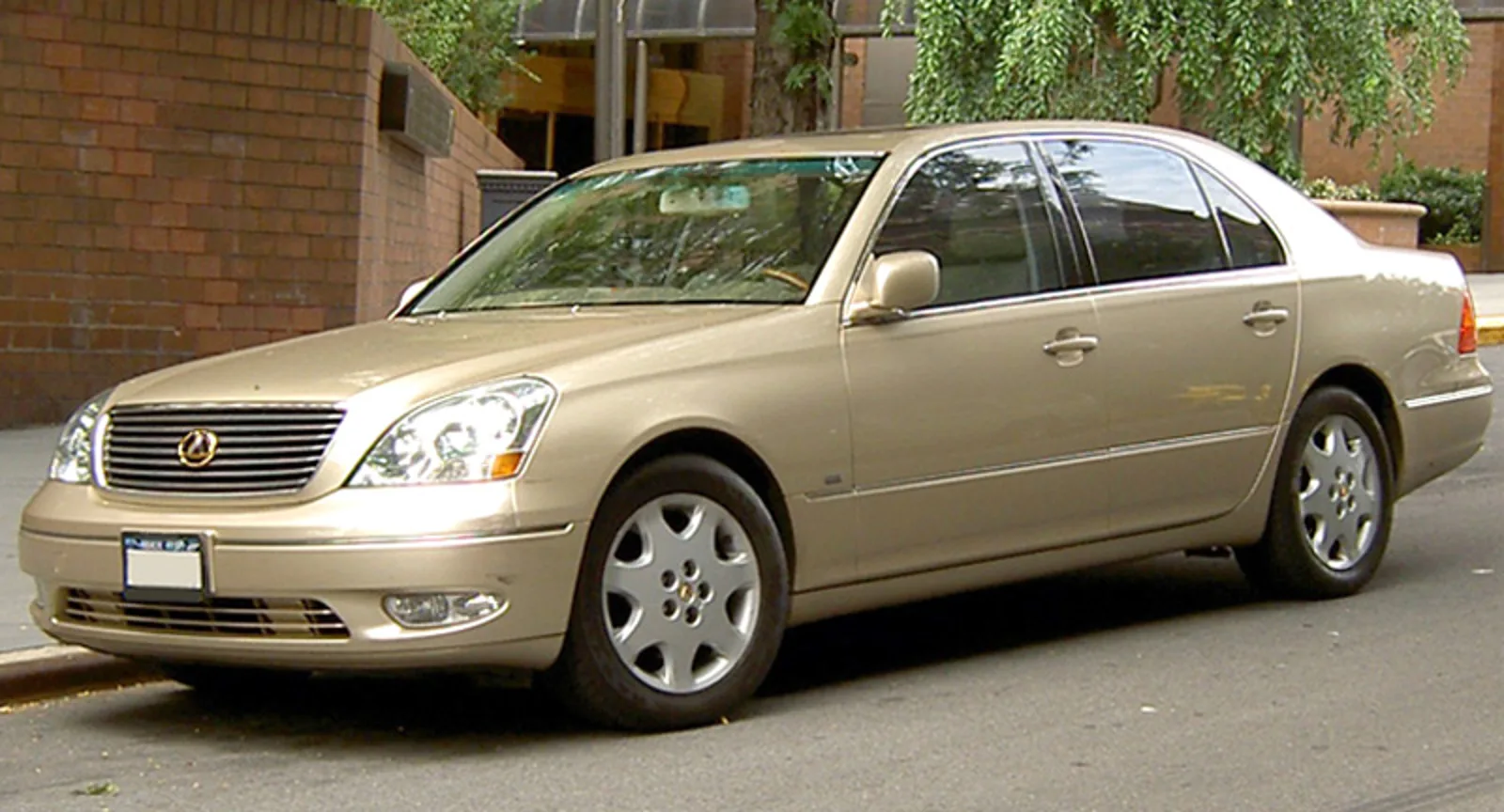
Announced in 1991 and cancelled in 1992, Amati was meant to challenge Acura, Infiniti and Lexus. Its planned cars survived only as other Mazda models.
Amati was a planned Mazda luxury marque announced in August 1991 as a challenger to Japanese premium rivals. Mazda cancelled it in October 1992 after Japan's economy collapsed, and it never reached a showroom under its own name, as the finished cars went out under other Mazda names.
Amati was a luxury car brand that Mazda announced in August 1991 and cancelled in October 1992, before any car carrying its name reached a showroom. It was meant to challenge Acura, Infiniti and Lexus in the United States and to help Mazda become Japan's third largest automaker. When the Japanese economy collapsed, the plan was dropped and the finished vehicles were sold under existing Mazda names.
What was Mazda trying to achieve with Amati?
Mazda wanted to grow from a much smaller company into Japan's third largest automaker, and a luxury range was a route to that goal. The project began in 1988 at the company's Irvine, California headquarters, where staff studied an American-tailored luxury car before the work became a division in 1989.
The backdrop was a changing American car market. Japanese cars had gained ground in the United States during the 1970s, and after the 1973 oil crisis buyers moved toward small, economical models. In May 1981 Ronald Reagan secured an agreement from Japan capping exports to America at 1.68 million vehicles annually. Japanese makers responded by sending pricier cars rather than cheap ones.
Honda had opened the Acura brand in 1986, and Toyota and Nissan followed in 1989 with Lexus and Infiniti. Honda and Toyota had built reputations for quality and reliability, and Toyota's name helped Lexus sell even though it had no history of its own. Mazda was far smaller than any of them, yet it joined the race with a plan for its own luxury marque.
A luxury brand that Mazda announced, engineered in part and cancelled before a single car wore its name.
How was the Amati project developed?
Project Pegasus began as a study into an American luxury car, and it became the Amati division in 1989 under executive Dick Colliver. The spring 1989 launch of the Miata roadster had surprised buyers in America and encouraged the company to believe it could build brand equity with a new upmarket name.
Mazda's Japanese side went much further than the American staff expected. At the 1989 Tokyo Motor Show the company displayed a 4.0 litre, 3981cc, three-bank, naturally aspirated W12 engine. An informal industry agreement in Japan limited the engine to 276 bhp (206 kW; 280 PS), and each bank displaced 1327 cc, roughly three proposed Mazda B3 engines joined at the crankshaft.
The W12 was widely linked to the Amati 1000, but former Mazda executive Bob Hall later told Jalopnik it was a mock-up meant to mislead rivals and never a serious engineering study. Inside Mazda the picture was split. Japanese managers pushed to finish the vehicles and tool a factory, while many American staff treated the project as busywork.
American managers had their own doubts. Mazda was largely undistinguished in the US market, and many of its staff did not believe it had the brand equity or resources to support a luxury car. The surprise success of the Miata was the main reason the project kept going.
What cars were planned under the Amati badge?
Mazda planned three models: the compact Amati 300, a mid-size Amati 500 and a flagship Amati 1000. The two smaller cars were to reach production in Japan as Eunos models, in 1992 and 1993, while the flagship was never shown to the public and no official specifications were published.
The Amati 300 was to be an American version of the Eunos 500 sedan. That car went into manufacture at the Hofu factory in early 1992 and was sold later that year in Japan and abroad.
The Amati 500 was the more ambitious of the two. Its planned specification included a supercharged engine of the Miller cycle type and yaw-controlled four-wheel steering. It became the Eunos 800 and reached buyers in 1993.
The Amati 1000 was the flagship that Mazda kept hidden. The Australian magazine Wheels published exterior and interior renderings in December 1992, two months after cancellation. Hall recalled a car that looked much like a 1991 Mazda 929, though with heavier pillars and a long, low bonnet. He said it was planned as a V12 built from two K V6 engines, and that prototypes produced 280 bhp (209 kW; 284 PS).
| Item | Detail |
|---|---|
| Status | Announced August 1991, cancelled 20 October 1992 |
| Planned launch | Spring 1994 |
| Amati 300 | Compact car, American version of the Eunos 500 sedan |
| Amati 500 | Mid-size car with a supercharged Miller cycle engine and four-wheel steering |
| Amati 1000 | Flagship, V12 from two K V6 engines; prototypes 280 bhp (209 kW; 284 PS) |
| Money invested | At least 50 billion yen |
| Cash needed for production | $50 million for the Amati 1000 |
| Dealers signed | 67 |
| Marketing budget | $60 million |
Why did Mazda cancel Amati?
Mazda cancelled Amati because the Japanese economy collapsed in early 1992 and the company ran short of cash. It had already put at least 50 billion yen into the project, but it could not find the $50 million needed to put the Amati 1000 into production. The cancellation was announced on 20 October 1992.
The Japanese asset price bubble burst soon after the August 1991 announcement. Japan then slid into years of falling prices and stagnation, a period later called the Lost Decade. In America a Gulf War recession depressed luxury car sales, and credit tightened in Japan just as car sales plunged.
Mazda had also overextended itself. Its Flat Rock, Michigan plant had serious quality problems, and Japanese managers blamed the American workforce until the same faults turned up at home. The company had launched more car lines than it could support, and profits were projected to fall by at least two thirds that year. Mazda cut its motorsport investment at the same time, which ended the program that had seen the 787B race car win the 24 Hours of Le Mans the year before.
The brand was far from a paper idea when it died. The company had budgeted $60 million for a campaign with a California advertising firm, Lord, Dentsu & Partners, had signed up 67 dealerships, and had two of the planned models already in production. Colliver laid off almost all of the program's staff, and he later said they had researched themselves out of a job.
What became of the Amati cars and engines?
The Eunos 800 reached the United States in early 1994 as the Mazda Millenia, without its four-wheel steering. Mazda's American studio also drew a V12 powered 2+2 and built a full-size mock-up, which Ford cancelled shortly after gaining a controlling stake in Mazda in 1995.
The Hofu plant had already been tooled for the Amati V12 engine, so Mazda looked for another use for it. That is the reason the V12 car existed at all, even though the brand itself had been cancelled.
The Millenia replaced the Mazda 929 as the American flagship after 1995. Reviewers said its quality, refinement and luxury went well beyond the rest of the Mazda line. Mazda's own advertising made the point that the money had gone into the car rather than into a luxury division and its overhead.
The Amati 1000 never appeared, but the second generation Mazda Sentia, launched in 1995, is believed to use the Amati 1000 body with a Mazda J V6 and Sentia underpinnings. Jalopnik also noted that the V12 concept bears a strong resemblance to the Mazda RX-8 sports car, which went into production in 2003.
Would Amati have succeeded?
Nobody can know for certain, and opinion was divided even before the cancellation. Many doubted that Mazda had the resources for a separate luxury division, while Dick Colliver believed the brand could have survived with two models and more added over time. The debate remains open, and several Mazda cars that followed sold poorly.
Analysts in 1991 were sceptical that Mazda could support a separate luxury division. In 1994 the Chicago Tribune described the venture as foolhardy from its beginnings. Gary O'Dell, a Los Angeles Times reporter, believed the launch would have bankrupted the company and compared it with the collapse of Daihatsu during the 1992 downturn.
Analysts also pointed out that the American luxury market was becoming over saturated and that Infiniti had trouble setting itself apart. The Amati announcement arrived just two weeks after Peugeot and Sterling said goodbye to the American market, and Alfa-Romeo followed four years later.
Colliver joined American Honda in 1994, bringing the planned systems and programs with him, along with seven colleagues from the Amati team. He took over running the Acura division, which enjoyed a long period of sales growth through the late 1990s and 2000s. Several related Mazda and Eunos cars, including the Eunos Cosmo and the second-generation Sentia, had weak sales and left the market after a couple of years.
What did the Amati name say about Mazda's plans?
Mazda said the name came from a Latin expression meaning to love, and it described the brand with images of sunsets, cashmere and roast turkey. Some analysts spotted that Amati is an anagram of Miata, and others wondered whether the new cars would take cues from the roadster.
The announcement itself said little about the cars. Mazda revealed no details at the August 1991 conference, following the secretive approach Infiniti had used early on to build anticipation. Reception was mixed, with some industry analysts doubting the company had the resources for a luxury division at all and others fearing the American luxury market was already crowded.
How is Amati remembered today?
Amati is remembered as a brand that never reached buyers, and Mazda has not acknowledged the project publicly since the October 1992 announcement. Former staff kept some material, and Colliver organised a 25th anniversary reunion in 2016 for himself and 50 other former employees.
At the reunion, former staff brought back Amati memorabilia they had kept. Colliver became emotional during the event and called the day of cancellation the saddest of his life.
Mazda began seeking a premium position in the 2010s, and Just-Auto said in 2017 that the company needed Amati and ought to reconsider the idea. Jalopnik's 2018 retrospective, written by Raphael Orlove, found that many former staff called the project foolish or doomed, which surprised the writer.
Motoring Research later summed up the brand as ambitious on paper and a failure in practice, arguing that its ghost lives on in several Mazda products of the 1990s.