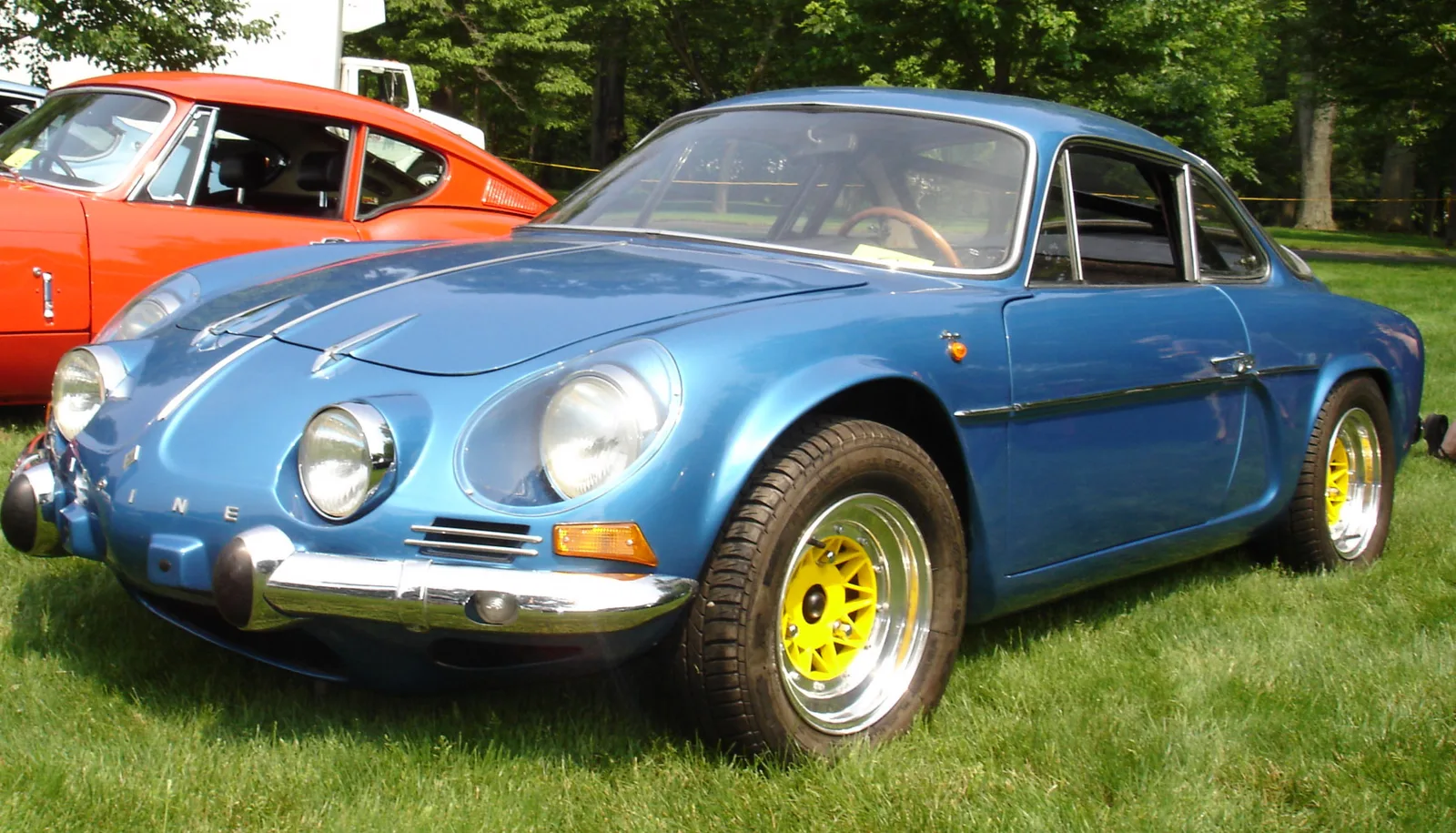
A Dieppe garage marque of lightweight glassfibre coupes that won rallies, took Le Mans and returned in 2017 with the A110.
Alpine is a French sports car maker founded in Dieppe in 1955. Renault owned it from 1973, and it won the 1978 Le Mans 24 Hours before the Alpine badge lapsed in 1995, returning with the A110 in 2017. Its lightweight glassfibre coupes and rally success built the reputation that the new car inherits.
Alpine is a French maker of sports and racing cars whose history is bound up with Renault. Founded in 1955 by a Dieppe garage owner, it built lightweight glassfibre coupes, won rallies and endurance races, and then spent years as a Renault sub-brand before being revived in 2017 with the A110. This guide covers the founding, the classic cars, the motorsport record and the modern relaunch.
Who founded Alpine and where did it start?
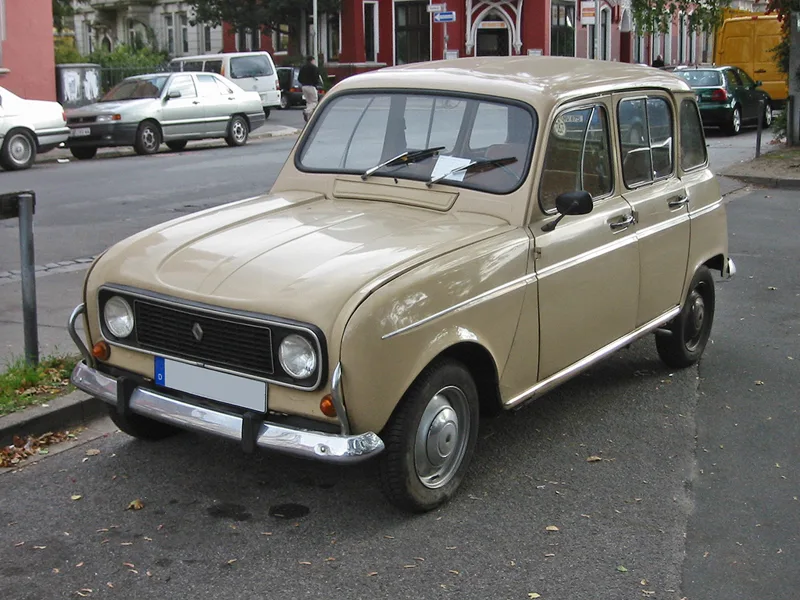
Jean Redele, a garage proprietor in Dieppe, built the Alpine business on the back of success with the Renault 4CV, a postwar French car. He picked up class wins at events such as the Mille Miglia and the Coupe des Alpes, and he named his new brand after those mountain-pass triumphs.
Redele partnered with the carrosserie Chappe et Gessalin, a firm that had pioneered glassfibre car bodies. Their first joint car was a small coupe on 4CV mechanicals, the A106, which set the template for the marque's later cars.
From a Dieppe garage to a Le Mans winner and back again, Alpine has survived by keeping its cars light and its engineering close to the road.
What made the early Alpine cars distinctive?
The early Alpines paired glassfibre bodies with a stiff chassis built around a central tubular backbone, a feature that became the signature of every Alpine that followed. Styling for the first cabriolet came from Giovanni Michelotti, and the company then developed a closed 2+2 berlinette body from it.
The A108 berlinette, built from 1958 to 1963, used the Dauphine Gordini engine of 845 cc. Later versions were bored out to 904 cc or 998 cc, and the design was also taken up in Brazil by Willys-Overland under the Interlagos name.
Sunbeam had already used the Alpine name in England, a clash that would cause trouble for the French firm for decades. Redele had not realised the conflict when he chose the name, and the problem followed the marque throughout its history.
Why did the A110 Berlinette become a legend?
The A110 Berlinette Tour de France took its name from a successful run by the A108 at the 1962 event. It reused the chassis and body of the earlier car, adapted to the R8 mechanicals, and its engine grew from a 956 cc unit with 51 bhp to 1800 cc engines making 180 bhp by 1974.
With a competition weight of around 620 kg, the A110 offered excellent performance for its size. In 1973 the 1800 took four of the top five finishes in its rallies and went on to claim the World Rally Championship outright, ahead of Porsche, Lancia and Ford.
Alpine's rally work depended on a close relationship with Renault. By 1968 the company had been given the whole Renault competition budget, and its cars were sold and serviced through ordinary Renault dealers in France.
How did the 1970s change the company?
The 1973 petrol crisis hit specialist makers hard. Annual output dropped from 1421 cars in 1972 to 957 in 1974, and Renault stepped in with a takeover that rescued the firm. Renault had grown more committed to motorsport through the decade.
Renault later merged the Gordini tuning firm with the competition department to create Renault Sport in 1976. That merger ended the Alpine competition department as an independent force, although the Alpine name stayed on the racing cars.
Alpine's problems were made worse by the need to replace the A110. Its successor, the A310, was restyled by Robert Opron in 1976 and fitted with the PRV V6 engine, which Alpine modified with a four-speed manual gearbox.
Which Alpine models defined each era?
The line-up can be traced through a series of models, each tied to a stage of the company's development. Across the first two decades the A106 (1955 to 1961), the A108 (1958 to 1965) and the A110 (1962 to 1977) covered the marque's early years.
Later decades brought the GT4 (1963 to 1969), the A310 (1971 to 1984), the GTA (1984 to 1991) and finally the A610 (1991 to 1995), which closed the classic line at Dieppe.
Collectors value the GTA family because it sits between the rear-engined classics and the modern marque, and its composite bodies were a bold step for a small French maker.
What were the GTA and A610 cars?
After the A310, Alpine moved into the GTA range, built from plastic and polyester components and first offered with normally aspirated PRV V6 engines. A V6 Turbo arrived in 1985, and from 1986 robots cut the polyester panels with a 3500 bar water jet.
The composite construction also suited a maker of low-volume cars, because bodies could be produced in small runs without the investment that steel pressings demanded.
The GTA Le Mans of 1990 was a wide-bodied special edition with a catalytic converter and 185 bhp. Only 325 were made, 299 left-hand drive and 26 right-hand drive, which makes it the most collectable member of the family.
The A610 of 1991 was a restyled GTA with a reworked chassis, air-conditioning and power steering fitted as standard. A total of 818 were built, 67 right-hand drive and 751 left-hand drive, before production ended.
Why did the Alpine name disappear?
The last Alpine, an A610, left the Dieppe line on 7 April 1995, and Renault dropped the name. The brand had always been awkward in Britain, because Sunbeam held the trademark from its own Alpine model of the mid-1950s.
Through the 1970s Dieppe built modified Renault 5s for the world market. Those cars were known abroad as R5 Alpines, but British buyers saw them as R5 Gordini instead, a reminder of how the name blocked the marque outside France.
The naming problem also shaped how the brand was sold abroad, because each market had to find its own way to describe the cars without the Alpine badge.
What did Dieppe build after the Alpine badge ended?
The Dieppe factory kept expanding after the Alpine badge was retired. It built the R5 Turbo, the RenaultSport Spider and the Clio Williams, and it put Alpine badges on early batches of the mid-engined Clio V6.
The plant has 3.8 hectares of covered buildings and employed 386 people as of 2019. It can turn out an average of 15 A110s per day, and its work also includes racing cars such as the Clio Rally4.
Dieppe's assembly method is unusual for a modern maker. Its bodies are fastened with rivets and adhesive rather than welded, then coated at low temperature, sanded by a robot and cleaned by another before the final build.
How did Alpine race in the modern era?
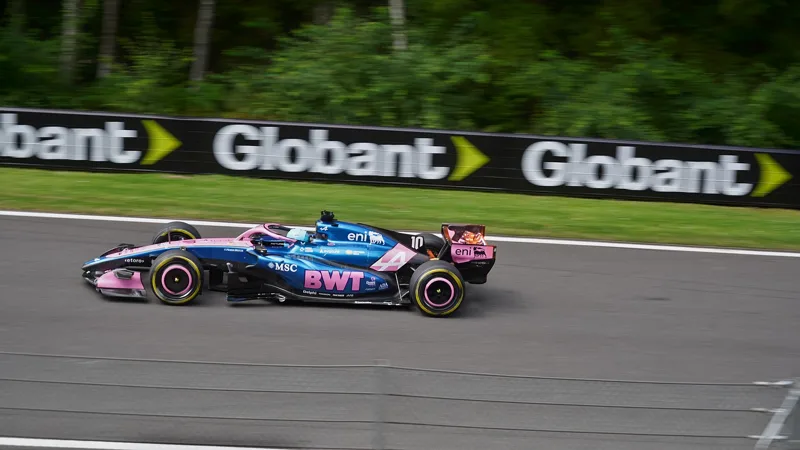
Alpine's motorsport division has two main subsidiaries, one based in Enstone and one at Viry-Chatillon, and it runs the company's Formula One programme. The division grew out of a long competition history that began with rally cars and sports prototypes.
In 1971 Alpine cars won the Monte Carlo Rally, a result that confirmed the strength of the rally programme before the company turned its attention to bigger prizes.
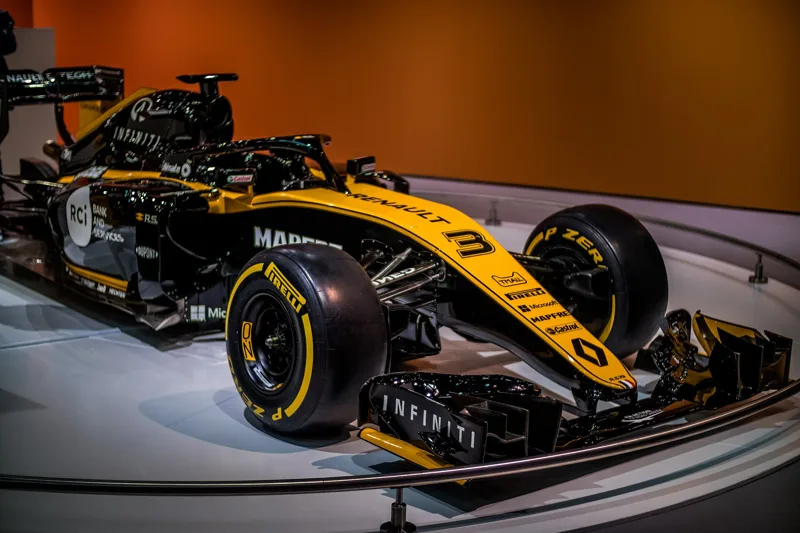
Formula One came next. Alpine built a testing mule that led to its entry into the world championship in 1977, after Jean-Pierre Jabouille had won the European Formula 2 title in 1976 and Rene Arnoux had repeated the feat with a customer team in 1977.
The Renault Alpine A442B won the 1978 Le Mans 24 Hours with a turbocharged engine. Alpine had earlier pioneered turbo power in rallying, when Therier took a modified A110 to victory on the Criterium des Cevennes in 1972.
In 2013 the marque teamed up with Signatech to run a Nissan-engined prototype in the European Le Mans Series. The partnership later won the WEC LMP2 championship in 2016 and in 2019 and 2020, and it claimed three Le Mans 24 Hours victories.
How did Renault revive the Alpine brand?
Between the end of the classic line in 1995 and the purchase of the name in 2012, the Alpine badge was largely absent from the market, and the Dieppe plant's work centred on Renault Sport models.
Renault bought the Alpine name in March 2012 and began planning a relaunch. The A110-50 concept of 2012 was followed by the Alpine Vision showcar, presented in 2016 by Carlos Ghosn in Monte Carlo as a preview of the production model.
The new car kept the original's lightweight ethos, though its engineering was entirely new.
The production car kept the A110 name. Official pictures were first released on 28 February 2017, ahead of the Geneva Motor Show unveiling. The new car marked the start of the modern brand, and it was built in the same lightweight spirit as the originals.
Alpine enthusiasts formed clubs across France and in many other countries, keeping interest in the classic cars alive long after production stopped.
In January 2021 Alpine absorbed the Renault Sport entities, and the Les Ulis operation was renamed Alpine Cars. That shift turned the group's sports car development into a single Alpine business unit.
What is Alpine's electric future?
In 2023 the company set out a global expansion, with US entry targeted for 2027 using an electric crossover of medium size and a large electric SUV. The A290 arrived in 2024 as the brand's first electric model.
The A290 was named European Car of the Year in 2025, a result that showed the new Alpine could compete at the top of the market. The electric line-up is being developed to serve buyers around the world.
Who led Alpine?
Jean Redele led the company from 1955 to 1978. Laurent Rossi led it from 2021 to 2023, and Philippe Krief has been in charge since 2023, steering the brand through its electric transition. Each leader faced a different test, from the early growth of the glassfibre cars to the electric plans that now shape the range, and the company's direction has changed with each of them.
What are the key figures for Alpine?
| Specification | Detail |
|---|---|
| Founded | 1955, by Jean Redele in Dieppe |
| Renault ownership | From 1973 |
| Dieppe plant | 3.8 hectares, 386 employees in 2019 |
| A110 output | Up to 15 cars per day |
| A110 engine (1974) | 1800 cc, 180 bhp |
| A610 production | 818 vehicles |
| Last A610 built | 7 April 1995 |
| Alpine name bought by Renault | March 2012 |
| Relaunch | A110, 2017 |
| Electric model | A290, 2024 |