A pancake engine, the first fuel-injected volume car, a front-drive NSU inheritance and a Brazilian sports coupe that critics adored and nobody bought.
The Type 3, Type 4, K70 and SP2 were Volkswagens that moved beyond the Beetle: a larger air-cooled family car from 1961, a flat-floored saloon in 1968, a front-drive car inherited from NSU in 1970, and a Brazilian sports coupe built from 1972.
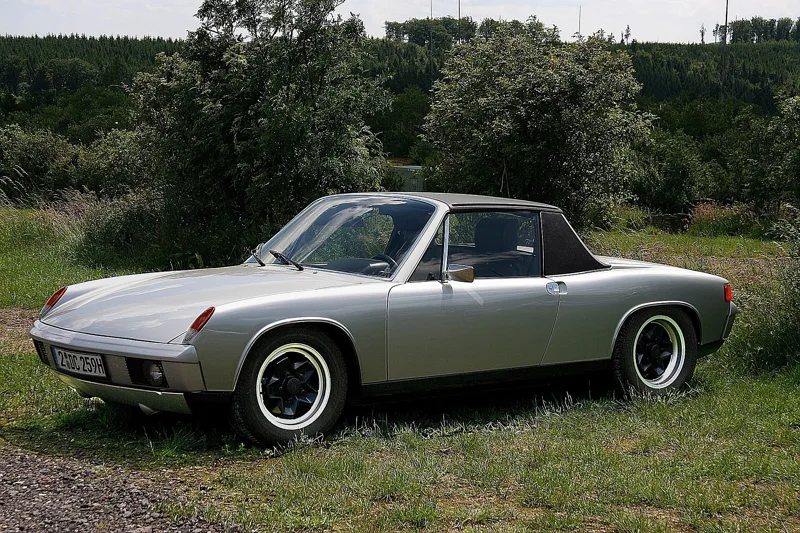
In June 1973 a German magazine called the Volkswagen SP2 the most beautiful Volkswagen in the world. The car in question had 65 horsepower and needed 17.4 seconds to reach 100 km/h (62 mph). It was built in Brazil, on the chassis of a Type 3, and it is one of four cars that show what Volkswagen tried when the Beetle could not carry the company any further.
The Type 3, Type 4, K70 and SP2 are very different machines. Three kept the air-cooled engine at the back and one broke with it completely. Together they cover a decade in which Volkswagen worked out how to become something other than a one-car firm.
VW Type 3: a bigger car on the Beetle's wheelbase
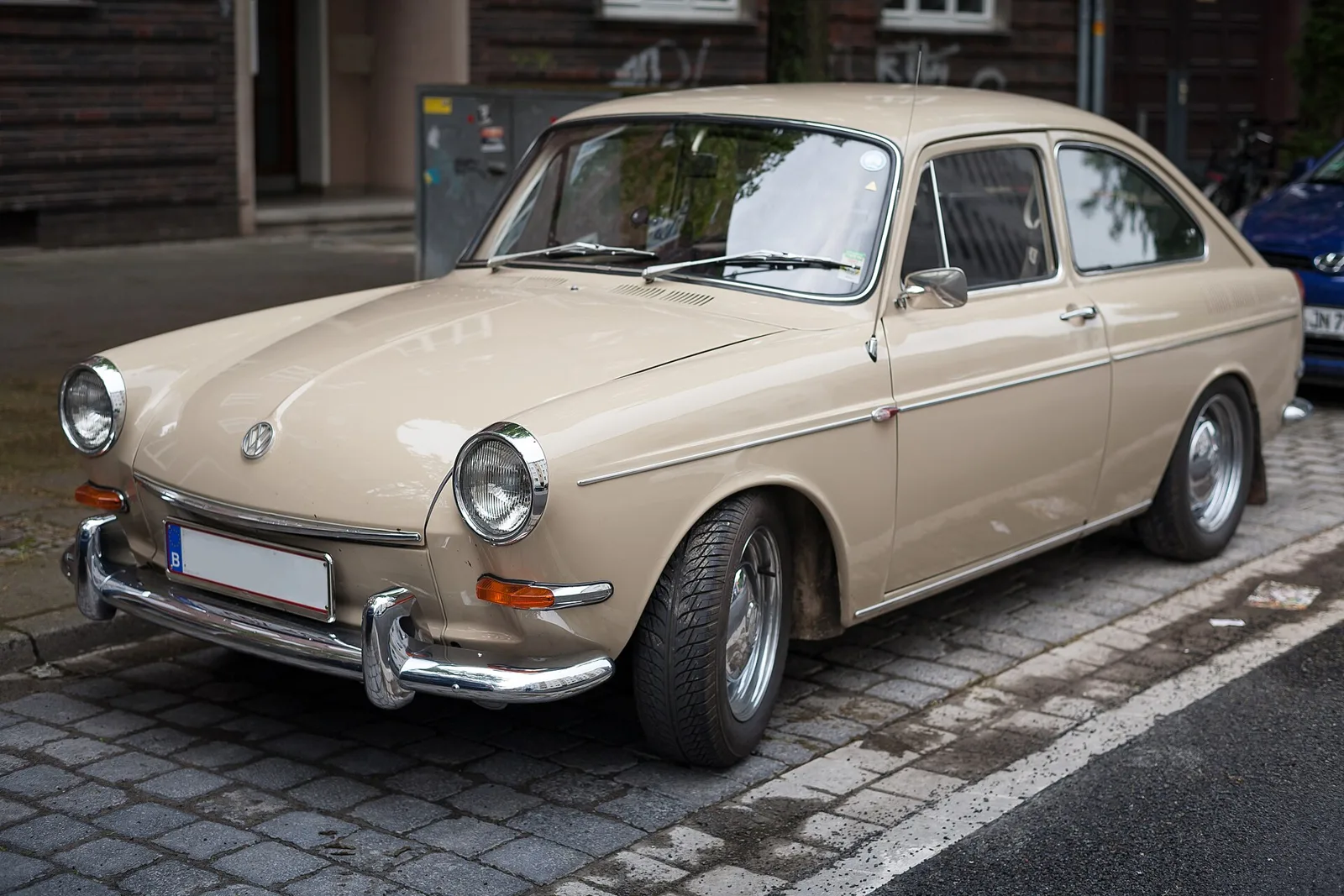
The Type 3 was shown at the 1961 Frankfurt show and sold until 1973. Volkswagen marketed it as the 1500 and later the 1600, and offered it as a notchback, a fastback and a station wagon that American buyers knew as the Squareback. It widened a range that until then consisted of the Beetle, the Karmann Ghia and the Type 2 vans and pickups.
Volkswagen kept its trademarks: an air-cooled engine behind the rear axle driving the rear wheels, a body that bolts to a chassis, and torsion bar suspension. The wheelbase was the Beetle's 2.40 m (94 in), so the extra space came from a longer and wider body with flat, slab-sided Ponton panels in place of the Beetle's swooping wings and running boards. The design was settled by 1959 and prototypes were running in 1960. Secrecy was tight enough that the company denied at the 1960 Geneva show that any new design was in the works.
VW Squareback, Fastback and Notchback
Production of the Notchback began in August 1961, a month ahead of its launch. The Karmann Ghia 1500, better known as the Type 34, followed in November 1961 with deliveries from January 1962, and the Variant estate, sold in America as the Squareback, joined in February 1962. A dozen prototype convertibles were built on the Notchback, but none reached production.
The Fastback arrived in August 1965 together with the 1600 engine. Volkswagen meant it to replace the Notchback, and in Britain it did. Elsewhere, including Germany, more customers preferred the older shape than the company expected, so both stayed in production until July 1973. Top models carried extra chrome and trim and full carpeting, and a fully automatic gearbox was offered from mid-1968. Radios and air conditioning were never fitted at the factory, though dealers could add them.
Volkswagen of America started selling the Squareback and Fastback with the 1966 model year, and the Notchback and Type 34 never crossed the Atlantic. American rivals included the Chevrolet Corvair, which had a rear-mounted air-cooled six-cylinder engine, and the Renault 8.
The pancake engine and the first fuel injection
The Type 3 started with a 1.5 L (1493 cc) engine developed from the 1192 cc flat-four of the Beetle, with a 69 mm stroke. The key change was moving the cooling fan from the generator to the end of the crankshaft, which made the engine much shallower. Engineers and owners called it the pancake or suitcase engine, and the lower profile freed space for luggage. In all four body styles the engine sits under a panel in the floor of the rear cargo area, which Volkswagen turned into an advertising gag in 1966. A young Dustin Hoffman showed off a fastback in a US television commercial and could not find the engine.
Power rose in steps. In August 1963 Volkswagen added two carburettor versions: the 1500 N with 45 PS (33 kW; 44 hp) and the 1500 S with 54 PS (40 kW; 53 hp), which had domed 83 mm pistons, an 8.5:1 compression ratio and twin Solex carburettors. A 1600 cc option followed in August 1965. In 1968 the 1600 became the world's first volume-production car with electronic fuel injection, the Bosch D-Jetronic system, sold as the 1600 TE and LE, with E for the German word for injection. That system later appeared on the Type 4 and on some VW-Porsche 914/4 models, and it was standard on every US Type 3 from 1968 to 1973.
The chassis moved forward too. The Type 3 was the first Volkswagen to use transverse round torsion bars at the front, instead of the Beetle's flat torsion leaves, with an anti-roll bar in the upper tube. Front disc brakes replaced drums in August 1965, though Australian cars kept drums until August 1967. Mid-1968 brought the three-speed automatic with CV-jointed independent rear suspension, which became standard in 1969, although the older swing axle stayed available in markets with poorer roads. A facelift in 1970 extended the nose by 115 mm (4.5 in), adding 1.5 cu ft (42 L) of luggage space.
Around the world and the end of the line
German production came to 1,339,124 notchbacks and fastbacks and 1,202,935 Variants. Brazil built 24,475 Notchbacks, 109,515 Fastbacks, 256,760 Variants and 41,002 Variant IIs. The Type 3 was also assembled at Clayton in Victoria, Australia, from 1963. Local manufacture ended in 1968 and kits were put together there until 1973. About 500 Australian panel vans were built, of which roughly 10 are known to survive.
Brazil had its own Type 3 as well: a four-door three-box saloon launched in 1968 and nicknamed Ze do Caixao, or Coffin Joe, for its boxy shape. It lasted only until 1970. The TL fastback fared better and ran from 1970 to 1976.
The Type 3 never matched the Beetle's popularity. As Volkswagen moved to front-drive, water-cooled designs, production ended in 1973 at Wolfsburg, where the factory was retooled for the Golf. Type 3 production moved to Emden, which was then retooled to build the first Passat.
Three of these cars kept the air-cooled engine at the back, and the K70 gave it up entirely.
Volkswagen Type 4: the 411 and 412
The Type 4 was Volkswagen's attempt at a larger family car. Designed under Heinrich Nordhoff and unveiled at the Paris show in October 1968, the 411 was the company's biggest passenger car, with its biggest engine and styling credited to Pininfarina. It ran in two generations, the 411 from 1968 to 1972 and the 412 from 1972 to 1974, as a two-door or four-door saloon or a two-door estate.
The air-cooled boxer engine stayed at the back, with a 45/55 front-to-rear weight split and 400 L (14.1 ft3) of luggage space up front. Around it Volkswagen made real departures: a fully flat passenger floor, control arm and MacPherson strut suspension, unibody construction, coil springs, trailing wishbones at the rear and a hydraulic clutch. It was also the first four-door saloon Volkswagen built. The 411's front suspension layout later went into the Super Beetle, the 1302 and 1303.
VW 411 and 412 in detail
At launch the 411 had a 1679 cc engine with twin carburettors. In 1969 it gained Bosch D-Jetronic injection and claimed output rose from 68 to 80 PS (50 to 59 kW), the same engine that powered the mid-engined Porsche 914. The E suffix flagged the injected versions in Europe, and twin round headlights replaced the single oval pair. Standard equipment included ventless front windows, radial tyres, full carpet and a petrol-fired auxiliary heater from Eberspacher. The 411 was assembled in South Africa from 1969, and Karmann showed a cabriolet prototype in 1968 that never reached production.
The 412 replaced it in August 1972 in Germany, restyled by Brooks Stevens with halogen lights and revised nose panels. For 1974 the engine grew to 1795 cc and went back to twin carburettors, though North American cars kept fuel injection. Production ended in June 1974. In February 1974 the four-door 412L cost DM 10,995 in Germany, with the 412 LS at DM 11,145.
Over six years Type 4 production reached 367,728. Sales totalled 119,627 in the United States between 1971 and 1974, with 119,094 in Germany, 34,452 in South Africa and 13,367 in Britain. The engine lived on in the larger Type 2 vans from 1972 to 1979 and in the T3 bus from 1980 to 1983, and the 412 Variant's styling was reused in Brazil on the TL, Variant, Variant II and Brasilia. Aside from the Brasilia, which carried on to 1982, the Type 4 was Volkswagen's last air-cooled saloon and estate, and the Passat succeeded it.
Volkswagen K70: the first front-drive Volkswagen
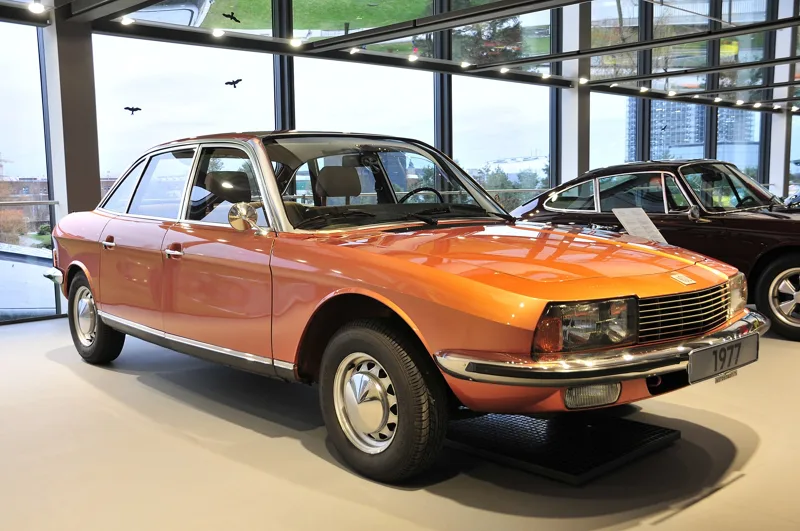
The K70 began life as an NSU. Engineer Ewald Praxl and stylist Claus Luthe designed it as a conventional piston-engined companion to the Wankel-powered Ro80, and it was meant to take on both Volkswagen's own 411 and the Audi 100. NSU planned a press launch for March 1969 ahead of the Geneva show. Then Volkswagen took over NSU, management worried that the car sat too close to the new Audi 100 in size and price, and the launch was pulled at the last minute. Only 23 pre-series cars wore NSU badges.
Volkswagen needed a family car to replace the Type 4, which had met with little success, and decided the K70's front-wheel drive and modern look could change the company's image. It scrapped the NSU publicity material and put the car into production at Salzgitter rather than Neckarsulm, with the first Volkswagen-badged cars arriving in August 1970. The name came from NSU: K for the German word Kolben, meaning piston, and 70 for an engine output of 70 PS. The engine was in fact rated at 75 PS (55 kW; 74 hp).
Design and how it drove
The 1,605 cc water-cooled four-cylinder was a development of the air-cooled unit from the NSU 1200. It sat lengthways, well forward and above the differential, canted to the right, with the clutch and gearbox directly behind in one compact package. That arrangement put more of the car's weight on the front wheels and left more room for passengers and bags. Inboard front disc brakes were shared with the Ro80. The tall, boxy body carried 650 litres (23 cu ft) of luggage, the driver sat high and the glass area was large. The fuel tank sat ahead of the rear axle, the steering column was angled to reduce intrusion in a crash, and mounting points for seat belts were standard.
Performance, particularly in the 75 PS entry model, was merely adequate, and it was hard to avoid comparing the car with the injected 411. Neither led its class for speed, acceleration or economy, and the K70's thirst became a bigger problem with the 1973 oil crisis. A 1,807 cc version with a claimed 100 PS (74 kW; 99 hp) arrived in May 1973, with revised mountings to reduce noise. Earlier changes aimed at sharing parts with other Volkswagens: Audi 100 bumpers in August 1971, a simpler gear linkage in spring 1972 and better synchromesh that August, round headlights and, in August 1974, a four-spoke steering wheel. The wagon planned alongside the saloon was delayed indefinitely.
Why it did not last
Volkswagen's dealers had spent years selling and servicing rear-engined air-cooled cars, and the K70 arrived at short notice. It was priced below the Audi 100 but still overlapped the 411. It also picked up a reputation for severe body corrosion that it never shook off. The Passat replaced it in 1973, though the K70 stayed in production until January 1975, with only 25 built in that final year. Total output is given as 210,082 in one place and 211,127 in another. Only about 800 were made with right-hand drive for the British market, and 11 were reported still on the road in 2024.
The K70, the 411 and 412, and briefly the Passat B1 were the only cars built at Salzgitter. In 1975 the plant switched to engines and transmissions for the whole Volkswagen Group, and it still makes powertrains today.
Volkswagen SP2: the sports coupe from Sao Paulo
Brazil began closing its market to imports in August 1952, and the multinational subsidiaries that dominated production offered few sports cars. Small local builders such as Puma filled the gap. By 1970 Rudolf Leiding, who had taken over Volkswagen do Brasil in March 1968, wanted a sports car to brighten the company's staid image, and he started Projeto X. He drew early sketches himself and asked his wife Helga for her views on the design. Designers Marcio Piancastelli, Jose Vicente Novita Martins and Jorge Yamashita Oba worked on it, and the first prototype was handbuilt by Giuseppe Accasto. The study introduced the shark-face nose, later seen on the German 412 and the Brasilia, and it was presented in Sao Paulo on 24 March 1971.
VW SP2 specifications
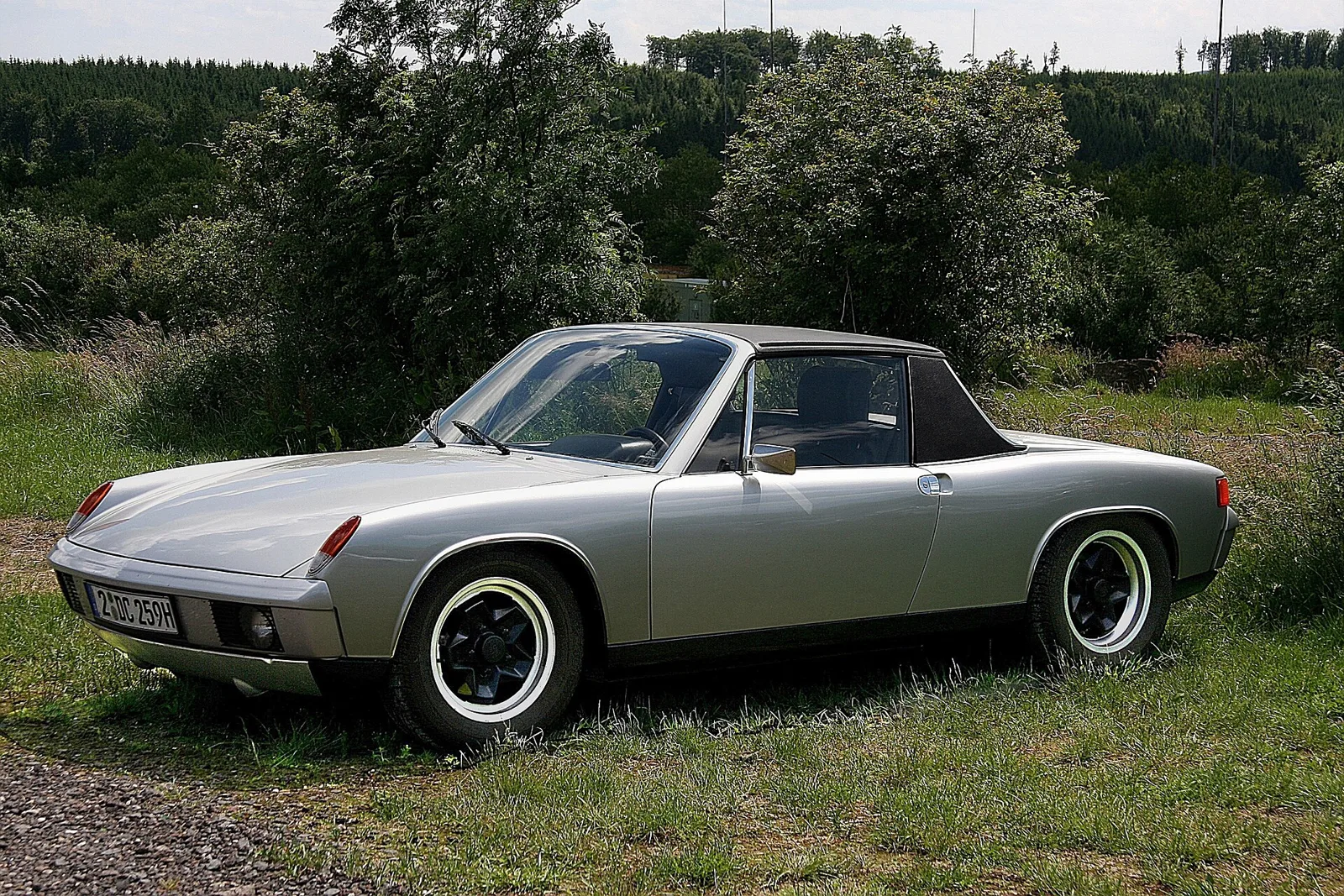
The SP2 sits on the steel backbone chassis of the Brazilian Type 3 Variant under a steel two-door hatchback body. No Brazilian car sat lower at the time, and it has two boot spaces: 140 L (4.9 cu ft) at the front and 205 L (7.2 cu ft) at the rear. Its 1.7 L air-cooled engine gave 65 DIN horsepower, a top speed of 161 km/h (100 mph) and a 0-100 km/h time of 17.4 seconds, through a four-speed manual gearbox and 14 in (356 mm) wheels. Brakes were discs at the front and drums at the rear, with a dual-circuit system. The front suspension kept the laminated torsion leaves of the Brazilian Beetle, and the rear used a swing axle with a Z bar. Inside, it was the first Brazilian car with three-point seat belts.
The SP1 was a plainer sibling with a 1.6 L engine of 40 kW (54 hp), a 149 km/h (93 mph) top speed and a sparser interior. Only 88 were built before it was dropped in July 1974.
Sales and legacy
The first SP2 chassis was made on 23 June 1972 and the cars were launched on 26 June. At 29,700 cruzeiros an SP2 cost nearly as much as two Beetles. Critics praised the looks but sales were slow, and a joke said SP stood for Sem Potencia, Portuguese for without power. The lighter, fibreglass-bodied Puma was faster. Volkswagen planned to export the car to the United States but the plans collapsed, partly because its headlamps sat too low for US rules. The last chassis was built on 16 December 1975. In total 10,205 were made and 681 exported, 155 of them to Nigeria. A well-kept SP2 now sells for much more than other VWs of its age.
The SP2 is generally believed to have been the forerunner of project EA425, which was eventually launched as the Porsche 924, and it may have influenced the Philippine DMG-VW Toro. A 1973 example is in the AutoMuseum Volkswagen in Wolfsburg. Fans marked the 50th anniversary on 26 June 2022.
Type 3, Type 4, K70 and SP2 compared
| Model | Years | Engine position | Notable engine | Body styles | Distinctive feature |
|---|---|---|---|---|---|
| Type 3 | 1961-1973 | Rear, air-cooled | 1.5 L (1493 cc) flat-four | Notchback, fastback, Squareback | First volume car with electronic fuel injection (1968) |
| Type 4 | 1968-1974 | Rear, air-cooled | 1679 cc, later 1795 cc | Two- and four-door saloon, two-door estate | First four-door Volkswagen, unibody |
| K70 | 1970-1975 | Front, water-cooled | 1,605 cc, later 1,807 cc | Four-door saloon | First front-drive, water-cooled car sold as a Volkswagen |
| SP2 | 1972-1975 | Rear, air-cooled | 1.7 L, 65 hp | Two-door hatchback coupe | Lowest car built in Brazil at the time |
What came after the SP2
Volkswagen do Brasil studied two replacements. One SP3 prototype kept the SP2's chassis and swapped in a water-cooled 1.6 L engine from the Passat TS, producing 85 SAE horsepower. Volkswagen planned to unveil it at the November 1976 Motor Show but cancelled the plan before it was shown. The other idea followed the SP2's shape on a front-drive Golf platform. It reached quarter-scale models and stopped because sales of the similar Scirocco in Europe were disappointing.
The Sao Paulo company Dacon built its own SP3 on the SP2 floor pan, with a rear-mounted 1.8 L water-cooled engine producing 100 SAE horsepower and a top speed of 180 km/h (112 mph). The conversion cost 20% more than a new Puma GTE and demand stayed low, and the supply of chassis ended with the SP2. In 2008 designer Marcelo Rosa proposed a revived SP2 based on the Scirocco, and in the late 2010s a group of engineering students at FEI College built a major project around a re-imagined one.