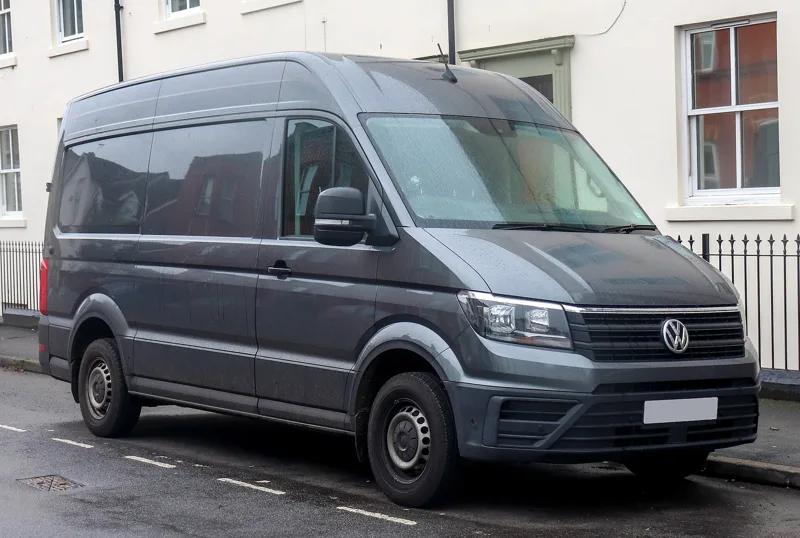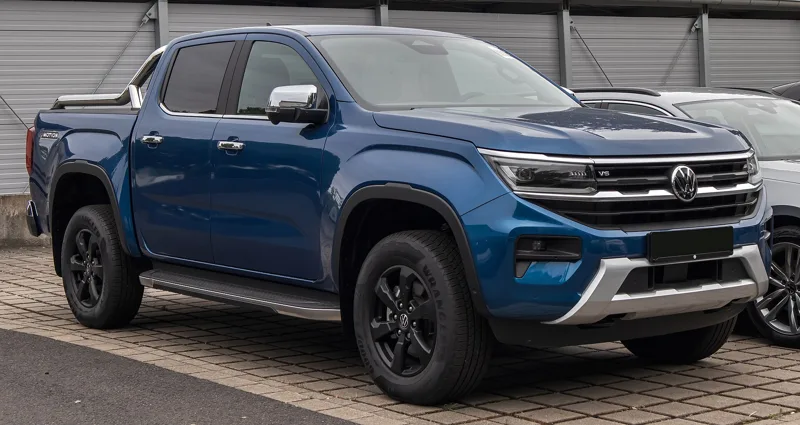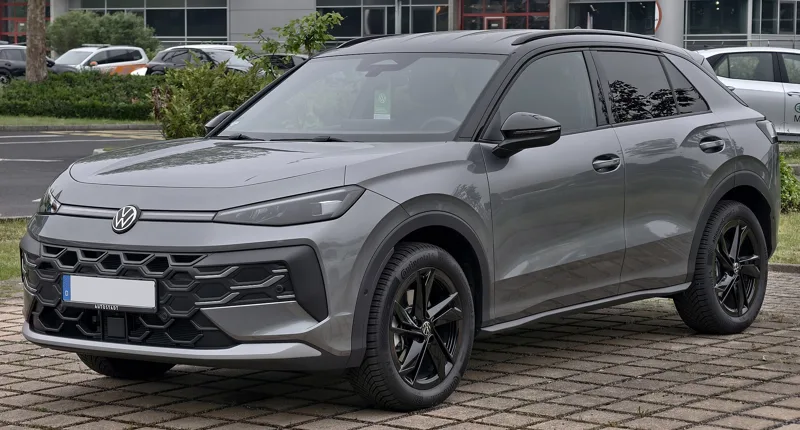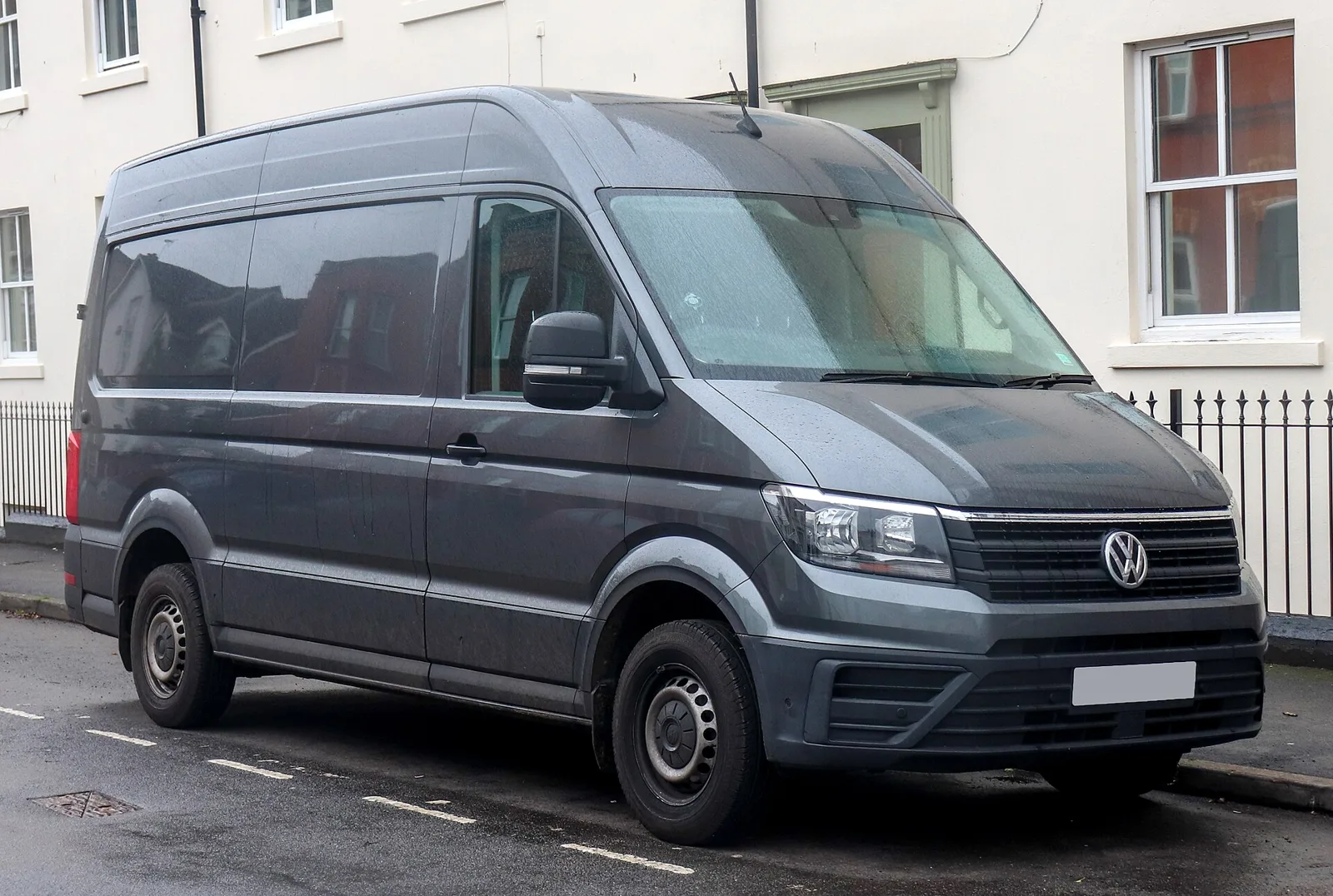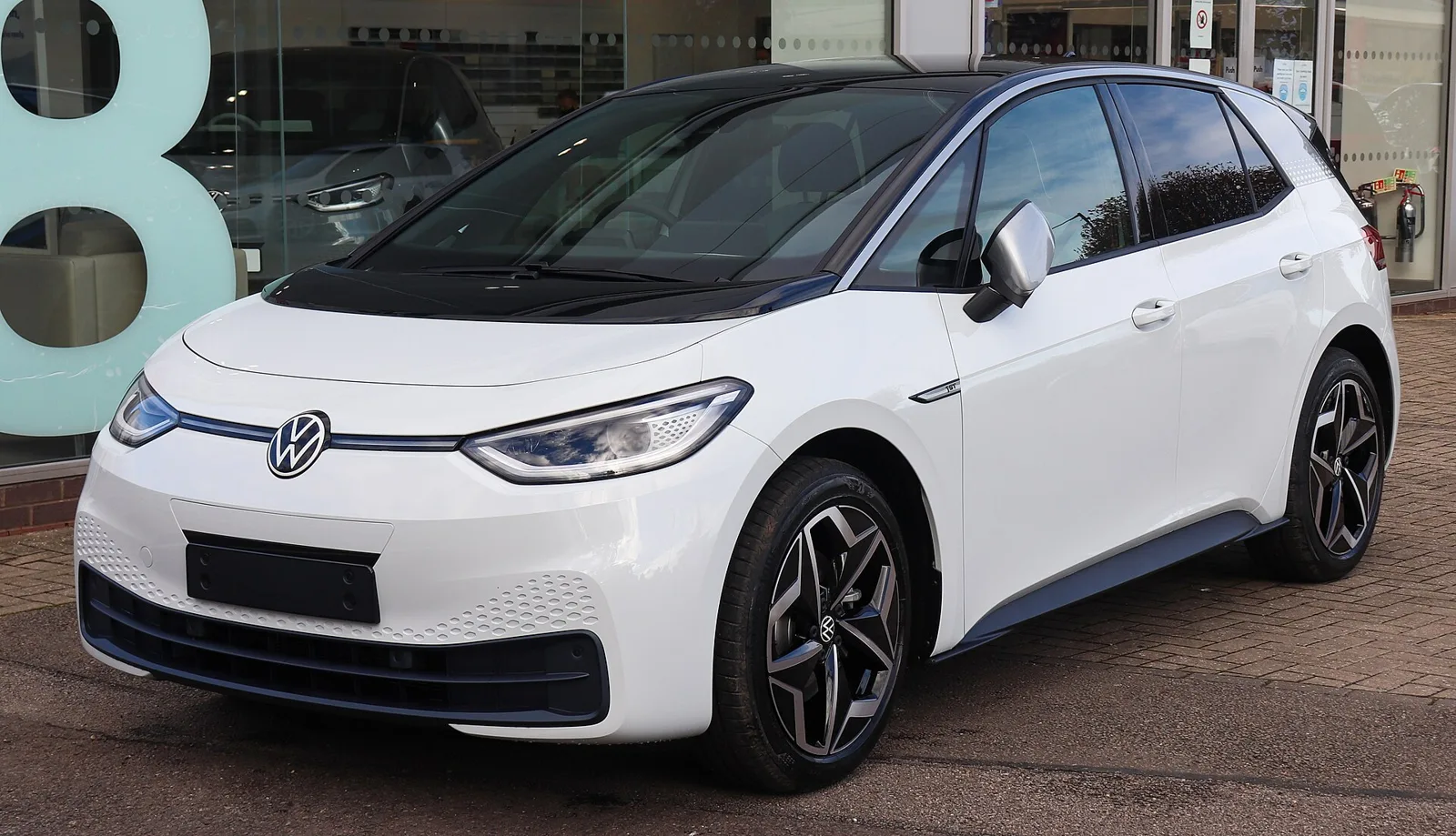
A hatchback, a crossover and a retro minivan share one electric toolkit. How they differ, who else uses the platform and what comes next.
The Volkswagen ID.3 is a small hatchback unveiled in 2019, the ID.4 is a compact crossover presented in 2020 and the ID. Buzz is a retro-styled minivan unveiled in 2022. All three sit on the MEB platform, a modular electric toolkit also used by Audi, Cupra, Skoda and Ford.
Ford's electric Explorer and Capri ride on Volkswagen underpinnings. They share them with the ID.3 hatchback, the ID.4 crossover and the retro-styled ID. Buzz minivan, a set of building blocks Volkswagen calls MEB, and as of 2026 it supports nine core models from Audi, Cupra, Skoda, Volkswagen and Ford.
That shared structure explains most of what separates one ID. car from another: they are different bodies on a common electric toolkit, with motors, batteries and charging speeds that vary from model to model and market to market.
What is the Volkswagen MEB platform?
MEB stands for Modularer E-Antriebs Baukasten, German for modular electric-drive toolkit. Think of it as a set of baseplates and standard parts: the battery sits in the underbody, a motor drives the rear axle, and designers then fit different bodies on top. According to the Volkswagen Group, the aims are to consolidate electronic controls, reduce the number of microprocessors, advance driver assistance and change how cars are built.
The strategy behind it dates to 2017, when the Group announced Roadmap E, a goal that by 2030 each of its roughly 300 models would have a battery-electric or hybrid variant. In March 2018 Volkswagen said 16 production sites would be equipped for electric vehicles by the end of 2022, and within two months battery-supply contracts worth about 40 billion euros had been awarded. MEB was opened to other manufacturers in March 2019, to spread costs over more cars. Series production of the ID.3 began at Zwickau, Germany, on 4 November 2019, and in 2020 output spread to Anting and Foshan in China. Skoda started building the Enyaq at Mlada Boleslav on 25 November that year.
The motors: APP 310 and APP 550
The standard rear motor is the APP 310, a permanent-magnet brushless design developed entirely by Volkswagen. The name describes its layout, with motor and gearbox arranged in parallel with the axle, and 310 is its torque in newton-metres. Because the torque arrives at low speed, a single-speed gearbox is enough for the whole rev range, and motor plus gearbox weigh only around 90 kg (200 lb). It is made at Kassel in Germany and Tianjin in China, with the rotor and stator produced in Italy by Eurotranciatura.
Its stronger sibling, the APP 550, was unveiled in April 2023. It delivers 550 Nm, as the name suggests, in the same physical size, and Volkswagen says better efficiency comes from an improved inverter. All-wheel-drive versions add a small front motor, a three-phase AC induction unit that is used only when acceleration or handling calls for it and is bought from a subsidiary of Magna.
Who else uses it
Ford entered talks in late 2018, and the volume planned for 2019 doubled, rising from 600,000 to 1.2 million vehicles, with the Explorer EV and Capri EV the two models. Fisker discussed using MEB for its Ocean in July 2020, but the talks stopped a month later and Magna Steyr was named assembler in October. Mahindra announced in late 2022 that it intended to use MEB components for its Inglo platform, with five vehicles planned.
Different bodies on a common electric toolkit.
VW ID.3 vs ID.4 vs ID. Buzz at a glance
| Feature | ID.3 | ID.4 | ID. Buzz |
|---|---|---|---|
| Body | Small family car (C-segment) | Compact crossover SUV | Electric minivan, plus Cargo van |
| Shown or launched | Unveiled 9 September 2019; German deliveries September 2020 | Presented 23 September 2020; deliveries from late 2020 | Unveiled 9 March 2022; production from June 2022 |
| Rear motor | APP 310, 150 kW (204 PS) | APP 550 from model year 2024, 210 kW (286 PS) | APP 310, 150 kW (short); APP 550, 210 kW (long) |
| Usable battery | 45, 58 or 77 kWh at launch, 79 kWh from 2024 | 52 or 77 kWh in Europe | 77 kWh (short); 85 kWh (long) |
| DC charging peak | 100 kW (58 kWh), 125 kW (77 kWh) | 125 kW at first, later 135 kW by software update | 170 kW |
| Assembly | Zwickau; extra line at Dresden from 2021 | Zwickau-Mosel, Emden, Chattanooga | Hanover |
Volkswagen ID.3: the hatchback that started the range
A concept called the I.D., at the 2016 Paris Motor Show, previewed the ID.3, and Volkswagen said it carried virtual wing mirrors built from cameras, a "chocolate bar" battery layout and retractable LiDAR sensors for autonomous driving. Not all of it reached the road. In May 2019 Volkswagen confirmed the production name as ID.3, rather than the rumoured I.D. Neo, and unveiled the car at Frankfurt on 9 September 2019 alongside a new company logo.
Demand looked strong early. Reservations opened on 8 May 2019, and 10,000 came in within 24 hours, with 30,000 before the unveiling. Then software got in the way. In early 2020 Volkswagen said deliveries would slip to at least September because of errors it had yet to resolve, and the first cars handed over were stripped-down, with cloud-connected versions following at the end of 2020. Even so, almost 57,000 ID.3s were delivered in 2020, enough to rank among the world's ten best-selling plug-in cars within four months of going on sale. What Car? magazine named the ID.3 Pro Performance Life its Small Electric Car of the Year in January 2021, with five stars, and Belgian magazines gave it Best Electric Compact in 2021.
At launch buyers chose between the Pro Performance, with a 58 kWh usable battery, and the Pro S with 77 kWh, both using the same 150 kW motor with 310 Nm. A 45 kWh Pure Performance joined in April 2021 with 110 kW (150 PS). The battery is liquid-cooled, and Volkswagen guarantees 70 per cent of original capacity after 8 years or 160,000 km (99,000 mi). The Pro S pack is 182 cm long and weighs 495 kg (1,091 lb). On charging, the Pro Performance accepts up to 100 kW and the Pro S 125 kW at a DC point, though a separate figure for the 58 kWh version is 120 kW. The car has a drag coefficient of 0.267, a frontal area of 2.36 square metres and a 10.2 m (33 ft) turning circle. Launch trims ran from ID.3 1st to 1st Max, differing in equipment and wheels of 18, 19 or 20 inches rather than battery or motor.
A refresh arrived in March 2023, and in April 2026 Volkswagen presented a heavily revised car called the ID.3 Neo. It takes its light-bar front from the ID.Polo, adds a central screen of 12.9 inches and a 10.3-inch driver display, brings back physical controls on a new steering wheel, and reinstates four window switches. The company says it also has an updated drive system with more power. A GTX version was announced for the end of 2024, with a 79 kWh battery and 201 kW or 240 kW.
VW ID.4 review: what the crossover offers
Where the ID.3 was aimed mainly at Europe, the ID.4 was built for North America as well. Volkswagen pitched it as an electric car for "the millions, not the millionaires", and Scott Keogh, head of Volkswagen Group of America, said it drives like a GTI with the packaging of a Tiguan. It followed concepts called I.D. Crozz and Crozz II, shown in 2017, and was presented on 23 September 2020. It won World Car of the Year for 2021, ahead of the Honda e and Toyota Yaris. The coupe-styled ID.5 version was revealed in November 2021.
It launched with rear-wheel drive only, with dual-motor all-wheel drive following. Wheelbase is 2,766 mm and length 4,584 mm, the boot holds 543 L (1,575 L with the rear seats folded), and there is no storage space at the front. Rear-drive cars can tow 1,000 kg on a braked trailer. A light strip under the windscreen, which Volkswagen calls ID. Light, signals charge level and brake alerts. An optional heat pump uses CO2 refrigerant, and Volkswagen claims it warms the cabin two to three times more efficiently than a resistance heater.
From model year 2024 the ID.4 gained the APP 550, an oil-cooled synchronous motor producing up to 210 kW and 550 Nm and revving to 16,000 rpm. It recovers energy under braking of up to 0.25 g, coasts in D mode, and recuperates in B mode. In Europe the 52 kWh battery pairs with 109 or 125 kW motors and the 77 kWh unit with outputs up to 213 kW, with a WLTP range of up to 565 km; the all-wheel-drive GTX reaches 100 km/h in 5.4 seconds. In North America the EPA rates the 82 kWh pack at 394 to 468 km (245 to 291 mi) and the 62 kWh pack at 336 km (209 mi). Peak charging there rose from 135 kW to 175 kW across battery suppliers and model years, and Volkswagen quotes a 10 to 80 per cent top-up in 28 to 36 minutes.
Production has moved. Zwickau-Mosel builds the car, Emden joined in May 2022, and Chattanooga in Tennessee began on 26 July 2022 before ending in April 2026. The 62 kWh version appears to have been dropped for model year 2026 without a specific announcement. The IIHS gave the ID.4 Top Safety Pick+ from 2021 to 2023, and China has two versions, the ID.4 X and ID.4 Crozz.
The ID.4 in Australia
The ID.4 launched in Australia in 2025, after a delay past its original mid-2024 date. Its rivals are the facelifted Tesla Model Y and the BYD Sealion 7. Buyers get only the larger 82 kWh battery, with rear-wheel drive or all-wheel drive, and the ID.5 coupe SUV arrived alongside it. The ID.5 has a lower 0.26 drag coefficient, a single 77 kWh battery and boot space of 549 L, or 1,561 L with the seats folded.
The ID. Buzz and the VW ID Buzz range
The ID. Buzz is Volkswagen's debut electric production minivan, styled after the Type 2 (T1) Microbus. The name comes from "bus", and also nods to the sound of electricity. After strong feedback on the 2017 concept shown at Detroit and Geneva, chief executive Herbert Diess announced production, and the finished vehicle was unveiled on 9 March 2022. It is built by Volkswagen Commercial Vehicles in Hanover, with series production from June 2022 and annual capacity of 130,000. The first example off the line was a Cargo, delivered to Wolfgang Kempe GmbH on 15 November 2022.
The short-wheelbase passenger version seats five on a 2,988 mm wheelbase, close to the Transporter T6's, with 1,121 L behind the rear bench and 2,205 L with it folded. Its turning circle of 11.1 m is about the same as a Golf's. The long-wheelbase version, shown in California on 2 June 2023 and on sale in the US from June 2024, adds a third row and up to 2,469 L of cargo, and the US model is 4,887 mm long. The seats use recycled plastics, leather is not offered, and up to eight USB ports are fitted. Drag is 0.285 for the passenger car and 0.29 for the Cargo.
A short-wheelbase Buzz has the 150 kW APP 310 and an 81 kWh battery with 77 kWh usable, for an estimated 400 to 480 km. The long-wheelbase car uses the 210 kW APP 550 and a 91 kWh pack (85 net), rated at 406 to 418 km on the EPA cycle, and an all-wheel-drive version with 250 kW was due in 2024. It charges at up to 170 kW on DC, taking the 77 kWh pack from 5 to 80 per cent in 30 minutes. Bidirectional supply to a home or grid is planned, though not expected on the US model, and a later update is meant to add Plug and Charge.
The Cargo van carries 3.9 cubic metres, enough for two EUR-pallets, with a payload of 592 to 607 kg. In March 2024 Euro NCAP gave it a Platinum rating for commercial vehicles, with an overall score of 83 per cent. The Buzz reached Indonesia in 2024 and Australasia in early 2025. In the US, Kjell Gruner announced in December 2025 that Volkswagen would withdraw it for the 2026 model year and bring it back for 2027.
Where this goes next
Volkswagen announced MEB+ in December 2022, promising faster charging and more range. In September 2025 it said the Cupra Raval, Skoda Epiq, Volkswagen ID. Polo and ID. Cross would use it, as members of an Electric Urban Car Family. By June 2026 the Raval and ID. Polo were in production at Martorell in Spain, and the Epiq had started at Pamplona. Rear-drive MEB+ models listed include the ID.3 GTI, Skoda Peaq, and an announced ID. Tiguan.
For the Buzz, a camper version called ID. California was confirmed in December 2021, though Edison Media reported in August 2023 that it had been delayed by weight concerns. Alex Hitzinger, chief executive of VW Autonomy, has described the minivan as the foundation for Volkswagen's self-driving car, which could serve the MOIA ride-pooling service; autonomous features were anticipated for 2025. Argo AI closed on 26 October 2022, after Volkswagen's US$2.6 billion investment in 2019, and the company said it would pursue automation with Bosch and Horizon Robotics instead.