From a boy with a flag walking 60 yards ahead to the 1896 Emancipation Run, and the veteran car parade that still follows the same road.
The Red Flag Act of 1865 held road locomotives to a crawl and sent a flag-carrying walker ahead of each one. The 1896 Act freed light vehicles under 3 tons, and the Emancipation Run to Brighton on 14 November 1896 celebrated it.
For years in Victorian Britain, a self-propelled vehicle on a public road had to be accompanied by a man on foot carrying a red flag, walking 60 yards (55 m) ahead. On 14 November 1896, at a breakfast in a London hotel, a lord tore a red flag in two, and a convoy of cars then set off for Brighton.
That convoy was the first Emancipation Run, and the run it started, now called the London to Brighton Veteran Car Run, takes place every year. The laws behind it were the Locomotive Acts, written for steam ploughing engines and applied, almost by accident, to the first petrol cars.
What was the Red Flag Act?
The Red Flag Act was the Locomotives Act 1865, a British law that capped road locomotives at 4 mph in open country and 2 mph in town. It also required a crew of three, one of them, usually a boy, walking 60 yards ahead with a red flag.
The label is usually stretched to cover the whole run of laws from 1861 to 1898, known together as the Locomotive Acts. They governed mechanically propelled vehicles on public highways in Britain through the latter part of the 19th century, and the 1865 Act was only one of them. It also barred the vehicle from sounding a whistle or blowing off steam on the road, and required working lights. Road locomotives were limited to 14 tons and 9 ft in width, and a fine of 10 pounds applied to anyone who broke the speed limit. The flagbearer had a second job, helping horses and carriages to pass, and the vehicle had to stop when he signalled.
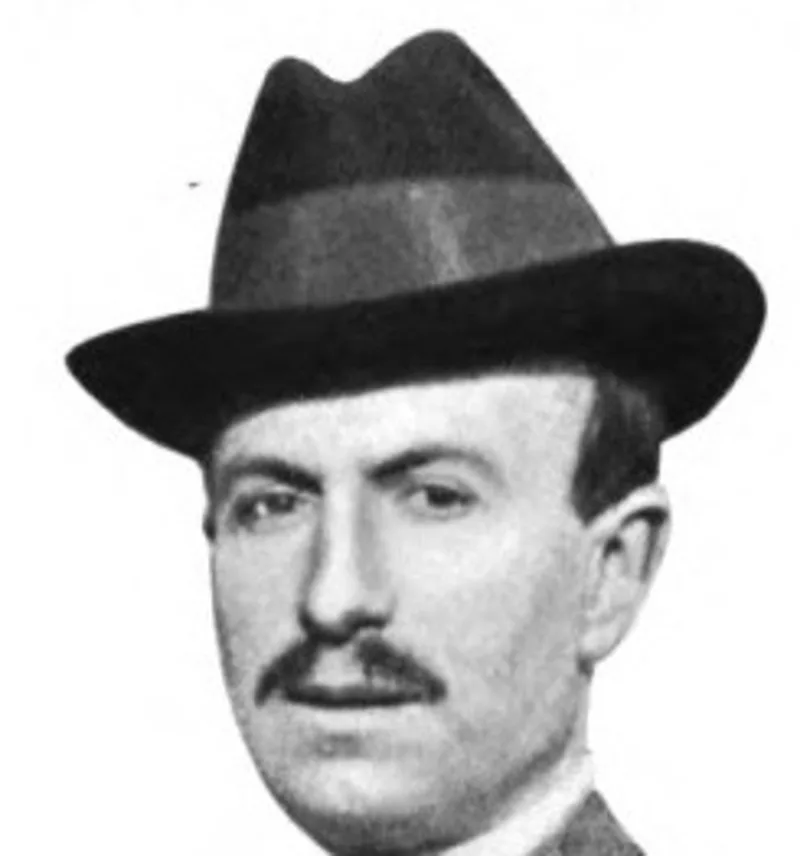
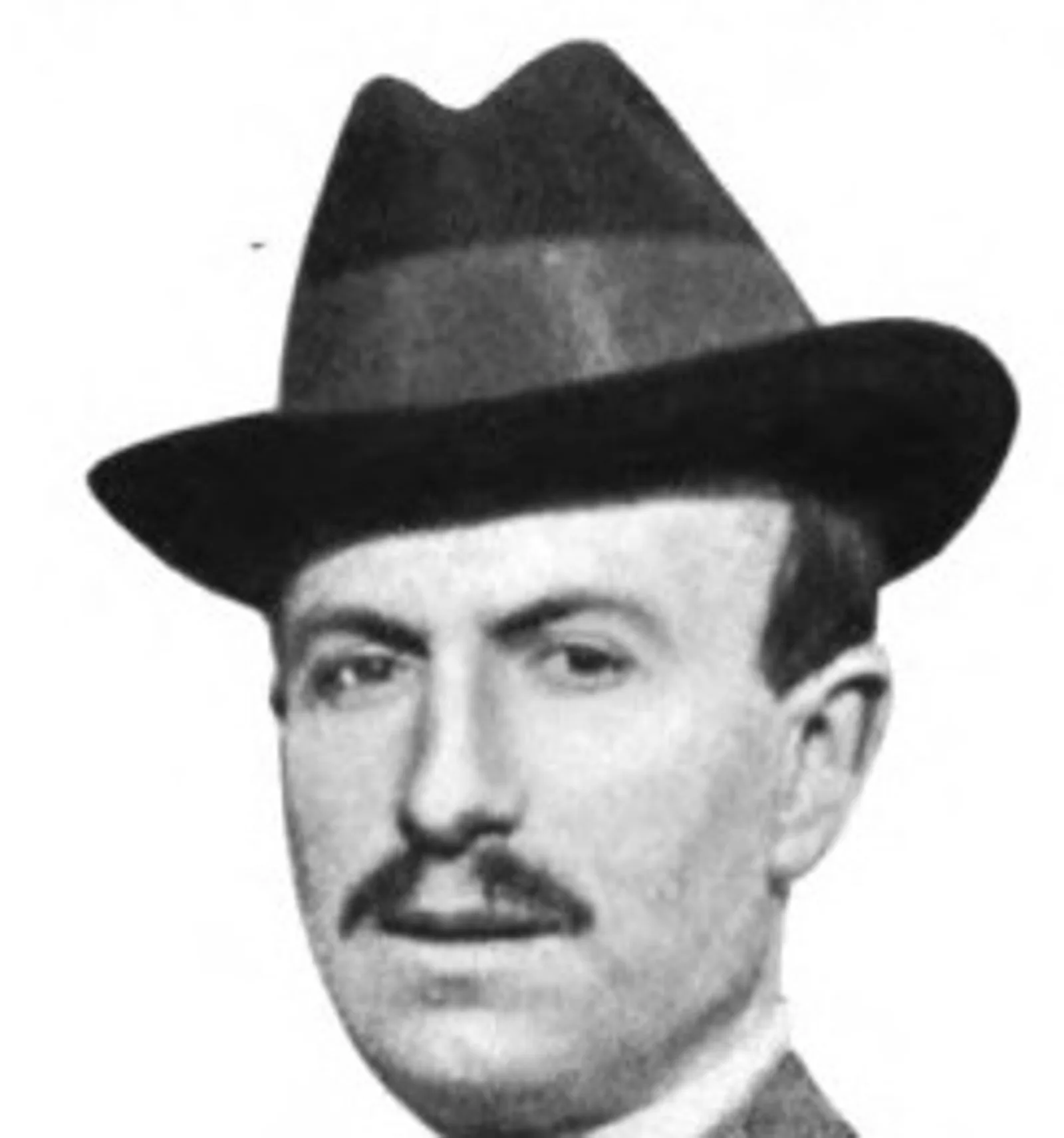
Lord Winchelsea tore a red flag in two before the first cars left for Brighton.
Why did Parliament pass the Locomotive Acts?
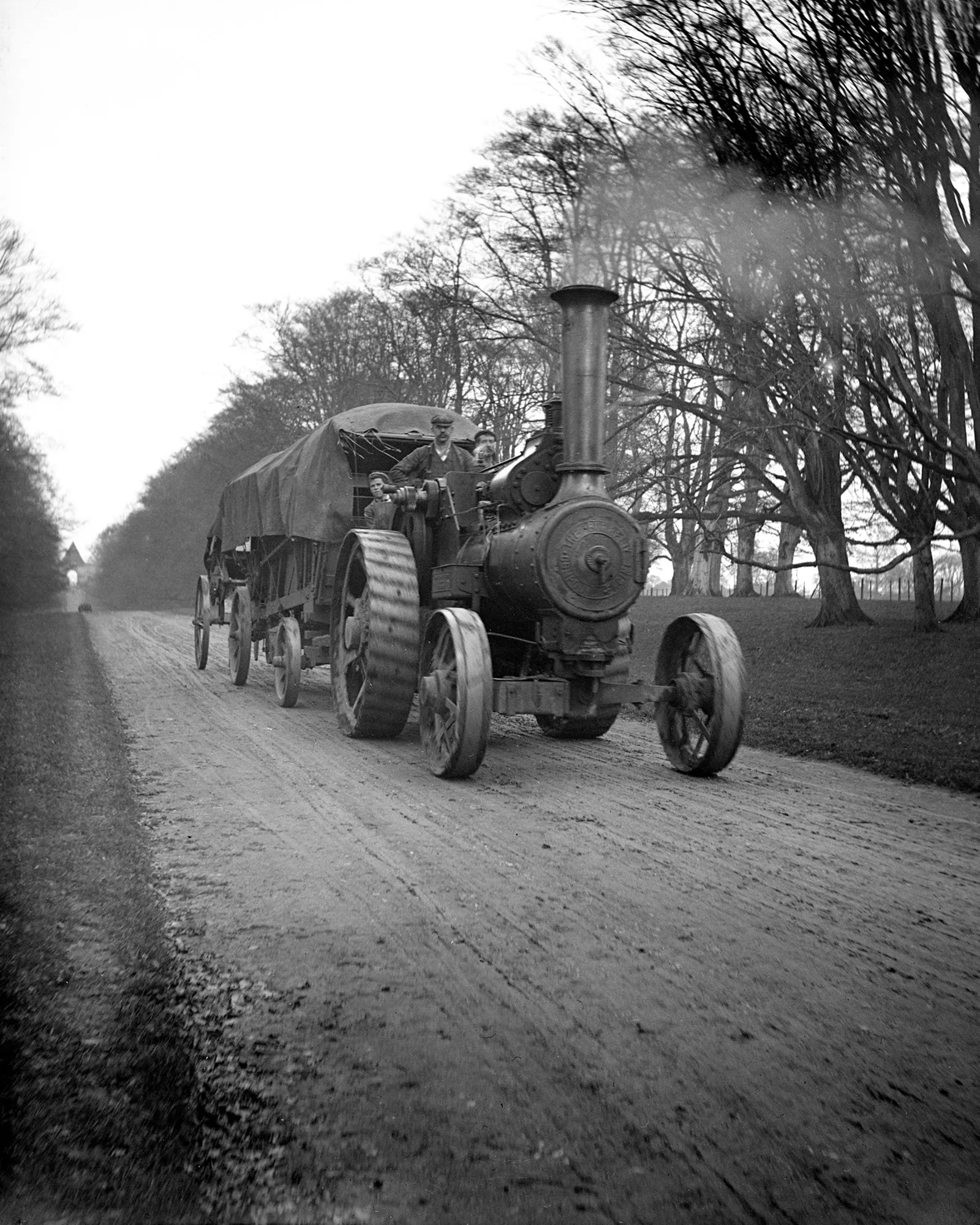
Parliament acted because steam had come to the farm. The road steamers of the 1830s had faded from memory by 1860, and nearly all the steam vehicles on the roads were agricultural: huge self-propelled ploughing engines that contractors moved from farm to farm. Their owners wanted a legal right to use the roads and an agreed system of tolls.
The engines had grown more intrusive. In the 1830s builders of steam coaches had gone out of their way not to give offence, with no chimney visible from the front, coke for fuel to avoid smoke and steam blasts muffled in a box. Goldsworthy Gurney had even routed the exhaust of a small carriage engine out of a slit as wide as the machine. By the 1860s those lessons had been forgotten, and traction engines had a prominent chimney, burned coal and let their steam blast unmuffled. Some were up to 8 feet wide, as much as many narrow lanes.
Fears about the roads and about safety followed. Road locomotives up to 9 feet (2.7 m) wide and weighing as much as 14 tons were alleged to damage the highway at around 10 miles per hour (16 km/h). People also feared fatal accidents, bolting horses, blocked lanes and noise at night, and the fears proved justified. There is also evidence that the brakes and wide tyres of steam vehicles did less harm to road surfaces than horse-drawn carriages, since nothing struck the surface like a hoof and the wheels never locked and dragged. Others have claimed that the restrictions were pushed by people with a stake in the railways and in horse-drawn transport.
What did each of the Locomotive Acts require?
The first, the Locomotive Act 1861, was the result of negotiation among the interests involved. It limited the size and weight of locomotives, set the tolls that turnpikes could charge, and demanded that engines consume their own smoke, carry lights at night and show the owner's name and the weight on the vehicle. Two men had to crew a locomotive, with a third if it hauled more than two waggons. The speed limit was 10 mph on open roads and 5 mph in towns, and locomotives were banned from suspension bridges.
The 1865 Act, the Red Flag Act, tightened the screws on speed and crew. The 1878 Highways and Locomotives (Amendment) Act then removed the flag and asked the walker to keep at least twenty yards (18 m) ahead to assist approaching horses, but it retained the speed limits. County authorities could pass byelaws and charge up to 10 pounds a year for a licence. Some overreached and made the red flag compulsory. West Sussex went further, demanding a man with a flag behind the vehicle as well as in front.
The 1896 Locomotives on Highways Act created a category of light locomotives under 3 tons, which the three earlier Acts did not cover. Such vehicles were defined as carriages, with no crew of three, no walking man, no bridge restrictions and no slow speed limit. It set a limit of 14 mph (23 km/h), with local authorities free to impose lower ones. The Motor Car Act 1903 later raised the limits.
The industry had lobbied hard in the year before. Harry J. Lawson of Coventry had bought the British Daimler engine patents in 1895 and later formed The Daimler Motor Company, and Sir David Salomons, founder of the Self-Propelled Traffic Association, gave officials long hours of advice on how the law should be drafted.
A final law came in 1898. The Locomotives Act 1898 required locomotives used for haulage on highways to be licensed by the county and to display a plate, while agricultural engines and steam rollers were registered. Counties and boroughs with a population over 10,000 could also restrict locomotives by byelaw, and some in South Wales and Middlesex used the power to close hundreds of roads to them.
The four Acts compared
| Act | Country speed | Town speed | Crew | Flag or walker |
|---|---|---|---|---|
| 1861 | 10 mph | 5 mph | Two, three with more than two waggons | None |
| 1865 (Red Flag Act) | 4 mph (6.4 km/h) | 2 mph (3.2 km/h) | Three | Walker 60 yd (55 m) ahead with red flag |
| 1878 | 4 mph | 2 mph | Three | Walker at least 20 yd (18 m) ahead, no flag |
| 1896 (light locomotives under 3 tons) | 14 mph (23 km/h) | Local limits | No crew rule | None |
What was the Emancipation Run?
The Emancipation Run was the first London to Brighton drive, held on Saturday 14 November 1896 to celebrate the Locomotives on Highways Act. It was organised by Harry John Lawson, who was also president of the Motor Car Club, for which it was the first meet.
Lawson had commercial motives. The day was also advertising for his British Motor Syndicate, which owned patents bought mostly from French and German firms. His commercial manager, H. O. Duncan, a fluent French speaker, brought over the Bollee brothers and several Panhard & Levassor cars with their drivers, including winners of notable races. Count de Dion stayed away, angry at having been paid half his patent fee in Syndicate shares that he thought worthless, and Frederick Simms persuaded his friend Gottlieb Daimler to come.
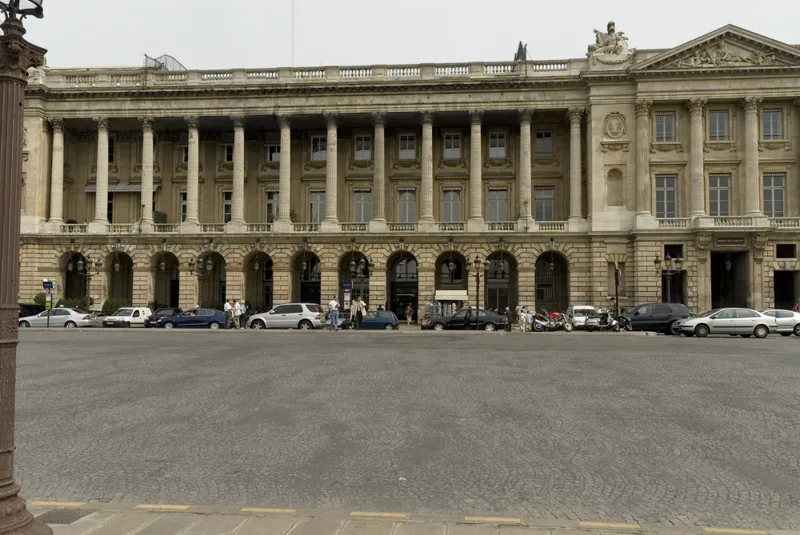
The day began with breakfast at the Charing Cross Hotel, where Lord Winchelsea tore a red flag in two, a symbolic gesture, since the 1878 Act had already lifted the flag rule. The Bollee brothers had fallen foul of the old rules and needed horses to pull them from Victoria Station to Holborn two days before the rules were lifted. Cars then gathered outside the Metropole Hotel, now the Corinthia, with an escort of cyclists that one witness put at about 10,000. In all, 33 motorists set off from London, the first at 10:30 am, and 17 reached Brighton on a wet day.
Who won the 1896 run to Brighton?
Nobody was supposed to win, because the event was organised as a procession, but some drivers treated it as a race. The first car seen arriving in Brighton was a Duryea Motor Wagon, half an hour ahead of Leon Bollee on his racing tricar. Two Duryeas took part, the first American motor vehicles seen in Europe, yet both were left out of the official results.
Duncan later wrote that there was doubt about the Duryeas' arrival and that the mystery of whether they came by rail or joined the road along the way was never solved. Some blamed Lawson, who had bought no patents from Duryea and so had no interest in promoting the cars. The argument against the Duryeas is that they would have had to overtake the Bollee tricars, who would probably have given chase and would certainly have told Duncan. Mayade's winning average in that year's Paris-Marseille-Paris race was 15.6 mph, yet he managed only 8.8 mph in the same car on the Emancipation Run, which suggests the field was not racing. Duncan also doubted that two electric vehicles listed among the fastest finishers had covered over 50 miles on their own batteries.
How does the London to Brighton Veteran Car Run work today?
The London to Brighton Veteran Car Run is a 54 mi (87 km) drive from Hyde Park to the seafront at Brighton, held on the first Sunday in November. Cars must have been built before 1905, and the Royal Automobile Club, which organises it, stresses that it is not a race.
The start comes at sunrise, around 7:00 AM, and the route follows the old A23 road, with a coffee stop at Crawley. Preston Park, in a suburb of Brighton, is the official finishing point, after which cars proceed to Madeira Drive on the seafront. The order of finishing is not even published, and no participant may exceed an average speed of 20 mph (32 km/h). Anyone who arrives before 4:30 PM earns a medal. Events around the run include a motoring forum, a sale, a motor show and a participants' reception.
The history is patchy but long. In the years after 1896 a Commemoration Run covered about 8 mi (13 km) between Whitehall Place and the Sheen House Club, and the London to Brighton drive was not staged again until 1927. It has run every year since, apart from the period from the outbreak of the Second World War to 1947, because of petrol rationing, and 2020, owing to the COVID-19 pandemic. That record makes it the longest-running motoring event in the world. Control passed to the RAC in 1930.
Entrants have included Sir Malcolm Campbell, George Formby, Phil Hill, Nigel Mansell and Damon Hill, among many racing drivers and celebrities. The 72nd anniversary run in 1968 brought Prince Rainier and Princess Grace of Monaco in a 1903 De Dion-Bouton, with Moss driving a four-cylinder 1903 Mercedes. In 1971 Queen Elizabeth II rode as a passenger in a 1900 Daimler. Prince Michael of Kent is a regular. The 1953 comedy film Genevieve is set during one of these runs.
Where this went next
The story of the road has moved on from veteran cars. The Royal Automobile Club added a Brighton to London Future Car Challenge in 2010, which follows the same route in the opposite direction on the day before the veteran run, and invites road-legal electric, hybrid and low-emission cars to compete at using as little energy as possible. At the inaugural event, electric vehicles used the least, an average of 0.62 MJ/km, equal to 141 mpg-imp of petrol. Hybrids averaged 1.14 MJ/km (76 mpg-imp equivalent), and the mostly diesel combustion cars 1.68 MJ/km (52 mpg-imp equivalent).
Speed limits rose again with the Motor Car Act 1903, after which the Locomotive Acts fade from the story. An American version of the run, from New London to New Brighton, also exists.