Where the Nexon, Harrier and Telcoline sit in Tata's range, with engines, electric versions, safety results and export names.
The Nexon is Tata's subcompact SUV, on sale since 2017. The Harrier is a larger five-seat diesel SUV launched in January 2019. The Telcoline is a pickup truck that Tata has built since 1988, sold in export markets as the Xenon.
Tata paid for its own crash test retake, and it worked. After the Nexon scored five stars for adult protection in Global NCAP testing in December 2018, it became the first car sold in India to reach that mark. Tata Motors had presented knee data, fitted a front-passenger seatbelt reminder as standard, and funded the reassessment itself. The range around it runs from the Nexon, below four metres, to the larger Harrier and the Telcoline pickup that has run since 1988.
What are the Tata Harrier, Nexon and Telcoline?
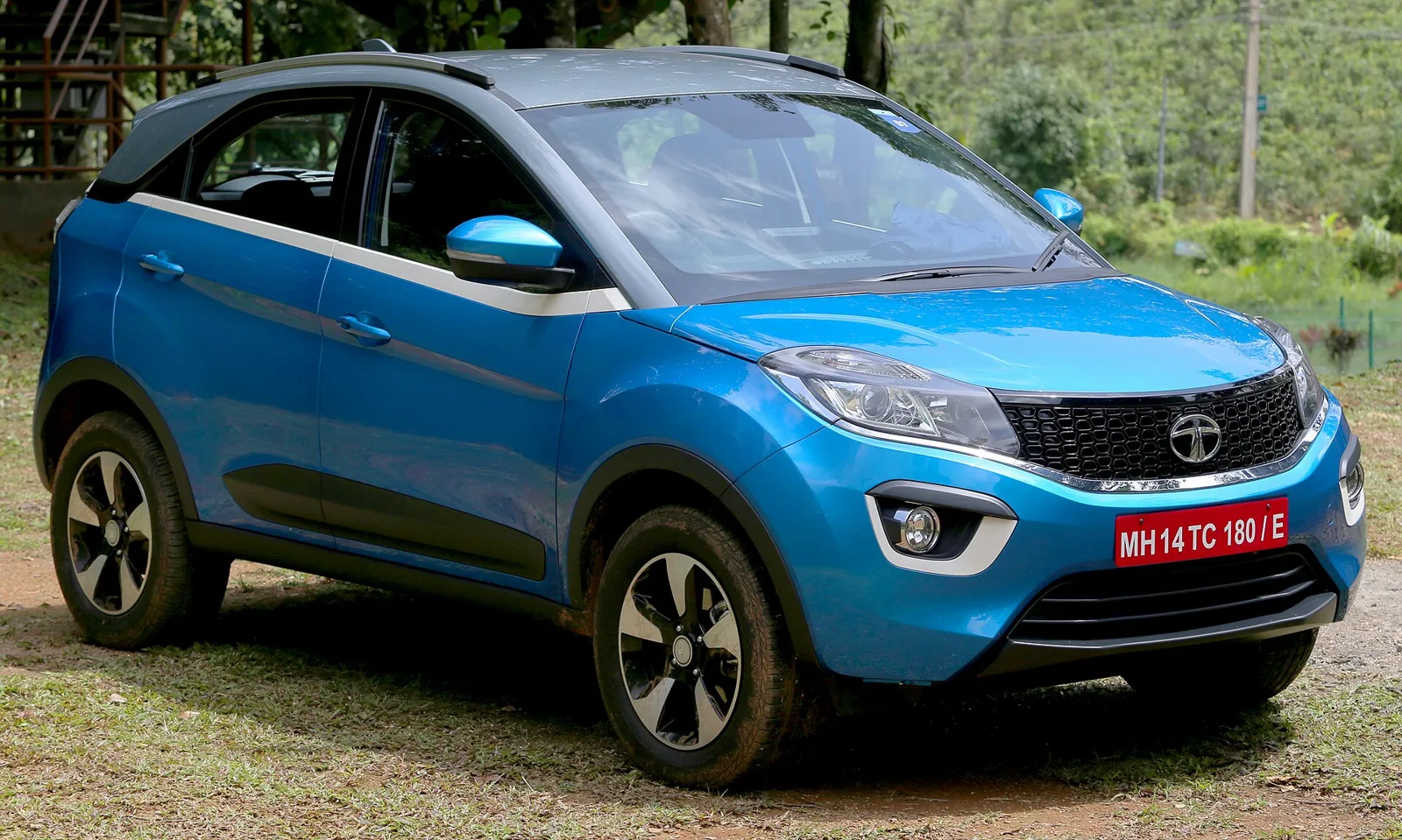
They are three vehicles from the Indian maker Tata Motors at three different sizes and jobs. The Nexon is a subcompact SUV and the brand's first crossover. The Harrier is a five-seat compact crossover SUV with a diesel engine, positioned between the Nexon and the three-row Safari. The Telcoline is a mid-size pickup.
The Nexon has been produced since 2017 and sits in India's sub-4 metre crossover class. The Harrier launched on 23 January 2019. The Telcoline began in July 1988 as the Tatamobile 206 and its second generation is sold abroad as the Xenon.
Tata paid for its own retest, and the Nexon became the first car sold in India with five adult stars.
How did the Tata Nexon start?
The Nexon first showed up as a prototype at the Auto Expo 2014, and the final model was presented in February 2016. It went on sale in 2017. It rides on a revised version of the Tata X1 platform, which first appeared in 1998 with the Indica. The front suspension uses MacPherson struts with coil springs, the rear has a twist beam, and the wheelbase measures 2,498 mm (98.3 in).
Production began at the FCA India plant at Ranjangaon under a joint venture agreement in July 2017, and sales in India began in September of that year. As of December 2018 Tata Motors had not exported the car, and the 50,000th Nexon was built in August 2018.
What engines did the first Nexon use?
Tata developed the engines with the Austrian engineering firm AVL. The petrol is a 1.2 L Revotron three-cylinder turbo making 81 kW (109 hp; 110 PS) and 170 N-m (125 lbf-ft). The diesel is a 1.5 L Revotorq four-cylinder with the same 81 kW output, though it delivers more torque, at 260 N-m (192 lbf-ft). Both came with a six-speed manual or a six-speed automated manual.
The car has City, Eco and Sports driving modes, and a sunroof joined the options list in 2018. Special editions included the Dark, Red Dark and Kaziranga.
What changed in the Nexon facelifts?
The first facelift arrived in January 2020 with Bharat Stage 6 engines, shown to the public at Auto Expo 2020. The exterior followed Tata's Impact 2.0 design language. The BS6 1.5-litre turbocharged Revotorq diesel kept 81 kW (109 hp; 110 PS), while the 1.2-litre Revotron petrol produced 88 kW (118 hp; 120 PS).
The second facelift was unveiled on 14 September 2023, with a nose inspired by the Curvv concept, a full-width LED light bar at the rear, and a two-spoke steering wheel whose Tata logo lights up, a first for India. It added a 10.25-inch touchscreen and a 10.25-inch digital instrument cluster, with six airbags, a 360-degree camera, a wireless charger, ventilated front seats, an air purifier and an electronic gear shifter as standard.
Grades were renamed Smart, Pure, Creative and Fearless, with variants such as Smart+ and Fearless+ (S); a plus sign denotes optional packages and (S) a sunroof. Three engines are offered: a turbocharged 1.2-litre petrol, a 1.5-litre diesel and a CNG version of the petrol. Gearboxes range from five-speed and six-speed manuals to a six-speed AMT and a seven-speed dual-clutch automatic with paddles, depending on the variant.
Which special editions did the Nexon get?
The Dark edition launched on 7 July 2021 in Atlas Black with darkened trim, leatherette upholstery and alloy wheels, and also came in electric form. The Kaziranga edition of the EV followed on 23 February 2022, in Grassland Beige with rhino badging on the front fenders, an air purifier and ventilated front seats. The Jet edition appeared on 27 August 2022, and the Red Dark on 22 February 2023, in Oberon Black with red inserts, a red leatherette interior and an electric sunroof.
How safe is the Nexon?
Global NCAP 1.0 first tested the Nexon in August 2018, awarding five stars for adult protection and three for children. Tata then made the front-passenger seatbelt reminder standard from 7 December 2018 and paid for a retest, including a basic side-impact test under ECE Regulation 95, which the top adult rating demands. The retest in December 2018 made the Nexon the first Indian-market car to get five adult stars.
In 2024 the facelifted Nexon earned five stars for both adult and child safety from Global NCAP under its updated criteria, thanks to extra standard equipment: electronic stability control, side and curtain airbags, i-Size anchorages, a lap-and-sash belt for the rear middle seat and belt warnings for every seat. The Nexon.ev also received five stars for adults and toddlers from Bharat NCAP in 2024. The model became the first Tata SUV to pass 800,000 sales, a total reached by March 2025.
What is the Tata Nexon EV?
Tata revealed the Nexon EV on 19 December 2019, using components from its Ziptron electric technology brand. Its motor makes 94.7 kW (127 hp; 129 PS) and 245 N-m of torque, and 0 to 100 km/h takes under 9.9 seconds. With a 30.2 kWh battery the ARAI-rated range reaches 312 km (194 mi).
A full charge takes under eight hours from a 7.2 kW charger bought from Tata, or a 15-ampere cable at any suitable socket. A 25 kW DC fast charger takes the battery from 0 to 80% in an hour. Tata began a subscription plan in August 2020, and the Nexon EV was reported to be India's best-selling electric vehicle in 2020.
In July 2022 the standard car became the Nexon EV Prime to separate it from the long-range Nexon EV Max, launched in May 2022. The Max has a 106.64 kW (143 hp; 145 PS) motor, 250 N-m of torque, a 100 km/h time under 9 seconds, and a 40.5 kWh battery with an ARAI range of 437 km (272 mi). The Prime also gained four-stage regenerative braking, cruise control and iTPMS.
Batteries come from Tata Autocomp System, which builds them in India through a joint venture with Guoxuan Hi-Tech, at Tata Motors' Sanand site in Gujarat. The EV facelift, unveiled on 7 September 2023, brought a larger 12.3-inch touchscreen, wireless phone charging, a pair of fast-charging Type-C sockets and three selectable drive modes. Its grades include Creative+, Fearless and Empowered, with long-range versions marked (LR).
What is the Tata Harrier?
The Harrier was developed as project Q501 and previewed as the H5X concept, with the production name announced in the summer of 2018. It is a C-segment SUV on the OmegaArc platform, a reworked Jaguar Land Rover D8 platform, the one behind the Range Rover Evoque, Discovery Sport and Jaguar E-Pace. The name is an acronym for Optimal Modular Efficient Global Advanced Architecture. The body is a monocoque with crumple zones.
To cut costs, Tata used different alloys, less high-strength steel and a rear twist-beam suspension with a panhard rod instead of the multilink layout Jaguar Land Rover uses, while keeping MacPherson struts at the front. The Harrier is front-wheel drive only, with ventilated front discs and drums at the rear. Production began in October 2018 on a new assembly line at Pune.
What powers the Harrier?
A 2.0-litre Multijet 16-valve turbodiesel with common-rail injection and a variable-geometry turbo, producing 140 hp (104 kW; 142 PS) and 350 N-m (258 lb-ft). Fiat's FCA India builds it in Pune, and the same engine goes into the Jeep Compass and MG Hector in India. Tata calls it Kryotec.
Inside, the first Harrier had an 8.8-inch touchscreen with Android Auto and a 7-inch TFT instrument cluster, with six airbags, ESP and traction control on top trims. It offers Eco, City and Sport modes plus a Land Rover-derived Terrain Response System offering Normal, Wet and Rough settings.
How has the Harrier been updated?
A full-black Dark edition arrived in October 2019. In February 2020 the Harrier gained a panoramic sunroof, an automatic transmission sourced from Hyundai and power of 170 metric horsepower (168 hp; 125 kW). The Camo edition of November 2020 added military-style visuals along with front parking sensors, side steps and roof rails.
February 2023 brought a 10.25-inch touchscreen, a 7-inch digital cluster, a 360-degree camera, semi-autonomous ADAS functions and a Red Dark edition. Tata revealed the facelift on 6 October 2023, together with the Safari's. For safety, the Harrier was rated five stars with the Safari by Bharat NCAP in 2023, and five stars for adults and toddlers by Global NCAP 2.0 that year.
Is there an electric Harrier?
At the January 2023 Auto Expo, Tata showed an all-electric Harrier EV concept with all-wheel drive, which company officials said would reach production in late 2024. In practice, a production-ready version appeared at the Bharat Mobility Expo in 2024 and 2025, and the Harrier.ev officially launched on 3 June 2025.
What are the Safari, Buzzard Sport and H5?
The all-new Safari was displayed at the 2019 Geneva show, the 89th. It has a longer body to hold a third row on the same wheelbase as the Harrier and was meant to replace the Hexa; it launched in January 2021. Tata also showed the Harrier for export as the Buzzard Sport, announcing plans to sell it in Europe, because Toyota already has the Harrier name registered in Europe and Asia. In Nepal the car was launched on 27 August 2019 as the Tata H5, taking its name from the H5X concept.
What is the Tata Telcoline?
Tata Motors has built the Telcoline, a mid-size pickup, since 1988. Indian buyers first knew it as the Tatamobile 206, then from 2002 as the Tata 207 DI, while export customers saw the Tatamobile, Loadbeta, Xenon and Pick Up badges.
Introduced in July 1988 and designed by Telco, it was the first light commercial vehicle Tata launched after the heavy Tata 407, which was based on a Mercedes-Benz design. It took two years to develop and sold 61,691 in India across the 1988 and 1989 model years, then 64,941 between 1989 and 1990. It gave Tata 25% of the light commercial vehicle segment.
How was the first Telcoline built?
It used a flexible body-on-frame chassis, the Tata X2 platform, in short-wheelbase single-cab form with two seats and long-wheelbase crew-cab form with five, and drive went to the rear wheels or all four. The four-wheel-drive car sat higher off the ground. The same platform produced the Tata Sierra, the Estate, the Safari, the Sumo and the Spacio.
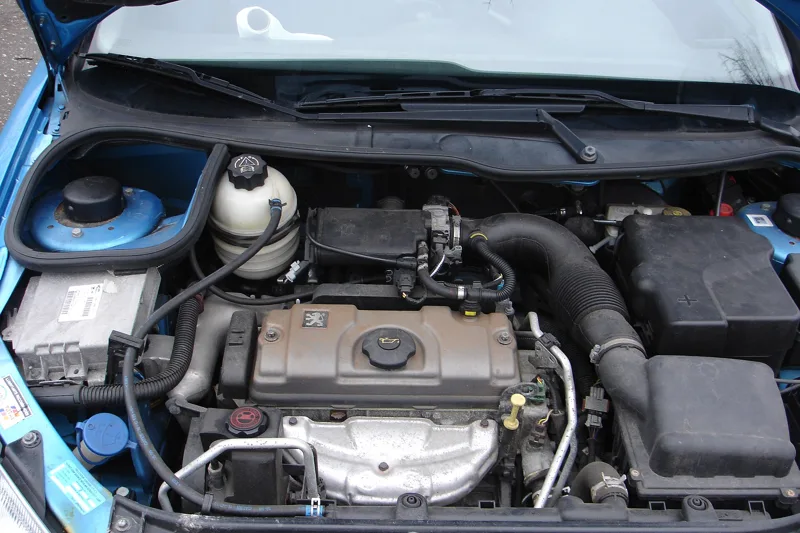
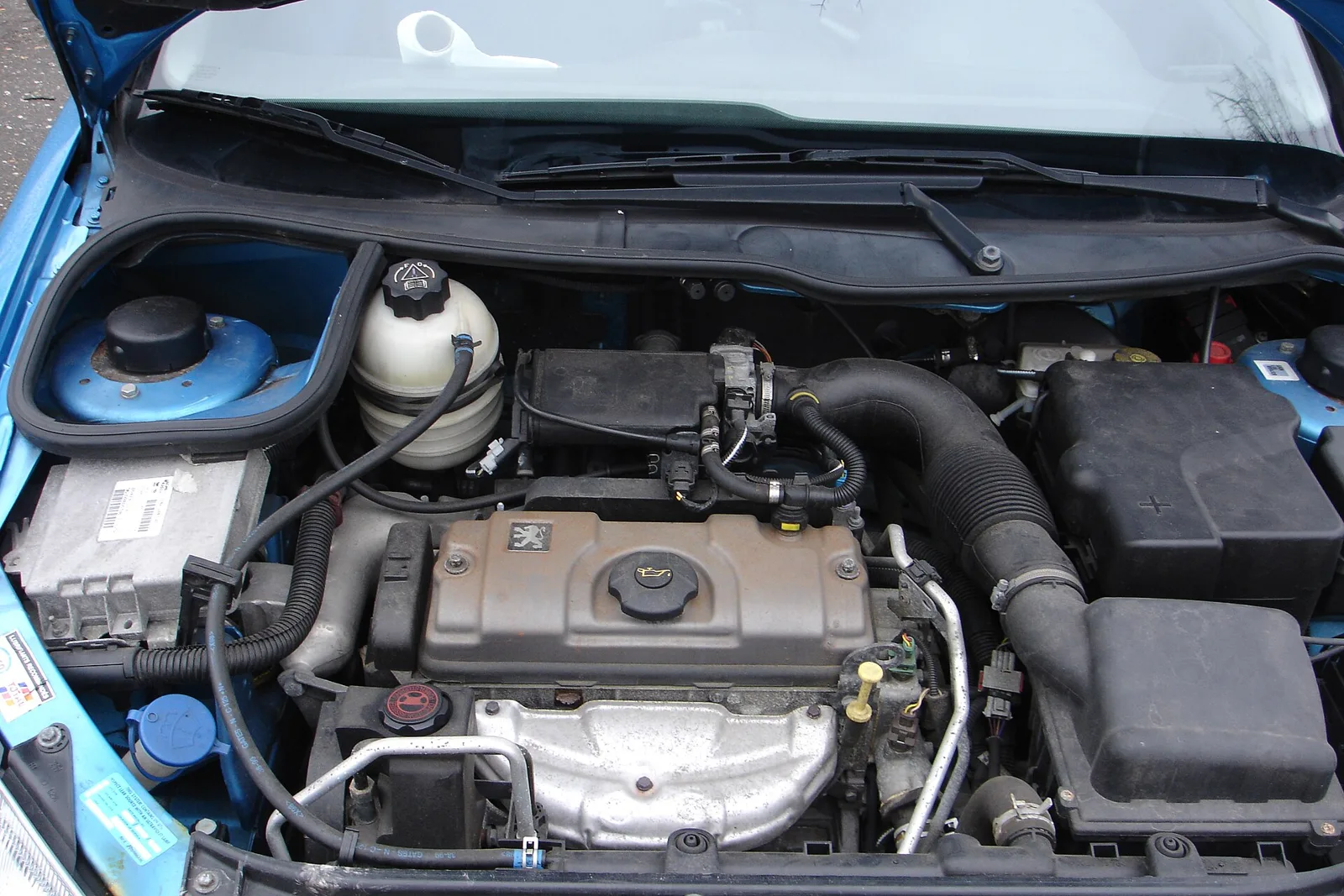
The original engine was a naturally aspirated 2.0-litre (1,948 cc) Peugeot XD88 diesel, built under licence in India, making 63 hp (47 kW). A turbocharged version produced 92 hp (69 kW). Tata exported the pickup to South Africa as the Telcoline from 1990, and later to Europe. In Italy it was the Tata Pick-Up, with a base trim and an Orciari version with two-tone paint, bull-bar, alloy wheels and air conditioning. When Euro 3 arrived, the naturally aspirated engine was dropped and the turbo was cut to 88 horsepower.
In 2000 Tata signed an agreement with Malaysia Truck & Bus to assemble Telcolines from complete knock-down kits at Pekan in Pahang.
What changed in 2002 and after?
The August 2002 facelift brought new bumpers, a new bonnet and a grille carrying the new Tata logo. A 3.0-litre (2,956 cc) diesel, the engine used in the Tata 407, arrived and gave the Indian model its 207 DI name. The naturally aspirated version made 58 HP but had more torque than the Peugeot unit, and the turbo version made 87 HP and met Euro 4.
In September 2003 Tata Motors signed a joint venture with Phoenix Venture Holdings, the MG Rover group, to distribute the 207 DI in the United Kingdom. India got the single-cab 207 DI EX in 2006, and Europe received a 2.2-litre Dicor turbodiesel with 140 horsepower, based on the 2,179 cc PSA DW12 and re-engineered by Tata and AVL. Four-wheel drive reached India in 2005 as the Tata TL. European exports of this generation ended in 2008, and Tata named the Xenon as its successor.
What is the second-generation Tata Xenon?
Developed in 18 months, the second generation evolved the X2 platform with revised suspension geometry and more high-strength steel. It was designed mainly for export, including Southeast Asia, EMEA and Mercosur. It has dual front airbags, ABS, traction control and downhill speed control, with stability control added to export models later. The development name was TL Sprint.
A definitive prototype appeared at the Bologna Motor Show in December 2006 and production began in May 2007 at the Pune plant. Tata chose the name Xenon to avoid confusion with the Telcoline still in production. The European car had a 2.2-litre Dicor Euro 4 turbodiesel with 140 horsepower and a five-speed manual; the 2012 Euro 5 revision added VGT, a DPF and 150 horsepower.
Thailand assembly began in 2010 with the Tata-Thonburi joint venture, followed by a CNG version in 2011 with 115 HP. The Xenon XT Cross Terrain double cab arrived in 2009, and it found a warm reception in Europe, above all in Spain and Italy. The Australasian New Car Assessment Program tested it twice, first without ESC and then with it. The Xenon Yodha facelift launched on 3 January 2017 in 4x2 and 4x4 forms, followed by the Yodha 2.0 in September 2022.
The three Tata vehicles compared
| Model | Type | First launched | Engines named | Built or assembled |
|---|---|---|---|---|
| Nexon | Subcompact SUV | 2017 in India | 1.2 L petrol, 1.5 L diesel, electric | Ranjangaon, India |
| Harrier | Five-seat compact SUV | 23 January 2019 | 2.0-litre diesel, electric Harrier.ev | Pune, India |
| Telcoline | Mid-size pickup | July 1988 | Peugeot 2.0 diesel, 3.0 diesel, Dicor 2.2 diesel | India, with kits in Malaysia and Thailand |
Where do the Harrier.ev, Telcoline and Nexon stand now?
The Harrier.ev, officially launched on 3 June 2025, takes the nameplate electric after its showings at the Bharat Mobility Expo in 2024 and 2025. Tata had showed the concept in January 2023 and said then that production would start in late 2024.
Telcoline production carries on in India, with exports going to South Africa. The Xenon line was updated again with the Yodha 2.0 in September 2022, and the Nexon passed 800,000 sales by March 2025.