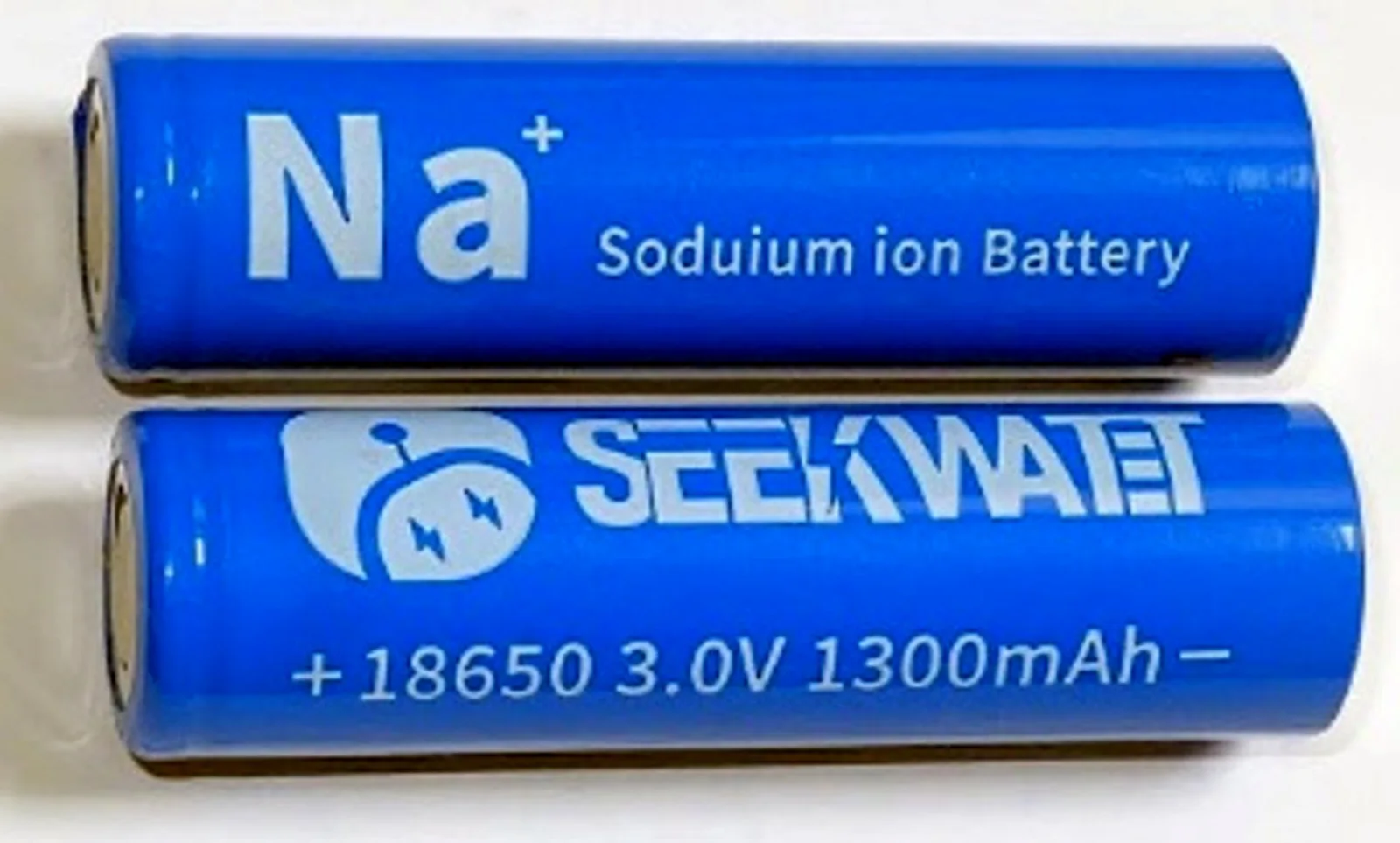
Sodium is cheap, it sits next to lithium on the periodic table, and the world's biggest battery maker unveiled a car cell in 2021.
A sodium-ion battery carries charge with sodium instead of lithium, using cheaper, abundant materials and often no cobalt, copper or nickel. CATL unveiled a car version in 2021, but the sodium-ion vehicles confirmed as on sale are Yadea scooters, and it must beat LFP cells that averaged $100/kWh in 2023.
Sodium sits directly beneath lithium on the periodic table, it is abundant in sea water, and CATL, the largest EV battery maker in the world, unveiled a sodium-ion battery for cars in 2021. The vehicles that actually use sodium-ion packs on sale today, however, are light scooters from Yadea. That gap between promise and showroom is the real story.
What is a sodium-ion battery?
A sodium-ion battery uses sodium ions to carry charge where a lithium-ion battery uses lithium ions. The construction is often very similar. There is a sodium-based cathode, an anode that need not contain sodium at all, and a liquid electrolyte containing dissolved sodium salts. When the cell charges, sodium ions travel from cathode to anode while electrons take the external circuit. On discharge, everything runs in reverse.
That mirrors the rocking-chair motion of a lithium-ion cell, where the ions shuttle back and forth between electrodes. Because sodium belongs to the same chemical group as lithium, the two behave in similar ways, and manufacturers can adapt much of their lithium know-how. Still, the label covers a family of chemistries rather than a single recipe, and some designs, such as water-based cells, differ sharply from lithium-ion.
A sodium cell has to undercut a target that has been falling for years, and it has to do so without giving up much range.
Sodium ion vs lithium ion: why ion size matters
Picture ions as passengers and the electrode as a theatre. A lithium ion measures 90 picometres across. A sodium ion measures 116. Larger guests need more room, and they take longer to find their seats.
That size difference has two consequences. The first is bad: sodium moves into and out of the electrodes more slowly, and its cathodes often pass through several stages with different voltages and different speeds. The second is useful. Iron ions measure between 69 and 92 picometres depending on their state, which is close to lithium. In a lithium cell, iron-based cathode material and lithium can swap places and mix, and every mixed pair costs cyclable charge. Sodium is too big to swap, so cheap iron and manganese oxides work well as sodium cathodes, whereas lithium cells lean on dearer cobalt and nickel oxides.
Can a sodium battery make EVs cheaper?
The case rests on materials. Many sodium-ion designs need no cobalt, no nickel and no copper. Cathodes can be built from manganese and iron, and aluminium can replace copper in the current collectors. Interest in the chemistry rose in the 2010s and early 2020s for reasons that were mostly about lithium: its high price, its uneven spread around the world and the environmental damage done when it is extracted. After a long lull, a revival began in the early 2010s as raw material costs for lithium-ion rose.
What sodium cannot yet show is a finished cell price. That matters, because the benchmark is moving. Lithium iron phosphate cells, which already avoid nickel and cobalt, had a lowest reported price of $80/kWh in 2020 with an average of $137/kWh. By 2023 the average had fallen to $100/kWh. In early 2024, cells in the common VDA format were on offer for under RMB 0.5/Wh ($70/kWh). Leapmotor, the Chinese carmaker, said it paid RMB 0.4/Wh ($56/kWh) and believed a fall to RMB 0.32/Wh ($44/kWh) was possible. Assembled LFP batteries sold to US consumers in mid 2024 for around $115/kWh.
A sodium cell therefore has to undercut a target that has been falling for years. Lithium-ion as a whole has already seen cost drop tenfold since the first cells were sold in 1991, and global demand topped 1 terawatt-hour a year by late 2024, against production capacity of more than double that.
Lithium-ion has its own pressure points, and they explain the appetite for alternatives. The electrolyte is flammable, so the cells can be a fire or explosion hazard. Lithium mining is thirsty work, often in dry regions, and cobalt, used in some chemistries, can be a conflict mineral. Researchers have responded by improving how efficiently minerals are used and by turning to lithium iron phosphate and to non-lithium chemistries such as sodium-ion and iron-air.
The numbers behind the chemistries
| Chemistry | Specific energy, cell level | Cycle life |
|---|---|---|
| NMC (best examples) | Over 300 Wh/kg | About 1,000 to 2,300 cycles |
| NCA (Panasonic 2170 in the 2020 Tesla Model 3) | Around 260 Wh/kg | n/a |
| LFP (CATL, 2024 claim) | 205 Wh/kg | Over 3,000 cycles in most conditions, over 10,000 at best |
| LFP (BYD) | 150 Wh/kg | Over 3,000 cycles in most conditions, over 10,000 at best |
Does sodium-ion fix the cold-weather problem?
It is a widely repeated claim, but no cold-weather range or charging figure for a sodium-ion cell has been published.
What exists is a lithium reference point. CATL's Shenxing LFP battery, announced in 2023, charges from 0 to 80 percent in 10 minutes at room temperature and in 30 minutes at -10 degrees C, according to the company. Any sodium-ion car that is sold on winter performance will be measured against numbers like those.
What does sodium-ion give up?
Energy density is the first price. In the laboratory, the figures per gram of material look competitive. Hard carbon, the favoured anode material, was found to absorb sodium in 2000 and delivers about 300 mAh/g, comparable to the 300 to 360 mAh/g of graphite in lithium-ion cells. The first sodium cell using it, built in 2003, showed an average voltage of 3.7 V on discharge. Nitrogen-doped versions have reached 520 mAh/g, and a sample made from plant matter delivered 280 mAh/g at a gentle 1 A/g and kept over 90 percent of its capacity through a thousand cycles.
On the cathode side, a cell built from iron and manganese can store 190 mAh/g at an average of 2.75 V, a figure the researchers rate as equal to or better than commercial lithium cathodes such as LiFePO4. A doped nickel oxide paired with hard carbon delivered 157 mAh/g at 3.2 V in a full cell, and again the result compares well with commercial lithium-ion systems. Yet the iron-manganese version is short of sodium, which lowers its energy density, and cathodes that add copper to hold capacity better are more expensive.
The anode has pitfalls of its own. Graphite, the lithium-ion workhorse, stores only about 100 mAh/g of sodium. A tin alloy can hold a stunning 847 mAh/g, but the material swells by as much as 420 percent and crumbles after a few cycles. Carbon-based anodes are also restricted to non-aqueous systems.
Cathode design is a similar bargain. Cathodes built on oxoanions give a stronger chemical bond, which helps cycle life, safety and cell voltage, but they pack less material into a given volume and so store less energy than the oxides. Every route to a better sodium cell trades one virtue against another.
Gram-for-gram capacity is not a finished battery, though. Pack level energy, the figure that decides range, depends on voltage, the weight of everything around the active material and how the cells are packed.
Who is building sodium-ion batteries for cars?
Several firms across four countries have said they are close to commercialisation. HiNa and CATL are Chinese, Faradion is British, Tiamat is French, Northvolt is Swedish and Natron Energy is American. Their cathodes are built from layered sodium transition metal oxides, Prussian white or vanadium phosphate. Faradion chose hard carbon for the anode because of its mix of capacity, lower working potential and cycling stability.
One sign of progress is paperwork. Around 2020, the number of patent families caught up with the number of academic publications, which usually marks a technology reaching its commercial stage. Sodium-ion systems are operating in fixed grid storage, and Yadea sells scooters that use HuaYu sodium-ion technology.
CATL is the company to watch. Founded in 2011 in Ningde, in China's Fujian province, it holds around 37 percent of the world market for EV and storage batteries in 2022 and 36.8 percent in 2023. Its first major customer, from 2012, was BMW Brilliance, and its cells now go into cars from BMW, Daimler, Ford, Hyundai, Honda, Toyota, Volkswagen, Volvo and Tesla, among others. It unveiled its automotive sodium-ion battery in 2021. Its commercial muscle, though, still sits in lithium iron phosphate, where it launched the M3P cell in 2023 with 210 Wh/kg, a 15 percent gain, and has set up a joint venture with Stellantis in Zaragoza for a 50 GWh plant with an investment of 4.1 billion euros.
The rival it has to beat
LFP is cheap, safe and long-lived, and it is already in volume. In September 2022 it held 31 percent of the EV battery market, with 68 percent of that coming from Tesla and BYD alone. By 2025 its share of passenger and light vehicle capacity measured in GWh had reached 79 percent in China, 13 percent in Europe and 5 percent in North America. It is also about 85 percent of stationary storage.
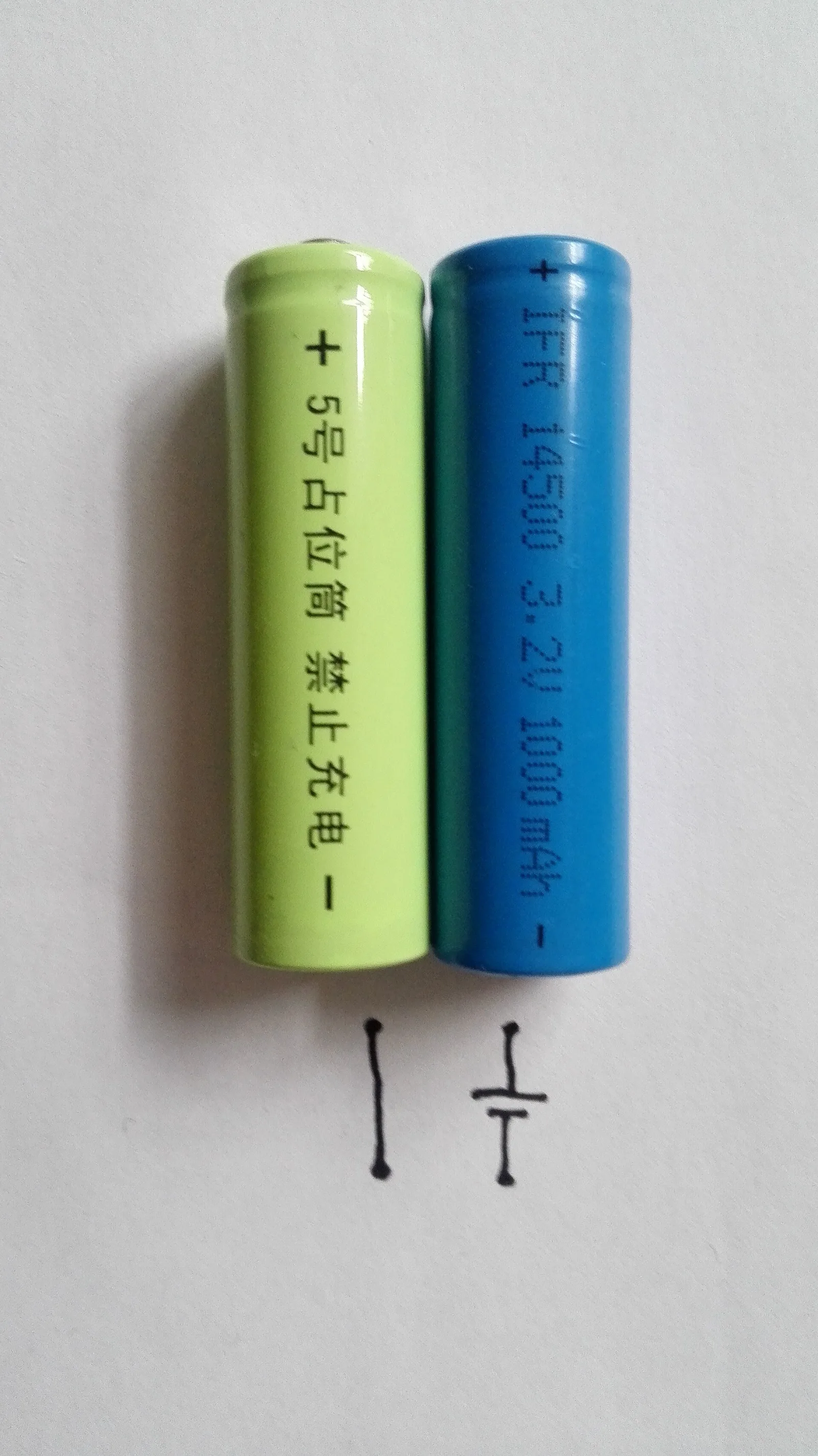
Practical examples are everywhere: Tesla fits it to standard-range Model 3 and Model Y cars made after October 2021, and Renault uses a 27.5 kWh LFP pack in the electric Twingo sold from 2026. Higher-end vehicles typically use NMC because of its performance. LFP cells also run at a lower operating voltage than other lithium-ion types, with a nominal 3.2 V. The question for sodium-ion, then, is whether it can undercut a chemistry that is already inexpensive and already trusted, while giving up little in range.
Where this goes next
There is no dated plan for a sodium-ion car. The companies named above have said they are close to commercialisation, and CATL unveiled its automotive cell in 2021, but being close to commercialisation is not a production date.
The dated plans that do exist concern lithium iron phosphate. The Stellantis and CATL plant in Zaragoza is expected, according to reports, to begin battery production in 2026. That tells us where the near-term volume is likely to be, and it is the benchmark any sodium-ion programme would be judged against.
What it means if you are buying a car
Today the choice in a showroom is between lithium chemistries: NMC or NCA for the longest range and strongest performance, LFP for lower cost, a longer cycle life and, in general, better thermal stability. LFP can still catch fire under extreme conditions such as overcharging or severe damage, and it has an awkward trait for the electronics, since its voltage stays almost flat between roughly 20 and 80 percent charge.
Sodium-ion belongs on the watch list, not the shopping list. The only vehicles confirmed with sodium-ion packs are light scooters. If a sodium-ion car does arrive, the useful questions will be the price against LFP, the range, and the cold-weather charging numbers the manufacturer publishes.
.jpg)