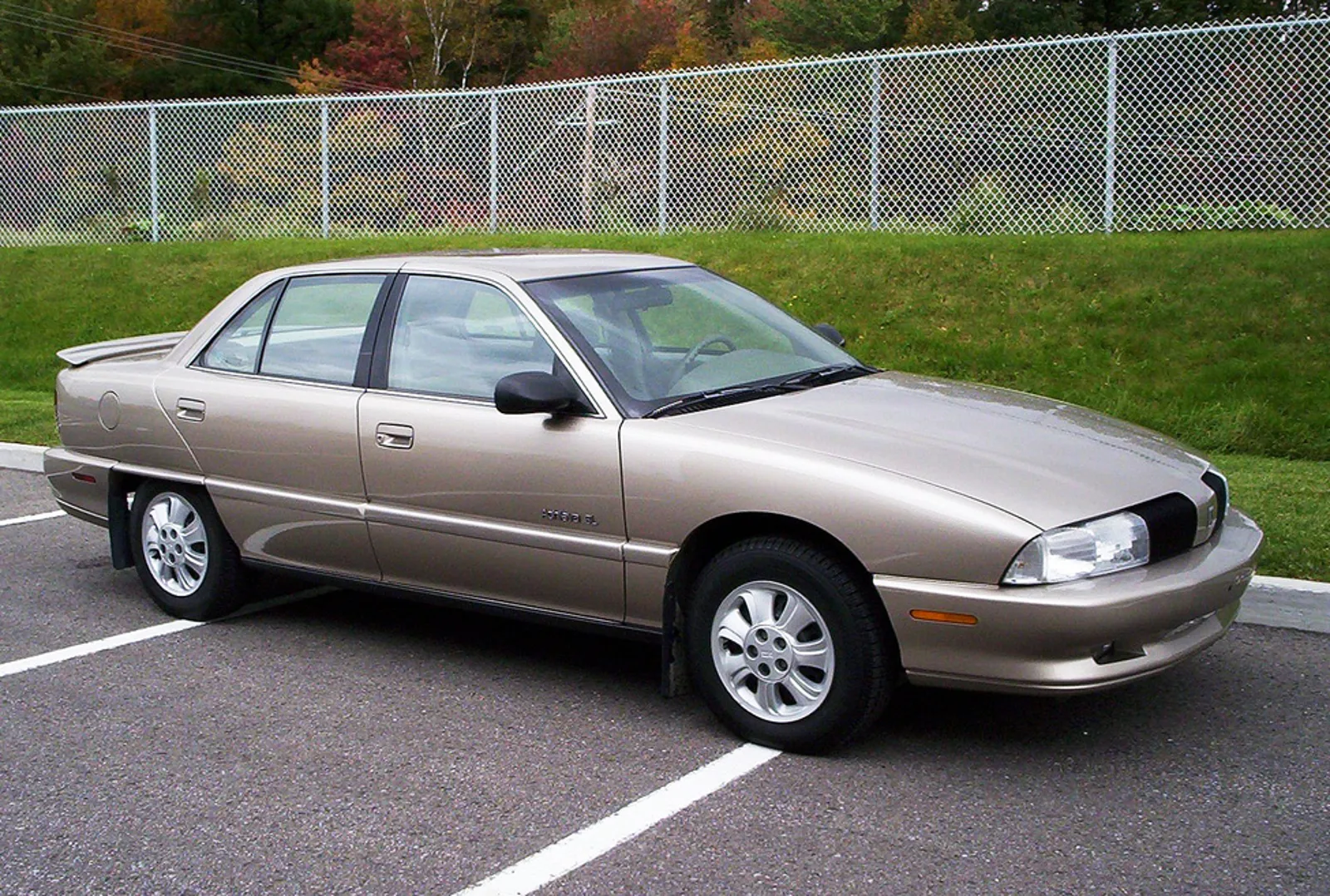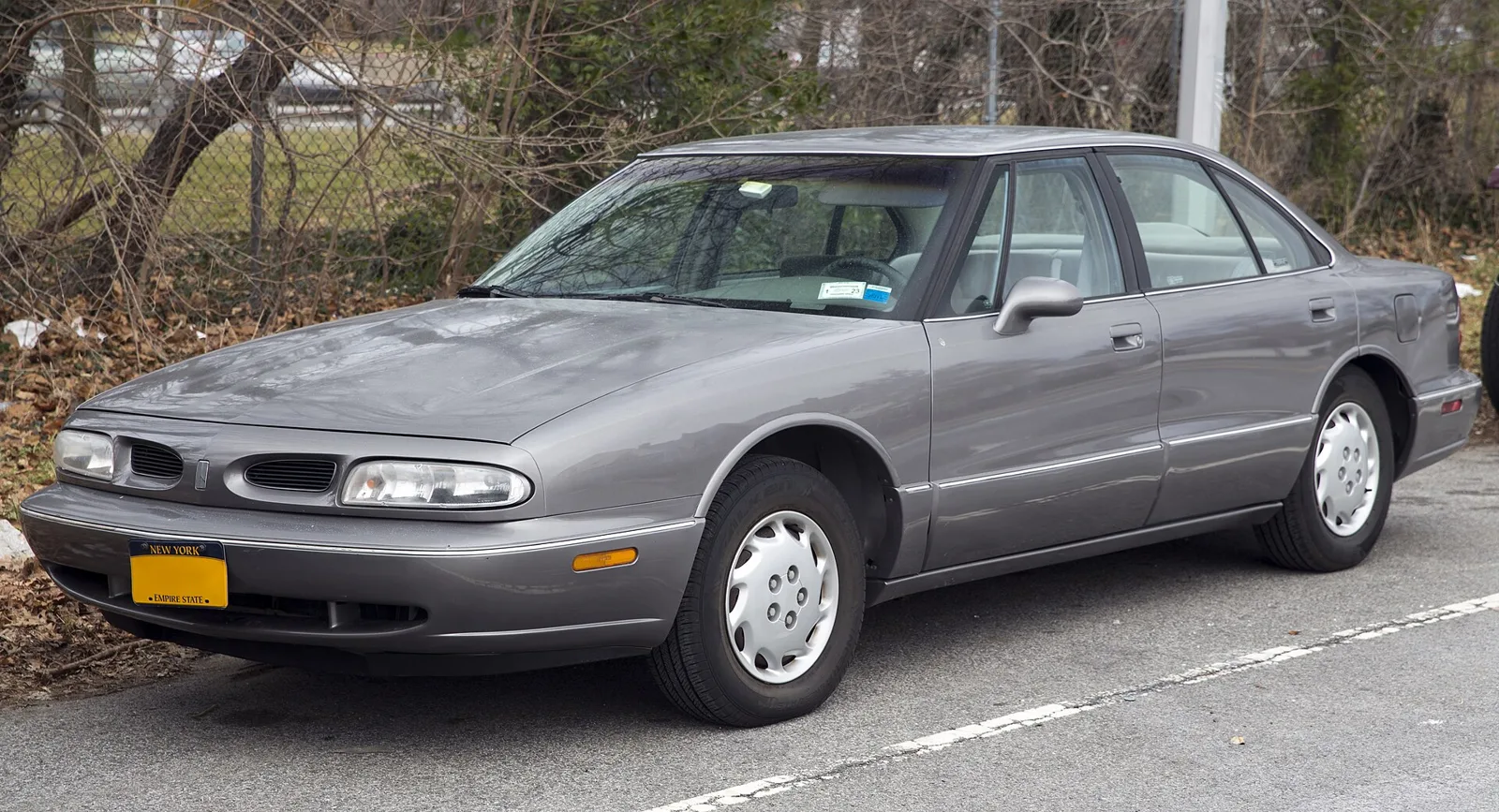
A rock and roll song, early NASCAR wins and the first four-door hardtops, alongside the flagship that became Oldsmobile's longest-running model.
The Oldsmobile 88 arrived in 1949 with the new Rocket V8 in a light body, won early NASCAR races and became the division's best seller until 1974. The Ninety-Eight was the full-size flagship until 1996, although the Aurora took over that role in 1995.
The car that made Oldsmobile famous was lighter than the one above it, and that was the whole point. In 1949 the company put its new Rocket V8 into a smaller body, and the result is considered by some to be the first muscle car. It also inspired a song often called the first rock and roll record.
That car was the 88, and its story runs beside the Ninety-Eight, the flagship that stayed above it in the range and became Oldsmobile's longest-running model. The 88 became the division's best-seller and a NASCAR winner; the 98 took the newest technology, from the Autronic Eye to Twilight Sentinel, and shared in the first hardtop coupes.
Oldsmobile 88 history: a big engine in a small car
Oldsmobile introduced the 88 badge in 1949 for a mid-range model that replaced the straight-eight 78. It used the same new A-body as the six-cylinder 76 but added the company's new 303 cubic inch (5.0 litre) V8, rated at 135 hp (101 kW). The engine had been designed for the larger, more luxurious 98, and the light body with the big motor made a sensation in performance circles.
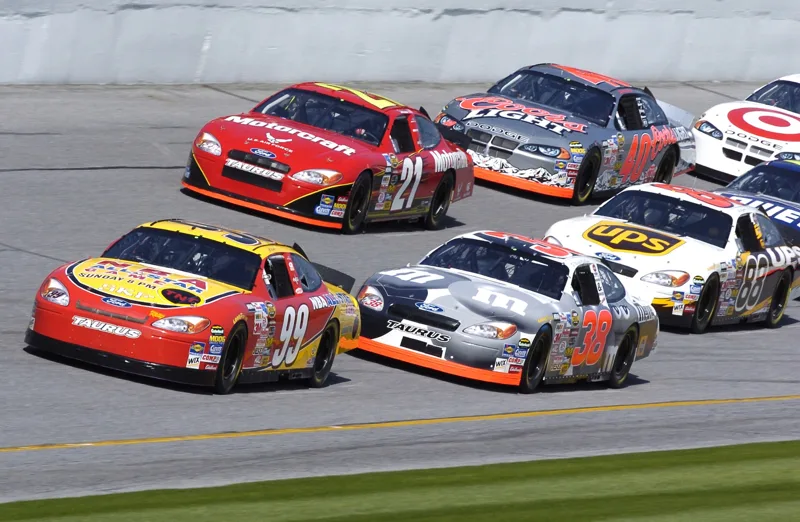
The Rocket 88 took Oldsmobile from a conservative image to a race winner. It won on the Carrera Panamericana, with Hershel McGriff and Ray Elliot taking the 1950 event, and it became the car to beat in early NASCAR. By the figures reported, it won six of nine late-model division races in 1949, ten of 19 in 1950 and 20 of 41 in 1952, until the low-slung Hudson Hornet eclipsed it. It was still the first real King of NASCAR, and the results lifted sales to the public.
Popular culture followed. Oldsmobile's slogan was "Make a Date with a Rocket 88", and a song called Rocket 88 is often considered the first rock and roll record. From the trunk-lid emblem of the 1950 model the rocket became the company's logo, and the 88 name stayed in the range until the late 1990s.
What the first 88 was like
The 1949 car started with an ignition key and a starter push-button, and the engine would not fire unless the key was in to unlock the ignition. It had an oil bath air cleaner and a Futuramic badge at the rear of the front fender, which flagged an automatic gearbox and the brand's push for easier driving. The V8s were automatic-only because Oldsmobile had no manual gearbox that could take the torque. For 1950 it offered a modified Cadillac manual box for the V8s.
The 88 came in six body styles: a two-door Club Sedan, a four-door Town Sedan, a two-door Club Coupe, a convertible, a four-door sedan and a station wagon. The first two were fastbacks in the pre-war GM streamliner style, and the rest were three-box notchbacks. The Town Sedan lasted one year. By 1950 the fastback was seen as dated, and the 88 outsold the six-cylinder 76; only 31,093 Club Sedans were built in the last year, against 50,561 of a new notchback two-door.
A light body and a big V8 turned Oldsmobile's 88 into a race winner and a song.
Moving to the B-body, 1951 to 1953
In 1951 the 88 moved to GM's B-body and became the entry-level Oldsmobile when the six-cylinder 76 was dropped, so every model now had the Rocket V8. It gained an I-beam frame and an in-house manual gearbox in place of the Cadillac unit, although manual shift grew rarer through the decade and was soon a special order. The more upscale Super 88 appeared, with restyled rear panels, a richer interior and a 120 in (3,048 mm) wheelbase against the 119.5 in (3,035 mm) of earlier 88s. The station wagon vanished until the 1957 model year.
In 1952 the base 88 took on the Super 88's rear panels and wheelbase, and the Super 88 gained a four-barrel carburettor and 160 hp (119 kW). The 1953 base car was the DeLuxe 88 for a single year. Late in the 1953 model year a fire wrecked the Livonia, Michigan, plant that was then the only one building GM's Hydra-Matic. Oldsmobile fitted thousands of cars with Buick's two-speed Dynaflow until the Willow Run plant took over Hydra-Matic production. New options that year included Frigidaire air conditioning, power steering and power brakes.
Oldsmobile Rocket V8 growth: the 1954 to 1960 88
The 1954 cars were new from the ground up, still on the B platform but longer and lower, with one-piece wrap-around windshields and rear windows and a 122 in (3.1 m) wheelbase. The Rocket grew from 303 to 324 cubic inches and 170 hp (127 kW), and the Super 88 had a four-barrel version of 185 hp (138 kW). A padded dashboard cost $17 extra.
The 1955 cars were a heavy facelift, and the 88 now made 185 hp against 202 hp for the Super 88. At mid-year came the pillarless four-door Holiday hardtop. It joined the 98 Holiday and the Buick Century and Special Riviera as the first four-door hardtops ever built. Air conditioning became an option and the vinyl interior carried the name Morocceen.
For 1956 the 88 gained more, 230 hp, with the Super 88 at 240 hp. A new Jetaway Hydra-Matic replaced the original that Olds had used since 1940: still four speeds with a fluid coupling, but with a Park position and no routine band adjustments. Inside, an oval speedometer replaced the round gauge and a foot-operated parking brake replaced the T-handle.
Golden Rocket, J2 and ChromeMobile
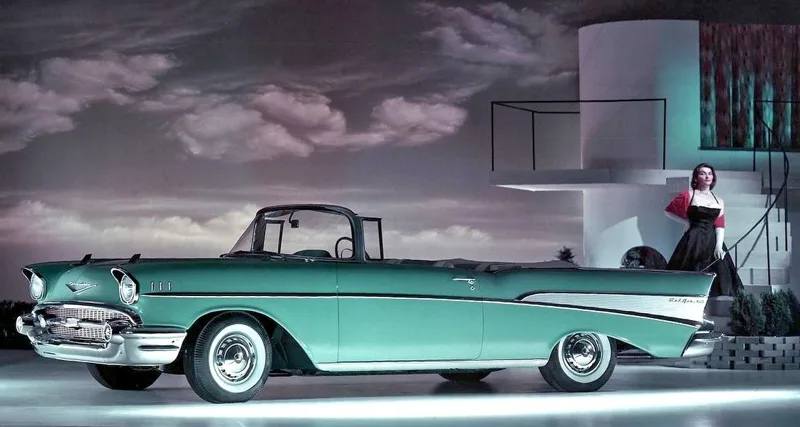
In 1957 the basic 88 was officially renamed Golden Rocket 88 after Oldsmobile's 1956 Motorama show car. The only badge was an "88" beneath each taillight, and the name was gone by 1958. The base Rocket V8 grew to 371 cubic inches and 277 hp (207 kW), and a triple two-barrel J2 option arrived, similar to the Pontiac Tri-Power. A three-piece Twin-Strut Rear Window and a deep-recessed safety steering wheel were new, and the Super 88 Fiesta hardtop brought back the station wagon.
The 1958 car is remembered as the ChromeMobile, for the splashes of trim on the Super 88 and Ninety-Eight, marketed as the Mobile Look. A Ford stylist later bought one as a daily driver and rearranged the front lettering to read SLOBMODEL. The entry car became the Dynamic 88, a name that lasted through 1966, with a de-tuned two-barrel 371 of 265 hp (198 kW). The Super 88 had 300 hp (220 kW), or 310 hp (231 kW) with the J-2 option. Despite a recession, Oldsmobile saw only a slight sales fall and rose to fourth place behind Chevrolet, Ford and Plymouth, passing Buick for the first time in many years.
| Year | Model | Engine | Output |
|---|---|---|---|
| 1949 | 88 | 303 cu in (5.0 L) Rocket V8 | 135 hp (101 kW) |
| 1952 | Super 88 | Rocket V8, four-barrel | 160 hp (119 kW) |
| 1954 | 88 and Super 88 | 324 cu in Rocket V8 | 170 hp (127 kW); 185 hp (138 kW) |
| 1956 | 88 and Super 88 | 324 cu in Rocket V8 | 230 hp; 240 hp |
| 1957 | Golden Rocket 88 | 371 cu in Rocket V8 | 277 hp (207 kW) |
| 1958 | Dynamic 88; Super 88 | 371 cu in Rocket V8 | 265 hp (198 kW); 300 hp (220 kW) |
| 1959 | Super 88 | 394 cu in Rocket V8 | 315 hp (235 kW) |
| 1960 | Dynamic 88 | 371 cu in Rocket V8 | 240 hp (179 kW) |
The 1959 range was restyled again, longer, lower and wider, and shared its appearance with the top-model 98. Oldsmobile called it the Linear Look: six-window pillared sedans, glassy Holiday Scenicoupes and Holiday Sport Sedans, and fins flattened to horizontal with less chrome. The wheelbase grew an inch to 123 in (3,124 mm). A 394 cubic inch four-barrel Rocket of 315 hp (235 kW) was standard on the Super 88, while the Dynamic 88 kept the 265 hp 371, with a 300 hp four-barrel option. The Safety-Spectrum Speedometer showed speed in a bar that was green from 0 to 35 mph (0-56 km/h), amber to 65 mph (105 km/h) and red above.
The 1960 makeover brought a simpler grille and even flatter fins. Dynamic 88s had their 371 detuned to 240 hp (179 kW) so that a lower compression ratio could run on cheaper regular gasoline, and a slimmer transmission tunnel freed up cabin room.
What the 88 numbers meant, and how long it lasted
After the war Oldsmobile standardised its names so that the first digit signalled the chassis platform and the second the number of cylinders. Over its run the 88 wore many labels: Super, Golden Rocket, Dynamic, Jetstar, Delta, Delmont, Starfire, Holiday, LS, LSS, Celebrity and Royale, and Fiesta on some wagons. The Delta 88 and its siblings were written as numerals in the early years, and the name was spelled out as Eighty Eight from 1989.
From 1950 to 1974 the 88 was the division's most popular line. It lasted 50 years across 10 generations and was among the oldest passenger car names in the United States when it ended in 1999, second in Oldsmobile's history only to the Ninety Eight.
Oldsmobile 98 history: the flagship
The 98 took its name from a Series 90 with an eight-cylinder engine, a badge that first appeared in 1941 and returned after the war. Lesser Oldsmobiles carried lower numbers, such as the 66 and 68 on the A-body and the 76 and 78 on the B-body. The Series 60 retired in 1949, the year the 88 replaced the 78, and the 76 went after 1950, leaving the 88 and 98 as the full-size bread and butter into the 1990s.
As the flagship it received the newest technology. It had the Hydramatic automatic, the Autronic Eye automatic headlight dimmer and Twilight Sentinel, which switched the headlights on and off with a light sensor and delay timer, along with the best interior and exterior trim. The car shared GM's C-body platform with Buick and Cadillac. In 1995 the Aurora went on sale and replaced it as flagship, and the Ninety Eight ended after 1996, its styling living on in the Eighty Eight-derived Regency. It had been built for 55 years across 12 generations, with a three-year pause for the war, making it Oldsmobile's longest-running model.
The early 98 years
Oldsmobile ran two series from 1932 to 1938, the six-cylinder F and the straight-eight L, then moved to the Series 60 and 70 in 1939. The big C-body arrived in 1940 for the straight-eight 90, which carried torpedo styling, shared its body with the Cadillac Series 62, the Buick Roadmaster and the Pontiac Torpedo, and was 5 in (127 mm) wider at the shoulders, with running boards gone. Oldsmobile sold 43,658 of them in four body styles; only 50 were four-door convertibles. In 1941 the second digit began to show cylinders, so the Custom Cruiser came as the 96 or the 98. Oldsmobile sold 24,726 98s and 6,677 96s, and just 119 four-door convertibles, which were only ever offered on the 98 that year.
For 1942 only the 98 remained, on a 127.0 in (3,226 mm) wheelbase, and 6,659 were built before the war halted production. Every car wore a small "B44" grille badge for the company's 44th anniversary. Production resumed in 1946 with 14,364 sold, and 1947 set a record of 37,140.
Futuramic, the Rocket and the Holiday
The 1948 car had all-new styling and a marketing push for what Oldsmobile called Futuramic, and 65,235 were sold, another record. The 1949 car added the Rocket V8. Several months into the model year, in February 1949, GM launched three pillarless coupes it called hardtop convertibles: this Holiday, Cadillac's Coupe de Ville in the Series 62 and Buick's Riviera version of the Roadmaster. They were the first hardtop coupes ever built. The Holiday was exclusive to the 98 that year, priced like the convertible, and 3,006 were sold against 20,049 Club coupes. Total sales reached a record 93,478.
The 1950 car was the first totally slab-sided Oldsmobile and the first sedan with a wraparound rear window. A fastback four-door Town Sedan sold 1,778 in its only year. Holiday sales nearly tripled to 8,263, and by 1951 the Holiday was the only closed two-door and sold 17,929. Total 1950 sales were another record, 106,220. From then until 1996 the car was simply the Oldsmobile 98, except in 1957 when it was the Starfire 98 and in 1961 when it was the Classic 98. The Ninety-Eight spelling began in 1952, when the car shared the 160 hp Rocket V8 with the Super 88s, power steering became an option and the Autronic Eye debuted, shared that year only with Cadillac.
1953 Fiesta
The 1953 Fiesta was a limited-production convertible that GM used to promote its design leadership, alongside the Cadillac Eldorado and the Buick Skylark. It had a cut-down beltline, a wraparound windshield 3 in (76 mm) lower than the standard car's and spinner hubcaps that later became an Oldsmobile trademark. Its engine gained 5 hp to 170 through manifold changes and compression raised from 8.1:1 to 8.3:1. At US$5,715 it cost nearly twice the US$2,963 of a regular Ninety-Eight convertible, and 458 were built against 7,521 of the standard car. The 1953 cars made a padded safety dash standard and offered air conditioning for the first time.
Which details set the early model years apart
Several details separate one early model year from another. Manual gearboxes were not offered on 1949 V8s, the 1953 Hydra-Matic plant fire put Dynaflow transmissions in thousands of cars, and the J2 triple-carburettor option arrived in 1957 and was still offered on the 1958 Super 88. The 1960 Dynamic 88 traded power for regular-fuel running. And the Fiesta name, retired from the 98 convertible after 1953, came back in 1957 on Oldsmobile station wagons.