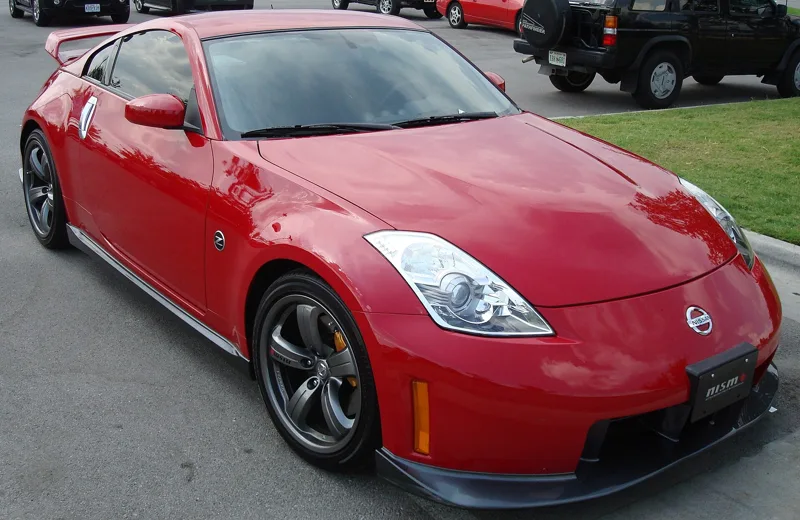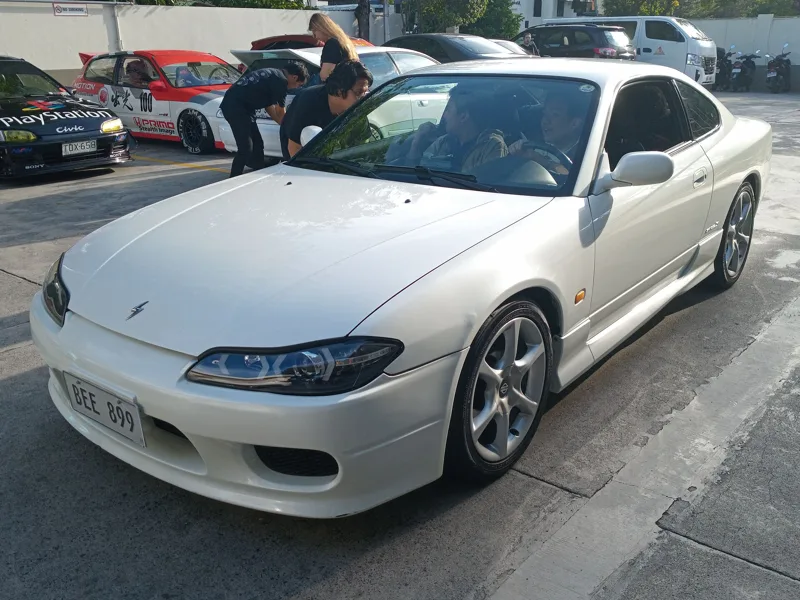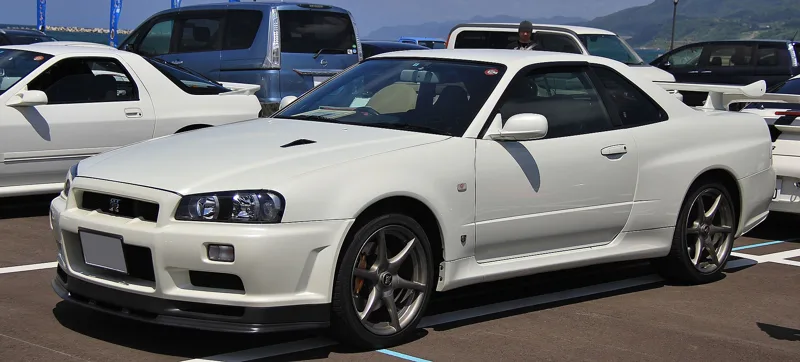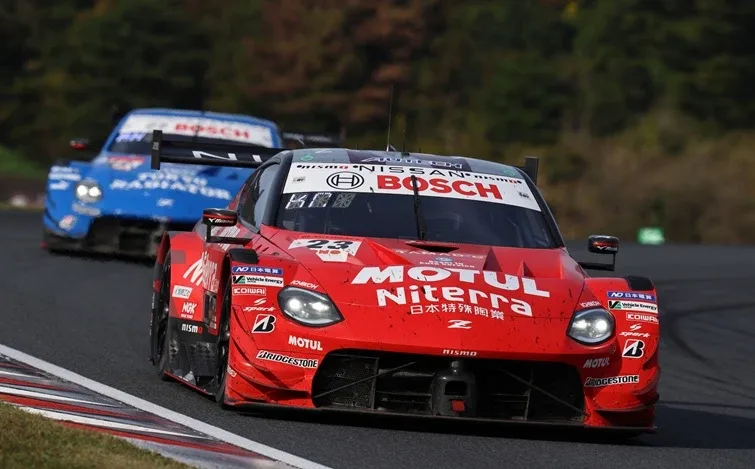
From the first Japanese mass-produced four-valve engine to the hand-built GT-R V6, with the SR20 turbo fours and TD diesels between.
Nissan's S20 is a four-valve straight-six from 1969 to 1973 that powered the Skyline GT-R. The SR is a family of 1.6 to 2.0-litre fours built from 1987 to 2007. The VR is a twin-turbo V6 family, and the TD is a series of tough diesels.
When Nissan's S20 engine appeared in 1969 it was the first mass-produced Japanese engine to have more than two valves per cylinder, and it powered a Skyline GT-R that won 49 consecutive touring car races. More than fifty years later, the VR38DETT of the GT-R, described as the most powerful production engine from a Japanese maker, is built by hand by nine specially trained mechanics. Between those two come the twin-cam SR fours and the tough TD diesels that carried Nissan's pickups and taxis.
What is the Nissan S20 engine?
The Nissan S20 is a 2.0-litre (1,989 cc) straight-six with double overhead camshafts and four valves per cylinder, produced from 1969 to 1973. Engineers from the former Prince company designed it, and it is a revised production version of the 1966 Prince GR-8 engine from the R380 racing car.
Output is 160 hp (119 kW; 162 PS), reached at 7000 rpm, with a torque rating of 177 N.m (130 lbf.ft) at 5600 rpm, and the engine weighs 199 kg (439 lb). It powered the Skyline GT-R in its C10 and C110 forms and the Fairlady Z432. It is unrelated to the SR20 family, despite the similar name.
The inline-six has a cast iron block, an aluminium head and a seven-bearing crankshaft. The cross-flow head has pent-roof combustion chambers, and the heads were ported and polished by hand, with each engine bench tested for consistent power before it was installed. Compared with the GR-8, the 82 mm (3.2 in) bore stayed the same but the stroke was trimmed from 63 mm to 62.8 mm (2.48 to 2.47 in), so that small manufacturing errors could not push displacement over 2 litres. The valves were driven by timing chains rather than gears.
Most engines used triple Mikuni-Solex 40PHH dual-choke carburettors, and after 1969 Lucas mechanical fuel injection was optional. Tuned for Shinohara's No. 39 racing car in 1969, the S20 produced 154 kW (209 PS; 207 bhp) at 8000 rpm. Fuel-injected race engines reportedly gave over 225 bhp (168 kW), and 250 bhp (186 kW) for bigger tracks like Fuji Speedway. Custom race engines reached 265 PS (195 kW; 261 bhp) at 12,000 rpm.
The S20 was the first mass-produced Japanese engine with more than two valves per cylinder.
How did the S20 Skyline GT-R go racing?
The S20 Skyline 2000GT-R won its first race on 3 May 1969 and went on to win 49 consecutive races. The four-door PGC10 took the TS-b race at the 1969 JAF Grand Prix at Fuji Speedway, driven by T. Shinohara in car number 39.
The PGC10 had been promoted since the 1968 Tokyo Motor Show, where a Skyline 2000GT Racing model with the S20 was shown, billed as having the same engine as the R380. The production four-door GT-R went on sale in February 1969, and the two-door KPGC10 hardtop, with a shorter wheelbase, followed in 1970. The two-door hardtop joined the racing saloons in March 1971, at the All Japan Suzuka Automobile Race.
The PGC10 and KPGC10 won 49 consecutive races at Fuji, Suzuka, Tsukuba and Hokkaido. The streak ended after the 49th win on 10 October 1971, but the GT-R won its next race, at Fuji on 20 March 1972, for its 50th victory. The winning No. 39 car is preserved in the Nissan Heritage Collection.
The Fairlady Z432
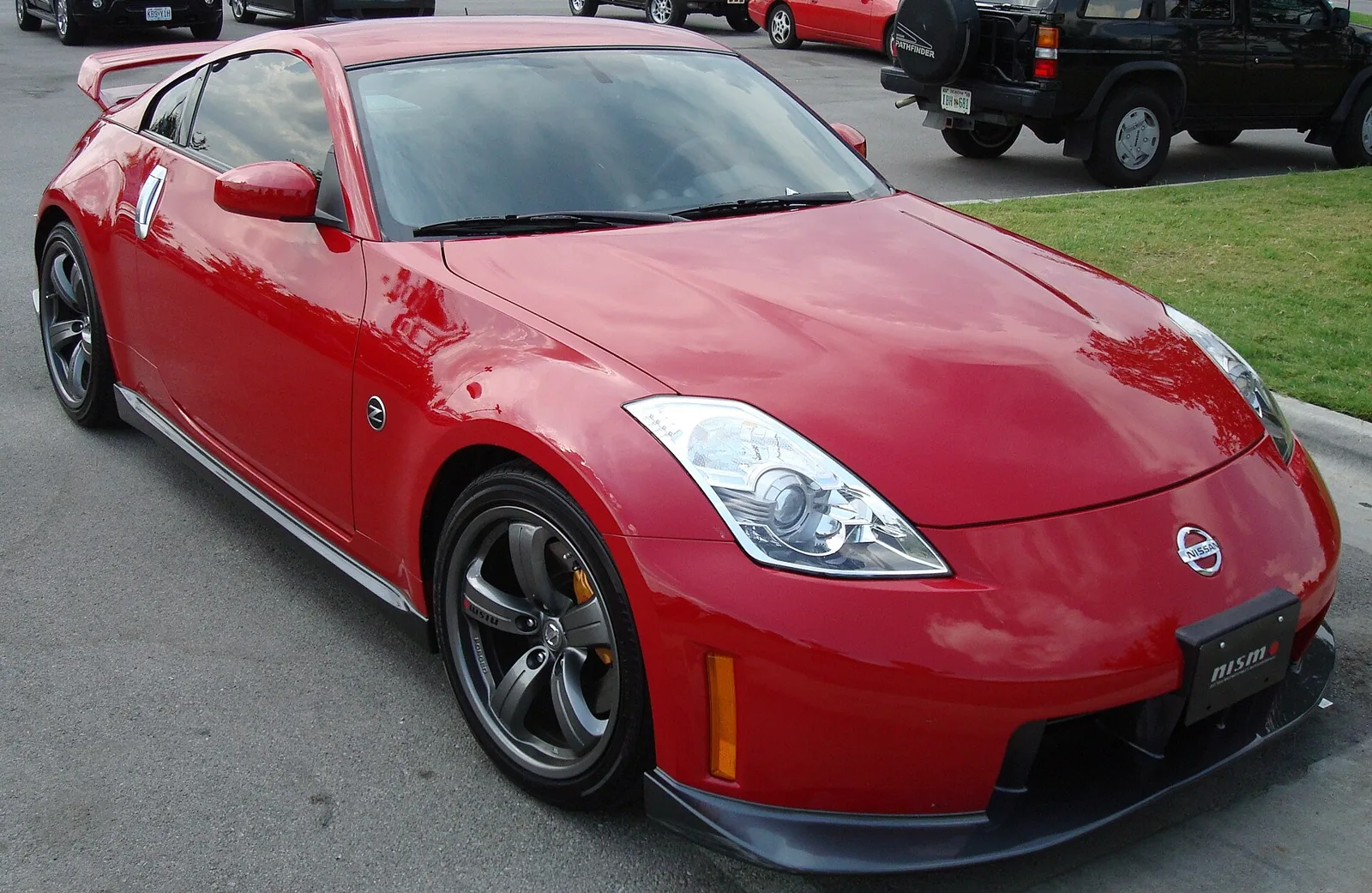
The S20 also went into the Fairlady Z432 from fall 1969. The name came from the engine: four valves per cylinder, three carburettors and two camshafts. The Z432 also had a 5-speed manual gearbox and a limited-slip differential, and cost nearly double the price of a standard Fairlady Z. The Z432R was a lightened homologation special built for racing, nearly 100 kg (220 lb) lighter.
- Skyline GT-R PGC10 four-door, 1969 to 1970: 832 units.
- Skyline GT-R KPGC10 coupe, 1970 to 1972: 1,197 units, on a wheelbase 70 mm (2.8 in) shorter.
- Skyline GT-R KPGC110, January to April 1973: 197 units.
- Fairlady Z432 (PS30), 1969 to 1972: 419 or 420 units.
- Fairlady Z432R (PS30SB): 30 to 50 units.
The Phantom GT-R and the end of the S20
Nissan introduced the fourth-generation C110 Skyline in September 1972 with L-series power. A Skyline 2000GT-R Racing Concept (KPGC110) with the S20 appeared at the 1972 Tokyo Motor Show, and its number, 73, hinted at a racing campaign for 1973. But Nissan dropped its factory team that year to concentrate on anti-pollution technology and fuel efficiency, and the oil crisis gave racing and fast cars a wasteful image. Fewer than 200 KPGC110 GT-Rs were built, which is why it earned the name Phantom GT-R.
The S20 had also met its match in Nissan's own L-series. The L engines were two-valve, single-overhead-cam sixes, and the S20 was judged too small and complex to use in comparison. At the 1970 All-Japan Fuji endurance race seven S30 Fairlady Zs were entered, six of them S20-powered Z432R homologation cars and one an L24-powered HS30. The HS30 beat the Z432Rs easily despite less power. Thanks to a simpler, more robust design, the L-series became one of the most favoured engines for motorsport and tuning, and the S20 has stayed relatively obscure.
What is the Nissan SR engine family?
The SR engine is a series of straight-four petrol engines of 1.6 to 2.0 litres (1,596 to 1,998 cc), made by Nissan from 1987 to 2007. It belonged to a family called PLASMA, short for Powerful and Economic, Lightweight, Accurate, Silent, Mighty, Advanced.
Every SR has twin cams and a four-valve head, with variable valve timing on selected models. The head and block are aluminium with steel sleeves, and the engines use chains rather than belts, unlike earlier Nissan fours. Nissan designed the SR to replace the CA series, which had cast iron blocks and timing belts, and it was later replaced by the QG, QR and MR families. It appeared in many small to medium Nissan vehicles, including various turbocharged performance versions.
The small SR engines
The SR16VE is a 1.6-litre (1,596 cc) engine with Nissan's Neo VVL variable valve timing with lift control. It makes 175 PS (129 kW; 173 hp) at 7800 rpm, redlines at 8300 rpm and has an 11.0:1 compression ratio. It went into the Pulsar VZ-R, Lucino VZ-R and Sunny VZ-R but never into the American-market B14 200SX. A limited-production Pulsar VZ-R N1 of 1997 to 1998, tuned by Autech Japan, raised output to 200 PS (197 hp; 147 kW) at 7800 rpm and is claimed to have the most powerful production 1.6-litre naturally aspirated engine.
The 1.8-litre (1,838 cc) SR18Di used single point fuel injection and produced 110 PS (108 hp; 81 kW). It sat in the P10 Primera and was dropped on the next generation because of low power. The SR18DE was the multi-point version, with 125 PS (123 hp; 92 kW), and its crankshaft has four fewer counterweights than the SR20DE's eight, for lighter weight and better economy. The lightweight crank was homologated for the Japanese N2 Silvia racing programme and later used in the SR20VE. In the Pulsar GTi the SR18DE made 140 PS (138 hp; 103 kW).
What is the Nissan SR20 engine?
The SR20 is the 2.0-litre (1,998 cc) part of the SR family, and its DE, DET, VE and VET variants cover everyday, turbocharged and variable-lift duties. More than 15 Nissan models used the SR20DE, which made its first appearance in the U12 Bluebird in October 1989.
The engine code explains itself: SR for the engine, 20 for 2.0 litres, D for dual overhead cams and E for electronic fuel injection. The SR20DE carried nominal power ratings between 125 and 165 hp (127 to 167 PS; 93 to 123 kW), although some Autech models reached between 175 and 200 hp depending on the chassis and tuning. Nissan phased it out with the arrival of the low-emissions QR family in 1999, and production stopped in 2002. An SR20Di version with throttle body injection made 116 PS (114 hp; 85 kW) in the Primera.
The SR20DET turbo
The SR20DET is the turbocharged version of the SR20DE, with power from 204 PS (201 hp; 150 kW) at 6000 rpm up to 250 PS (247 hp; 184 kW) at 6400 rpm. Torque runs from 266 N.m (196 lb.ft) to 280 N.m (207 lb.ft), both at 4800 rpm. Its debut came in the U12 Bluebird SSS ATTESA Limited in October 1989, and it then spread across several cars until 2002.
The Silvia was its longest-running and best-known home, from the S13 series in 1991 to the S15 in 2002. Transverse-mounted versions went into front- and all-wheel-drive cars such as the Pulsar GTi-R, Bluebird SSS ATTESA Limited, Avenir and Liberty GT4. Longitudinal versions powered the Silvia S13, S14 and S15, the 180SX and the 200SX, including Australian and New Zealand S15 Spec-R and Spec-S cars, and the 1994 Nismo 270R. The QR20DE replaced it in most applications.
The variable-lift SR20VE and SR20VET
The SR20VE has Neo VVL and produces 190 PS (187 hp; 140 kW) at 7000 rpm, with 196 N.m (145 lb.ft) at 6000 rpm and a 10.3:1 compression ratio. A later version from 2001 to 2003 made 204 PS (201 hp; 150 kW) at 7200 rpm with an 11:1 ratio. It was used in the Primera Te-V and G-V, the 20V Primera, the Bluebird SSS-Z, the Wingroad ZV-S and the 2002 ASL Garaiya sports car.
The SR20VET was the first turbocharged Nissan engine with variable valve lift, built only for the Japanese market. It makes 280 PS (206 kW; 276 hp) at 6400 rpm and 309 N.m (228 lb.ft) at 3200 rpm, with a 9.0:1 compression ratio, and it was fitted to the X-Trail GT from 2001 to 2007.
How do the Nissan SR variants compare?
| Engine | Capacity | Induction | Output | Typical car |
|---|---|---|---|---|
| SR16VE | 1,596 cc | Naturally aspirated, Neo VVL | 175 PS (129 kW; 173 hp) | Pulsar VZ-R |
| SR18DE | 1,838 cc | Naturally aspirated | 125 PS (92 kW; 123 hp) | Primera |
| SR20DE | 1,998 cc | Naturally aspirated | 127 to 167 PS | Bluebird, Primera |
| SR20DET | 1,998 cc | Turbocharged | 204 to 250 PS | Silvia S13 to S15 |
| SR20VE | 1,998 cc | Naturally aspirated, Neo VVL | 190 to 204 PS | Primera Te-V |
| SR20VET | 1,998 cc | Turbocharged, Neo VVL | 280 PS (206 kW; 276 hp) | X-Trail GT |
What is the Nissan VR engine?
The VR is a series of twin-turbocharged DOHC V6 engines from Nissan, in 3.0, 3.5 and 3.8-litre sizes. It grew out of the widely successful VQ series and also borrows from Nissan's VRH, JGTC and R390 GT1 Le Mans racing engines.
VR38DETT in the GT-R
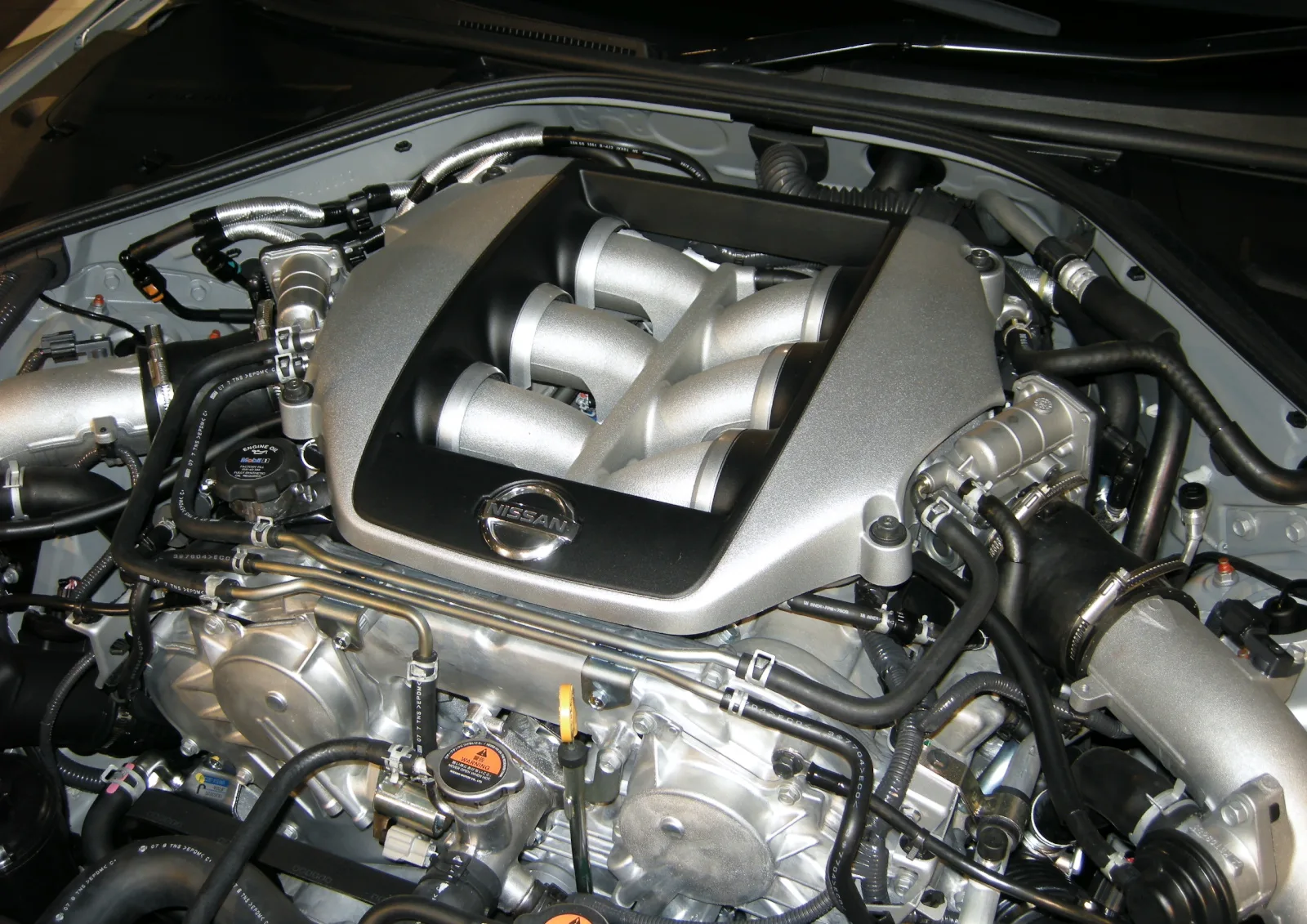
The VR38DETT was developed for the Nissan GT-R and used from 2007 to 2025. It was the first engine in the VR series and is described as the most powerful production engine produced by a Japanese manufacturer. It has 24 valves operated by two camshafts per bank, with variable valve timing on the intake side only. The cast aluminium block has bores coated by plasma spraying to a thickness of 0.15 mm (0.0059 in), a hard layer for the piston rings to slide on. The turbine housings of the two IHI turbochargers are built into the exhaust manifolds to cut weight and improve balance.
A feedback system alters the air-fuel ratio with engine load, which noticeably cuts fuel consumption. With its first catalytic converters, turbos, accessories, front differential and turbo outlet pipes fitted, the engine weighed 608 lb (276 kg). Other features include a pressurised lubrication system with thermostat-controlled cooling and a magnesium oil sump, iridium-tipped spark plugs, drive-by-wire throttle and a secondary air system that rapidly heats the catalysts. It is rated 50 State LEV2/ULEV.
Each engine has been hand built since 2007 on a special line at Nissan's Yokohama plant by a total of just nine specially trained mechanics, known as Takumi Craftsmen, whose names are badged on every engine. A NISMO Engine Tuning Menu Concept, unveiled at the 2016 Tokyo Auto Salon, added a GT3-spec camshaft, connecting rods and rod bolts, intercooler, turbocharger, NISMO catalysts and a titanium muffler.
VR30DDTT and VR35DDTT
Infiniti announced the VR30DDTT on 15 December 2015. It arrived in the Infiniti Q50 sedan and, a year later, the Q60 coupe, in 300 and 400 hp (224 and 298 kW) versions. It was on the Ward's 10 Best Engines list for 2017 and 2018. The block is aluminium with an arc-sprayed mirror coating on the bores, and the engine has compact twin direct-mount turbos with integrated exhaust manifolds and an electronic wastegate, twin water-to-air charge coolers, a variable displacement oil pump, variable valve timing on both sides and direct injection. Production began in 2016 at the powertrain plant in Iwaki, Fukushima.
The VR35DDTT, announced in March 2024, is a larger version for the third-generation Infiniti QX80 and the related Nissan Patrol and Armada. It replaces the 5.6-litre VK56 V8, with an 86 mm bore and 100.2 mm stroke giving 3,492 cc.
What is the Nissan TD engine?
The Nissan TD series is a family of diesel engines, all inline, most with four cylinders, apart from the six-cylinder TD42. They have cast iron blocks, crossflow heads, swirl-chamber indirect injection and two pushrod-operated valves per cylinder, with the camshaft driven by gears. The construction is simple and somewhat old-fashioned, and the engines are generally durable if not very powerful.
TD23, TD25 and TD27
The TD23 displaces 2,289 cc from an 89 mm by 92 mm bore and stroke, with a 22.0:1 compression ratio. It was the least common TD, ended around 1995, and went into the 1987 to 1992 Nissan Pickup (D21) and the E24 Caravan. The TD25 (2,494 cc) was called "thoroughly viceless" by reviewers of the day, who also thought it a bit bland. JASO used it for a diesel oil detergency test from 1998 to 2009, and it appeared in the Cedric, Navara, Atlas and Caravan.
The TD27 (2,663 cc) is the best known of the fours. The naturally aspirated version makes 85 PS JIS (63 kW; 84 hp) at 4,300 rpm, and a turbo version arrived in 1988. It was the most common diesel in the Homy, Caravan and Urvan vans, and the turbo versions went into the Caravan, Pickup, Terrano and Terrano II. The regular turbo TD27T, built from 1985 to 2007, makes 100 to 115 PS (74 to 85 kW; 99 to 113 bhp), the intercooled TD27Ti 125 PS (92 kW; 123 bhp), and the electronically controlled TD27ETi of 1995 to 2001 was the most powerful.
The TD27 also powered British taxis. It went into LTI's Fairway series in the United Kingdom, and its reliability earned praise from the general secretary of Britain's Licensed Taxi Drivers' Association, who called it one of the greatest engines ever put in a cab. Engineering consultants Ricardo PLC chose it after extensive testing. LTI offset the cost of importing the engines because Nissan agreed to sell 200 Fairways a year in Japan under the name Big Ben, and the TD27 continued in the TX1 that followed.
TD42
The TD42 is the six-cylinder, built from July 1987. It displaces 4,169 cc from a square 96 mm by 96 mm bore and stroke and uses a mechanically controlled injection pump. Early engines have a silver cylinder head cover, the so-called Silvertop, while turbocharged engines and naturally aspirated ones built after 1995 are black. It is old-fashioned but loved for its ruggedness and reliability, although it is not particularly fuel efficient and can have cooling problems if not maintained.
Depending on the market, naturally aspirated versions are rated between 115 and 135 PS (85 to 99 kW; 113 to 133 bhp). They were fitted to the Nissan Civilian (W40, W41) from 1988 and the Safari/Patrol (Y60/61). The turbocharged TD42T, available from 1993, got a revised crankshaft and pistons, extended oil squirters with piston oil cooling and fuel pumps upgraded to 11 mm plungers.
The TD42Ti, with a factory intercooler, was built from the end of 2002 to 2007. In February 2003 it gained electronic control of injection timing, raising torque to 360 N.m (266 lb.ft), and became the TD42ETi. Outputs of the turbo models run from 145 to 160 PS (107 to 118 kW; 143 to 158 bhp). These are the most sought after TD42s, with the strongest internals, and the family has a strong following in overlanding and offroading, with extensive aftermarket support.
Where did these Nissan engine families end up?
The S20 ended in 1973, the SR family in 2007 and the TD42 in 2007, when incoming emissions rules led Nissan to replace it with the ZD30 family in most applications. The VR38DETT was used in the GT-R from 2007 to 2025.
The VR family continues with the VR30DDTT and the VR35DDTT, which replaces the VK56 V8 in Nissan's largest vehicles. Low-output versions of the TD25, TD27 and TD42 for forklifts were still being made by Global Component Technologies as of 2024.