An imperial gallon and a US gallon differ in size, so one car can be rated 47 or 56. Here is how to convert mpg to L/100 km and why fuel per distance is the cleaner scale.
An imperial gallon is 4.54609 litres and a US gallon is 3.785411784 litres, so the same car earns a higher mpg figure in imperial gallons. Divide 235.215 by L/100 km for US mpg, or 282.481 by L/100 km for imperial mpg.
Park two identical cars side by side, one in Birmingham and one in Boston, and let each cover the same distance on the same amount of fuel. The British dashboard will read 56 miles per gallon. The American one will read 47. Neither is wrong; they are counting in two different gallons.
What is the difference between an imperial and a US gallon?
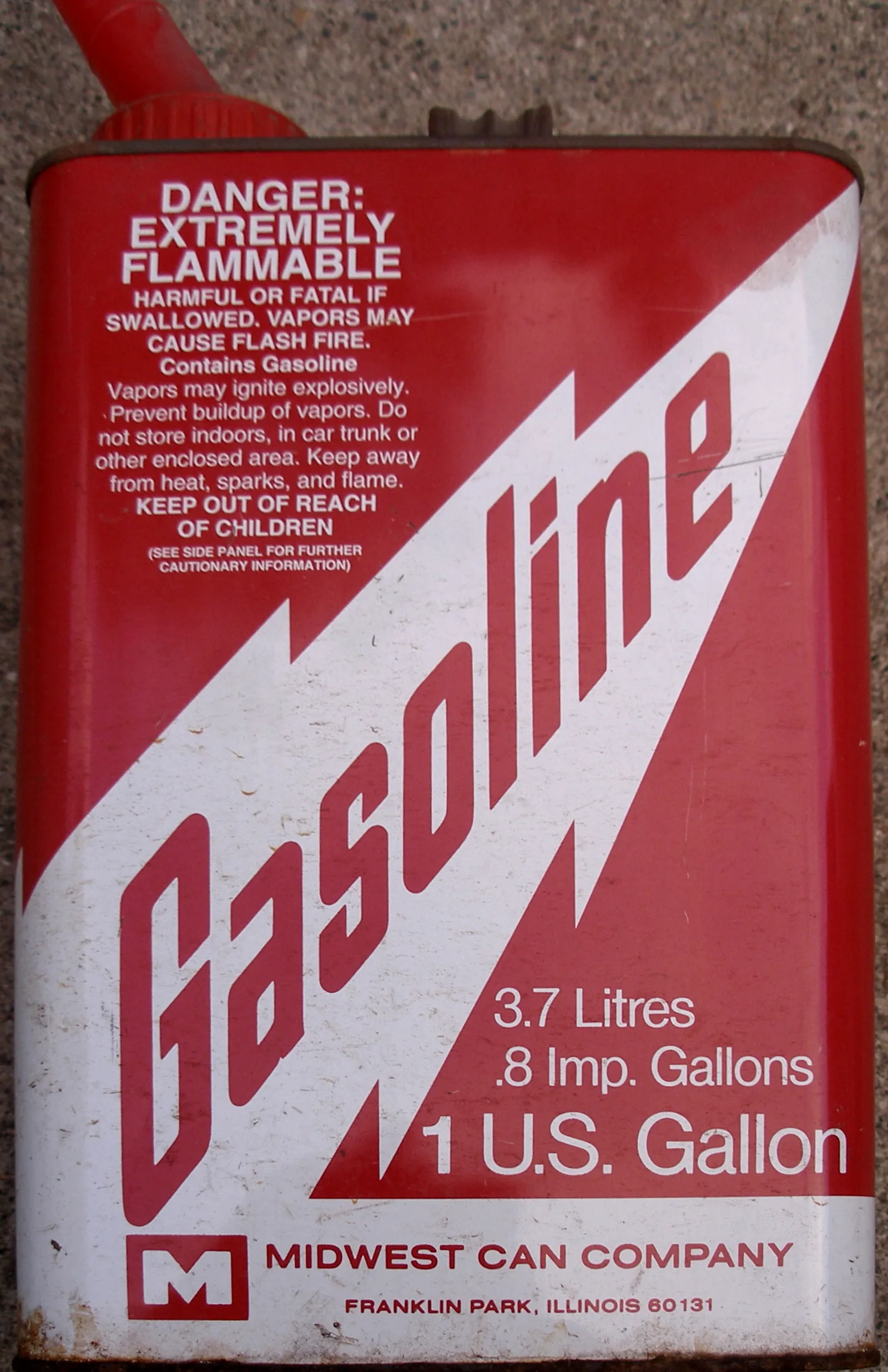
The imperial gallon is defined as 4.54609 litres. The US gallon is defined as exactly 231 cubic inches, which works out at 3.785411784 litres. The US version therefore holds a little over 83 per cent of what the British one does, and every smaller unit follows the same pattern.
The split goes down through the whole ladder of measures. Both gallons hold four quarts, eight pints and thirty-two gills, so the numbers of subdivisions match. The difference lies in the ounce. A British pint is 20 fluid ounces and an American pint only 16, and the British ounce is itself slightly smaller than the American one, at 96.076 per cent of its size. Put those two effects together and each imperial gallon, quart, pint, cup and gill comes out at 1.20095 times its US counterpart.
That ratio is the whole story behind the 47 and the 56 above. A car does not care what we call its fuel. Fill it with the larger gallon and the miles-per-gallon figure rises, because the same journey now consumes a smaller number of those larger gallons.
How the two sizes ended up apart
The gallon began in England as the basis of separate systems for wine and for beer, and the two were not the same size. The wine gallon matched what is now the US gallon. The ale gallon was 1.65 per cent larger than the modern imperial one. By the end of the 18th century three gallons were in everyday use: a corn gallon of about 268.8025 cubic inches, a wine gallon of 231 cubic inches and an ale gallon of 282.
The wine gallon was pinned to exactly 231 cubic inches in 1706, in Queen Anne's reign, and the United States made it the legal gallon in 1836. Britain went the other way. In 1824 it adopted the imperial gallon and abolished the rest, defining it by the volume of ten pounds of distilled water at 62 degrees Fahrenheit. The definition was reworked in 1889 and again in 1963. Then the litre was given a new definition in 1964, and the imperial gallon was fixed at exactly 4.54609 litres, a value Canada took up soon afterwards and the United Kingdom adopted in 1976.
The same car that manages 47 miles on a US gallon manages 56 on an imperial one.
Which countries use which gallon?
Fewer than you might think still use either. The imperial gallon is still the petrol measure in eight places. Four are British Overseas Territories: Anguilla, the British Virgin Islands, the Cayman Islands and Montserrat. The other four are independent countries: Antigua and Barbuda, Grenada, Saint Lucia and Saint Vincent and the Grenadines.
The US gallon sells petrol across the United States and in a handful of territories and countries, among them Guam, Colombia, Ecuador, Guatemala, Haiti, Peru and Liberia. The Turks and Caicos Islands and the Bahamas use both. In the Turks and Caicos the arrangement has an odd origin: a tax rise was disguised by levying the duty that once applied to the 4.55 litre imperial gallon on the 3.79 litre US gallon instead.
Others have walked away. The United Arab Emirates stopped selling petrol by the imperial gallon in 2010, Guyana followed in 2013 and Myanmar switched to the litre in 2014. Dubai's water authority moved its billing from imperial gallons to cubic metres in March 2025. Since 2015 Antigua and Barbuda has had a proposal to move to the litre.
Britain and Ireland are a special case. An EU directive removed the gallon from the list of primary units of measure with effect from 31 December 1994, and Ireland and the United Kingdom passed laws making the litre the primary unit in trade, from 31 December 1993 and 30 September 1995 respectively. The gallon remains legal as a supplementary unit in both. Miles per imperial gallon is still the primary fuel economy unit in the UK, and Canada treats it as a supplementary unit on official documents.
How do you convert mpg to L/100 km?
You divide a constant by the figure you have. For miles per US gallon, divide 235.215 by the litres per 100 km. For miles per imperial gallon, divide 282.481 by the same number. Because the relationship is a pure division, the sums work in both directions.
Take a car using 5 L/100 km. Divide 235.215 by five and you land on about 47 miles per US gallon; divide 282.481 by five and you land on about 56 miles per imperial gallon. Those are exactly the pair from the two parked cars above. The same sums give more pairs for real cars.
| L/100 km | mpg (US) | mpg (imperial) | Example |
|---|---|---|---|
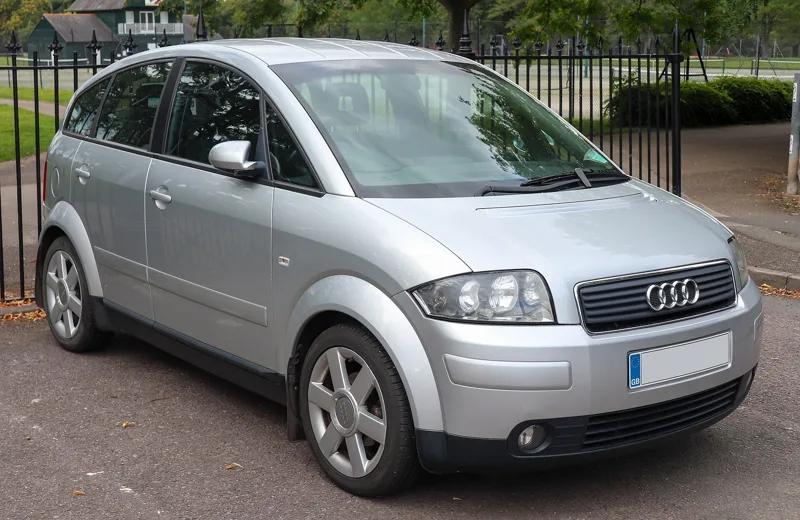
| 3 | 78 | 94 | Volkswagen Lupo and Audi A2 "3L" models |
| 3.4 | 69 | 83 | Smart Fortwo cdi, up to |
| 4.5 | 52 | 63 | Skoda Octavia diesel; EU diesel target |
| 5 | 47 | 56 | Modern supermini on a motorway; EU petrol target |
| 5.7 | 41 | 50 | Skoda Octavia petrol |
| 6.5 | 36 | 43 | Mid-size car on a motorway |
One practical rule falls out of the arithmetic. If you see a bare mpg figure, ask which gallon it uses. A number quoted in imperial gallons will always look about a fifth more generous than the same car quoted in US gallons, and a US number placed beside a British one will always look worse than it is.
Why is L/100 km better for comparing fuel economy?
It measures what you actually pay for: fuel burned over a fixed distance. A lower figure means a thriftier car, and the numbers stack the way costs do. Miles per gallon asks the opposite question, how far a fixed amount of fuel will take you, and there a higher figure wins.
The two scales are mirror images, which is where mpg misleads. Because one is a division of the other, equal steps on the mpg scale do not mean equal savings at the pump. Look at the US figures. New passenger cars averaged 17 miles per US gallon (13.8 L/100 km) in 1978 and 22 (10.7 L/100 km) in 1982, a jump of five mpg that cut consumption by more than three litres every 100 km. Between 2002 and 2010 the US average climbed from 22.0 to 23.0 mpg-US, a gain of one mpg, and consumption fell from 10.7 to 10.2 L/100 km: half a litre.
The same effect stretches the top and bottom of the range. US mid-size cars of the 2019 model year ranged from 12 to 56 mpg-US, which on the per-distance scale is 19.6 down to 4.2 L/100 km. At the heavy end, the largest American trucks of 2002, those weighing over 33,000 lb (15,000 kg), averaged 5.7 mpg-US, or 41 L/100 km. A single mpg gained by a vehicle at that end of the scale is worth far more fuel than the same gain by a frugal small car.
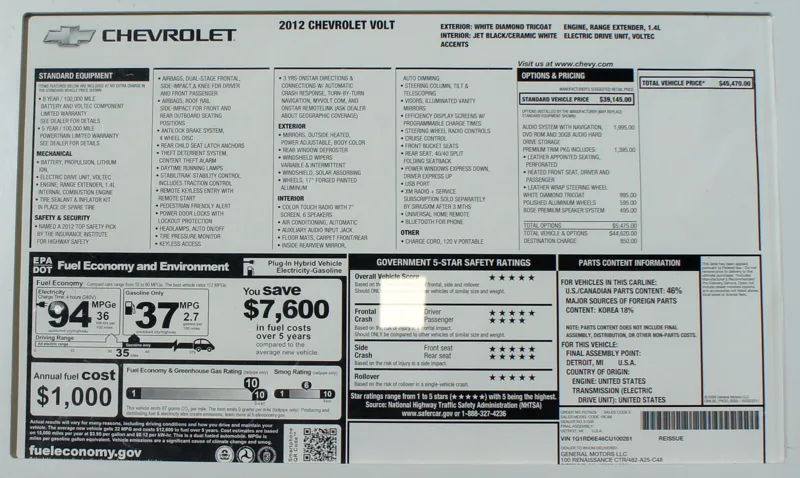
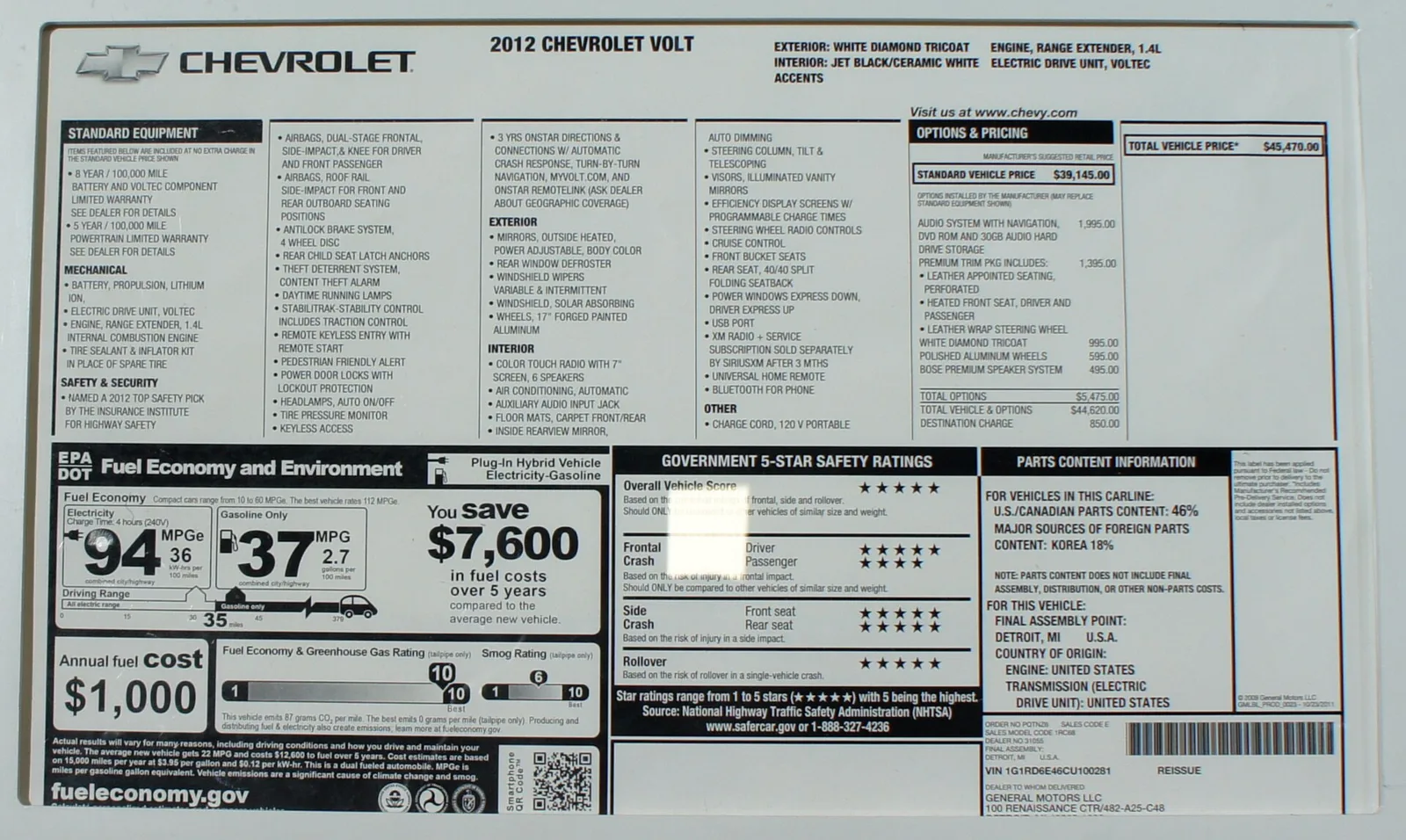
The American window sticker already hints at the same logic. New US cars carry a second figure on the label, US gallons per 100 miles, beside the traditional mpg number. It is a per-distance measure of the kind Europe uses.
Who uses which scale
Litres per 100 km is the standard across most of Europe (the UK, Denmark and the Netherlands are the exceptions), Africa, New Zealand, Australia, Canada, China, Colombia, Guatemala, Paraguay and Uruguay. Kilometres per litre turns up in India, Japan and South Korea. In the Levant some drivers count kilometres per tanaka, a metal container that holds twenty litres. The UK and the US lean on miles per gallon, although British rules let L/100 km appear alongside it and Irish law allows miles per imperial gallon alongside L/100 km.
What do typical fuel economy figures look like?
Real cars spread widely. A modern European supermini or mid-size estate can manage motorway driving at 5 L/100 km (47 mpg-US; 56 mpg-imp) or 6.5 L/100 km (36 mpg-US; 43 mpg-imp). The average North American mid-size car returns 21 mpg-US (11 L/100 km; 25 mpg-imp) around town, improving to 27 mpg-US (8.7 L/100 km; 32 mpg-imp) at highway speeds. Full-size SUVs sit lower: 13 mpg-US (18 L/100 km; 16 mpg-imp) in the city and 16 mpg-US (15 L/100 km; 19 mpg-imp) out on the open road.
Pickups range even further. A four-cylinder light pickup can reach 28 mpg-US (8.4 L/100 km; 34 mpg-imp), while a big V8 pickup with an extended cab is rated at 13 mpg-US (18 L/100 km; 16 mpg-imp) in town and 15 mpg-US (16 L/100 km; 18 mpg-imp) on the highway.
The record for a production car belongs to the Volkswagen Group, whose special "3L" versions of the Lupo and the Audi A2 consumed as little as 3 L/100 km (94 mpg-imp; 78 mpg-US). The Smart Fortwo cdi, with a turbocharged three-cylinder diesel of 30 kW (40 hp), reached up to 3.4 L/100 km.
What a whole country burns
A fleet lags behind the showroom. Australia's car fleet averaged 11.5 L/100 km in 2004 while the average new car that year used 9.3 L/100 km. In the United States, new cars, light trucks and SUVs of the 2020 model year averaged 25.4 mpg-US (9.3 L/100 km), and the all-vehicle average had touched its low point of 13.4 mpg-US (17.6 L/100 km) in 1973 before rising as fuel got dearer. One study found that a 10 per cent rise in petrol prices eventually produces a 2.04 per cent improvement in economy.
Price differences show up in comparisons too, and they carry a trap of their own. In 2005 a gallon of fuel in the UK cost US$6.06 and a gallon in the United States cost US$2.61, but the first was an imperial gallon and the second a US gallon. Compare per litre and the gap changes shape.
Why does the same car get different figures in different countries?
Because the test is not the same everywhere. Published economy varies with the testing protocols of each jurisdiction, even when the unit is identical. A Lexus IS 250 with a V6 petrol engine, 204 horsepower, a six-speed automatic and rear-wheel drive was rated as follows:
- Australia: 9.1 L/100 km (urban 12.7, extra-urban 7.0)
- Canada: 9.6 L/100 km (city 11.1, highway 7.8)
- European Union: 8.9 L/100 km (urban 12.5, extra-urban 6.9)
- United States: 9.8 L/100 km (city 11.2, highway 8.1)
New vehicles in Europe are now compared on the WLTP standard. Diesel adds another wrinkle to any gallon-based comparison, since diesel contains roughly ten per cent more energy per unit of volume than petrol, which helps explain why a diesel car can seem so frugal on a volume scale. Passenger-car diesels reach an energy efficiency of up to 41 per cent but more typically 30 per cent, against up to 37.3 per cent and more typically 20 per cent for petrol engines.
What does MPGe mean for an electric car?
MPGe, or miles per gallon gasoline equivalent, is the distance a vehicle travels on an amount of energy equal to one US gallon of petrol. The US Environmental Protection Agency counts 33.7 kWh (121 MJ) of electricity as that gallon. It exists so that electric, plug-in hybrid and other advanced cars can sit on the same label as a petrol car.
The figure was introduced in November 2010 on the sticker of the Nissan Leaf and the Chevrolet Volt. A joint ruling by the National Highway Traffic Safety Administration and the EPA in May 2011 made a label built on it mandatory for every new passenger car and truck from model year 2013.
It is not a running-cost guide. Fuel and electricity prices vary from place to place, while the EPA assumes national averages, so MPGe does not necessarily mean equal operating costs. The window sticker also counts only the energy stored in the tank or battery, whereas the Corporate Average Fuel Economy rules look at the whole path from well to wheel and give alternative-fuel cars extra credit. Elsewhere, electric cars are rated in kilowatt-hours per 100 kilometres, which is simply the per-distance idea applied to electricity.
Where does this go next?
The direction of travel is toward the litre, though slowly. Antigua and Barbuda has proposed selling petrol by the litre since 2015, and the countries that have already switched, from the United Arab Emirates to Myanmar, show the pattern. In Europe, rules introduced from 2012 aimed to bring the average emissions of new cars to 130 g/km of CO2, which equals 4.5 L/100 km for a diesel car and 5 L/100 km for a petrol one.
For the buyer the working rule is short. When an mpg figure arrives without a unit, find out which gallon it means, then convert to L/100 km and compare like with like.