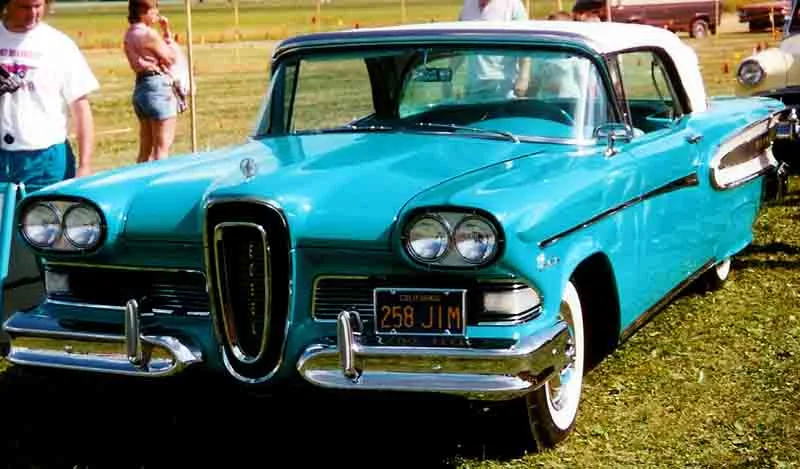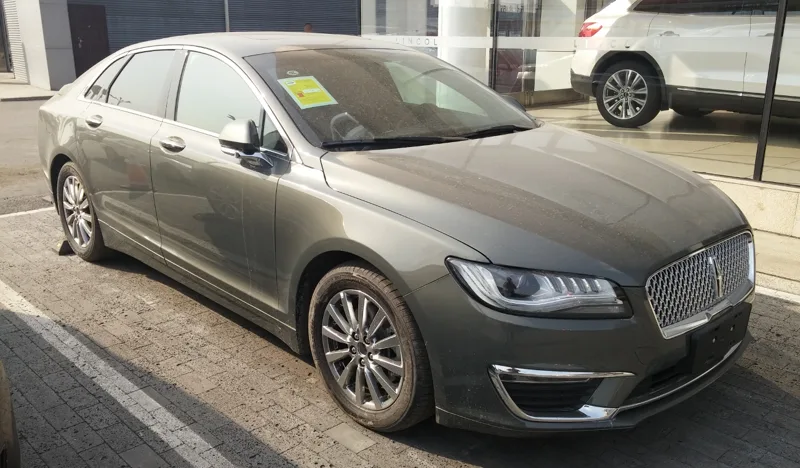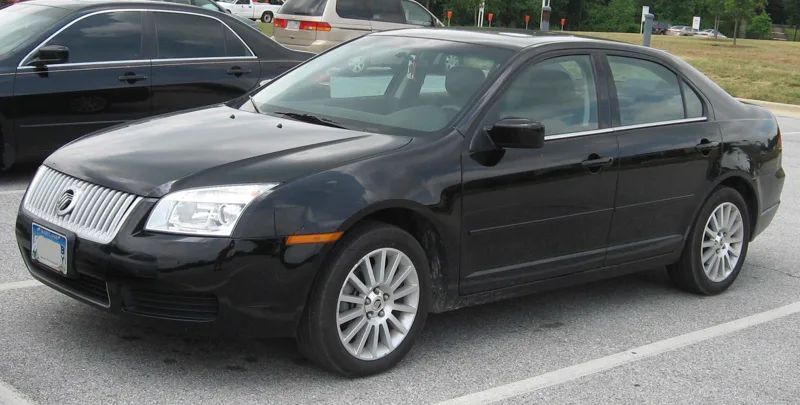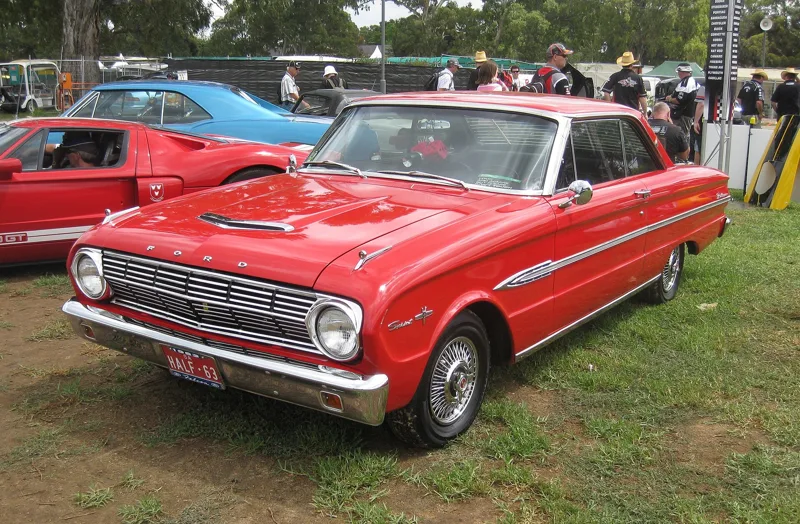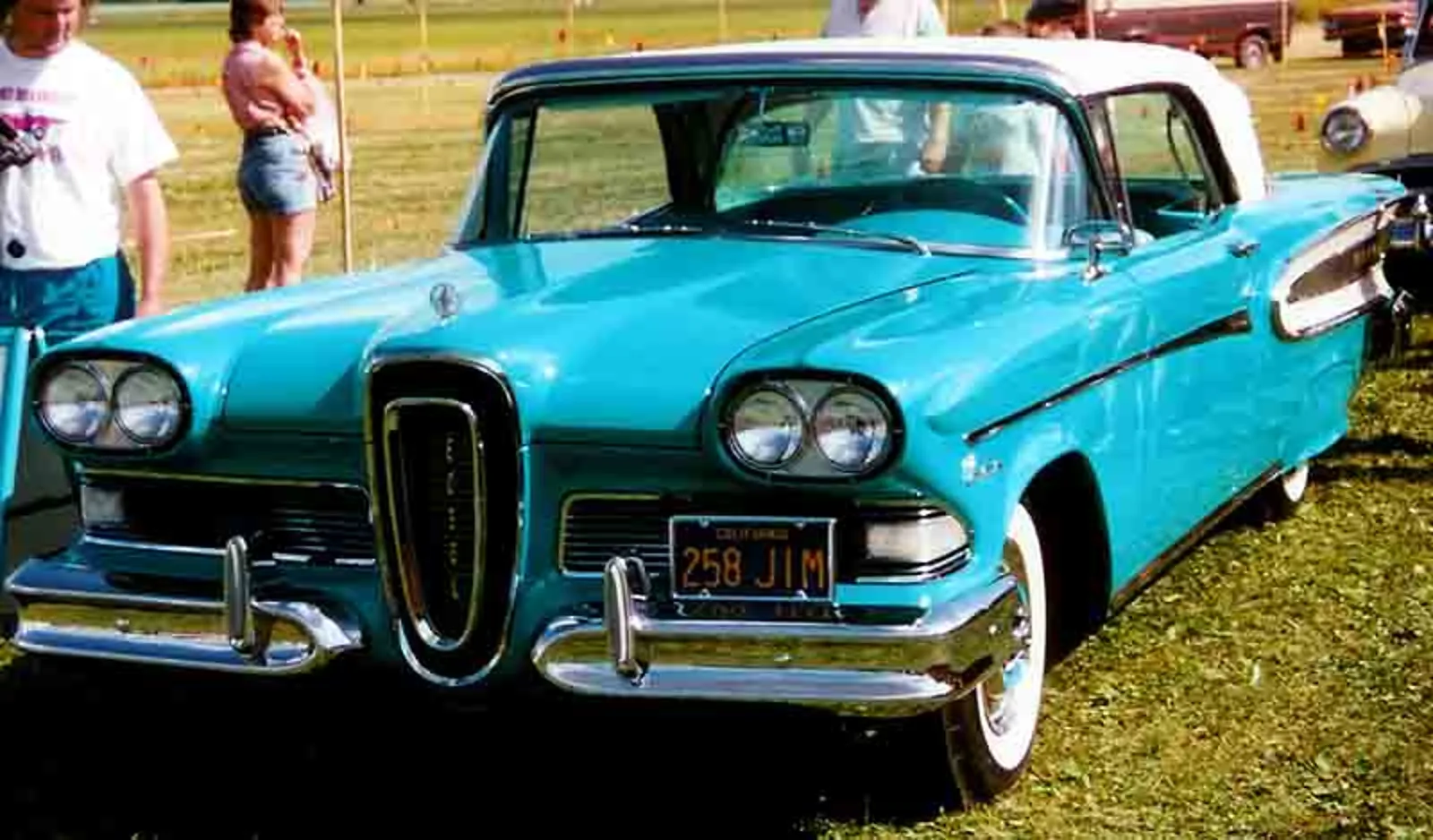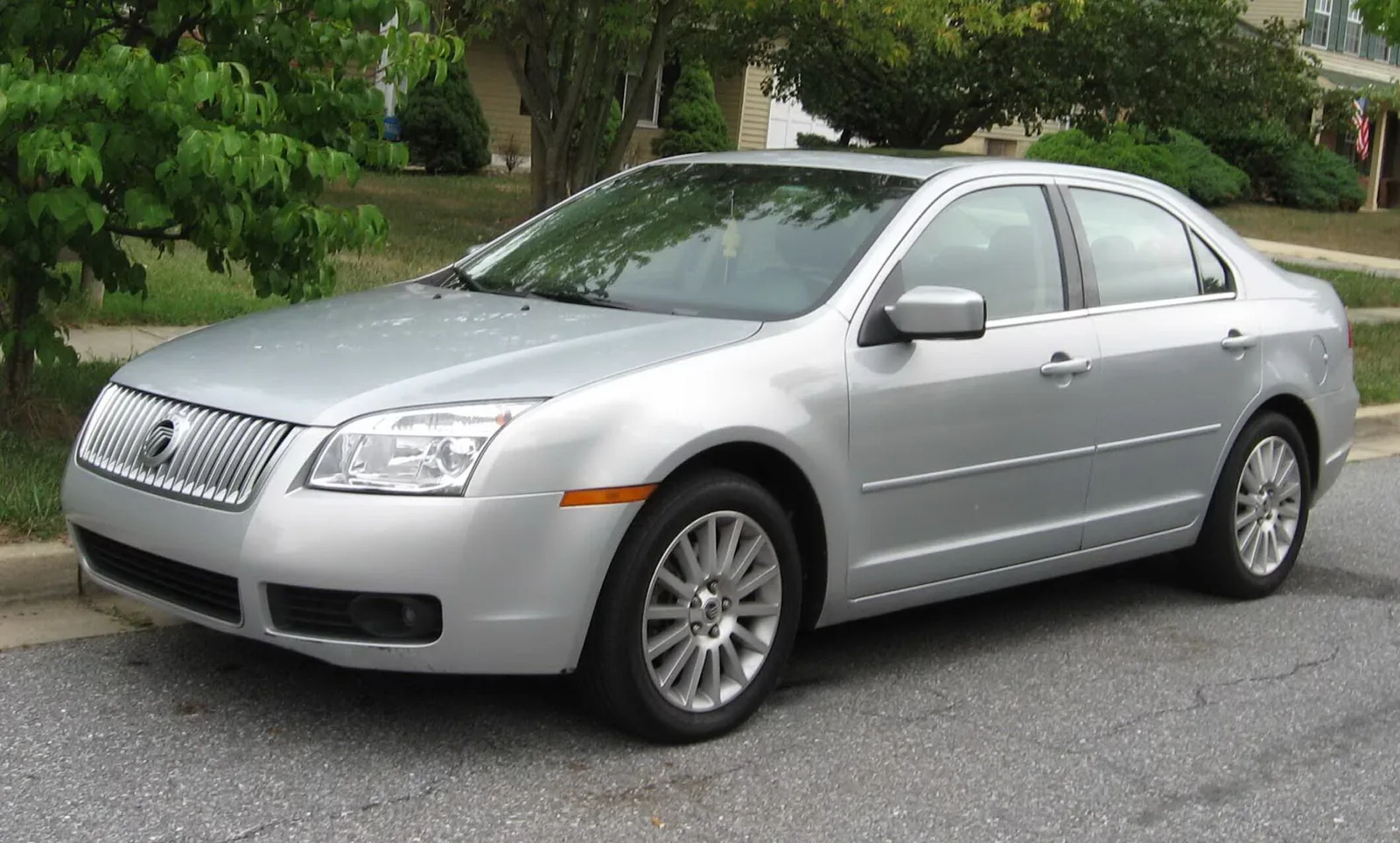
A base Edsel orphaned before 1960 began, a flagship Mercury with a retractable rear window and the smallest Mercury, sold until Ford retired the brand.
The Edsel Ranger, Mercury Turnpike Cruiser and Mercury Milan were Ford products from two divisions. The Ranger was the base Edsel of 1958 to 1960, the Turnpike Cruiser was Mercury's 1957 and 1958 flagship, and the Milan was the smallest Mercury, sold from 2006 until Ford retired the brand.
On 19 November 1959 Ford discontinued the Edsel, and the last car left the line before the month was out. The 1960 Ranger, introduced on 15 October, never lived to see its own calendar year, and owners were suddenly left with a car for which Ford had stopped making parts. It is one of three cars that show where Ford's Edsel and Mercury divisions sat.
What were the Mercury Milan, Mercury Turnpike Cruiser and Edsel Ranger?
The Edsel Ranger was the base model of Ford's short-lived Edsel brand from 1958 to 1960. The Mercury Turnpike Cruiser was the flagship Mercury in 1957 and 1958. The Mercury Milan was the smallest, entry-level Mercury, a mid-size sedan sold from 2006 until Ford retired the brand.
Two Ford divisions, three cars, and both divisions ended: Edsel in 1959 and Mercury after 2011.
Mercury Milan, Turnpike Cruiser and Edsel Ranger side by side
| Model | Division | Years | Place in the line-up | Engine |
|---|---|---|---|---|
| Edsel Ranger | Edsel | 1958 to 1960 | Base model | 361 cu in (5.9 L) V8, 303 hp (226 kW) |
| Mercury Turnpike Cruiser | Mercury | 1957 and 1958 | Flagship, above the Montclair | 368 cubic-inch V8, 290 hp |
| Mercury Milan | Mercury | 2006 to 2011 | Entry-level and smallest Mercury | 2.3 L four-cylinder, 160 hp, or 3.0 L V6, 221 hp |
Where did the Edsel Ranger sit in Ford's line-up?
At the bottom. The Ranger was the base-trim Edsel in the brand's first two years, riding on an Edsel platform that was shorter and narrower than the rest, shared with the Ford and the Edsel Pacer. Body styles were coupe, sedan and hardtop, in two- and four-door forms where offered, plus a convertible in 1960. Edsel's Ranger, Villager and Corsair names were later reused on other Fords.
Edsels were highly publicised in the autumn of 1957 and then proved a marketing disaster for Ford, whose strategy was to match General Motors line for line. In 1958 the brand shared both Mercury's and Ford's platforms, and since Lincoln, Mercury and Ford each used a full-size platform of a different interior width, the Edsel gives a view into how much they varied.
The base Ranger had armrests, a cigarette lighter, a mirror, two coat hangers and plain black floor mats, with chrome around the rear quarter-panel moulding. Stainless strips along the front doors and fenders separated the upmarket Pacer from it. A heater cost $92 and a radio $95, while air conditioning was $417.
What powered the 1958 Edsel Ranger?
A 361 cu in (5.9 L) FE V8 making 303 hp (226 kW) with a four-barrel carburettor, paired with a three-speed manual gearbox. The wheelbase was 118 in (2997 mm), or 116 in (2946 mm) for the wagons. Buyers could specify a column-shift three-speed automatic instead.
The more adventurous choice was Teletouch, an automatic whose drive buttons sat in the steering wheel hub. It cost $231 and was highly promoted but trouble-prone. Buyers could not order the 410 cu in (6.7 L) MEL V8, rated at 345 hp (257 kW), that came as standard on the Corsair and Citation.
Ford built an estimated 21,301 Rangers in the United States and Canada for 1958, including 7,414 four-door sedans and 6,005 two-door hardtops. Prices ran from $2,529 to $2,990.
What changed for the 1959 and 1960 Rangers?
For 1959 Edsel dropped both its best-selling Pacer and its premium Citation, and replaced Teletouch with the column-mounted Mile-O-Matic, its name for the two-speed Fordomatic. The Ranger and new Corsair shared a 120-in wheelbase on a ladder-type frame, and a shield-shaped grille filled with bars replaced the horsecollar. Four-door sedans led output at 14,063, and prices were $2,629 to $2,756.
By 1960 the Ranger was the only sedan Edsel offered. The Villager name moved to two station wagons, six- and nine-passenger, and the Corsair was gone, along with the vertical grille element, which gave way to an hourglass shape. The 1960 car shared so many panels and trim parts with Ford that its taillights, grille, signal lights, fender trim and badges were the only real giveaways.
Production of the 1960 line began on 14 September 1959 and every car came from the Louisville, Kentucky, plant. Chief Stylist Bud Kaufman's cars introduced horizontal coolant flow through the radiator and a muffler placed away from the passenger compartment to cut heat. Total output was 2,571 Rangers and 275 Villagers, 2,846 cars in all, with prices of $2,643 to $3,000.
The rarest were the Ranger convertible, at 76, and the four-door nine-passenger Villager wagon, at 59. That makes the Ranger convertible the second rarest Edsel ever built.
How can you spot a counterfeit 1960 Edsel Ranger convertible?
Check the wheelbase. A genuine Edsel rides on 120 in (3,048 mm), while a converted Ford Sunliner measures 119 in (3,023 mm). Because production was so low, every Ranger is collectible, but the 1960 convertible is often faked.
The conversion needs little more than swapped trim and reshaped rear fenders on a 1960 Ford Sunliner, easy work for anyone with an Edsel parts car. Enthusiasts are wary of examples that have been "found" or priced below the going rate. The manufacturer's code should match the VIN to Edsel production for November 1959.
What was the Mercury Turnpike Cruiser?
The Turnpike Cruiser was a Mercury model line built for 1957 and 1958, named for the arrival of America's Interstate Highway System. It was sold as the flagship, above the Montclair, as Mercury moved upmarket when Edsel arrived in 1958. Ford built 23,268 over two years, as two- and four-door hardtops.
Its name came from the 1956 XM-Turnpike Cruiser concept, a preview of the 1957 line. It took a similar approach to luxury as the four-seat second-generation Ford Thunderbird, though the Mercury had a body-on-frame chassis and the Thunderbird a unibody. List price was US$3,758 for the coupe and US$4,103 for the convertible, against rivals such as the Buick Roadmaster and Oldsmobile 98.
The Turnpike Cruiser was built for the 1957 and 1958 model years. For 1958 it was phased into the Montclair line, and the newly introduced Park Lane took the premium top spot.
What was the Breezeway window?
A retractable rear window, one of the Turnpike Cruiser's headline features. It sat alongside a compound-curve windshield that curved into a separate roofline and was among the first tinted to reduce glare. The curve left a body seam, so Mercury covered it with rooftop ventilation intakes, each housing a fake radio antenna while the working one sat on the passenger-side front fender.
Gold-anodised scalloped tailfins replaced contrasting paint. Quadri-Beam dual headlamps were standard, though they were not legal across the United States until 1958, so some states got a standard setup. Air conditioning and power side windows cost extra.
The cabin carried features that were unusual for 1957. A flat-top, deep-dish steering wheel followed the curve of the instrument panel, which included a tachometer, a clock for working out average speed and a trip odometer, in effect a trip computer. A programmable memory seat called Seat-O-Matic slid down and back once the ignition was off.
For 1958 the model took the Montclair and Monterey styling, with grilles in the front bumper, rocket-style tail lamps and gold trim and badging. All Mercurys that year had a programmable speed warning. Padded dashboards and safety door locks were standard, seat belts and a child harness optional.
How was the Turnpike Cruiser powered?
For 1957 it used a 368 cubic-inch V8 making 290 hp, and the engine took the car's name when offered across the rest of the Mercury range. For 1958 Mercury added two new Marauder engines: a 383 cubic-inch 330 hp V8, and a 430 cubic-inch 360 hp V8 shared with the Park Lane.
A triple two-barrel carburettor Super Marauder 430 produced 400 hp, the first factory-built engine with that output and a reply to the 375/390 hp Chrysler 300C of 1957. All engines drove through a three-speed Merc-O-Matic automatic.
The 1957 car answered Chrysler's TorqueFlite with pushbutton controls called Keyboard Control, with buttons for Drive, Brake, Neutral Start, Hill Control and Reverse. It was relabelled Multi-Drive for 1958, splitting Drive into Performance and Cruising. The panel sat to the left of the steering wheel, and a steering column selector replaced it in 1959.
The chassis was a rear-drive, body-on-frame design with a 122-inch wheelbase, shared with the Monterey and Montclair, with independent ball-joint front suspension, a live rear axle on leaf springs and 11-inch drum brakes. Edsel stretched it to 124 inches for the 1958 Corsair and Citation.
What was the Mercury Milan?
The Milan was a four-door, five-passenger mid-size sedan built by Ford for its Mercury division from 2006 to 2011 on the CD3 platform, with front or all-wheel drive. It was a rebadged first-generation Ford Fusion and Lincoln MKZ, built beside them at Hermosillo in Mexico, and replaced the Mystique and Sable.
Mercury unveiled it at the 2005 Chicago Auto Show and sold it through dealers on the US mainland, in Puerto Rico and the US Virgin Islands, and in Mexico and the Middle East. In 2008 it became Mercury's best-selling model. When Ford retired Mercury, Milan sales ended after a shortened 2011 model year, and the last car was built on 17 December 2010.
The name came from the Italian city associated with fashion and design, and Chief Designer Darrell Behmer said it suited the car's theme and target customer. The 2010 facelift, shown at the 2008 Los Angeles Auto Show under Behmer and Design Director Peter Horbury, brought new tail lamps, an enlarged grille and a revised instrument panel.
What engines did the Mercury Milan use?
From 2006 to 2009 the standard engine was a 160 hp 2.3 L four-cylinder, replaced for 2010 by a 175 hp 2.5 L. A 3.0 L V6 was optional, at 221 hp rising to 240 hp in 2010. Unlike the Fusion, the Milan had no sporty version with a 3.5 L V6.
The four-cylinder's five-speed manual made the Milan the first manual Mercury sedan since the 2000 Mystique, and there was a five-speed automatic as an option. The V6 came only with a six-speed automatic, and for 2010 the fours gained six-speed manual and automatic gearboxes. All-wheel drive became available on the V6 in 2007.
There were six trims: I4, V6, I4 Premier, V6 Premier, V6 AWD and V6 Premier AWD. A VOGA package for 2009 added bespoke white leather seats embroidered in VOGA lettering and 17-inch 8-spoke chrome wheels. From 2010 an acoustic windscreen, Carlite SoundScreen, used a vinyl layer between two sheets of glass to cut noise by up to 6 dB at some frequencies and 2 to 3 dB overall.
What was the Mercury Milan Hybrid?
The 2010 Milan Hybrid, introduced in March 2009 alongside the Fusion Hybrid, was the first Mercury hybrid sedan. It paired a 156 hp Atkinson-cycle Duratec 25 petrol engine with a 106 hp electric motor and an Aisin CVT. On electric power alone it could reach 47 mph and cover up to 2 miles.
The US Environmental Protection Agency rated it at 41 miles per US gallon (5.7 L/100 km) in the city and 36 (6.5 L/100 km) on the highway, and a full tank was good for 700 miles (1,126.5 km) of city driving. Ford aimed for a modest 25,000 or so sales annually across the Fusion and Milan hybrids, and 2,884 Milan Hybrids were sold.
What awards did the Mercury Milan win?
Consumer Reports ranked it among the most reliable family cars in November 2006, and Auto Pacific gave it its 2006 Vehicle Satisfaction Award for midsize cars. It offered the first six-speed automatic in the medium car class. In 2007 it was a Consumer Guide Recommended mid-size car and a J.D. Power Initial Quality winner in its category.
RDA Group analysis found the lowest number of things gone wrong in the midsize category in 2008 and 2009. The 2007 model also gained improved side-impact protection and better Insurance Institute for Highway Safety ratings.