A hybrid sedan that logged 10,000 sales in a month in Japan, a hatchback that became the smallest Lexus and two crossovers that took over the bottom of the range.
Lexus took its range down in size with the HS 250h sedan in 2009, the CT 200h hatchback in 2010, the UX crossover in 2018 and the LBX crossover in 2023. The LBX is now the smallest, and the UX 300e is the first fully electric Lexus.
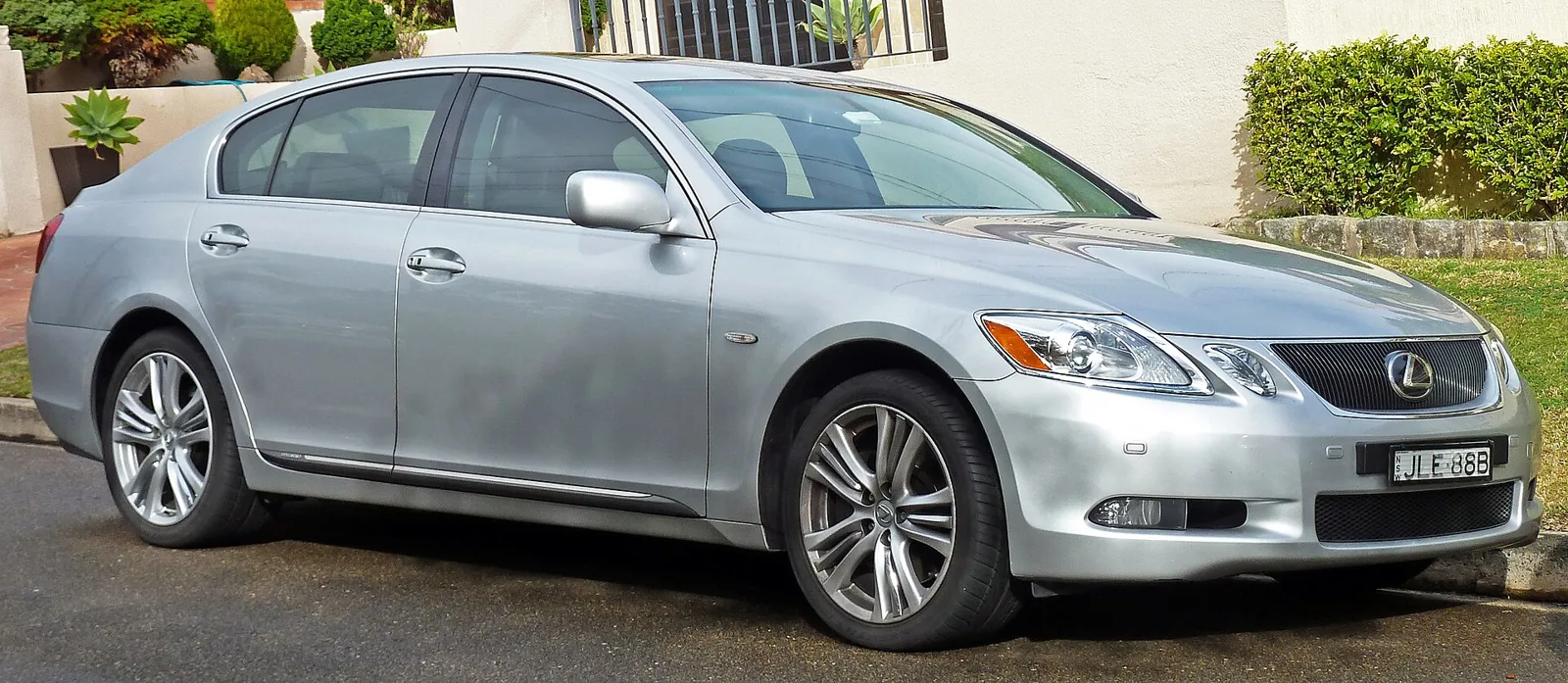
In its first month on sale in Japan, the Lexus HS 250h logged 10,000 sales and a waiting list six months long. Within three years Lexus had withdrawn it from the United States, where sales fell by nearly three-quarters in 2011.
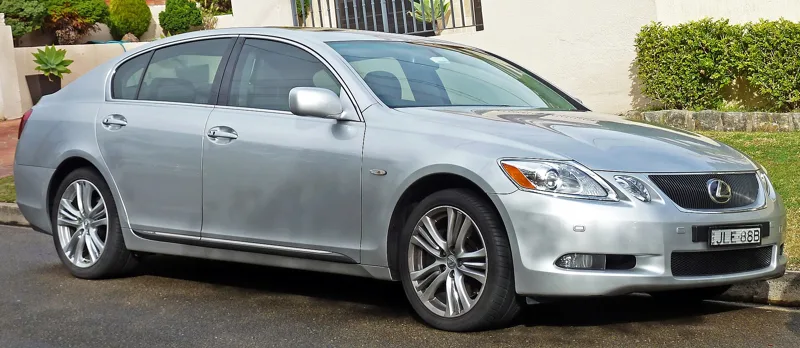
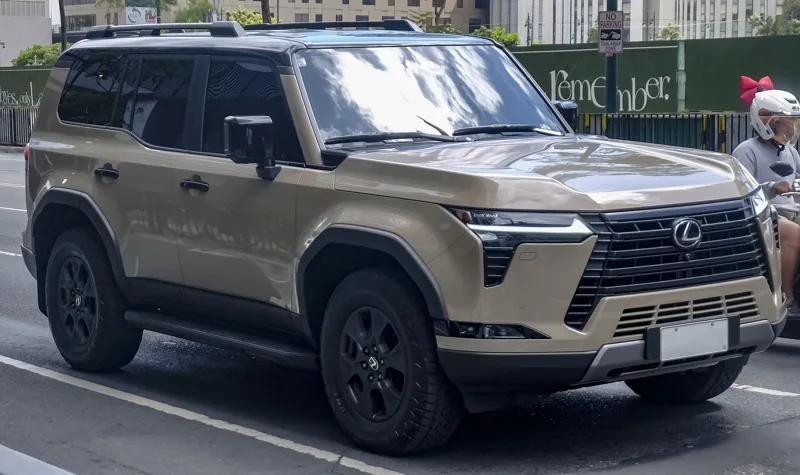
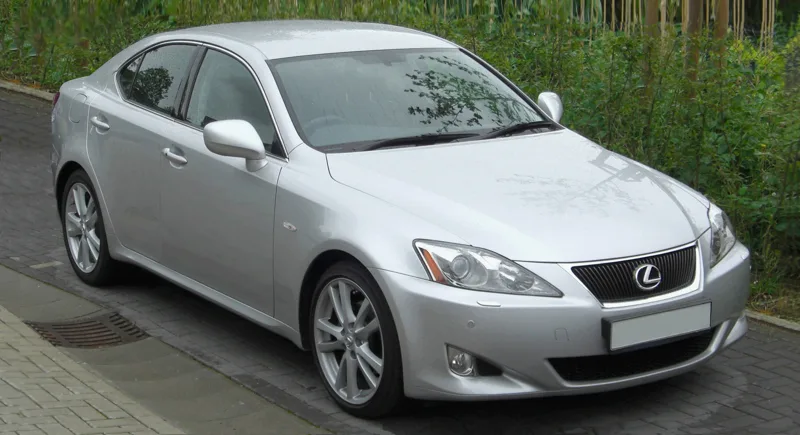
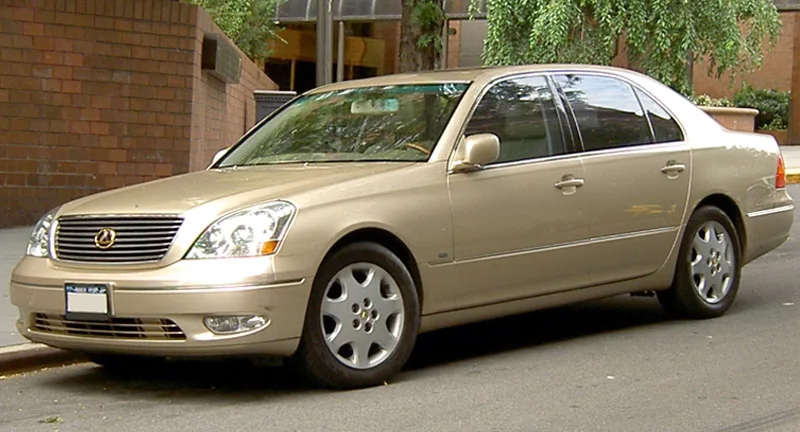
Four models mark Lexus's trip down the size scale: the HS 250h sedan of 2009, the CT 200h hatchback that followed, the UX crossover of 2018, and the LBX of 2023, now the smallest car in the range. Between them they show Lexus moving from small hybrid cars to small crossovers.
Lexus HS 250h: the first dedicated hybrid
The HS 250h was presented at the North American International Auto Show in January 2009 and went on sale in Japan that July, and in the United States in August as a 2010 model. It was a compact executive sedan on Toyota's New MC platform, 4,700 mm (190 in) long, a little bigger than the IS and smaller than the ES, and it counted as a compact under Japanese size and engine rules. Lexus said the HS stood for Harmonious Sedan.
It was the first Lexus built only as a hybrid, and the first to use an inline-four petrol engine. Lexus officials said they built it because buyers kept saying they would choose a luxury hybrid if one were offered, and because the Toyota Prius had sold well to upper-income buyers. At its debut it was the most fuel-efficient Lexus, and the company claimed it was the most efficient luxury vehicle in the United States. The CT 200h later beat its ratings.
How the HS 250h was engineered
The platform came from the third-generation Toyota Avensis, which is related to the Allion, Premio, Vista, Opa, Wish and Caldina. The petrol half of the powertrain was a 2.4-litre four, the 2AZ-FXE, with 147 hp (110 kW) and 105 lb ft (142 Nm) at 4,000 rpm. An electric motor lifted the total to 187 hp (139 kW) and 138 lb ft (187 Nm). The engine ran on the Atkinson cycle, a continuously variable transmission handled the gearing, and a 41 kg (90 lb) nickel-metal-hydride battery sat between the boot and the rear seats. An exhaust heat recovery system warmed the engine faster to shorten the period of start-stop running.
EPA figures were 35 mpg-US (6.7 L/100 km) in town and 34 mpg-US (6.9 L/100 km) on the highway. Drivers could pick EV, Eco, Normal or Power modes. EV was suited to short trips at up to 32 km/h (20 mph). The 0-60 mph time was 8.4 seconds and top speed 180 km/h (112 mph). The drag coefficient was 0.27.
The interior leaned on plant-based plastics. Kenaf fibres and castor seeds supplied bioplastic for the cabin, the cargo space and foam-injected parts, and Lexus said 85 percent of the car was recyclable. In Japan a Harmonious Driving Navigator compared a driver's efficiency with others and named the greenest, so that donations could be made to charity. Equipment ran from a pop-up navigation screen with a Remote Touch haptic controller and Mark Levinson audio to Intelligent Highbeam, Lane Keep Assist, up to five cameras and a Pre-Collision System.
Why the HS sold well in Japan and badly in America
Japan took to the HS at once. Pre-orders at the July 2009 launch reached 1,500, reportedly three times the forecast, and in its first month it recorded 3,000 pre-orders and 10,000 sales. The Toyota Sai, a sister model, followed in October 2009. Lexus cut its US allocation that month because Japanese demand was higher than planned.
In the United States it started as the best-selling Lexus hybrid, with monthly sales close to those of the economy-minded Honda Insight, but by early 2010 the ES, IS and LS were all outselling it. A recall in February 2010 to reprogram brake software made some buyers wary, and on 25 June 2010 Lexus recalled 17,801 MY2010 cars for fuel leakage in a rear-end crash. Production stopped in January 2012. Lexus confirmed in May 2012 that it had adjusted the line-up, and said the ES 300h was not a replacement. The HS was not sold in Europe, where the IS 220d and Toyota Avensis covered the segment.
A January 2013 facelift brought the Spindle Grille, a body 10 mm (0.39 in) lower, a Sport mode and a JC08 rating of 20.6 km/L. In 2017 the HS and the Sai both ended in Japan, replaced there by a larger, TNGA-based ES 300h.
Lexus's first dedicated hybrid sold 10,000 in a month in Japan and was gone from the United States within three years.
Lexus CT 200h: the smallest Lexus hatchback
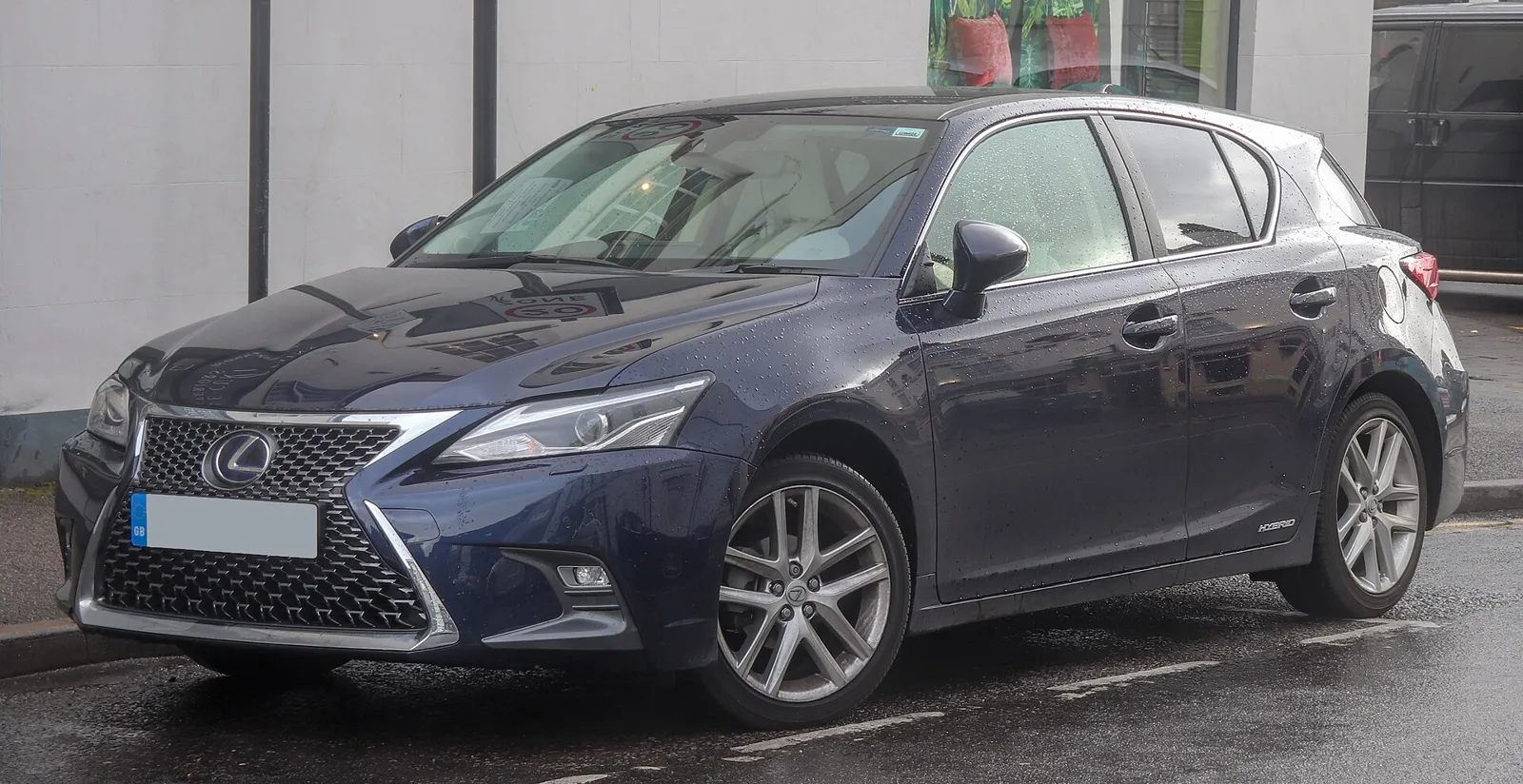
The CT 200h was a premium compact hatchback and the first luxury compact hybrid hatchback. It used the Prius drivetrain and the Toyota MC platform, and it superseded the IS as the smallest car in the lineup. Shown at the Geneva show in March 2010, six months after the LF-Ch concept, it was aimed mainly at Europe and reached New York in April. Takeshi Tanabe's design was approved in 2008 and patented on 11 September 2009.
Production began in January 2011. Japanese sales started on the 12th of that month and US sales in March. Lexus said CT stood for Creative Touring, and some distributors preferred Compact Touring. The 200h indicated that the hybrid delivered the performance of a conventional 2.0-litre engine.
How the CT 200h worked
The engine was the 1.8-litre VVT-i four from the Prius and Auris, with 73 kW (98 hp) and 142 Nm (105 lbf ft). With its electric motors it produced up to 100 kW (134 hp) and 207 Nm (153 lbf ft) through an electronically controlled CVT. Australia listed fuel use at 4.1 L/100 km. The chassis shared the platform of the Corolla and Matrix, with MacPherson struts in front and double wishbones behind. Drivers had Normal, Sport, Eco and EV modes, and Sport sharpened the throttle and steering while relaxing the stability and traction systems.
Eight airbags were standard, with a pre-collision system and radar cruise control as extras. A Vehicle Proximity Notification System sounded a low tone so pedestrians could hear the hybrid.
A 2013 refresh for the 2014 model year brought the Spindle Grille, and a second in 2017 for the 2018 model year added full LED lights and a larger grille on every model. In North America the F Sport package was cosmetic, with different wheels but the same tyres as the base car. In Australia it was sold as Prestige, Luxury, F Sport and Sport Luxury, and a CT 200h took part in the Celebrity Challenge at the March 2011 Australian Grand Prix, billed as the first race with only petrol-electric cars.
How the CT ended
Lexus announced in May 2017 that the CT would leave the US market, and the 2017 model year was the last in the United States and Canada. In Thailand, Lexus said in 2019 that the UX crossover would replace it. The UK stopped receiving the CT, IS and RC (except the RC F) in October 2020, citing poor sales, strong European competition and a market shift towards crossovers, with the UX as successor. Australia withdrew the CT, IS and RC in November 2021 after stricter crash rules. The CT ended in October 2022 with a special edition named Cherished Touring.
The record was strong in places. The Union of Concerned Scientists ranked the 2011 CT 200h with the Lincoln MKZ Hybrid as the best luxury hybrids for environmental improvement, and found it cut greenhouse emissions by 42.9% compared with the IS 250. It won Best Small Car over $35,000 in Australia's Best Cars for 2011, a top safety grand prix from JNCAP and the 2011 hybrid prize at the Asian Auto Fuel Efficiency Awards. Global sales reached 267,000 by March 2016, making it the second best-selling Lexus hybrid behind the RX 400h and RX 450h, and 380,000 by March 2022.
Lexus UX: the move to crossovers
The UX arrived at the Geneva show in March 2018 as a subcompact luxury crossover. It was the first Lexus on the GA-C platform used by the E210 Toyota Corolla, and the letters stand for Urban Explorer. It was the smallest Lexus crossover until the LBX, and since 2024 it has sat between the LBX and the larger NX.
There were three versions. The UX 200 used a 2.0-litre M20A-FKS four with a Direct Shift CVT and front-wheel drive only. The UX 250h, sold as the 260h in China and the 300h in the United States and Australia, paired a 2.0-litre M20A-FXS hybrid four with an eCVT, in front-drive or E-Four all-wheel-drive form, with a 1.4 kWh nickel-metal-hydride battery. The UX 300e, unveiled at the 2019 Guangzhou show, was the first battery-electric Lexus. It used a 54.3 kWh battery with a claimed 400 km (249 miles) on the NEDC cycle or 299 km (186 miles) on the WLTP cycle, and a technical update for the 2024 model year changed the battery pack and range.
North American production began in the fourth quarter of 2018 and sales in December. The UX was the first Lexus offered through the Complete Lease programme, which includes insurance and maintenance. An update for 2023 added wireless Apple CarPlay and Android Auto, an 8 or 12.3-inch screen, a phone-based digital key, a bigger wireless charger and ambient lighting, and it dropped the touchpad. Lexus Safety System+ 2.0 became 2.5. In the United States the UX was hybrid only for 2023.
The UX went to 80 countries. It reached Europe in October 2018, Thailand in March 2019 and Australia in the first quarter of 2019, after an Asian debut in Indonesia in August 2018.
Lexus LBX: the smallest Lexus
The LBX was introduced in Milan in June 2023 as a B-segment crossover, below the UX, developed mainly for Europe and Japan. It was the first Lexus on the TNGA-B platform, shared with the Toyota Yaris Cross and Yaris, and went on sale in Europe in early 2024. Lexus said the letters stand for Lexus Breakthrough X(cross)-over. It is the second Lexus with a three-letter name, after the LFA of 2011, and it avoided the plain BX name to stay clear of a trademark clash with Citroen, which built the BX from 1982 to 1994.
Engineering and design
Chief engineer Kunihiko Endo said reaching Lexus refinement was hard, so the team took a different approach to the usual sound insulation. The hybrid system uses a bi-polar nickel-metal-hydride battery that is lighter and more compact than a regular one and charges and discharges faster, so it can drive a larger electric motor than the Yaris Cross has. At the front are MacPherson struts. The rear is a torsion beam on front-drive cars and double wishbones on all-wheel-drive ones, and Vehicle Braking Posture Control uses the brakes to reduce pitching.
Unlike other Lexus models, the LBX has no Spindle Grille. Its grille is a single trapezoid, in the style of the fifth-generation RX, and it follows the Resolute Look first seen on the LF-S in 2003. The front pillars are pulled back so the cabin looks small. Wheels measure 17 or 18 inches, and trims are Emotion, Cool, Elegant and Relax; in Japan the Cool has 20-inch wheels.
Inside, designers wanted simplicity. Seats can be trimmed in semi-aniline leather or a vegan-friendly synthetic. Ambient lighting offers 50 colours under the Omotenashi, or hospitality, idea. The tazuna layout, from the LF-30 Electrified concept, takes its name from the reins used on horses and includes a 12.3-inch digital instrument display and an optional head-up display. A 9.8-inch touchscreen runs Lexus Link Connect with a Hey Lexus voice assistant, Apple CarPlay and Android Auto come standard, and so do over-the-air updates. The boot holds 332 litres (11.7 cu ft) in front-drive cars, and there is an optional 13-speaker Mark Levinson sound system.
Lexus set a sales target of 3,500 a month, with 2,000 in Europe, 1,200 in Japan and 300 elsewhere. The LBX won Car of the Year and Small SUV at the 2024 What Car? awards in London.
| Model | Introduced | Body | Platform | Powertrain | Status |
|---|---|---|---|---|---|
| HS 250h | 2009 | Compact sedan | Toyota New MC | 2.4-litre hybrid, 187 hp (139 kW) | US sales ended 2012; Japan ended 2017 |
| CT 200h | 2010 show, 2011 sales | Compact hatchback | Toyota MC | 1.8-litre hybrid, 100 kW (134 hp) | Ended October 2022 |
| UX | 2018 | Subcompact crossover | GA-C | 2.0-litre petrol, hybrid and electric | On sale between LBX and NX |
| LBX | 2023 | B-segment crossover | TNGA-B | Hybrid with bi-polar nickel-metal-hydride battery | On sale from early 2024 |
What the line-up looks like now
The range has settled into two crossovers at the small end. Since 2024 the UX sits between the LBX and the NX, with the UX 300e as the electric option, and the LBX is aimed squarely at Europe and Japan, with only 300 cars a month planned for other markets such as Australia and Southeast Asia. The HS and CT are history, with the CT's job handed to the UX, and the ES 300h took the HS's role in Japan.