A family of customer prototypes from HPD, a Nissan V8 built for a cost-cut LMP2 class and a heavier Nissan V6 for the Daytona rules, and what each one won.
The HPD ARX-03, Zytek Z11SN and Ligier Nissan DPi were three prototype racing cars of the 2010s. The HPD ARX-03 family raced from 2012, the Nissan-powered Z11SN from 2011, and the Ligier Nissan DPi from 2017, winning class titles and races at Le Mans, Sebring and Road America.
A fuelling hose cost Muscle Milk Pickett Racing its debut race in the HPD ARX-03a at Sebring in 2012. The team then won the next five races in a row, won again at Virginia International Raceway and finished the year as American Le Mans Series LMP1 champions by a margin of just 5 points.
That is the shape of the HPD ARX-03 story: quick, a little untidy and rewarded in the end. The Zytek Z11SN and the Ligier Nissan DPi are different machines built for different rule books, yet all three came out of the same decade of prototype racing, and each found its way to wins and class titles at places like Le Mans, Sebring and Road America.
What was the HPD ARX-03?
The HPD ARX-03 was a family of Le Mans Prototype race cars that Honda Performance Development developed in 2012, sold in three versions. The 03a carried a Honda V8 and raced in the LMP1 category. The 03b used a turbocharged V6 and raced in LMP2. An updated 03c package followed in 2013.
Think of the family as one design asked two different questions. The 03a, built for LMP1, took the V8, while the 03b, built for LMP2, was given a turbocharged V6. Both were customer cars: teams had announced their use before the season began, with entries planned in the American Le Mans Series, the new FIA World Endurance Championship and the 24 Hours of Le Mans.
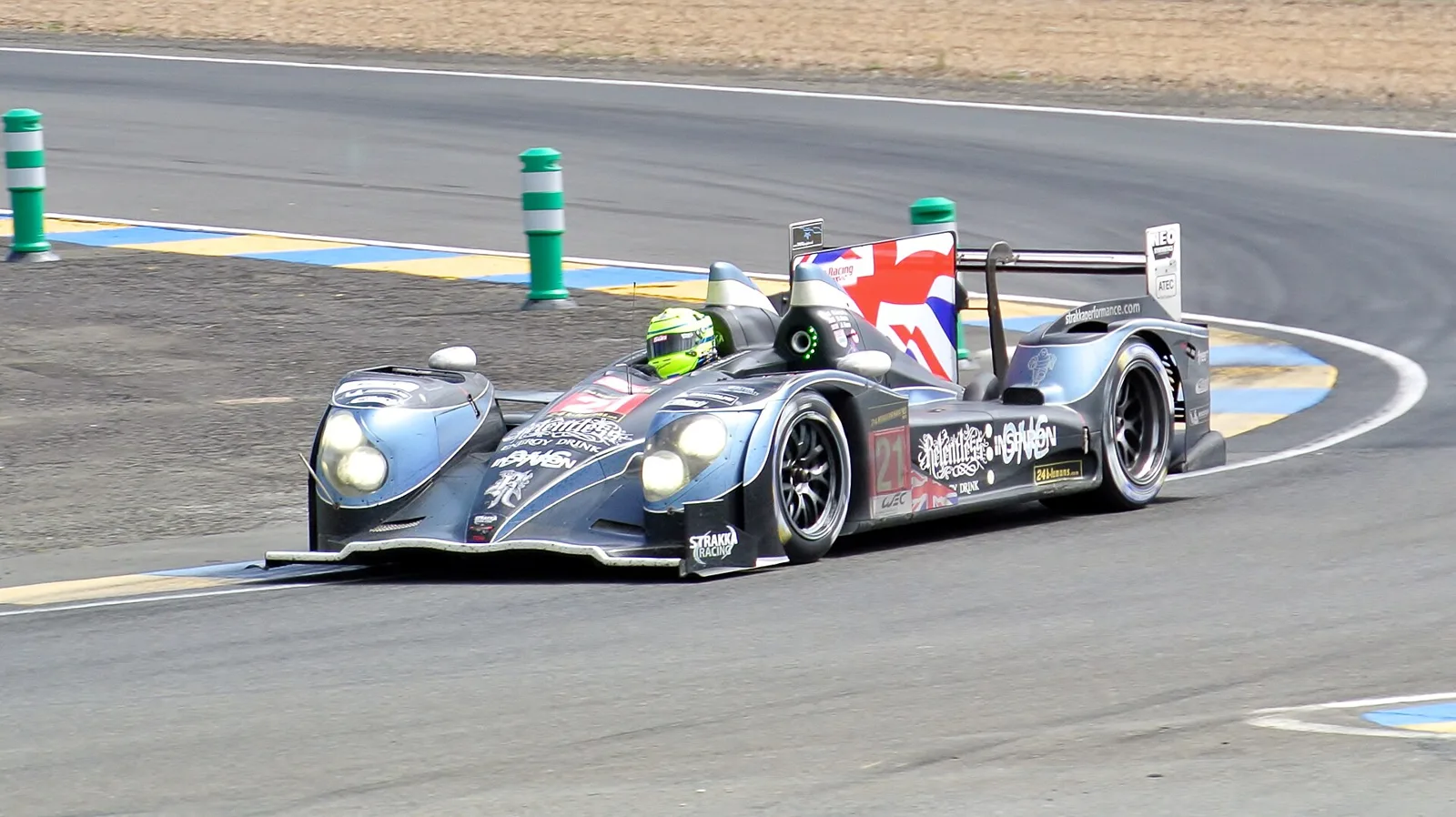
Muscle Milk Pickett Racing bought an 03a for the American series, while Level 5 Motorsports took two 03bs. In the world championship, Strakka Racing and JRM Racing each ran a single 03a, and Starworks Motorsport entered one 03b in LMP2.
A fuelling hose cost Muscle Milk Pickett Racing its debut race in the HPD ARX-03a at Sebring in 2012.
How did the HPD ARX-03 do in 2012?
The car's racing debut came at the 2012 12 Hours of Sebring, which was the first round of the American Le Mans Series and of the newly created world championship. Late in the year, at Petit Le Mans, Lucas Luhr's car was struck by a GTC-class Porsche, and the car needed repairs mid-race. The team still completed 70% of the distance in order to score points. At the end of the season Muscle Milk won both the LMP1 drivers and team championships by 5 points over its main rivals, Dyson Racing.
Level 5 Motorsports did even better in proportion. Its 03bs won their class at the Mobil 1 12 Hours of Sebring, then took 7 of the following 9 races. Mosport and Road America, where Conquest Endurance came out on top, were the only defeats. The team collected the LMP2 teams and drivers championships.
The world championship was a tougher stage. Starworks Motorsport scored three class victories with its 03b, among them the season-opening Sebring race and the 24 Hours of Le Mans, and took the LMP2 trophy. Strakka Racing and JRM, running 03as, were second and third in the LMP1 Privateer Trophy, with the Swiss outfit Rebellion Racing ahead of both. Strakka managed one class win.
What changed for the HPD ARX-03 in 2013?
Muscle Milk started the 2013 American season with the 03a for three rounds, then switched to the updated 03c for the remainder. The results justified the change. The team won eight times in ten races, and Rebellion Racing and Audi Sport Team Joest beat it only at Sebring, while an overheating problem ended its Petit Le Mans. It retained both LMP1 championships.
Extreme Speed Motorsports arrived in LMP2 that year alongside Level 5, bringing the former Starworks 03b plus a newly built chassis. Level 5 still won at every round except Long Beach, where ESM beat it, and again took both LMP2 championships.
Strakka Racing was the only team to run an HPD car in the 2013 world championship, and only for the first three rounds. Damage forced the car out at Silverstone. It then finished second among the privateers at Spa-Francorchamps, and at Le Mans it came first in that group, ahead of its rival Rebellion Racing.
Why was the Zytek Z11SN built?
The Zytek Z11SN is an LMP2 racing car built by Zytek Engineering since 2011 and powered by a 4.5-litre Nissan V8. It grew out of the Zytek 07S and Zytek 09SC and was updated for the Le Mans Prototype regulations introduced in 2011. It raced mainly in the European Le Mans Series and at Le Mans itself.
The rule change that created it was about money. For 2011 the prototype regulations were altered to reduce costs, and one casualty was the Ginetta-Zytek GZ09S, which became obsolete. The 09SC, previously an LMP2 car, was moved up to LMP1. That left a gap in the smaller class, and Zytek filled it by developing the car into the Z11SN.
The engine came through a deal with NISMO, which let Zytek use the Nissan VK45DE from the Nissan GT-R Super GT car. In LMP2 specification this naturally aspirated 4.5-litre V8 produced approximately 450 hp (336 kW; 456 PS). A naturally aspirated engine takes in air at ordinary atmospheric pressure, with no turbocharger to force more in, so power depends on size and revs rather than boost. The Z11SN therefore sat at the opposite end of the spectrum from the turbocharged six in the HPD 03b.
How did the Zytek Z11SN do at Le Mans?
In the Z11SN's first season, 2011, Greaves Motorsport was the sole team to field one, and its chassis had begun life as a Zytek 07S. The result was immediate: a class victory and third place overall on debut, when Karim Ojjeh, Gary Chalandon and Tom Kimber-Smith shared the car at the 6 Hours of Castellet. Greaves went on to win LMP2 at Le Mans, and it took the LMP2 Team's Championship in the Le Mans Series as well. That chassis was retired at the end of the year, and three new ones replaced it.
The second season was harder. Jota Sport put a Z11SN into the European series and came eighth in class at the opening round, the 6 Hours of Castellet. Greaves bought two chassis, and both teams entered the 24 Hours of Le Mans. The most notable entry was Greaves' No. 42 car, driven by the former Formula 1 driver Martin Brundle, his son Alex and Lucas Ordonez. It finished eighth in class. The other Greaves car took fifth, and the Jota entry failed to finish. Across the full European series, Greaves was third in class and Jota tenth.
In 2013 both teams stayed in the European Le Mans Series, and Jota Sport won the 6 Hours of Silverstone. Caterham Motorsport announced its first Le Mans entry, a Z11SN shared by Alexander Rossi, Tom Kimber-Smith and Eric Lux, run as a joint venture with Greaves. Greaves also ran its own car for Jann Mardenborough, Lucas Ordonez and Michael Krumm, and Jota ran a third for Simon Dolan, Oliver Turvey and Lucas Luhr. Greaves' own entry was the best of the three, finishing fourth in LMP2.
Then came the second class win at the great race. In 2014, Jota Sport won LMP2 at Le Mans with its Z11SN.
What happened to the Zytek Z11SN after 2014?
The car did not simply stop. Zytek was bought by Continental AG, which established Gibson Technology, and in 2015 the Z11SN was substantially developed and renamed the Gibson 015S. Jota Sport used it that year to finish second in the LMP2 class and tenth overall at Le Mans, 48 seconds behind the KCMG Oreca.
In 2016, Strakka Racing finished fourth in the LMP2 class and eighth overall at the 24 Hours of Le Mans with the Gibson 015S.
How did the Ligier Nissan DPi come about?
Ligier Automotive built the Ligier Nissan DPi, a Daytona Prototype that also goes by the name Onroak Nissan DPi. It is based on the Ligier JS P217, a car designed for the 2017 FIA and ACO rules for the LMP2 category in the World Endurance Championship. It first raced at Daytona in 2017, in the 24 Hours, where the Tequila Patron ESM team finished fourth.
The project was announced on 21 September 2016 by Scott Sharp, owner of Tequila Patron ESM, who said the team would return to the IMSA WeatherTech SportsCar Championship for a full 2017 programme and leave the World Endurance Championship. ESM kept its existing arrangement with OAK Racing and Onroak Automotive and signed a new multi-year partnership with Nissan Nismo. Nismo would supply the VR38DETT 3.8L V6 used in the Nissan GT-R GT3. An earlier rumour that the team would run the VRX30A from the Nissan GT-R LM Nismo was refuted by the announcement.
This was a customer programme without works support, and ESM agreed to a 2-year exclusive deal with Nissan. The car was unveiled and shaken down at Sebring International Raceway in Florida on 22 December 2016.
How was the Ligier JS P217 DPi different from the LMP2 car?
Several differences were noted between the JS P217 and the DPi, including a large front panel covering the nose and revised side panels. The final design also departed from the first proposals made to the International Motor Sports Association.
The bigger change sat under the bodywork. The Nissan VR38DETT weighed over 50 kilograms more than the Gibson Technology engine used in the JS P217, so the DPi was overweight compared with its LMP2 sibling. Anyone who has carried an extra bag in the boot of a small car will understand the compromise: the same chassis, the same brakes and the same tyres have more mass to manage.
How did the Ligier Nissan DPi race in 2017?
The 2017 season began at the Rolex 24 at Daytona, where both cars showed strong pace and the No. 2 car led during the rainy night. Electrical problems, a penalty and several spins in the wet left the team fourth, just outside the podium.
Long Beach brought the first podium: the No. 2 car finished second and set the fastest lap. At Watkins Glen, Pipo Derani put the car on pole for the first time. The first win came at Road America, where the No. 22 car led a one-three finish and ended a seven-race winning run for the Cadillac DPi-V.R. That success followed a switch of the car's electronics from Cosworth to Motec, made to improve reliability. At the season-ending Petit Le Mans, the No. 2 car won after late penalties for the sister No. 22 and for the No. 5 Mustang Sampling Racing car.
How did the Ligier Nissan DPi story end?
The 2018 season opened with a double retirement at Daytona, even though the No. 22 car had led for several laps. The team bounced back at Sebring, where a strong late-race drive from Derani delivered a win. The Watkins Glen weekend was a disaster: the team used 3 engines and suffered 2 engine failures, and it dropped to one car at the Canadian Tire Motorsport Park.
Patron then announced it was ending its involvement in motorsport. ESM still aimed to carry on in 2019 and released Onroak Automotive from the exclusive arrangement, so other customers could buy the car. At Laguna Seca the car scored its fourth and last win under ESM. Derani took pole in his final race for the team at Petit Le Mans, but the No. 22 finished sixth and the No. 2 eleventh. ESM sold both cars to CORE Autosport and then closed.
The closure followed the withdrawal of title sponsor Patron Spirits, and the team shut its doors in November 2018. CORE Autosport announced it would run one car in 2019. On 23 August 2019, it said that the retirement of owner and driver Jon Bennett meant the end of its DPi programme after Petit Le Mans, with the team shifting to the Porsche factory GT Le Mans programme. That was said likely to mean the end of racing for the car, since Nissan had shown little interest in supporting the effort.
How do the three prototypes compare?
| Car | Class or rules | Engine | First racing | Headline results |
|---|---|---|---|---|
| HPD ARX-03a | LMP1 | Honda V8 | 2012 12 Hours of Sebring | 2012 and 2013 ALMS LMP1 titles for Muscle Milk |
| HPD ARX-03b | LMP2 | Turbocharged V6 | 2012 12 Hours of Sebring | LMP2 title for Level 5 Motorsports; Le Mans class win for Starworks |
| Zytek Z11SN | LMP2 | 4.5-litre Nissan V8 | 2011 | Le Mans class wins in 2011 and 2014 |
| Ligier Nissan DPi | Daytona Prototype, based on LMP2 car | Nissan VR38DETT 3.8L V6 | 2017 24 Hours of Daytona | 4 wins for ESM, 2017 and 2018 |