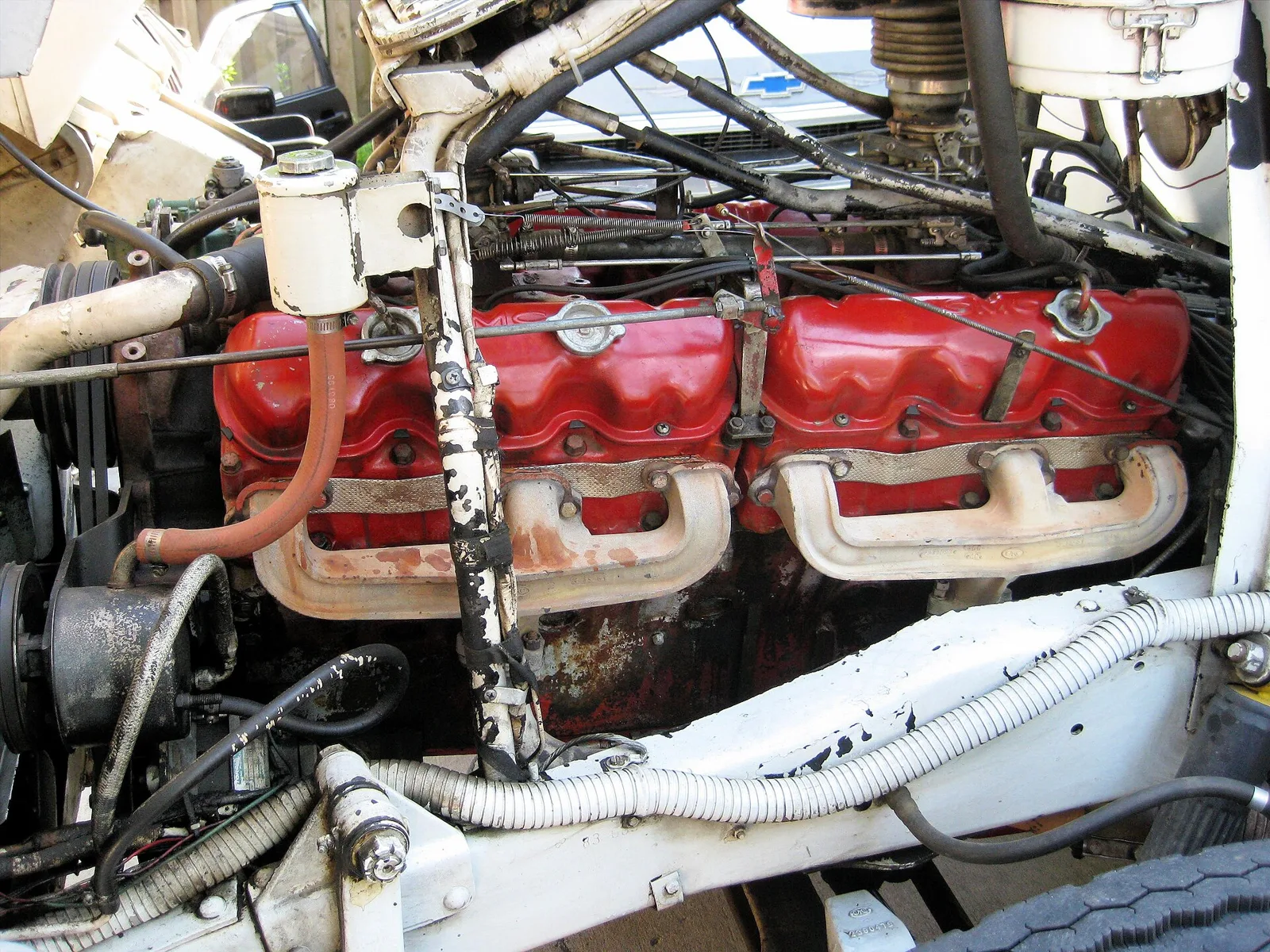
One was the only overhead-cam engine in US mass production and was dropped after failures. The other was a 60-degree truck V6 that grew into a V8 and a 702 cubic inch V12.
The Jeep Tornado was a 3.78 litre overhead-cam straight-six introduced in 1962, dropped from US civilian Jeeps in 1965 after failures but built in Argentina for years. The GMC V6 was a 60-degree truck engine family from 1959 to 1974, with V8, V12 and diesel versions.
In 1962 the only overhead-cam engine in mass production in the United States went into a Jeep. By 1965 Jeep had dropped it from its civilian vehicles because engines were failing, and yet the same design kept going in Argentina, where a Torino fitted with it covered more laps than any rival in an 84-hour endurance race. The Jeep Tornado six is one of two unusual American engines worth knowing. The other came from GMC, which built a V6 for trucks, then stretched the idea into a V8 and a V12 with 702 cubic inches.
The Jeep Tornado engine: Detroit's overhead-cam outlier
The Jeep Tornado was a 3.78 litre (230.5 cubic inch) straight-six with hemispherical combustion chambers, introduced in mid-1962. It is described as the first mass-produced overhead-cam car engine designed in the United States after the Second World War. It took the place of the flathead Willys Super Hurricane, the 226 cubic inch six that had been in use since 1954.
Development began in the late 1950s at Kaiser Jeep, which wanted a new engine for an entirely new vehicle. The chief engineer, A.C. 'Sammy' Sampietro, had worked under Donald Healey in Europe, and he concentrated on power through better engine breathing. The answer was a single overhead camshaft over hemispherical chambers. Mass production started in 1962, first in the Willys Jeep Wagon and truck: six-cylinder versions built after 3 May 1962 got the 230 OHC Tornado in place of the 226 flathead. It became the standard engine in the all-new Jeep Wagoneer station wagon and Jeep Gladiator pickup, which began production in the autumn of 1962 as 1963 models.
Efficiency mattered as much as power. In tests the Tornado showed the lowest specific fuel consumption of any production gasoline engine on the market.
The Tornado was the only American-built overhead-cam engine in mass production, and its own mounts helped to kill it.
How the Jeep Tornado engine was built
Jeep engines were generally undersquare, and the Tornado followed suit: the stroke was longer than the bore was wide. The bore measured 84.93 mm (3 and 11/32 in) and the stroke 111.13 mm (4 and 3/8 in). A long stroke gives the engine its pulling power at low speed, which is what an off-road vehicle wants. Think of a long wrench handle: more leverage at low effort.
The standard engine ran an 8.5:1 compression ratio and was rated at 104 kW (140 hp; 142 PS) at 4000 rpm and 285 Nm (210 lb ft) at 1750 rpm. The torque curve was flatter than that rating suggests: the engine actually reached the 210 lb ft figure before 1000 rpm and held it up to about 3700 rpm. A 7.5:1 low-compression version was also offered, making 99 kW (133 hp; 135 PS) with 270 Nm (199 lb ft) of torque arriving at 2400 rpm. Both were what the maker called high-efficiency engines with conservatively rated output.
One cam lobe for two valves
The most unusual detail was the camshaft, which had only six lobes. A conventional engine gives each valve its own lobe, so a six-cylinder with two valves per cylinder needs twelve. Here a single lobe opened both the intake and exhaust valve for each cylinder. That made the profile of each lobe harder to engineer, but it let designers place the valves more freely for a cross-flow head. The valves sat directly opposite their ports, and the ports were short with wide, gentle bends.
Hardened crank, armoured chain, light metal
The crankshaft was strengthened by ferritic nitrocarburizing, a hardening process carried out in a salt bath held at 552 degrees C (1,025 F) for two hours. It was among the first uses of that hardening process by an engine maker. The timing chain was a silent Morse type, covered in chilled cast iron so that it would last and suit the cam lobes. Aluminium also went into the front cover, the water pump, the valve cover and the intake manifold. The saving brought engine weight to 261 kg (575 lb), about 18 kg (40 lb) below the old 6-226.
Why the Tornado lost its reputation
For the 1960s, the Tornado was a complicated engine, and Jeep stopped fitting it to civilian vehicles in the United States in 1965, after failures damaged its name. The cause was a combination of a flawed engine mount and owners who did not check their oil. Rather than bolting to the block, the front mounts attached to an engine cover that also sealed the timing chain. That arrangement was too rigid for the chain's gasket, so the gasket gave up, oil leaked out and engines failed. Repairs were made under warranty and later production fixed the fault, but the harm to the engine's reputation was done.
The M-715 and M-725, military pickups built between 1967 and 1969, had ordinary mounts bolted to the block.
The road testers had liked it. Car Life called the new Wagoneer's six 'commendably smooth and quiet'. The automatic four-wheel-drive wagon needed 15.9 seconds to reach 60 mph from rest. Economy was 14 L/100 km (17 mpg-US; 20 mpg-imp) on the highway and 16.2 L/100 km (14.5 mpg-US; 17.4 mpg-imp) in the city.
The Jeep Tornado in Argentina
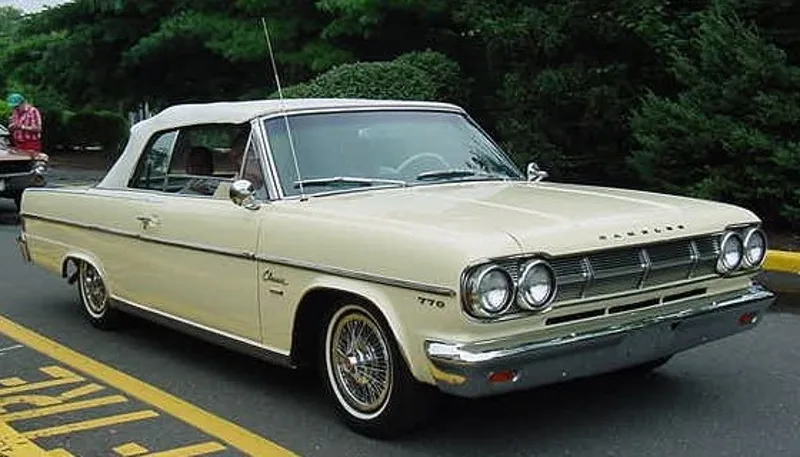
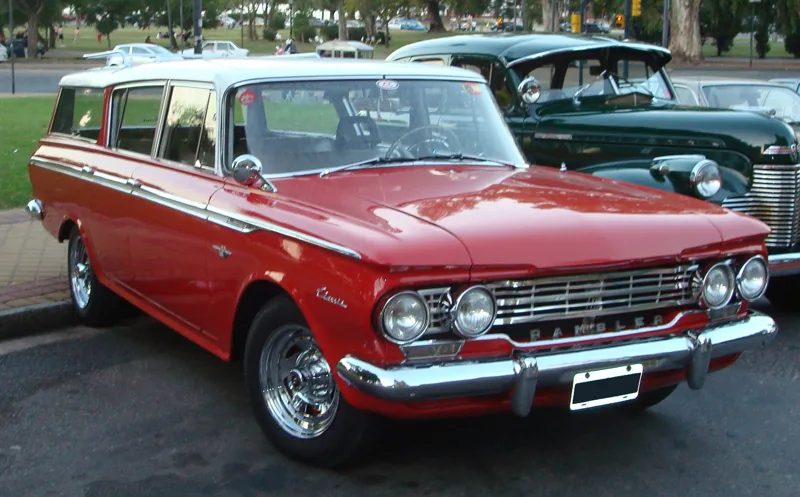
Industrias Kaiser Argentina (IKA) carried on with the engine after 1965. It went into a range of Jeep vehicles and into American Motors passenger cars assembled under licence, and it became best known in the IKA-Renault Torino, an Argentine cross between the Rambler American and the Rambler Classic from AMC, given its own front and rear styling, built from 1966 through 1981.
The Torino made its name in racing. In the 1969 Nurburgring 84-hour endurance race the Argentine team fielded three Torinos. At the finish the number 3 car had completed 334 laps, more than anything else on the track and about 9,450 km (5,872 mi) in distance. Penalty points left it third overall.
The engine itself kept evolving. In 1973 it was renamed Torino to match the car and received a reworked block and crankshaft, with four main bearings becoming seven, plus a new cylinder head. Renault bought out IKA, and in 1975 the IKA name disappeared in favour of Renault Argentina. Street versions grew from 116 kW to 160 kW (155 to 215 hp), and racing versions from 186 kW to 261 kW (250 to 350 hp). A redesigned head with better intake and exhaust ducts did much of the work, helped by a new camshaft, a new exhaust manifold, two 2-inch exhaust pipes and three Weber DCOE 45-45 side-draught carburettors. In AMC-designed cars built by IKA the engine was sold as the Tornado Jet and later the Tornado Interceptor.
The Tornado engine stayed in production through 1982. From 1976 until 1982 the Torino and its engine were the only cars and engines Renault built that it had not designed itself.
The GMC V6: a truck engine nobody else built
The GMC V6 was a family of 60-degree V6 engines built by General Motors' GMC division from 1959 through 1974. It came in gasoline and diesel form, and in V8 and V12 derivatives. Examples went into pickups, Suburbans, heavier trucks and motor coaches.
These were big-block engines, offered at 5.0, 5.8, 6.6 and 7.8 litres (305, 351, 401 and 478 cubic inches), with a good deal of parts commonality between them. Late in production came 6.2 and 7.1 litre versions (379 and 432 cubic inches) with enlarged crankshaft journals.
Why a V6 could be smooth
Most V6 engines need help to run smoothly. Here the answer lay in the geometry: every version used a six-throw crankshaft, meaning each connecting rod had its own crank pin, and combined it with a 60-degree angle between the cylinder banks. The spark plugs sat on the inboard side of the heads and were reached from the top of the engine. That allowed shorter plug leads and kept the plugs clear of the hot exhaust manifolds, a point GMC stressed in its sales literature, and the layout was also seen as easier to service. The engines gained a reputation for durability, easy maintenance and strong torque at low revs.
| Engine | Displacement | Bore x stroke | Output | Notes |
|---|---|---|---|---|
| 305 | 5.0 L | 108 x 91 mm | 112 kW (150 hp) 305A; 127 kW (170 hp) 305E, gross | Standard pickup and Suburban engine, 1960 to 1969 |
| 351 | 5.8 L | 115.8 x 90.9 mm | 145 kW (195 hp) 351C; 189 kW (254 hp) 351M, gross | Introduced 1960; replaced by the 379 in 1973 |
| 379 | 6.2 L | 116 x 98 mm | 127 kW (170 hp), net | A 351 with a 478 crankshaft |
| 401 | 6.6 L | 123.8 x 90.9 mm | 157 kW (210 hp); Magnum 177 kW (237 hp), gross | 1960 through 1972 |
| 432 | 7.1 L | 123.8 x 98.0 mm | 142 kW (190 hp), net | A 401 with a 478 crankshaft |
| 478 | 7.8 L | 130.2 x 98.0 mm | 143 kW (192 hp), net | Introduced 1962 for 6500 series trucks |
GMC 305, 351 and the smaller GMC V6 engines
The 305 was GMC's standard pickup and Suburban engine from 1960 to 1969. The single-barrel 305A made 112 kW (150 hp) at 3600 rpm, with 353 Nm (260 lb ft) on offer from 1600 rpm. Those are gross figures, taken without air cleaner or accessories in ideal conditions, so they flatter the engine compared with net ratings. With a two-barrel carburettor the 305E gave 127 kW (170 hp) at 4000 rpm in 1969.
The letters tell a story. The 305A was standard in the 1000 to 3500 series trucks in 1960 and 1961, then dropped in 1962. The 305D arrived as an option in 1961 and became standard in 1962. The 305E replaced the D in 1963 and stayed until 1969. For the 4000 and 5000 series there were the 305B and the 305C, which was a B with a different manifold and carburettor. The B went in 1962; the C carried on to 1974.
The 351 appeared in 1960 as a C series, an E series and a Magnum series. The E and M versions were fitted with a bigger two-barrel carburettor and an open-port intake, and had enlarged ports, bigger valves and heavier-breathing exhaust manifolds. The 351C made 145 kW (195 hp), while the 351M made 189 kW (254 hp) and a hefty 599 Nm (442 lb ft) in 1969. The 351E did not share parts with the 305E. The 351E was the light-duty variant, effectively a 351M lacking the oil-driven governors, and it served in 1000 to 3500 series trucks from 1966 to 1969, while the other 351s went into medium-duty trucks. The 351 or 351C went into some 4000, 5000 and 6000 series trucks from 1962 to 1972.
The larger Magnum engines: 379, 401, 432 and 478
GMC built its bigger sixes largely by mixing parts. The 379 was a 351 with a 478 crankshaft, rated at 127 kW (170 hp) net and 376 Nm (277 lb ft). The 401 was a further enlargement of the 351, built from 1960 through 1972, making 157 kW (210 hp) gross and 511 Nm (377 lb ft); the Magnum version, introduced in 1966, reached 177 kW (237 hp) at 4000 rpm. It served in the 5500 and 6000 series and the H-5000, and buyers of the W-5000 and SP-5000 could also order it. The 432 was a 401 with a 478 crankshaft. In 1973 and 1974 it was rated at 142 kW (190 hp) net, with 449 Nm (331 lb ft) in 1973. It was a Magnum engine in all but name.
The 478 was introduced in 1962 for the 6500 series. At 7.8 litres, and rated at 143 kW (192 hp) net, it ranks among the largest V6 engines ever built.
The GMC 637 V8 and the 702 Twin Six V12
The 637 is essentially a V8 version of the 478. It shares the 130.2 mm by 98.0 mm dimensions and a single camshaft, displaces 10.4 litres (637 cubic inches), and was the biggest gasoline V8 ever put into a production highway truck.
The 702 'Twin Six' V12 went further still. At 11.5 litres it made 205 kW (275 hp) gross in 1965, peaking at 2400 rpm, with a huge 854 Nm (630 lb ft) of torque. Buyers of 7000 series trucks could have it from 1960, and Canadian customers could special-order it. It was a separate design cast as one block, carrying four exhaust manifolds, a pair of carburettors with a pair of intake manifolds, and two distributor caps run from a single drive. Other parts came from the 351 V6, and GMC kept 56 major parts common with its V6 engines to make spares easier to find. Production ran until 1966, when the 637 V8 replaced it. Fewer than 5,000 were built, by estimate, and fewer than 200 are believed to exist as of 2021.
ToroFlow diesels
GMC added naturally aspirated four-stroke diesels for the 1965 model year, advertised as ToroFlow. The D351, D478 and DH478 all ran a 17.5:1 compression ratio. They shared displacement, bore and stroke with the gasoline engines, but very few parts. The blocks were a chromium-nickel iron alloy with the same 60-degree layout. They had no relationship to the two-stroke Detroit Diesel engines General Motors built at the same time.
The D351 made 88 kW net (118 hp) at 3200 rpm with 302 Nm (223 lb ft) of torque, and was discontinued for the 1967 model year. The D478, which can be regarded as a de-tuned DH478, made 101 kW net (135 hp) and 361 Nm (266 lb ft). The DH478 raised that to 116 kW (155 hp) and 390 Nm (290 lb ft), and added a standard oil cooler, an option on the D478. The V8 diesels, the D637 and DH637, kept the 17.5:1 ratio and were introduced in 1966 on 70-series trucks to rival the already established two-stroke Detroit Diesel 6V-53N. The D637 produced 138 kW net (185 hp) at 2600 rpm, and the slightly higher-revving DH637 produced 153 kW net (205 hp) at 2800 rpm.
The end of the line
In 1974 GMC discontinued the V6. From then on its gasoline models used Chevrolet straight-six and V8 engines, and diesels were dropped from medium-duty models until 1976.