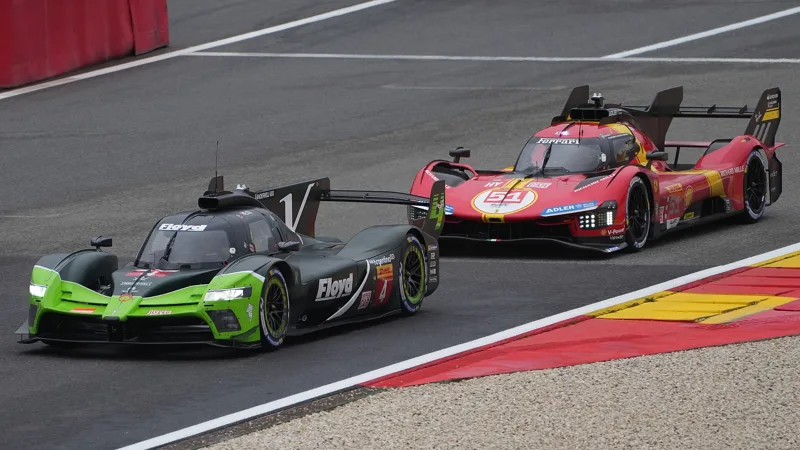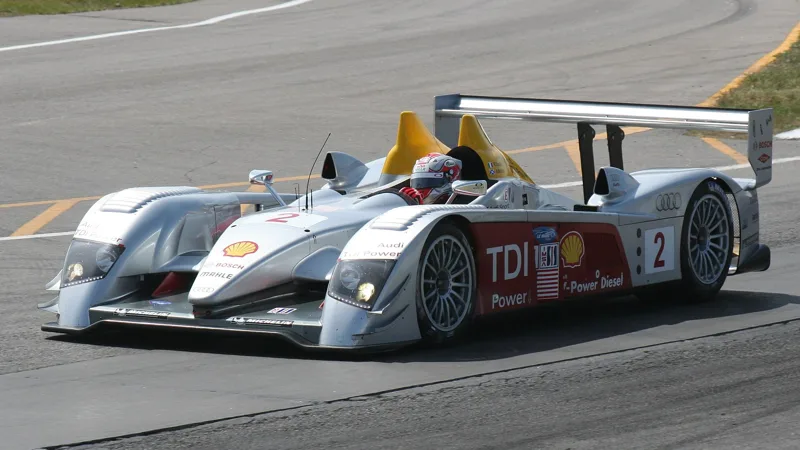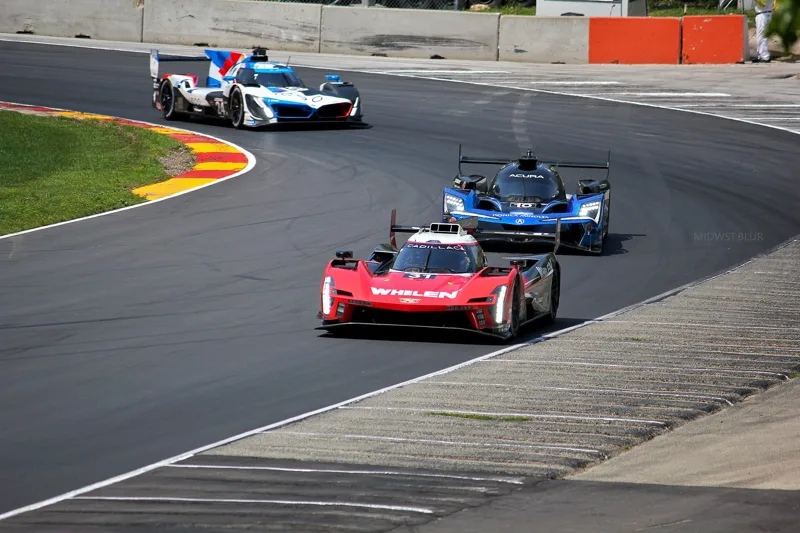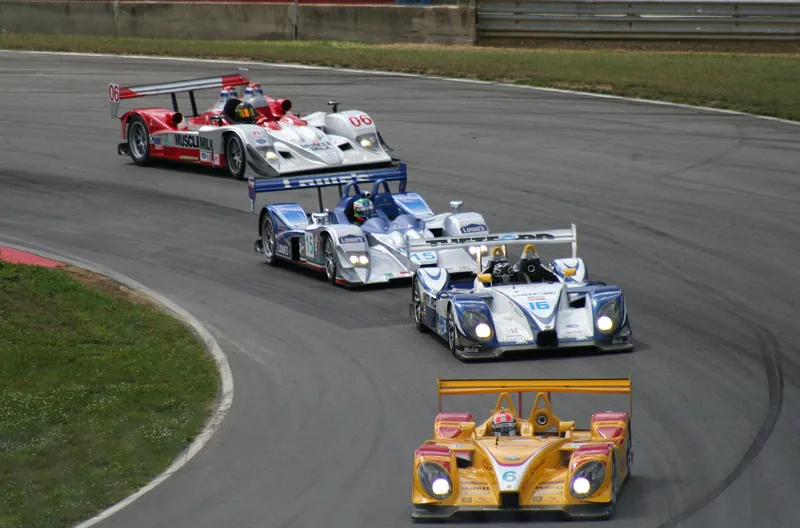
An American podium at Le Mans, an Italian name revived after decades and a French factory win at Fuji: how the SCG 007, Tipo 6 and A424 reached the top class.
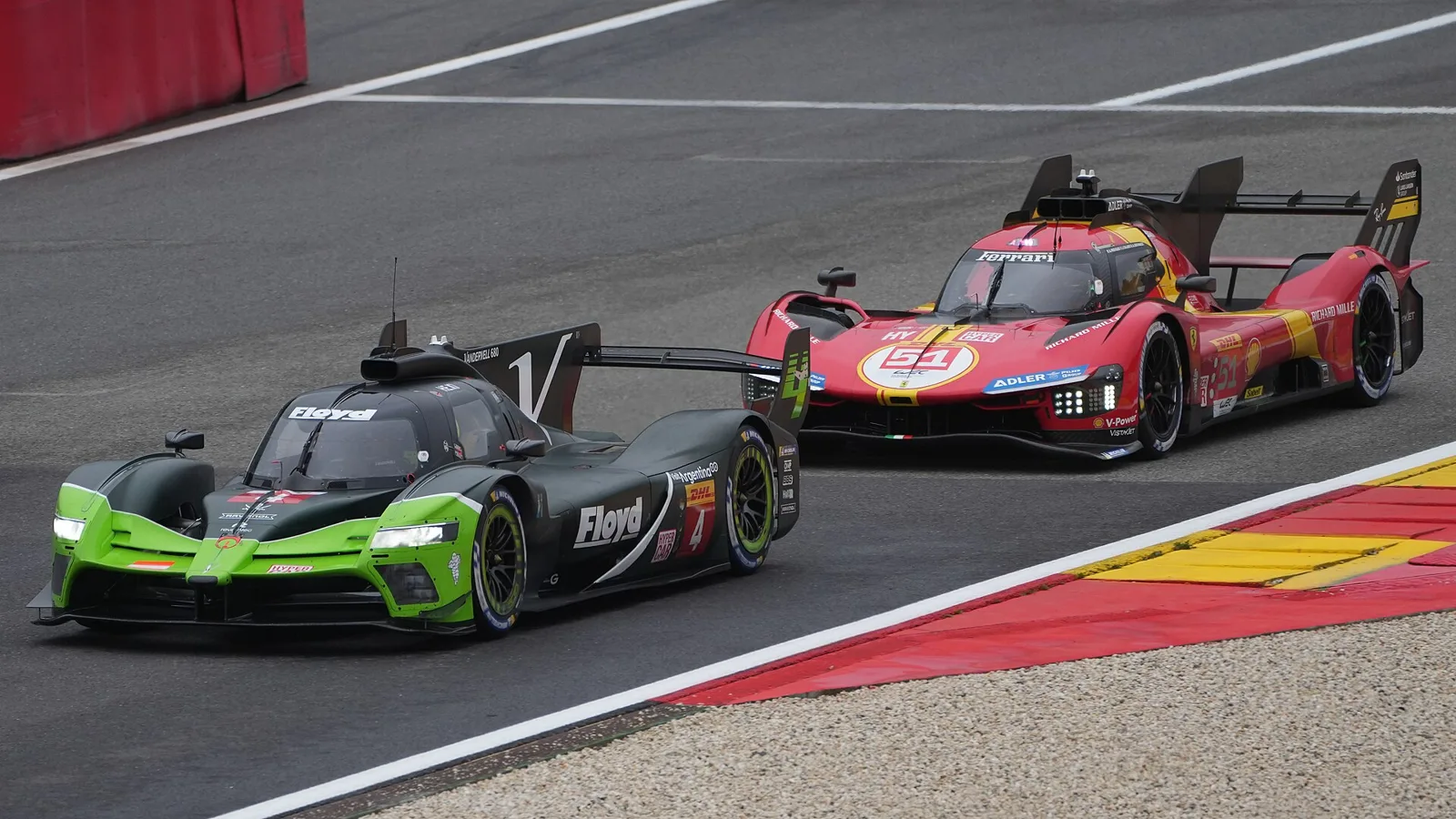
The Glickenhaus SCG 007, Isotta Fraschini Tipo 6 and Alpine A424 are three Le Mans Hypercar class entries from very different teams. The American car finished third at Le Mans in 2022, the Italian car raced in 2024 before withdrawing, and the French car won at Fuji in 2025.
In 2022 a small American team did something no US sports car had done at Le Mans in 53 years: it finished on the overall podium, the first since a Ford GT40 won the race in 1969. The Glickenhaus SCG 007 LMH took third and fourth at the 24 Hours, and its story sits alongside two other newcomers to the Le Mans Hypercar class, the Isotta Fraschini Tipo 6 and the Alpine A424.
All three entered the top class of the FIA World Endurance Championship, but they got there by very different roads. One came from a film producer with a long-held interest in a sports prototype, one from an Italian name that had been dormant for decades, and one from a French manufacturer with a proper factory programme behind it.
What is the Glickenhaus SCG 007 LMH?
The SCG 007 LMH comes from Scuderia Cameron Glickenhaus, an American manufacturer, and was designed to race in the Hypercar class at Le Mans and in the World Endurance Championship. It first raced at Portimao in 2021 and has a bespoke twin-turbo V8 engine.
The idea began with a rule change. In June 2018 the new Le Mans Hypercar regulations were introduced to replace the outgoing LMP1 rules. James Glickenhaus, an American film producer and the company's founder, called them a natural and wonderful direction, though he stressed that a project would need a high level of investment. He had flirted with the idea before: in 2014 he showed sketches of a prototype based on the Ferrari P4/5, a car he had commissioned with Pininfarina.
On 27 July 2018 the team announced its entry and presented the car it would race, the SCG 007 LMH. That made Glickenhaus the first manufacturer to commit to the Hypercar rules, and it led to the first non-hybrid car in the class. The chassis was developed with Podium Advanced Technologies. Sauber Motorsport brought aerodynamic know-how and time in its wind tunnel, while Joest Racing looked after much of the team's race-weekend logistics.
The engine is a bespoke 3.5-litre twin-turbocharged V8 from the French firm Pipo Moteurs, based on the company's inline-four engines from the World Rally Championship. Testing started at Vallelunga in February 2021, where Romain Dumas drove the car in public for the first time.
Three newcomers reached the top class of Le Mans racing by three very different roads.
How did the Glickenhaus hypercar do at Le Mans and in the WEC?
The Glickenhaus hypercar built a respectable record in 2021 and 2022, then faded as bigger manufacturers arrived. Its best moments were a first overall podium at Sebring in 2022, two poles and a third and fourth at Le Mans that year.
The start was untidy. The team could not run the 2021 season opener at Spa-Francorchamps because homologation tests were not finished in time. Its first race, at Portimao, was hampered by heavy tyre wear caused by high brake temperatures and long repairs after a crash. At the next round, the 2021 6 Hours of Monza, the car finished fourth overall and third in its class. Dumas, Ryan Briscoe and Richard Westbrook were announced for Portimao, and Pipo Derani, Gustavo Menezes and Olivier Pla for the second entry at Monza. Franck Mailleux joined the number 709 car at Monza in place of Briscoe, then moved to the number 708 ahead of Le Mans, taking Menezes' place.
For 2022 the team committed to one car for the full season and added a second only for Le Mans. The number 708 finished third at the 2022 1000 Miles of Sebring, the team's first overall podium. At the next round at Spa, Glickenhaus took its first pole, but miscommunication with Derani dropped the car to ninth overall. At Le Mans the pair of cars finished third and fourth, the best pair of results the model has had. At Monza that year it took another pole and was on course to challenge Toyota and Alpine for overall victory before a turbocharger failure ended its race.
The IMSA door that stayed shut
When the Le Mans Hypercar and LMDh regulations converged for 2023, Glickenhaus wanted to take the car to the IMSA SportsCar Championship in North America. IMSA refused, confirming a mandate of 2,500 road cars per year. James Glickenhaus voiced his frustration and said that being shut out of IMSA made it harder to attract sponsors, even though the series is held in his home country.
The 2023 World Endurance Championship season, again with one car, proved less fruitful. Cadillac, Ferrari, Peugeot and Porsche had joined the series, and the SCG 007 LMH lacked competitiveness and qualified towards the back all year. Its best result came at the 2023 24 Hours of Le Mans, where the cars finished sixth and seventh overall.
In October 2023 the team said it would not return in 2024 because it lacked substantial funding, and it moved its resources to road car projects. An Evo performance upgrade, revealed afterwards by Podium Advanced Technologies, was left undeveloped.
Did the Glickenhaus SCG 007 become a road car?
In a limited form, yes. In May 2025 the company teased a three-seater road version called the SCG 007S on Instagram, then unveiled it at the Concorso d'Eleganza Villa d'Este on Lake Como later that month. Only 24 units were built.
The 007S is based on the race car's platform but is otherwise entirely bespoke, though it shares some mechanical parts such as the double wishbone push-rod suspension, tweaked for road use. Its engine is different: a 6.2-litre twin-turbocharged V8 producing 1,000 hp (750 kW; 1,000 PS), connected to a 7-speed automated manual gearbox. The car weighs 3,417 lb (1,550 kg), and it wears the blue livery the race car carried before the 2022 6 Hours of Monza.
Where did the Isotta Fraschini Tipo 6 LMH-C come from?
Michelotto Engineering developed the Isotta Fraschini Tipo 6 LMH Competizione, also known as the Tipo 6 LMH-C, as a Le Mans Hypercar. It was the first race car to wear the badge since the Tipo FE of 1908, a gap of 116 years.
Isotta Fraschini had been missing from the car industry for nearly seven decades. The D65 and D80 were the last mass produced cars in 1955, and two concept cars in the late 1990s, the T8 and T12, never reached production as the firm went bankrupt in 1999. The brand was relaunched in 2022 as Isotta Fraschini Milano Fabbrica Automobili, put together by Alessandro Fassina and Enzo Panacci, both ex-rally drivers, with Claudio Berro, who used to work at Lotus, and Giuliano Michelotto, a Ferrari engineer in his earlier career.
The group wanted a Hypercar programme and lined up partners: Williams Advanced Engineering, HWA Team, Xtrac Limited and Michelotto's own manufacturing company. Michelotto Engineering completed the design and development of the car entirely and holds 100% of its intellectual property rights. The first renders appeared in October 2022, and the car was unveiled at the Automobile Club di Milano in March 2023.
The powertrain is an HWA-tuned 3.0-litre 90-degree turbocharged V6, joined by a Bosch electric motor on the front axle. Together they produce around 700 hp (520 kW; 710 PS). Testing took place at Monza with Vector Sport and Marco Bonanomi, but Vector Sport, which had been due to race the car, split from the project and complained that no data had been supplied. A day later the Italian firm announced it would contest the 2024 championship with Duqueine Team.
How did the Isotta Fraschini Tipo 6 race?
The Tipo 6 LMH Competizione made its official debut at the 2024 Qatar 1812 km. It was the most budget-limited team on the Hypercar grid that year, and the car ran down on pace from the rest of the field. Its best result was a finish at Le Mans.
That Le Mans run was clean and reliable, even though the car finished 7 laps behind the next-best Hypercar. Because it ran with few problems, it finished 14th and ahead of fellow newcomers BMW and Alpine, whose cars suffered mechanical trouble and accidents.
At Sao Paulo the car received the largest balance-of-performance boost, an adjustment series use to even out rival machines. Jean-Karl Vernay took it from 19th to 15th in the opening laps and held the place for the first 30 minutes, but the car eventually retired with an engine failure.
Before the 2024 Lone Star Le Mans, on 21 August 2024, Isotta Fraschini announced it was withdrawing from the 2024 championship after a dispute with Duqueine. It stressed that it expected to return in 2025, said it would restructure its motorsport programme and said it would put resources into expanding its road car division. In 2026 it teamed up with High Class Racing, targeting the 2026-27 Asian Le Mans Series with the car.
Track and road versions
The Tipo 6 LMH Pista is an unrestricted, track-only version of the Competizione. The Tipo 6 LMH Strada, unveiled in November 2023, is a street-legal single-seater with a 3.0-litre V6 and a hybrid system that together produce 1,020 hp (760 kW; 1,030 PS). It is to be priced at about 3.25 million euros, and only 12 will be built.
What is the Alpine A424?
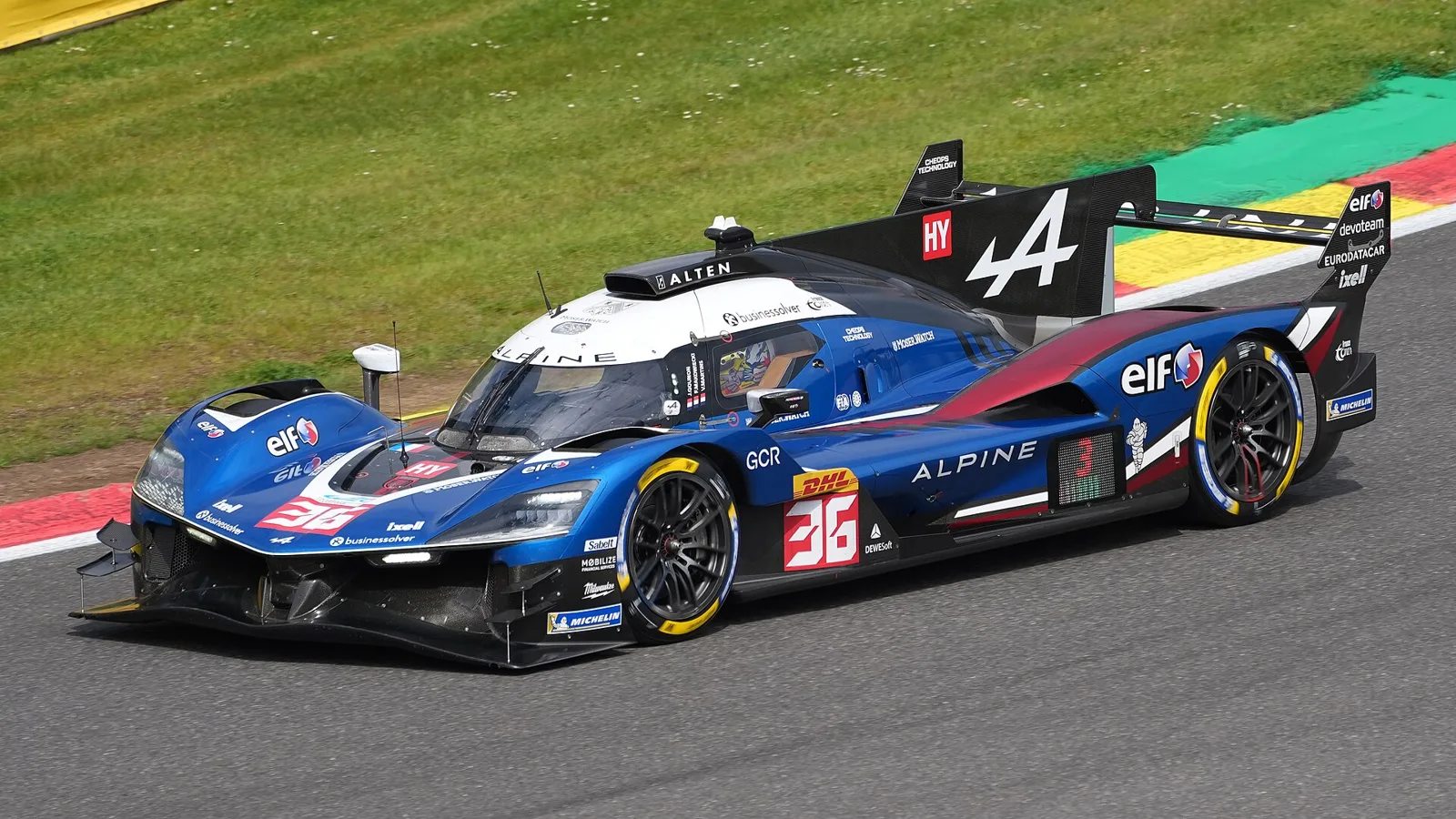
The Alpine A424 is an LMDh sports prototype. Automobiles Alpine designed it, Oreca built it, and it runs in the Hypercar class. Alpine announced the programme on 5 October 2021 for the 2024 season, and Oreca was named as chassis supplier on the same day.
A show car, the A424_beta, was shown on 9 June 2023 at the 24 Hours of Le Mans. The car is hybrid: a Mecachrome-based single-turbocharged V6 combines with standardised hybrid parts from Williams Advanced Engineering, Bosch and Xtrac, and Signatech runs two cars. The chassis is the next-generation Oreca LMP2 design. The engine is described as a heavily modified version of the Mecachrome V634 used in the FIA Formula 2 Championship, and Alpine confirmed that it has no connection with the unit that briefly powered the 2018 Ginetta G60-LT-P1.
Development moved fast. Dyno tests on the engine finished on 28 June, the car was first fired up on 5 July, and two shakedown tests followed at Lurcy-Levis at the end of August. Testing continued at Circuit Paul Ricard, Motorland Aragon, Jerez and Portimao, and Alpine revealed its 2024 driver line-up on 22 November 2023.
How did the Alpine A424 do in the WEC?
The A424 won at the 2025 6 Hours of Fuji and took a maiden pole position at the 2026 race on the same circuit. Its first season, 2024, brought a fifth at the Lone Star Le Mans, a podium at Fuji and fourth place in the constructors' standings.
It debuted at the 2024 Qatar opener, one of four new manufacturers joining the series, alongside BMW, Lamborghini and Isotta Fraschini. Paul-Loup Chatin, Ferdinand Habsburg and Charles Milesi drove the number 35, with Nicolas Lapierre, Mick Schumacher and Matthieu Vaxiviere in the number 36. The number 35 finished seventh, the only points-scoring result among the newcomers. After Habsburg was injured in a testing crash, reserve driver Jules Gounon covered the next two rounds at Imola and Spa-Francorchamps.
Le Mans in 2024 was painful. Both cars suffered catastrophic turbo failures inside the first six hours and retired, despite showing good pace. Engine upgrades began at once, reached the cars in time for the Lone Star Le Mans, and the number 35 finished fifth, Alpine's best result so far. At Fuji the number 36 took third for the team's first podium, and a fourth place for the number 35 in Bahrain sealed fourth in the constructors' standings.
For 2025 the engine was updated again and the line-ups were tweaked. Frederic Makowiecki, a former Porsche Hypercar driver, and Gounon, promoted from reserve to full-season driver, replaced Vaxiviere and Lapierre. Alpine secured the first A424 win at the 2025 6 Hours of Fuji by taking only two tyres at the final pit stop, which put it ahead of Peugeot and Porsche. It was the team's first win in the series since the 2022 6 Hours of Monza.
In 2026 a rained-out qualifying session at Fuji meant the grid was set by the fastest free practice times. That put Alpine on the front row and gave the A424 its maiden pole. The team ran most of the race in the lead, but a late safety car let Toyota take the lead at the restart, and Alpine settled for second and fourth.
How do the three Le Mans Hypercar entries compare?
| Detail | Glickenhaus SCG 007 LMH | Isotta Fraschini Tipo 6 LMH-C | Alpine A424 |
|---|---|---|---|
| Builder | Scuderia Cameron Glickenhaus | Michelotto Engineering | Designed by Alpine, built by Oreca |
| Engine | 3.5-litre twin-turbo V8 | 3.0-litre 90-degree turbo V6 | Single-turbo V6 |
| Hybrid system | None, the first non-hybrid in the class | Bosch front-axle electric motor | Williams Advanced Engineering, Bosch and Xtrac parts |
| WEC debut | 2021 8 Hours of Portimao | 2024 Qatar 1812 km | 2024 Qatar |
| Best overall result | Third at Sebring 2022; third and fourth at Le Mans 2022 | 14th at Le Mans 2024 | Win at the 2025 6 Hours of Fuji |
| WEC status | Not entered after 2023 | Withdrew in August 2024 | Racing, 2026 season listed as ongoing |
Where each Hypercar programme stands now
Isotta Fraschini has a 2026 partnership with High Class Racing, with the 2026-27 Asian Le Mans Series as the aim and a potential return to the 24 Hours of Le Mans beyond that. The Alpine A424 is still racing, with the 2026 championship listed as ongoing.
Glickenhaus left the World Endurance Championship after 2023 and has focused on road cars since, including the 24-unit SCG 007S. The Evo upgrade planned for the SCG 007 LMH was never developed.