From a lost rider in the Tenere desert to Saudi Arabia in 2026, how the Dakar Rally works, where it has been and which makers have won it.
The Dakar Rally is an annual off-road endurance race, called a rally raid, run by the Amaury Sport Organisation. Started in 1978 from Paris, it has been held in Saudi Arabia since 2020. The 2026 edition ran 14 days and was won in the cars class by Nasser Al-Attiyah.
Thierry Sabine got lost in the Tenere desert, and the hardest race in motorsport grew out of his mistake. He was competing in the 1975 Rallye Cote-Cote between Abidjan and Nice when the sand swallowed his route, and the experience convinced him that the desert deserved a regular rally of its own. The Dakar has been crossing it ever since.
What is the Dakar Rally, and why is it a rally raid?
The Dakar is an annual event run by the Amaury Sport Organisation (ASO), and it belongs to a category called rally raid. Think of a conventional stage rally as a sprint over closed roads and a rally raid as an expedition with a stopwatch attached. The ground is rougher, the distances are longer, and the vehicles are built specifically for unpaved country. Cars, trucks, quads and motorcycles all start.
The timed sections are called special stages. They cross dunes, mud, camel grass, rocks and erg, and a single day's stage can range from a few dozen kilometres up to 800-900 km (500-560 mi). Length is only part of the test. Competitors face long hours of driving, constant navigation and punishing weather, and thin experience of desert navigation, mechanical fault-finding or endurance racing, once fatigue sets in, often ends in accidents and serious injuries.
Anyone can enter, amateur or professional, although professionals typically make up about eighty percent of the field. Since 2022 the rally has counted towards the World Rally-Raid Championship, usually shortened to W2RC. The event was formerly known as the Paris-Dakar Rally, a name that tells you where it began.
Strip away the workshop and the crews have to rely on what they carry and on each other.
How does the Dakar Rally work day to day?
The 2026 edition makes a good worked example. It ran from 3 to 17 January 2026 and was the opening round of that year's World Rally-Raid Championship. Riders and drivers faced 14 days of racing, split into a prologue and 13 stages.
The stages came in several flavours. There were four loop stages, which circle back to where they began, and four split-route stages run as two back-to-back pairs. In the split stages the cars and trucks followed a different route from the bikes, so the two groups did not share the same ground.
Then came the marathon sections. Stage four was a hybrid of a 48h Chrono format and a marathon, with a bare-bones bivouac where competitors could help one another without time limits and class T5.2 trucks reached the camp to assist. Stages nine and ten formed a more traditional marathon, again with only a minimal bivouac. The idea is simple enough: strip away the workshop, and the crews have to rely on what they carry and on each other.
Class structure is wide. Besides the headline car category the 2026 rally had Stock, Challenger (T3) and SSV (T4) classes, plus trucks, classics and the Mission 1000 category for zero-emission or hybrid drives, which was in its third year. For bikes, the Rally2 class covers entries eligible for the FIM World Rally-Raid Cup.
The toughest bike class is Malle Moto, where bikes and quads compete without any assistance. Each rider gets one trunk from the organisers for personal belongings, spare parts and tools. The permitted kit is one headlight, one set of wheels, one set of tyres, one tent with sleeping bag and mattress, one travel bag and a 25-litre (6.6 gallon) backpack. Generators, compressors and toolboxes in the bivouac are free to use.
Where has the Dakar Rally route been?
| Period | Where it ran | What stands out |
|---|---|---|
| 1978 to 2007 | Paris to Dakar at first, then a shifting set of starts and finishes in Europe and Africa | 182 starters in 1978, a record 688 in 2005 |
| 2008 | Cancelled; a Central Europe Rally in Hungary and Romania stood in as the legal 2008 edition | Called off on 4 January 2008 |
| 2009 to 2019 | South America | 501 competitors in 2009 |
| 2020 onwards | Saudi Arabia | The 2026 edition was the seventh held there |
The first running left Paris in 1978 with 182 vehicles, and only 74 of them survived the 10,000 km (6,200 mi) trip to the Senegalese capital. Cyril Neveu won on a Yamaha. Numbers climbed quickly, from 216 starters in 1980 to 291 in 1981 and 427 in 1984, before peaking at 603 in 1988. By 1993 the entry list had slumped to 153, around a quarter of that peak.
Organisers kept moving the furniture to win entries back. In 1992 the finish line shifted to Cape Town in South Africa, and GPS was used for the first time. The route turned back to Paris in 1994, ran exclusively in Africa in 1997 between Dakar and Agadez in Niger, and reached Cairo in 2000. The familiar Paris-Dakar route was used for the last time in 2001. Later starts came from Arras, Marseille, Clermont-Ferrand, Barcelona and Lisbon, and 2007 was the final African event.
Why did the Dakar move to Saudi Arabia?
Security. Organisers called off the 2008 rally, meant to leave from Lisbon, on 4 January 2008 because of attack fears in Mauritania, where four French tourists had been killed in 2007. Chile and Argentina offered to host, the ASO accepted for 2009, and the Dakar ran in South America from 2009 to 2019.
Saudi Arabia has been home since 2020, and the rally kept its name through that move just as it did through earlier route changes.
The 2026 route shows how the organisers now use the country. It started and finished in Yanbu, passed through the desert stages around Ha'il and Al-Qassim, and reached Riyadh for the rest day. It skipped the Empty Quarter and headed west into regions the event had not visited before: Al-Bahah, Aseer and Jizan. The calendar around it was tight, with registration open from 7 June to 20 October 2025, scrutineering and loading in Barcelona from 27 to 29 November, offloading in Yanbu on 30 December and final checks on 1 and 2 January.
Which cars and makers win the Dakar Rally?
| Maker | Winning years named in the rally's history | Drivers named |
|---|---|---|
| Porsche | 1984, at its first attempt | Rene Metge |
| Mitsubishi | 12 car wins in all, the first in 1985 | Patrick Zaniroli, Hubert Auriol, Bruno Saby, Kenjiro Shinozuka, Jutta Kleinschmidt, Hiroshi Masuoka, Luc Alphand, Stephane Peterhansel |
| Peugeot | 1987 to 1990, then 2016 to 2018 | Ari Vatanen, Juha Kankkunen, Stephane Peterhansel |
| Citroen | 1991, then 1994 to 1996 | Ari Vatanen, Pierre Lartigue |
| Volkswagen | 2009 to 2011 | Giniel de Villiers, Carlos Sainz, Nasser Al-Attiyah |
| X-raid Mini | 2012 to 2015 | Stephane Peterhansel, Nani Roma, Nasser Al-Attiyah |
| Audi | 2024 | Carlos Sainz |
Porsche set an early tone. It entered in 1984 at the urging of 1983 winner Jacky Ickx, and Rene Metge won first time out. Mitsubishi began its long association in 1983 and took its first victory in 1985. It would add eleven more, with the association lasting until 2009, and in 2006 it took a sixth consecutive win with former skiing champion Luc Alphand.
The late 1980s belonged to Peugeot, and the drama came with it. In 1988 Ari Vatanen's car was taken from the service area at Bamako. It was found again, but he was disqualified and teammate Juha Kankkunen inherited the win. Vatanen then won in 1989 and 1990, and a third straight victory in 1991 came for Citroen once Peugeot had left to focus on sportscar racing.
Outsiders broke through as well. Kenjiro Shinozuka became the first non-European winner in 1997. In 1999 Jean-Louis Schlesser won in a buggy he had been building himself since 1992, with Renault backing, beating the works Mitsubishi and Nissan teams. In 2001 Jutta Kleinschmidt became the first woman to win, although only after Schlesser was given a one-hour penalty for unsportsmanlike conduct.
Volkswagen won in 2009 with Giniel de Villiers, and Carlos Sainz and Nasser Al-Attiyah followed, but the German maker then left to concentrate on the World Rally Championship, leaving the car class with no factory entries. X-raid, running Minis, filled the gap. Stephane Peterhansel took the 2012 win, his fourth in the car class and tenth overall, and won again in 2013. Nani Roma won in 2014, a decade after his bike title, and Al-Attiyah in 2015. Peugeot came back that year with an all-new diesel two-wheel-drive car, struggled, then won with Peterhansel in 2016, 2017 and 2018 before leaving officially.
On two wheels the pattern was just as lopsided. Neveu collected five motorcycle wins, and Peterhansel matched that tally in 1997 and passed it in 1998. KTM took its first Dakar win in 2001 with Fabrizio Meoni, beginning a streak that lasted through 2019.
Can an electric-drive car win the Dakar?
It already has, though this one carries a petrol engine too. The Audi RS Q e-tron, unveiled in 2021 and built under the brand's battery-electric e-tron sub-brand, is a purpose-built rally raid car, and a slightly updated version took the 2024 Dakar with Carlos Sainz at the wheel. Audi announced its intention to compete on 30 November 2020, and on 11 December that year Q Motorsport became its factory team.
The engineering is unusual. Two electric motors from Audi's Formula E programme drive the car, one on each axle, with a combined output under 288 kW (386 hp). A TFSI petrol engine rated at approximately 200 kW (270 hp) sits alongside them, and the car's energy converter has a maximum charging power of 220 kW (300 hp). Put simply, this is a racing car that mixes electric drive with an engine on board, rather than one that depends on a plug in the desert.
It was not an easy start. In 2022 navigation errors from all three crews cost them hours on the first day, and mechanical problems piled up. Even so, each of the three drivers won a stage and Sainz took stage 11 as well, making four stage wins on debut. Earlier that year Peterhansel and Edouard Boulanger had won the Abu Dhabi Desert Challenge, the first victory for an electric car in a rally raid. Peterhansel likened the 2023 drive to a boxing match, which hints at the sharp acceleration and rigid seats.
Dakar Rally 2026 results
Nasser Al-Attiyah won the cars class of the 2026 rally, his sixth Dakar victory. Luciano Benavides of Argentina won the bikes category. That puts Al-Attiyah on a list that already includes his 2011 win with Volkswagen and his 2015 win with X-raid's Minis, which gives him a longer span of success than most.
What does the Dakar mean for people who buy or drive cars?
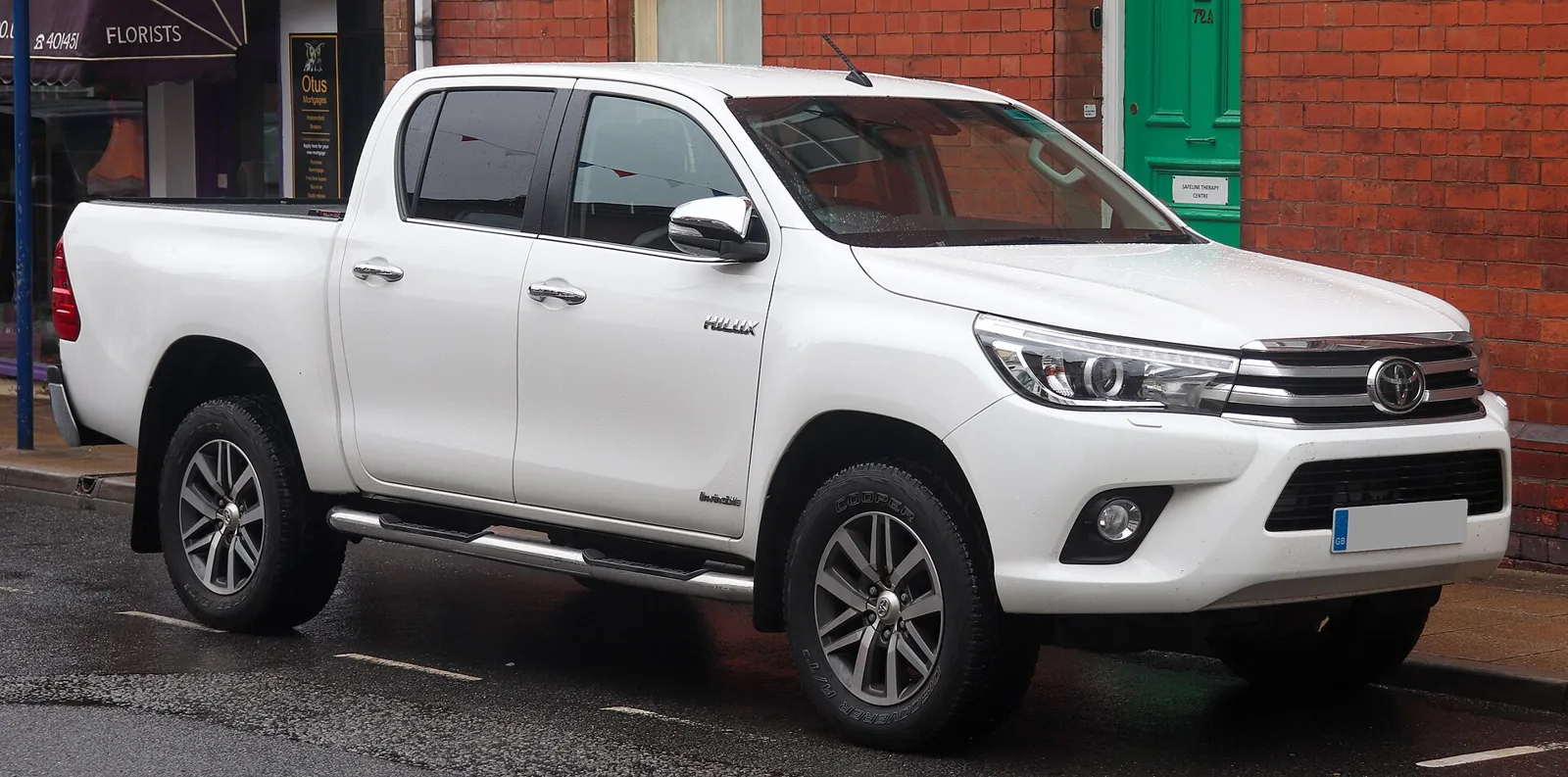
The prototypes at the sharp end bear little resemblance to anything on a dealer forecourt. The vehicles that most drivers recognise are pickups such as the Toyota Hilux, which began production in March 1968 with a 1.5-litre four-cylinder engine making 77 PS (57 kW; 76 hp). By the 2017 count, 17.7 million had been sold worldwide. Since the seventh generation arrived in 2004 it has shared a ladder-frame platform called IMV with the Fortuner SUV and the Innova people-mover.
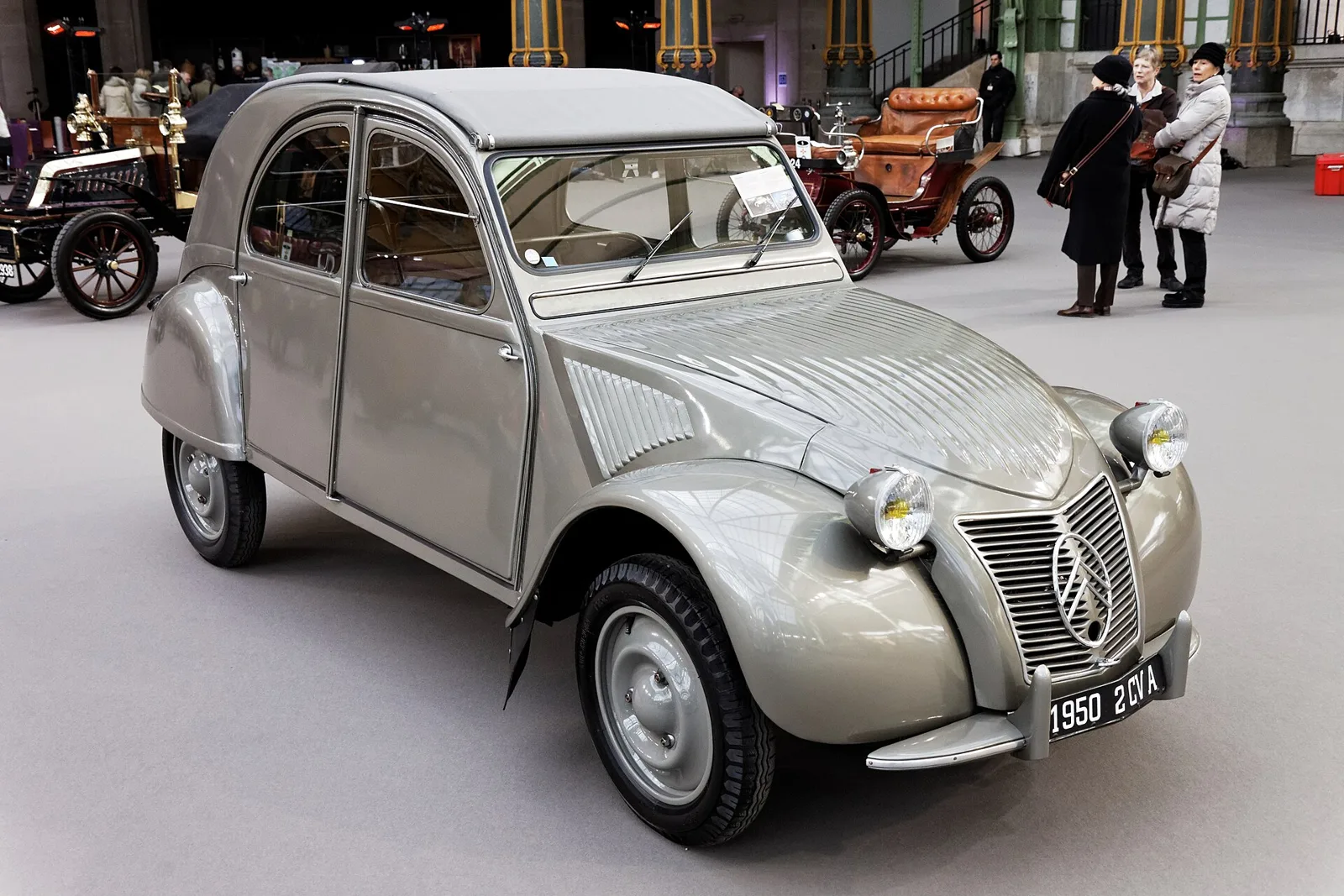
That is a useful yardstick, because it shows how wide the Dakar field is. The rally takes in everything from factory prototypes to Stock and Classics classes, and its early entry lists included odd privateer choices, from a Rolls-Royce and a Citroen CX in 1981 to a privately entered Renault 20 that won the car class in 1982.
The more practical lesson comes from Audi. A car that combines electric motors with a petrol engine and an energy converter has won the Dakar, which tells a buyer the idea can survive punishing conditions.
Where this goes next
The 2026 rally was the first round of the 2026 World Rally-Raid Championship, so the Dakar now opens a season rather than standing alone. The Mission 1000 category, for zero-emission and hybrid drives, was in its third year in 2026, and the new Saudi regions of Al-Bahah, Aseer and Jizan joined the route for the first time.