A front-drive sensation that sold 1,174, an air-cooled luxury marque, a gangster favourite and a 1916 engine that revved to 3,400 rpm.
Cord, Franklin, Terraplane and Hudson Super Six were American car names of the early to mid twentieth century. Cord built front-wheel-drive luxury cars, Franklin built air-cooled cars in Syracuse, and Hudson of Detroit built the cheap, quick Terraplane and the Super Six, which set speed marks.
At the New York Auto Show in November 1935 the Cord 810 was the star. Buyers placed orders at the stand, with Christmas delivery promised and 1,000 cars a month expected. In the whole of its first model year, Cord sold 1,174. Beside the Cord come three more American names: Franklin, Terraplane and the Hudson Super Six.
What was the Cord automobile?
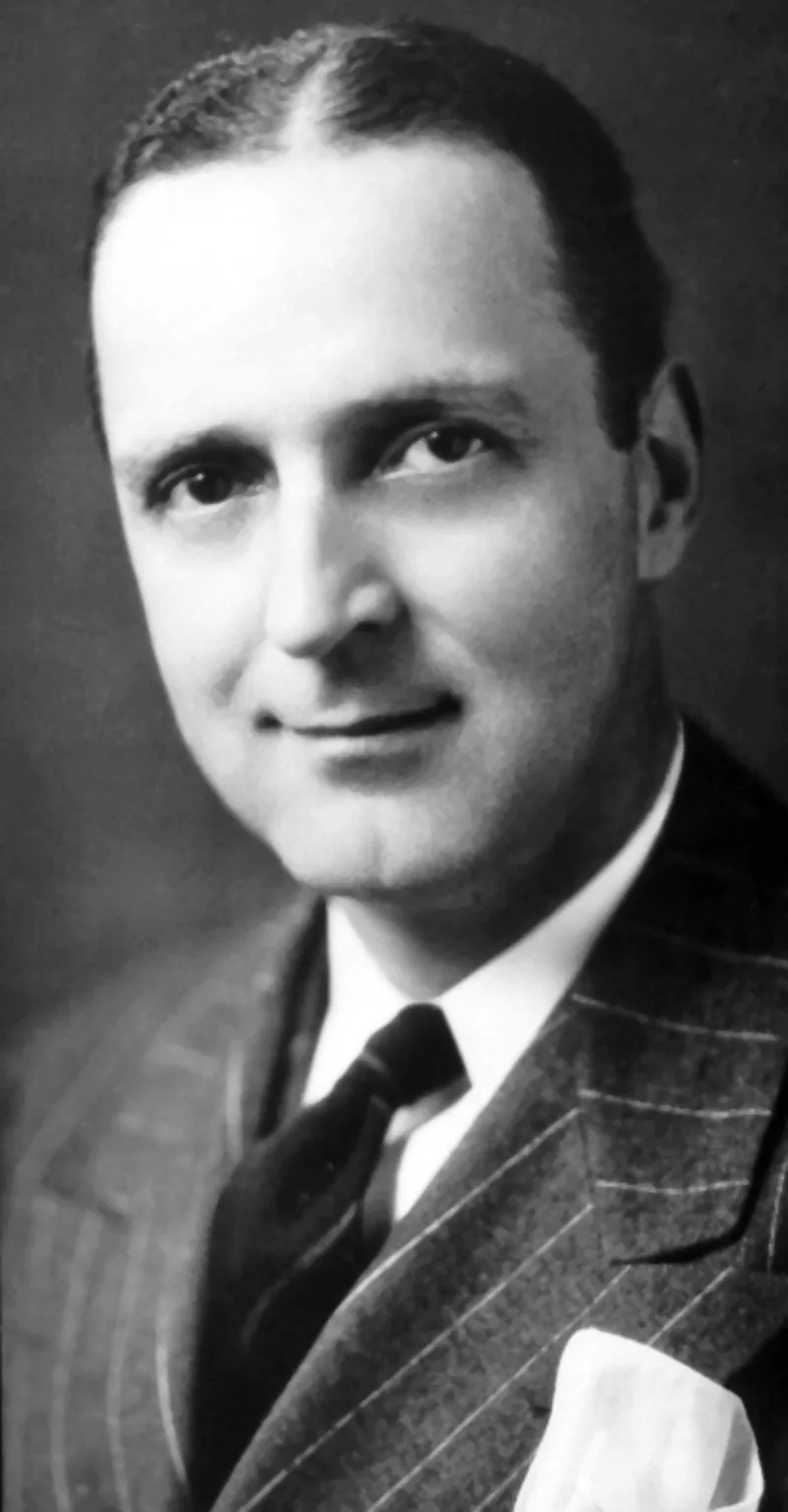
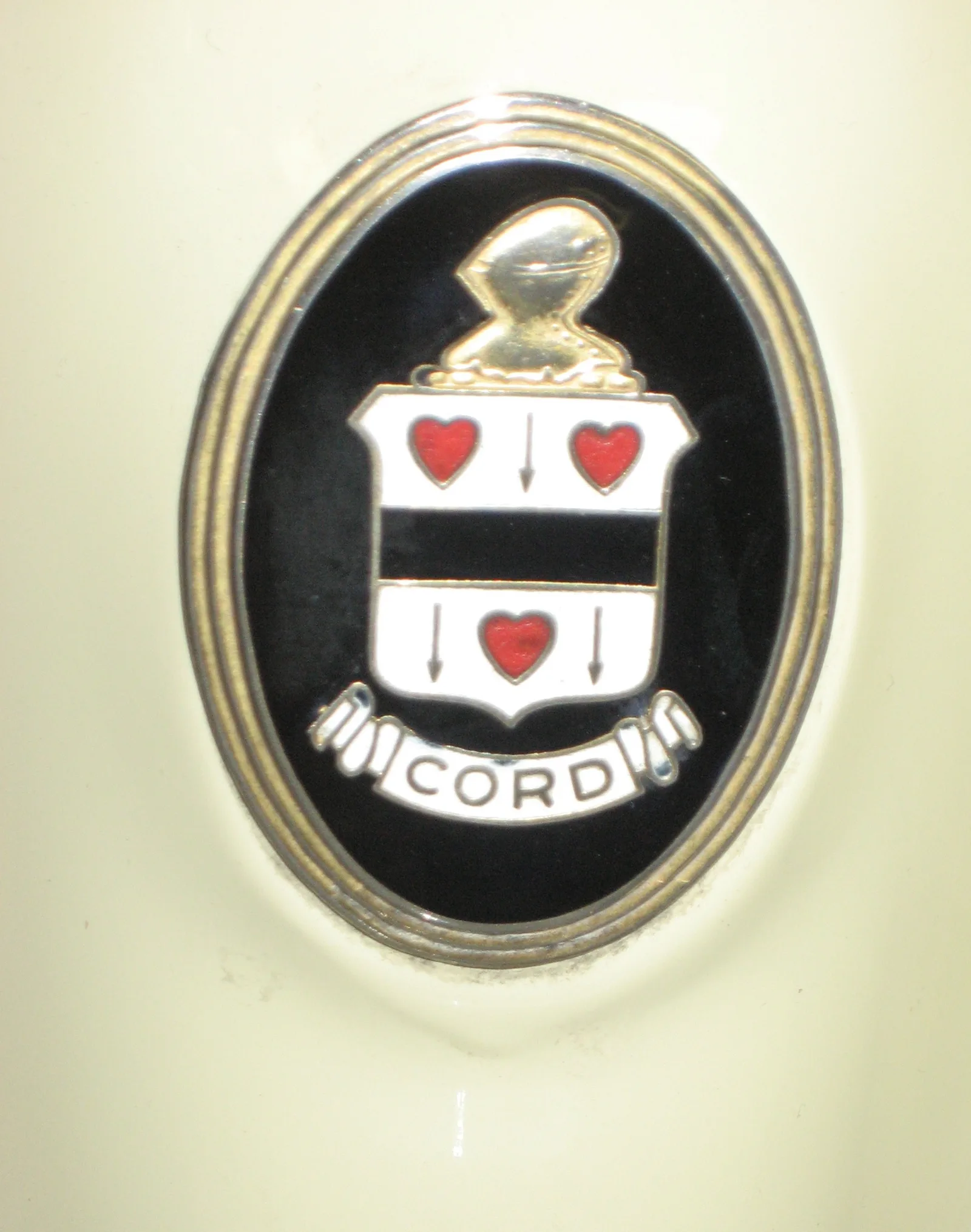
Cord was an American luxury marque, made in Connersville, Indiana, by the Auburn Automobile Company, in two spells: 1929 to 1932 and 1936 to 1937. Auburn belonged to the Cord Corporation, a holding company that E. L. Cord founded and ran for his transport interests, which took in Lycoming engines, Stinson aircraft and Checker Motors. Cord cars were known for innovative technology and streamlined designs.
Two ideas stand out: front drive, on the L-29, and concealed headlamps, on the 810 and 812. Hidden headlamps then dropped out of luxury cars until the 1960s, apart from DeSoto using them in 1942. They returned on the 1963 Chevrolet Corvette and, two years later, on the Buick Riviera, whose stylists later said they wanted to evoke the character of the Cord.
The L-29
The L-29 of 1929 was the first American front-wheel-drive car offered to the public, beating the Ruxton by several months. It was the brainchild of former Miller engineer Cornelius Van Ranst, whose drive system borrowed the de Dion layout and inboard brakes from the Indianapolis 500 racers. It was also the first American front-drive car with constant-velocity joints, using double Hooke's joints rather than the Rzeppa type adopted by Ruxton. With no rear drivetrain and a straight frame, the L-29 sat far lower than rivals that stood about six feet tall. Coachbuilders in America and Europe won prizes with bodies on its chassis.
A Lycoming straight-eight of 4,934 cc (301 cu in) and 125 hp (93 kW) drove a three-speed gearbox, with the crankshaft protruding through the front of the block. It was not enough. The 4,700 lb (2,100 kg) car was limited to a little over 80 mph (130 km/h), slower than the cheaper Auburn, and steering needed four full turns lock to lock, though handling was reportedly superb. Priced around US$3,000 ($56,250 in 2025 dollars), it sat among the dearest American cars, below only Duesenberg, and the Great Depression finished it. By 1932 it was discontinued after only 4,400 sales.
The 810 and 812
The Model 810 and 812, styled by Gordon M. Buehrig, are probably the best-known Cords. Buehrig put the transmission ahead of the engine, which removed the driveshaft and transmission tunnel, and he left off running boards for a sleek, low-slung look. The 4,739 cc (289 cu in) Lycoming V8 made the same 125 horsepower (93 kilowatts) as the L-29's straight-eight. The four-speed gearbox was electrically selected and called a pre-selector, because the driver chose the gear first and then pressed the clutch. The headlights rolled up into the wings.
Delivery slipped from Christmas to February 1936, and owners only began receiving cars in April. The squared-off nose with its horizontally louvred grille earned the lasting nickname coffin nose. Early reliability problems, including slipping out of gear and vapour lock, cooled enthusiasm, and the dealer base shrank. Unsold 1936 cars were renumbered as 1937 812s, and in 1937 Auburn ceased production of the Cord. The Cord empire was sold to the Aviation Corporation as allegations of financial fraud swirled.
After Cord
In 1940 two ailing makers, Hupmobile and Graham-Paige, used the 810/812 body dies to try to revive themselves. The Hupp Skylark and Graham Hollywood had plain headlight pods and conventional rear-wheel drive. Graham built a combined 1850 cars for 1940, of which about 450 were Skylarks, and Hupmobile closed before the 1941 model year. Graham stopped the Hollywood in November 1941, having built a rumoured 1400.
Dallas E. Winslow bought the assets of Auburn in 1938 and ran the Auburn-Cord-Duesenberg Company as a parts and restoration business. Glenn Pray bought the Auburn-Cord rights in 1960, and in 1964 his company began building the Cord 8/10, an 8/10 scale replica of the 810 designed with Buehrig's help, with a Royalite plastic body and a turned-around rear-engine Chevrolet Corvair drivetrain for front-wheel drive. Pray was ousted in January 1966, and the company built 97 cars before going bankrupt in July 1966. Craig Corbell bought the Cord name at auction in 2014 and planned a revival, which he later cancelled.
Cord promised 1,000 cars a month in 1935 and sold 1,174 in the whole of its first model year.
What was the Franklin automobile?
The Franklin Automobile Company made cars in Syracuse, New York, from 1902 to 1934. Its founder Herbert H. Franklin began in metal die casting. Two traits defined the cars: air-cooled engines, and in the early years a lightness and responsiveness that set them apart from other luxury cars.
Why air cooling
Franklin considered air cooling simpler and more reliable than water cooling, and lightness critical to performance given the limited power of engines then. Most Franklins had wooden frames, with pressed steel for heavier cars from 1928, and the company used so much aluminium that it was reckoned the world's largest user of it in its early years.
The 1904 touring car seated four, with a transverse-mounted vertical four-cylinder engine of 10 hp (7.5 kW), a two-speed planetary transmission and a weight of 1100 lb (499 kg). It listed at US$1300. The Ford Model F of 1905 cost $1,000, a Cole 30 or Colt Runabout US$1500, a Ford Model S $700, the high-volume Oldsmobile Runabout US$650 and the Success as little as US$250.
Franklins were technological leaders: six cylinders by 1905 and automatic spark advance in 1907. In 1906 L. L. Whitman drove one from New York City to San Francisco in 15 days 2 hours 15 minutes, a record. Franklin was the undisputed leader in air-cooled cars when almost every rival used water cooling as cheaper to build. Before antifreeze, an air-cooled car had a big advantage in cold weather, and doctors and others who needed an all-weather machine bought Franklins. The limits were cylinder bore size and valve area, which held down early power, until 1921 when the fan was changed to blow cool air.
The cars were often odd-looking. In 1925 dealers demanded a conventional look, so J. Frank DeCausse gave them a massive nickel-plated dummy radiator that served as an air intake, called the hoodfront. The same year Franklin introduced the boat-tail to car design. A new engine in 1930 eventually made 100 horsepower (75 kW) with one of the best power-to-weight ratios of its day. In 1932, answering competition, Franklin launched the air-cooled Twelve, of 398 cubic inches (6.5 L) and 150 hp (110 kW). It was designed for a light chassis, but managers sent in by banks to recover bad loans overruled the engineers, and the car became a 6,000-pound (2,700 kg) behemoth lacking the ride and handling of its forebears.
The end of Franklin
The Twelve was the wrong car after the crash of 1929 and the Great Depression. Sales were poor, and bankruptcy followed in 1934. Sinclair Powell, writing for the Society of Automotive Engineers, cited internal causes too: profit per car allowed a proper dividend only in 1925, Franklin kept a craft-shop approach and built components it could have bought more cheaply, and it chose aluminium bodies from Walker when steel was available at low cost. Its dealers were in unimpressive locations. Debt taken on to expand production in 1929 produced cars that needed big discounts, and the discounting repeated in 1930 and 1931.
The name and assets were sold. Aircooled Motors of Syracuse carried on making air-cooled engines for commercial and aircraft use, and Preston Tucker bought it after the Second World War. Water jackets were added to its flat-six engines for the short-lived Tucker car. Franklin engines powered many light planes and most early American helicopters. Aircooled Motors, the last maker under the Franklin name, went bankrupt in 1975, its designs sold to the Polish government, and engines based on them remain in production.
What was the Terraplane?
Hudson of Detroit, Michigan, built the Terraplane as both a brand and a model between 1932 and 1938. In 1932 it was the Essex-Terraplane, and from 1934 simply the Terraplane. The cars were inexpensive but powerful, for town and country, and the name was used on trucks as well.
Hudson had built the cheap Essex from 1919 and merged it into itself in 1922. Falling Essex sales and the Great Depression forced Hudson to replace it with a cheaper, redesigned car. Roy D. Chapin decided in 1932 to repeat a successful strategy by building a featherweight at the bottom of the price range, and he believed the Terraplane name would have great public appeal because it echoed the interest in aviation. The Terraplane contributed greatly to Hudson's Depression sales, to the point that it outsold Hudson cars in the mid-1930s, and management reportedly did not like that, which is partly why the make was dropped.
Launch and the gangster years
The Essex-Terraplane launched on 21 July 1932 with over 2,000 dealers travelling from 40 states to Detroit and aviator Amelia Earhart on hand to introduce it. It was a small, powerful car with a steel frame, and Orville Wright bought one of the first. In 1932 only the Model K was offered, with a 106-inch (2,692 mm) wheelbase and a 193 cu in (3.2 L) six. For 1933 the range grew with the Model KU six on a 113 in (2,870 mm) wheelbase and the Model KT with a 244 cu in (4.0 L) straight-eight.
Terraplanes had unusual Duo-Automatic brakes: two systems, hydraulic and mechanical, so that if the hydraulic line leaked the mechanical brakes would stop the car. The 1933 eight was believed to have the highest power-to-weight ratio of any production car in the world, and gangsters John Dillinger, Baby Face Nelson and John Paul Chase favoured it for lightness, acceleration, handling and discreet looks. A 1933 Terraplane 8 convertible coupe set a record on Mount Washington that stood for over twenty years, and period tests showed 0 to 60 mph in 14.4 seconds. Essex-Terraplanes set dozens of records, particularly in hillclimbs.
For 1934 the Essex name was dropped and the eight-cylinder engine with it, so the car was slightly heavier and rarely seen in competition. The 1938 cars were called Hudson-Terraplanes as Hudson phased out the name, alongside the Model 112, which had a shorter 112 in (2,845 mm) wheelbase and smaller engine. A 1938 Terraplane cost about US$900 ($20,585 in 2025 dollars).
Terraplanes abroad
Low-volume licensed assembly also took place in South Africa, New Zealand, Australia, England and Canada, where the British-sounding Hudson and Essex names helped sales. In Britain, Hudson-Essex Motors opened a factory on the Great West Road in Brentford in 1927. English-designed bodies went on Terraplane frames, and two Terraplane tourers and a saloon won the team award in the 1933 Scottish Rally. The Terraplane eight chassis and engine also underpinned the first British Railton cars of 1933. The 1934 Railton Light Sports Tourer reached 0 to 60 mph in 8.8 seconds, sensational before the war, and 107 mph. Hudson bought the company in 1939.
What was the Hudson Super Six?
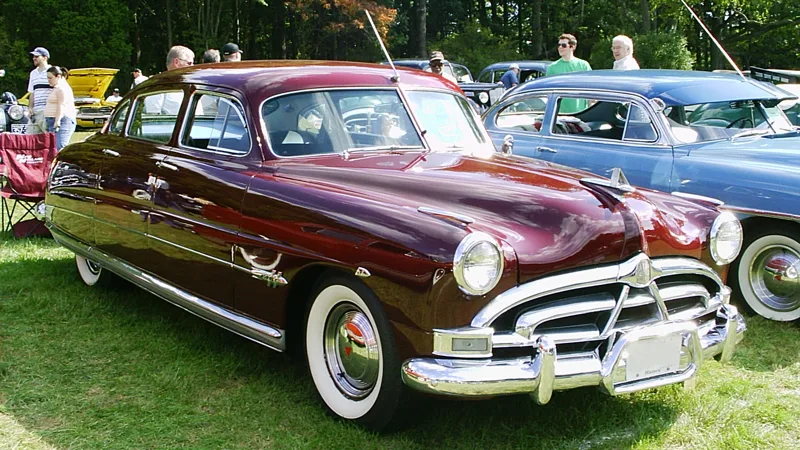
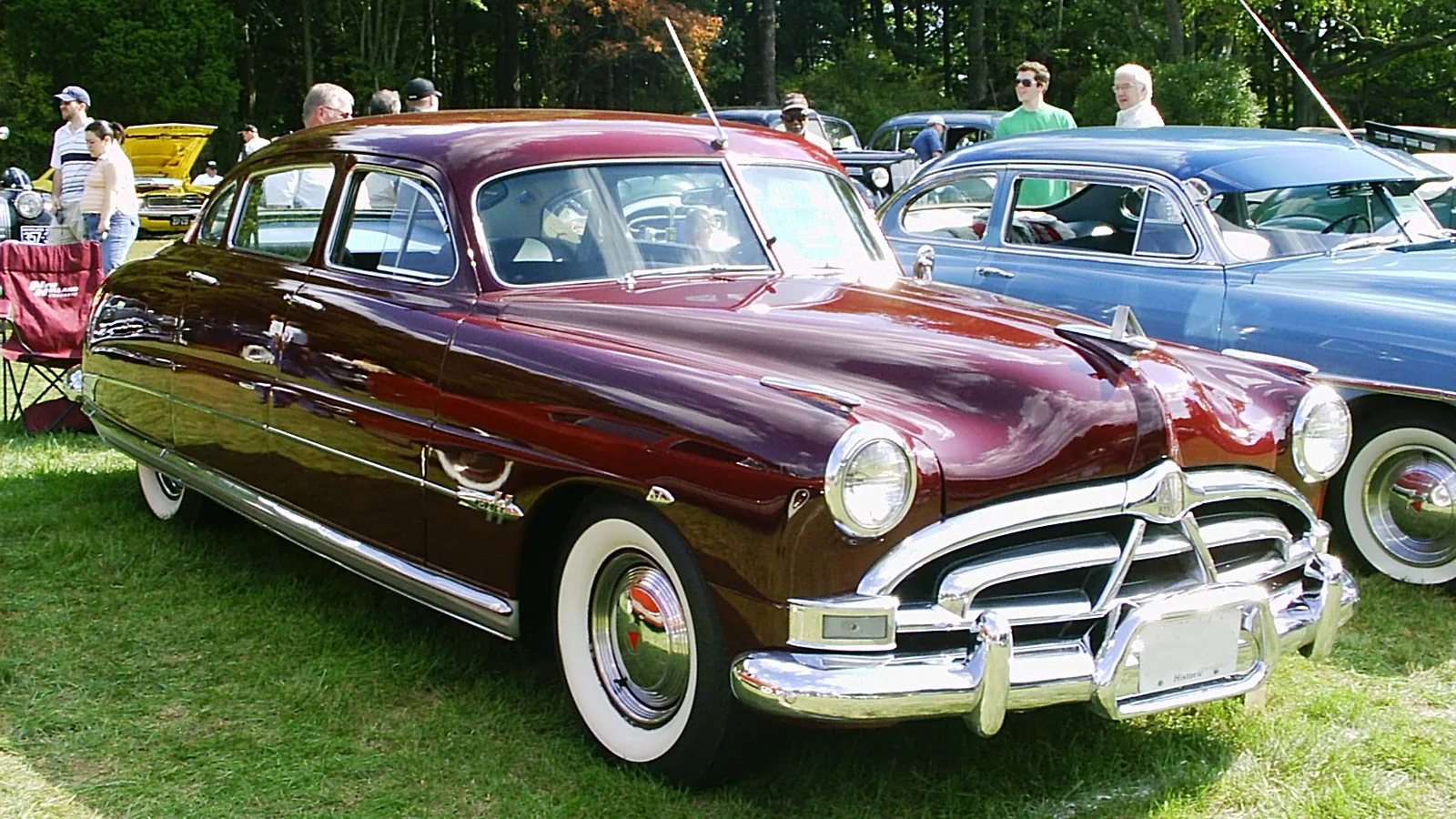
Hudson of Detroit introduced the Super Six in 1916 and built it until 1928. The name was used on a rebadged Essex for one model year in 1933 and returned from 1940 to 1951, apart from a wartime pause. The 1951 cars were called the Hudson Super Custom Six.
| Generation | Engine | Output |
|---|---|---|
| First (1916) | 288.5 cu in (4.7 L) inline-six | 76 hp (57 kW) |
| Second (1927) | F-head six | 92 hp (69 kW) |
| Third (1933) | 193.1 cu in (3.2 L) six | 73 or 80 hp (54 or 60 kW) |
| Fourth (1940) | 212 cu in (3.5 L) six | 102 hp (76 kW) |
The 1916 performance car
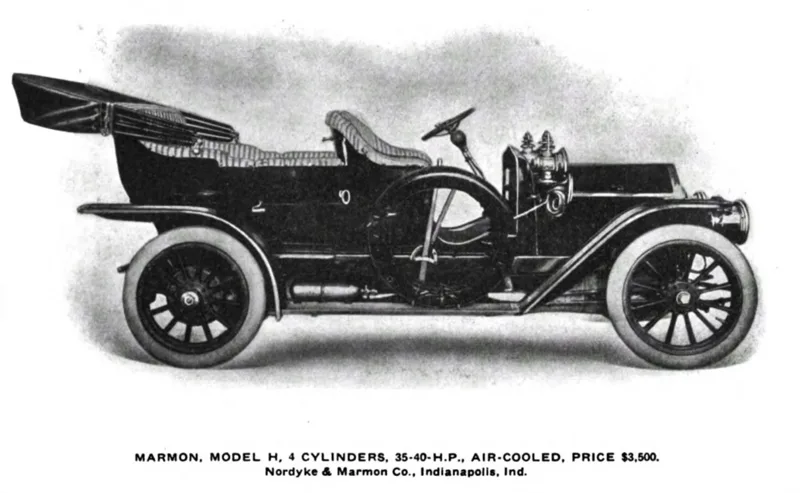
The first Super Six, introduced on 16 January 1916 and also known as the Series H, was an early performance car. Its engine made 76 hp (57 kW), against 40 hp (30 kW) from the equally sized engine of the Hudson Model Six-40. The breakthrough, a crankshaft with integral counterweights, was designed by Hudson engineer Howard E. Coffin. Internal vibration was the main limit of early engines, but the Super Six could turn 3,400 rpm, nearly double its contemporaries.
Before launch, Super Sixes made speed runs at Sheepshead Bay Speedway, setting a 24-hour record at an average of 74.9 mph (120.5 km/h) that stood until a Marmon beat it in 1931. One car crossed the continent from San Francisco to New York in 5 days, 3 hours and 31 minutes, then came back after an eight-hour rest. In April a Super Six set a stock-car record for the measured mile of 102.5 mph (165.0 km/h) at Daytona Beach, and a stock chassis record run up Pikes Peak followed.
Inventor Ben P. Ellerbeck modified a 1919 Super Six roadster to demonstrate a retractable hardtop. He was granted patent No. 1,379,906 on 31 May 1921, and his flip top on the Hudson, worked by a crank handle at the rear of the passenger door, disappeared behind the trunk when lowered. The Super Six also features in John Steinbeck's novel The Grapes of Wrath, where the Joad family depends on a 1926 Super Six sedan converted into a truck. The car used in the 1940 film is a 1926 Super Six, which was turned into a speedster in 2009.
The later Super Sixes
For 1927 the Super Six was completely redesigned, with an F-head engine, 18-inch wood-spoke wheels in place of 21-inch ones and four-wheel brakes. The car was lower and more stylish, and power rose from 76 to 92 hp (57 to 69 kW). The Model R rode a 118 and a half inch (3,010 mm) wheelbase, the Model S 127 and three-eighths inches (3,240 mm), with a two-door Coach and a four-door Sedan, and Model O had five custom bodies by Biddle and Smart. Essex also adopted the Super Six label in 1927 and kept it off and on until 1932. In 1929 Hudson dropped the badge for Greater Hudson, and in 1930 all Hudsons had eight-cylinder engines.
The 1933 Hudson Super-Six Pacemaker, largely an Essex, ran for one year alongside the cheaper Essex-Terraplane. Its wheelbase was 113 inches (2,900 mm), against 106 in (2,700 mm) for the low-cost car, and the 193.1 cu in (3.2 L) engine made 73 or 80 hp (54 or 60 kW) depending on compression.
For 1940 the name came back on a six-cylinder version of the new Hudson Eight, sharing its 118 in (3,000 mm) wheelbase, five inches longer than the regular Hudson Six. The Super Six was Series 41, with a larger 212 cu in (3.5 L) engine of 102 hp (76 kW), ten more than the Six. Bodies were a three-passenger Coupe, a five-passenger Victoria Coupe, a two- or four-door Touring Sedan, and a Convertible Coupe and Convertible Sedan. Running boards were optional at no cost, as styling moved away from separate fenders. The 1941 model year brought a synchronised transmission and electrically controlled overdrive.
Has the Cord name been revived?
Not successfully. In 2014 Craig Corbell planned to restart the company, beginning with the Cord Model III, a reverse-trike with a 180-horsepower V4 motorcycle engine, and moving on to a conventional four-wheeled replica of the 810/812 with modern technology. He later cancelled the project, and the rights to the Cord name went up for auction a second time in 2019.