A castor-bean name, a physician's lubricant, a $7.53 billion court fight and a family firm that began in a slaughterhouse: four motor oil brands and the companies that stand behind them.
Castrol is a British brand founded in London in 1899 and owned by BP, Valvoline began in 1866 in the United States and Saudi Aramco announced a purchase of its lubricant unit in 2022, Pennzoil is a Shell-owned American brand, and Fuchs is a German firm founded in 1931 whose founding family holds the voting majority.
A Texas jury once ordered Texaco to pay Pennzoil $7.53 billion in compensatory damages, then added $3 billion more as punishment. That courtroom drama is only one of the odd turns in the lives of four names that sit on garage shelves everywhere: Castrol, Valvoline, Pennzoil and Fuchs.
They look like rivals on a single shelf. Their histories could hardly be more different. One began with a London businessman who left Vacuum Oil, one with a physician who went looking for medicine in crude oil, one as a label shared by two regional oil marketers, and one in a German slaughterhouse.
Castrol: from Cheapside to the racetrack
Castrol started life as the product, not the company. Charles Wakefield founded the Wakefield Oil Company in Cheapside, London, in 1899, after leaving a job at Vacuum Oil. His first line was lubricant for trains and heavy machinery, and eight of his former colleagues came with him. The first lubricant under the new firm launched in 1906.
As motoring and flying took hold, Wakefield developed oils suited to cars and aeroplanes. The name Castrol came from the researchers' habit of mixing carefully measured doses of castor oil, pressed from castor beans, into their blends. Its red, white and green livery goes back to 1909, when Castrol motor oil first went on sale.
By 1960 the brand had overtaken the business that made it, so CC Wakefield and Company became Castrol Limited. Six years later Burmah Oil bought it and renamed itself Burmah-Castrol. BP Amoco acquired that group in 2000, when it had a turnover of nearly 3 billion pounds, operating profits of 284 million pounds, 18,000 employees and operations in 55 countries. The Burmah side was folded into BP, but Castrol itself stayed on as a subsidiary.
Wakefield's other trade was far from the road. Some steam locomotives carried Wakefield mechanical lubricators on the footplate, linked to the valve gear so that oil reached the cylinders and valves in proportion to the distance the engine travelled.
What Castrol sells
The range is grouped by job. Edge and Magnatec are the passenger car engine oils. Power 1 and Activ cover motorcycles. Vecton goes into commercial vehicles. A separate family handles gearboxes and axles: Transmax, Transynd and Syntrax. The advertising line for decades was "liquid engineering", and for years the commercials on television were scored with the opening bars of a Mahler Nachtmusik movement.
Castrol in motorsport
Few oil brands have spread themselves across as many forms of racing. In Formula One, Castrol has supplied McLaren (1979-1980 and again in 2017), Brabham (1983-1984), Team Lotus (1992-1993), Sauber, Williams (1997-2005), Jaguar (2002-2004) and Renault, later Alpine, from 2017 to 2025. Audi is on the list from 2026 onwards.
Rallying has been a long relationship. Castrol has backed Ford's World Rally Team and M-Sport since 2003, and Volkswagen Motorsport in the Dakar and then the World Rally Championship since 2005. Toyota carried the green and red from 1993 to 1999 and Hyundai from 2000 to 2002. Audi Sport's rally and touring car programmes have been sponsored by Castrol, along with its Le Mans prototypes since 2011, while BMW Motorsport ran with the brand from 1999 to 2014.
In Australia the oil is tied up with Supercars. Perkins Engineering ran under Castrol title sponsorship from 1993 to 2005 and later sponsored Longhurst Racing, Ford Performance Racing and Paul Morris Motorsport. Team Bray, the outfit of the drag-racing figure Victor Bray, carried its name as title sponsor for 17 years.
Castrol ownership news
The December 2025 announcement said Stonepeak would acquire 65 per cent of Castrol from BP, putting an enterprise value of roughly US$10.1 billion on the lubricants business. BP keeps the other 35 per cent. The Canada Pension Plan Investment Board plans to put in as much as US$1.05 billion for an indirect holding. Regulators must still approve the transaction, and completion is targeted for late 2026.
A Castrol oil plant was struck by a pair of Iranian drones on 1 April 2026, during the 2026 Iran war, and a huge fireball enveloped the site.
The name on the bottle and the company behind it are rarely the same thing.
Valvoline: the physician's lubricant
Valvoline's founder was looking for a cure, not a lubricant. Dr John Ellis, a physician born in Massachusetts, travelled in the early 1860s to Titusville, Pennsylvania, the centre of America's young petroleum industry, to test crude oil as a possible medical compound. He found something more useful. Crude, properly treated, made an excellent lubricant for machinery, and Ellis built his own equipment to improve it.
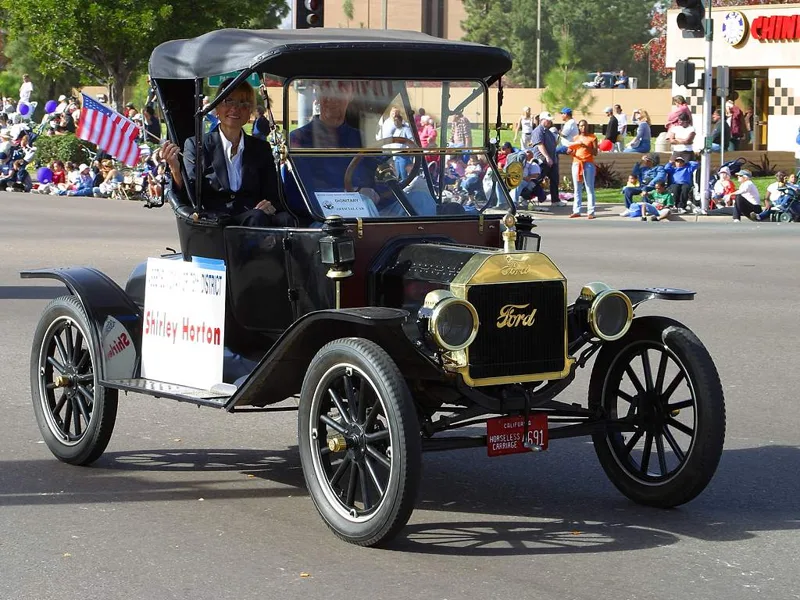
In 1866 he teamed up with a relative of his wife who owned a refinery in Binghamton, New York, and together they formed the Continuous Oil Refining Company to supply steam engines. The first product was called Binghamton Cylinder Oil. Two years later Ellis chose a simpler and more memorable name, Valvoline. The business moved to Brooklyn in 1869, and then, as Ellis and Leonard, to Shadyside, New Jersey. At the Paris Exhibition of 1878 the oil earned commendations, and by the 1890s it was linked with winning race cars. In the early twentieth century it was the recommended oil for the Ford Model T.
Ashland Inc. took over the Freedom-Valvoline Company in 1949. By 2016 the Valvoline subsidiary produced about 37 per cent of Ashland's annual revenue. It listed publicly in New York on 22 September 2016, and Ashland cut it loose as a separate company on 5 May 2017.
Two Valvolines
The name now sits on two different businesses. Valvoline Inc., based in Lexington, Kentucky, is a retail automotive services company. It licenses the name for oil, additives and lubricants, and owns three service chains: Valvoline Instant Oil Change, Great Canadian Oil Change and Valvoline Express Care. As of 2023 it was the second-largest oil change provider in the United States, with a 10 per cent market share and more than 1,650 locations.
The bottled lubricant side went elsewhere. On 1 August 2022 Saudi Aramco announced it would buy Valvoline's lubricant unit for US$2.65 billion.
Valvoline on the track
NASCAR is where the brand has put down the deepest roots. It first appeared in 1981 with Cale Yarborough, and its backing of Neil Bonnett produced a win in Australia, the series' first outside North America. From 1992 it worked with Roush Racing and driver Mark Martin, a partnership that took 27 wins. After 2000, executive James Rocco pushed Valvoline into owning a team, an unprecedented step at the time. The result was MBV Motorsports, the V standing for Valvoline, which began racing in 2001 with Johnny Benson. Since 2014 the oil has been back with Hendrick Motorsports, supporting Kyle Larson and William Byron.
Beyond stock cars it sponsored Janet Guthrie, who became the first woman to start both the Daytona 500 and the Indianapolis 500, and the CART driver Al Unser Jr. from 1988 to 1993. In Australia the Sydney Speedway carries its name, and it backs the Australian Sprintcar Grand Prix.
Valvoline is also an official recommended oil for every General Motors marque, including Chevrolet, Buick and Cadillac, and for the Honda group, covering Honda and Acura cars and Honda motorcycles.
Pennzoil: a brand with a courtroom past
The Pennzoil name was never one company's invention. Two businesses, one on the East Coast founded in 1908 and one on the West Coast founded in 1913, sold motor oil under the label. Their refineries and distributors were pulled together as The Pennzoil Company in 1925. Behind them stood the South Penn Oil Company, started in Oil City, Pennsylvania, in May 1889 by Michael Late Benedum and Joe Trees. It began as part of Standard Oil and went independent when that empire was broken up in 1911.
South Penn took a 51 per cent controlling stake in the Pennzoil business in July 1926, raised that to 88 per cent by June 1955, then absorbed it entirely. In 1963 South Penn merged with Zapata Petroleum and Stetco Petroleum into a new Pennzoil Company based in Houston, with Hugh Liedtke as president. Five years later it bought United Gas Corporation through a leveraged buyout, because it did not have the assets to pay outright.
The Texaco case
In 1984 Pennzoil struck an informal but binding agreement with Getty Oil to buy a large portion of the company and gain rights to its oil deposits. Texaco stepped in and tried to take Getty for itself. Pennzoil sued in Texas state court, alleging that Texaco had wrongly induced Getty to break its promise.
The jury's award came to $7.53 billion in compensatory damages plus $3 billion in punitive damages. Texas law would have let Pennzoil claim a lien over every Texaco asset in the state, unless Texaco put up a bond to cover the judgment, interest and costs, a sum put at $13 billion. Texaco went to a federal court in New York, which sided with it, but the Supreme Court reversed that ruling because the federal court should not have interfered with a state proceeding. The Texas Court of Appeals upheld the verdict but called for a reduction of two billion dollars, which left the punitive award at $1 billion. Texaco then entered bankruptcy, and Pennzoil accepted a $3 billion settlement.
Becoming a Shell brand
In 1998 the lubricants and car-care side of Pennzoil was separated into its own company, and that company bought its rival Quaker State. The merged business was called Pennzoil-Quaker State. Shell Oil Company, the US subsidiary of Shell plc, bought it in 2002 and chose to market the two names as separate brands.
Pennzoil also sold petrol for decades. Early stations traded as Pennzip before switching to Pennzoil, mostly in western Pennsylvania, western New York and parts of Ohio and West Virginia. A co-branding deal with the Pittsburgh-area chain Cogo's gave the fuel a short revival in the 1990s, but by the mid-2010s Pennzoil had stopped selling petrol altogether.
Pennzoil on the circuit
Yellow is the brand's calling card in American open-wheel racing, and its IndyCar livery picked up the nickname "Yellow Submarine". Johnny Rutherford, who raced for the Pennzoil-sponsored Chaparral team, won the Indianapolis 500 and the CART championship in 1980. Rick Mears drove for Team Penske with Pennzoil support from 1983 to 1990, taking the Indianapolis 500 in 1984 and 1988. Helio Castroneves carried the colours part-time from 2011 until 2020, then Scott McLaughlin took them over at Penske.
In NASCAR, Joey Logano took the Pennzoil-backed Penske entry to championships in 2018 and 2022 and to the 2015 Daytona 500, and the brand has sponsored the Las Vegas spring race, the Pennzoil 400, since 2018. Haas F1 Team has used Pennzoil since 2016, and through its link to Shell the oil also supplies Scuderia Ferrari and the Ducati MotoGP team.
In the United States it is an official long-term recommended oil for BMW, Mini, Rolls-Royce, Hyundai, Genesis, Iveco, most Stellantis brands and Ferrari, which has been the case since 2002. Chevrolet recommends it alongside other oil brands.
Fuchs oil: the family firm from Mannheim
Fuchs is the one name here where the founding family still holds the voting majority. Rudolf Fuchs started the company on 30 May 1931 in Mannheim, Germany. His first product was a motor oil sold as Penna Pura, a guaranteed Pennsylvania oil made and bottled in a Mannheim slaughterhouse and delivered to transport firms in the city's port. By 1936 he had developed his first transmission oil and opened a branch in Munich, and by 1939 the company headquarters stood on a plot he had bought on Friesenheimer Island.
War cost Fuchs its customers. Transport companies shrank and their vehicles were requisitioned by the Wehrmacht, so the firm swung toward specialised industrial lubricants. Motorsport came back in the postwar years: from 1948 Fuchs ran a racing service at major circuits, where drivers used Penna Pura Racing Oil RC. Rudolf Fuchs died in 1959 and his son Manfred took charge in 1963.
Going global and going public
The first foreign subsidiaries opened in France and Spain in 1968, followed by Austria, Sweden, Italy and Brazil. Titan took over from Penna Pura as the brand name in 1978. Entry into the Australian, Asian and American markets came in 1981. A joint venture in China was signed in 1985, and the first plant there, at Yingkou, followed in 1988. By then the group included 80 production and trading companies.
The company went public on 30 January 1985 in Frankfurt, Stuttgart and later Zurich. Manfred Fuchs issued preference shares first so that the family would keep the votes, and ordinary shares followed from 1986. Acquisitions became a habit: the French maker Labo Industrie and the British firm Silkolene in 1989, Century Oils in 1991, Statoil Fuel and Retail Lubricants and Deutsche Pentosin-Werke in 2015, and Nye Lubricants in 2021. Around 4000 employees produced a turnover of about 900 million euros in 2000, and by 2006 turnover had reached 1.2 billion euros. A programme of around 300 million euros starting in 2016 paid for new plants in the USA, South Africa, Australia, Sweden and China.
In May 2023 the company dropped Petrolub from its name and became Fuchs SE. For 2025 it reported turnover of 3.56 billion euros, 6,879 employees, 33 production sites and 58 operating companies. The Fuchs family still holds about 55 per cent of the ordinary shares, and it is described as the world's largest independent maker of lubricants.
What Fuchs puts in the bottle
Titan is the flagship automotive brand, covering passenger car and heavy-duty engine oils, gear oils and transmission fluids. Fuchs says its XTL technology platform tunes how the oil's thickness changes with temperature, helping cold starts and fuel economy. Through Pentosin it has become a major supplier of dual-clutch transmission fluids, central hydraulic fluids and steering fluids to European car manufacturers. Silkolene handles motorcycle and racing lubricants. For electric cars it launched the BluEV range and opened a plant at Kaiserslautern in September 2024, with E-Lyte Innovations, able to make 20,000 tonnes of liquid electrolyte a year.
Castrol, Valvoline, Pennzoil and Fuchs side by side
| Brand | Origin | Current owner | Best-known lines |
|---|---|---|---|
| Castrol | London, 1899 | BP, with a 65 per cent sale to Stonepeak announced in December 2025 | Edge, Magnatec |
| Valvoline | Binghamton, New York, 1866 | Valvoline Inc. licenses the name; Saudi Aramco announced a purchase of the lubricant unit in 2022 | Oils, additives and lubricants |
| Pennzoil | Pennsylvania, 1913 | Shell plc since 2002 | Motor oil, alongside Quaker State |
| Fuchs | Mannheim, 1931 | Independent; family holds about 55 per cent of ordinary shares | Titan, Silkolene, Pentosin fluids |
How do approvals and ownership differ at the shelf?
For a driver, the names matter less than the approvals behind them. Carmakers publish their recommendations, and the brands advertise theirs: Valvoline for General Motors and Honda, Pennzoil for BMW, Hyundai, Ferrari and most of Stellantis in the United States, Fuchs for the transmission fluids that European manufacturers specify for dual-clutch gearboxes. Castrol's racing backing spans Formula One, rallying, touring cars and Supercars.
The ownership map also explains why the badge on the bottle can mislead. A buyer of Pennzoil is buying from Shell. A buyer of bottled Valvoline is buying from a lubricant business that Saudi Aramco announced it would buy in 2022, while a different company of the same name changes the oil in service centres.
What is scheduled for these four brands from 2026?
Several of the plans are dated. The Stonepeak purchase of Castrol is expected to complete by the end of 2026, subject to regulators. Castrol's Audi Formula One supply begins in 2026, the same season in which Valvoline moves from sponsoring Aston Martin to supplying its lubricants, because of the team's direct partnership with Honda engines. From the 2025-26 season Valvoline will also supply the Mahindra-backed Formula E team.
Fuchs launched a global strategy called FUCHS100 in 2026. It aims to restructure its products around locally blended speciality chemicals to reduce supply chain risk, and targets sales of 4.0 to 4.5 billion euros by 2031, according to the company.