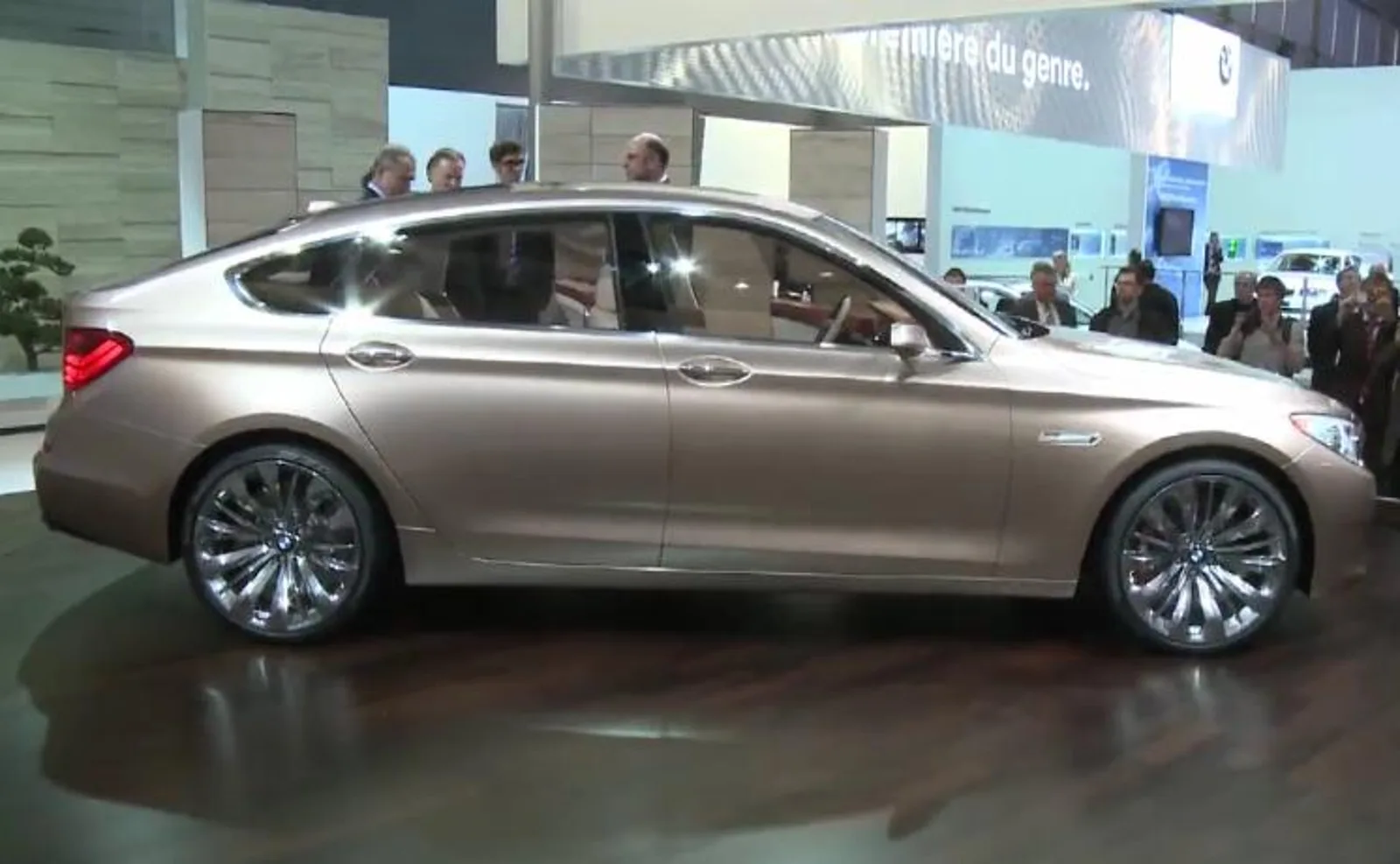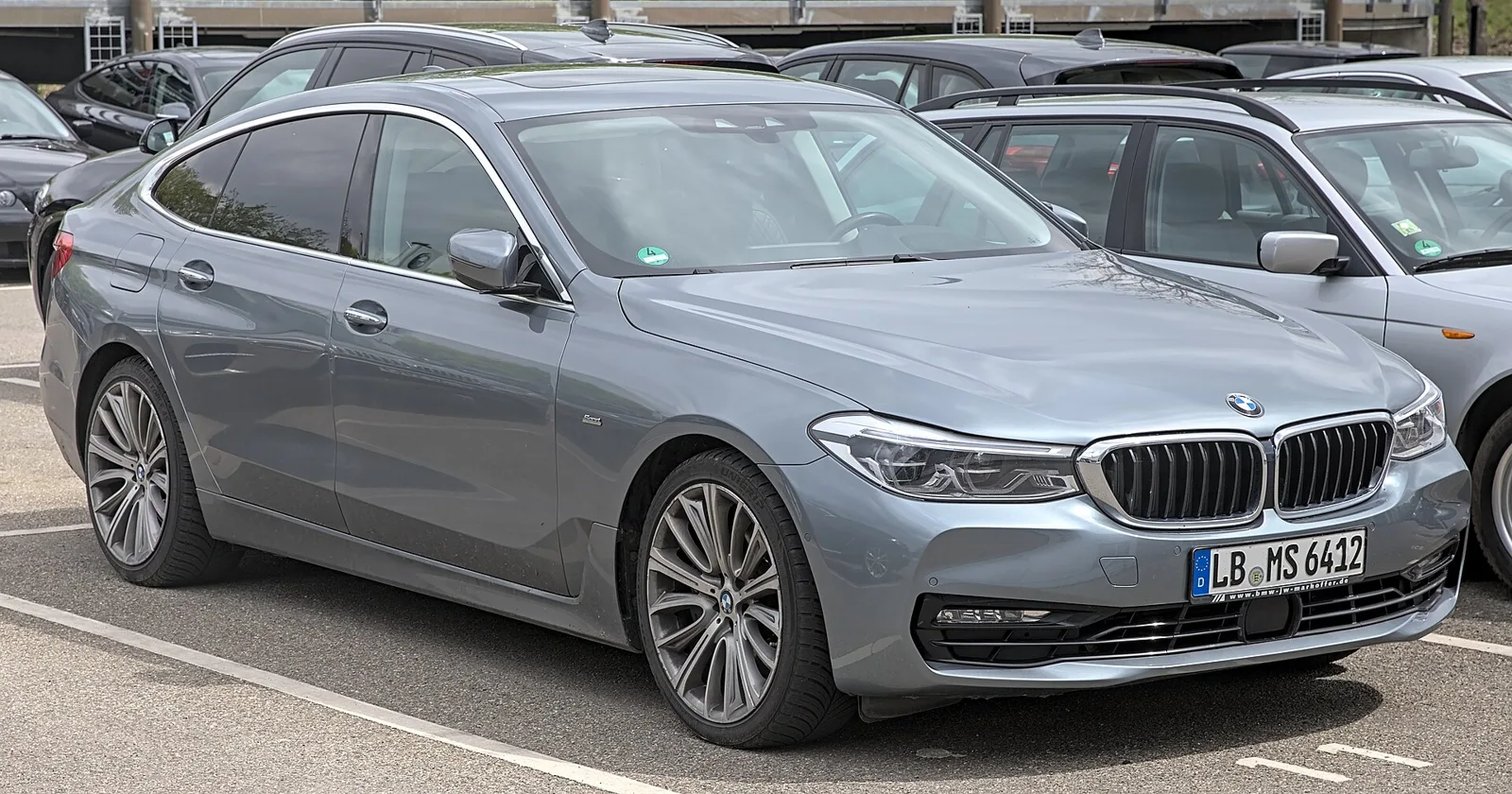
From the controversial E63 and its V10 M6 to the F12 family and the five-door G32, the grand tourer that kept changing shape.
The BMW 6 Series returned in 2003 with the E63 coupe, ran through the F06/F12/F13 family from 2011, and ended as the five-door G32 Gran Turismo, discontinued in August 2023. Its coupe, convertible and Gran Coupe bodies moved to the 8 Series, and the Gran Turismo had no successor.
The last car to wear the BMW 6 Series badge was neither a coupe nor a convertible. It was a five-door liftback, and when BMW stopped making it in August 2023 the model had no successor. For a nameplate that began in 1976 on a two-door coupe, that is a long way to travel.
The route had several turns: a first generation that lasted until 1989, a gap of 14 years, a controversial return, a grander third act and a final reinvention as something closer to a hatchback than a grand tourer. Each step changed what a 6 Series was supposed to be.
BMW 6 Series history before the revival
The story starts with the E24, sold from 1976 to 1989. It took over from the E9 Coupe and was built only as a two-door, borrowing its underpinnings from the E23 7 Series. Under the bonnet sat naturally aspirated straight-six engines, mostly from the M30 family.
The E24 also gave BMW its first M6. The M635CSi, as most markets knew it, used the M88 straight-six. Buyers in North America and Japan received a car badged simply M6, with the less powerful S38 six-cylinder instead. That small regional split is an early sign of something that recurs later: the American market often got a slightly different car from everyone else.
In 1989 the E24 gave way to the larger 8 Series, the E31, and the 6 Series name went quiet. It stayed quiet for 14 years.
The 6 Series began as a two-door coupe and finished as a five-door liftback with no successor.
BMW 6 Series generations at a glance
| Generation | Years | Body styles | Built on | Engines named | M model |
|---|---|---|---|---|---|
| E24 | 1976-1989 | Coupe | E23 7 Series | M30 straight-six | M635CSi (M6 in North America and Japan) |
| E63/E64 | 2003-2010 | Coupe, convertible | Shortened E60 5 Series | 630i, 645Ci/650i, 635d diesel | M6 with 5.0-litre V10 |
| F06/F12/F13 | 2011-2018 | Gran Coupe, convertible, coupe | F10 5 Series and F01 7 Series | 3.0-litre six, 4.4-litre V8, diesel six | M6 with 4.4-litre twin-turbo V8 |
| G32 | 2017-2023 | Five-door Gran Turismo | G30 5 Series (CLAR) | Turbo four, petrol six, diesel six | None |
The E63 and E64 revival of 2003
The E63 coupe brought the 6 Series back in January 2003, after 14 years away. It was shown at the 2003 Frankfurt show and reached the market in the middle of the 2003 model year. The E64 convertible was unveiled at the 2004 Detroit show and went on sale in mid 2004.
Underneath, the new car was a shortened version of the E60 5 Series chassis, which meant it shared a good deal of equipment with that saloon. The shape was by Adrian van Hooydonk and grew out of the 1999 Z9 concept, which had been drawn under the then design chief Chris Bangle. The rear end, first seen on the E65 7 Series, drew a nickname from critics: "Bangle Butt". BMW's own phrase for the approach was flame surfacing, meaning concave and convex forms meeting in sharp edges.
The car was criticised at first for that styling and for iDrive, the on-board control system that many drivers found complicated. Weight saving was taken seriously, though. The doors and bonnet were aluminium, while the boot and front wings were carbon-reinforced plastic. The convertible used an unusual roof design with side fins and a built-in wind deflector that could be raised or lowered at any time.
All models had a top speed electronically limited to 250 km/h (155 mph). Unlike the E60 saloon, the E63 and E64 could not be ordered with xDrive all-wheel drive, so every car was rear-driven.
Gearboxes and equipment
The transmission list was broad. There were six-speed ZF manual gearboxes for the 630i and 645Ci/650i, six-speed ZF automatics across much of the range, a six-speed SMG automated manual for the 630i, 645Ci and 650i, and the seven-speed SMG III in the M6. An automated manual is a conventional gearbox with a computer working the clutch and gear lever for you, which is why it feels different from a torque-converter automatic.
The options list read like a catalogue of what was then new: adaptive headlights, parking sensors, voice control, Active Steering with a variable ratio, active anti-roll bars, radar cruise control that worked in stop-and-go traffic, a head-up display, lane departure warning, night vision, keyless entry and starting, a heated steering wheel and soft-close doors. Safety included an Advanced Safety System that chose the most effective airbag deployment, and on convertibles roll-bars that deployed automatically behind the rear seats. From 2008 active head restraints were standard.
Changes along the way
In 2006 the 650i replaced the 645Ci. A facelift, called LCI, came in September 2007 for the 2008 model year. It added the 635d, powered by the M57 diesel, and in countries with low-sulphur fuel the 630i switched from the N52 engine to the N53. New headlights, tail-lights and bumpers arrived, the third brake light on the coupe moved to the boot lid, and an electronic gear lever with steering-wheel paddles appeared. The Edition Sport trim gave the 650i a stiffer anti-roll system and a revised exhaust. In 2009 iDrive moved from the CCC version to the CIC version. The whole E63/E64 range was built at BMW's Dingolfing plant.
The E63 M6 and its V10
The M6 arrived as a coupe at the 2005 Geneva show, with the convertible following at the British International Motor Show in 2006. It took the 5.0-litre naturally aspirated S85 V10 from the E60 M5, rated at 373 kW (500 hp) at 7,750 rpm and 520 Nm (384 lb ft) at 6,100 rpm. Most cars were sold with the seven-speed SMG III, though American buyers could specify a six-speed manual.
The coupe carried a carbon fibre roof to cut weight and lower the centre of gravity. Sports seats, larger brakes, an M instrument cluster, an optional M head-up display, four exhaust pipes and bigger air intakes completed the package. BMW built 9,087 coupes and 5,065 convertibles, making 14,152 in all.
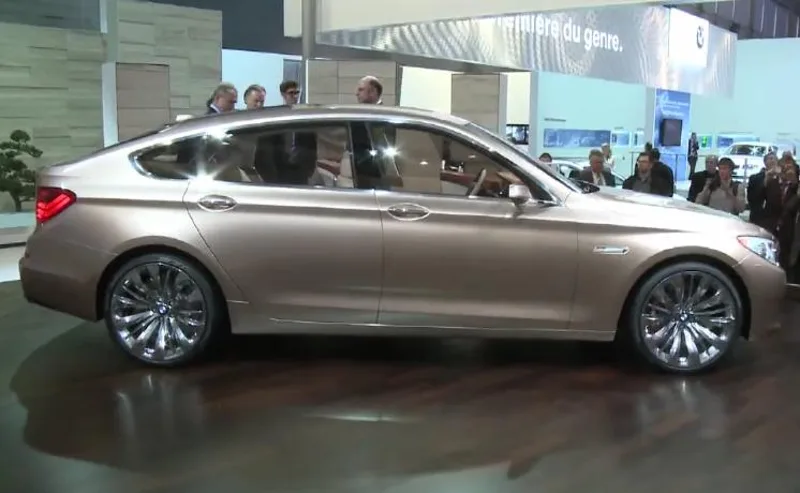
BMW E63 vs F12: what changed in the third generation
The F-series cars were shown first as the BMW Concept 6 Series coupe at the 2010 Paris show. Nader Faghihzadeh drew the exterior and Christian Bauer the interior. Then BMW did something unusual for the company: it launched the production convertible before the coupe. The F12 convertible was introduced in January 2011 at the Detroit show, with deliveries starting in March. The F13 coupe followed in April at the Shanghai and New York shows and reached customers in June.
The chassis moved on from the E60 to share parts with the F10 5 Series and the F01 7 Series. Both two-door models sat on a shorter wheelbase than the 5 Series, while the four-door matched it. The first models were the 640i and 650i, with the 640d and 650i xDrive added later. Kerb weights ran from 1,715 to 1,985 kg (3,781 to 4,376 lb).
The biggest mechanical difference from the E63 was the gearbox. Most F-series cars came with an eight-speed ZF automatic, in 8HP45Z form for the 640i and 8HP70Z for the 640d and 650i. Selectable driving modes arrived with this generation, with ECO PRO, Comfort and Sport changing throttle response, shift points and climate control. Four-wheel drive, absent from the E63 altogether, became an option in 2012.
BMW 640i Gran Coupe and the four-door idea
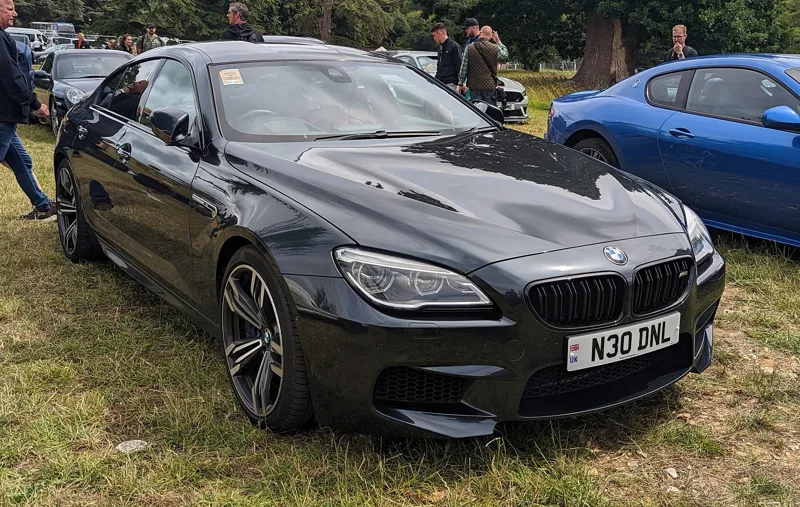
The Gran Coupe, code F06, was the real novelty. It was introduced in March 2012 at the Geneva show and drew on the 2007 CS Concept. Its wheelbase was 117 mm (4.6 in) longer than the F13 coupe's, matching the 5 Series, and the body was 112 mm (4.4 in) longer and 23 mm (0.9 in) taller. Seating was 4+1: two proper rear seats and a smaller one in the middle. The boot held 16.2 cubic feet against 14 for the F01 7 Series, although the sloping roofline left less rear headroom than the big saloon offered.
The 640i was one of the two launch models, and in 2013 the 640d xDrive Gran Coupe and the 640i xDrive joined the range. Rear seats folded in a 60:40 split. The convertible, for its part, had sun-reflective front seats.
Options and updates
An M Sport package brought M exterior and interior styling, LED fog lamps, 19-inch alloy wheels, sports seats and an Alcantara interior. Other options included automatic parking, a Bang & Olufsen sound system and xDrive. M Performance Parts could be fitted to any model, from black grilles and carbon fibre mirrors to a sport exhaust and a carbon fibre gear selector.
In 2012 the 650i engine became the N63TU, which added variable valve lift that BMW calls Valvetronic, and traffic sign recognition gained a warning about overtaking restrictions. A year later launch control and engine coasting in ECO PRO arrived on eight-speed cars, an emergency call system with location and crash-severity detection became standard, and the optional night vision learned to recognise animals.
The facelift appeared at the 2015 Detroit show. It brought a new bonnet, revised bumpers, LED fog lamps, adaptive LED headlights, indicators in the mirrors and fresh paint colours. Every model could now be had with xDrive, the range met the EU6 emissions standard, fuel economy improved and the electronic dampers gained extra comfort settings. A 10.2-inch touch-sensitive iDrive display came in 2016, and iDrive 5 with Professional Navigation in 2017. The range collected design awards too, among them the Red Dot award in 2011 and 2012 and an iF Gold award in 2012 for the coupe.
M6 and Alpina B6 in the F-series
The F-series M6 used the 4.4-litre twin-turbocharged S63 V8, the first turbocharged engine in any M6. In most countries the only gearbox was a seven-speed dual-clutch unit called M-DCT. A dual-clutch gearbox keeps two sets of gears ready, one already selected for the next shift, which is why changes feel so quick. American buyers could also order a six-speed manual. Extras over a standard 6 Series included M styling, merino leather, an M-specific head-up display and a carbon fibre roof.
BMW unveiled the F12 M6 convertible in May 2013 and the F13 M6 coupe in July 2013. Buyers who wanted a four-door M6 had to wait until November 2013 for the M6 Gran Coupe.
Alpina offered its own take. The B6 Gran Coupe xDrive arrived in 2014, based on the 650i, and used a 4.4-litre twin-turbo V8 rated at 397 kW (532 hp) and 730 Nm (538 lb ft), with a top speed of 318 km/h (198 mph). A 2015 refresh added 59 kW (79 hp) and 70 Nm (52 lb ft) and lifted top speed to 324 km/h (201 mph). The B6 was built alongside the regular car in Dingolfing and finished at Alpina's factory in Buchloe, Bavaria. In most countries Alpina sold it independently, but in the United States and Canada BMW sold it next to the M6. BMW's own description of the pair is that the M6 was sharper because of its dual-clutch gearbox, turbochargers, lower weight and rear-wheel drive only, while the B6 leaned more towards road driving than track work.
The end of the F-series and the arrival of the 8 Series
The coupe ended production in February 2017 and the convertible in February 2018. The Gran Coupe followed in September 2018, though it stayed on sale for the 2019 model year. The replacement, the 8 Series coded G15, started production in June 2018, and the coupe, convertible and Gran Coupe bodies moved into that more upmarket range.
The BMW 6 Series G32 Gran Turismo
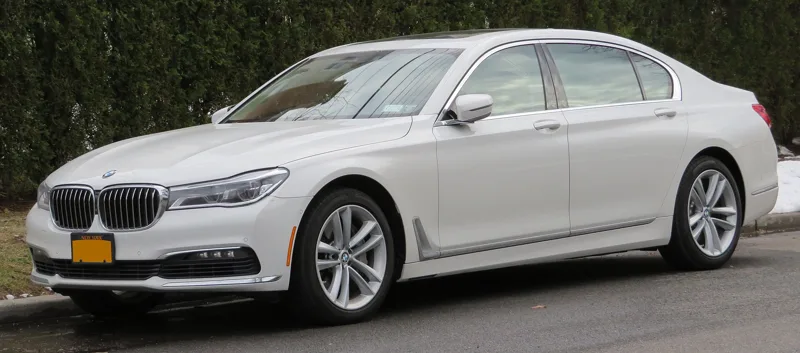
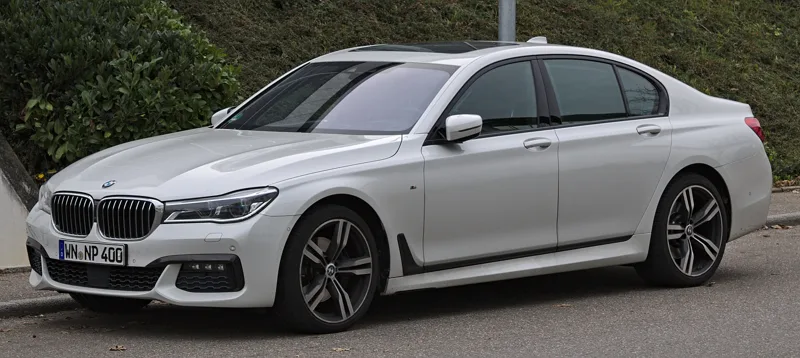
The 6 Series name then jumped across to a very different car. The G32 was a five-door liftback, replacing the 5 Series Gran Turismo (F07) and sitting on the G30 5 Series. BMW put details online on 14 June 2017 and showed the car at the Frankfurt show that September. Hussein Al-Attar designed the exterior.
Against the car it replaced, the body was 87 mm (3.4 in) longer, 21 mm (0.83 in) lower and 150 kg (330 lb) lighter, and the load area grew by 110 L (3.9 cu ft) to 610 L (22 cu ft). It used the modular CLAR platform with self-levelling air suspension as standard, and above 120 km/h (75 mph) the car lowered itself by 9.9 mm (0.39 in).
Engines and equipment
The first cars were the 630i, 640i and 630d, with the 640d diesel arriving in September 2017 and an entry-level 620d from July 2018. Most were rear-drive, with xDrive optional and the 640d offered only with all-wheel drive. The G32 range was made up of turbocharged four-cylinder and six-cylinder petrol engines plus six-cylinder diesels, and it never offered a V8, which set it apart from the contemporary 5 Series and the F06 Gran Coupe. All used an eight-speed ZF automatic with a manual sequential mode and a sport setting that holds gears longer. A facelift appeared on 27 May 2020 alongside the revised 5 Series, and for 2021 every engine became a 48-volt mild hybrid.
Inside, a 10.25-inch screen ran iDrive 6.0, with gesture control as an option. Active Driving Assistant came as standard, with blind spot monitoring, lane departure warning and speed limit information. The 630d earned five stars from Euro NCAP in 2017, and the car won the 2017 EuroCar Body Award.
Why the G32 ended
Reception was mixed. Critics found the tall roof and rear styling awkward, and noted that the Audi A7 looked sleeker though it was less practical. Practicality was the G32's strength, but it also competed inside BMW's own showrooms against the X5 and X6. In the United States only the 640i xDrive was sold, for the 2018 and 2019 model years, and after 2019 both it and the F06 Gran Coupe left that market. Production ended worldwide in August 2023.
After the G32, the 6 Series name stops
The G32 was discontinued in August 2023 with no successor, and the coupe, convertible and Gran Coupe lines continue under the 8 Series name.
For a driver choosing between generations, the differences are concrete. Manual gearboxes were offered on several E63 models, but on the F-series only in the United States. The F-series brought eight-speed automatics, selectable driving modes and xDrive. The G32 is the one with mild-hybrid engines and a 610 L load area.