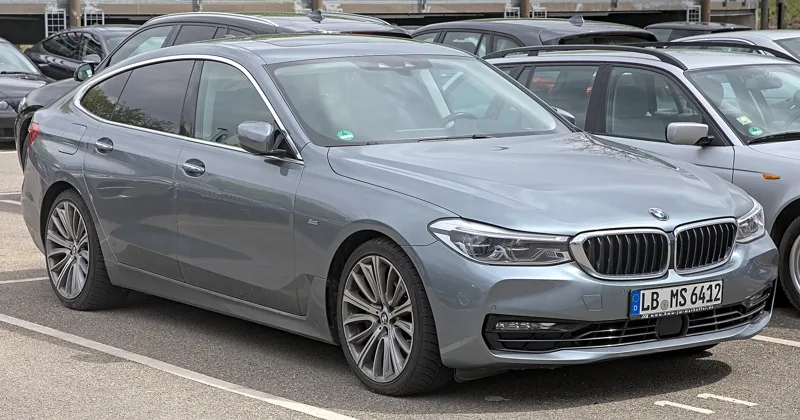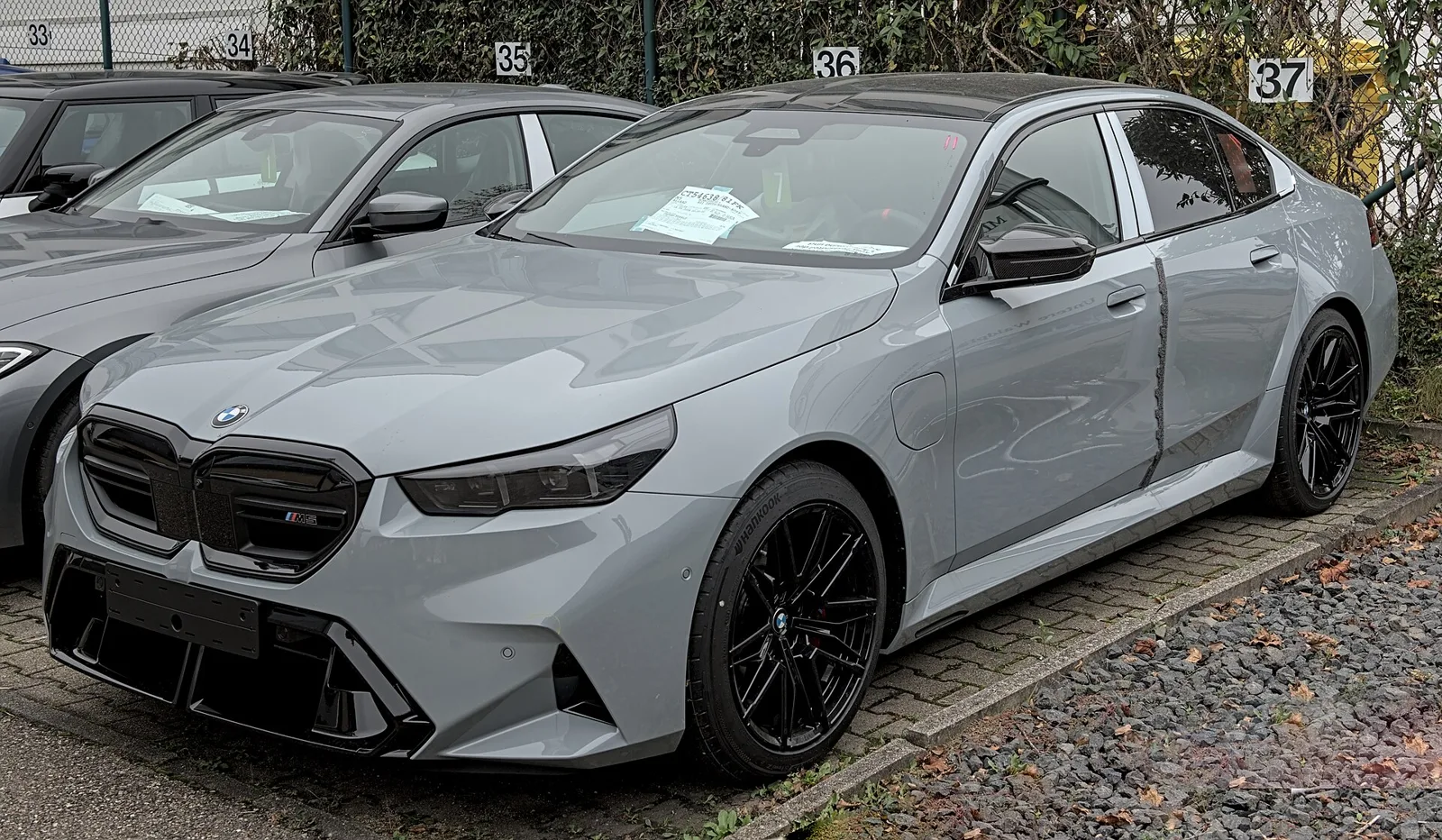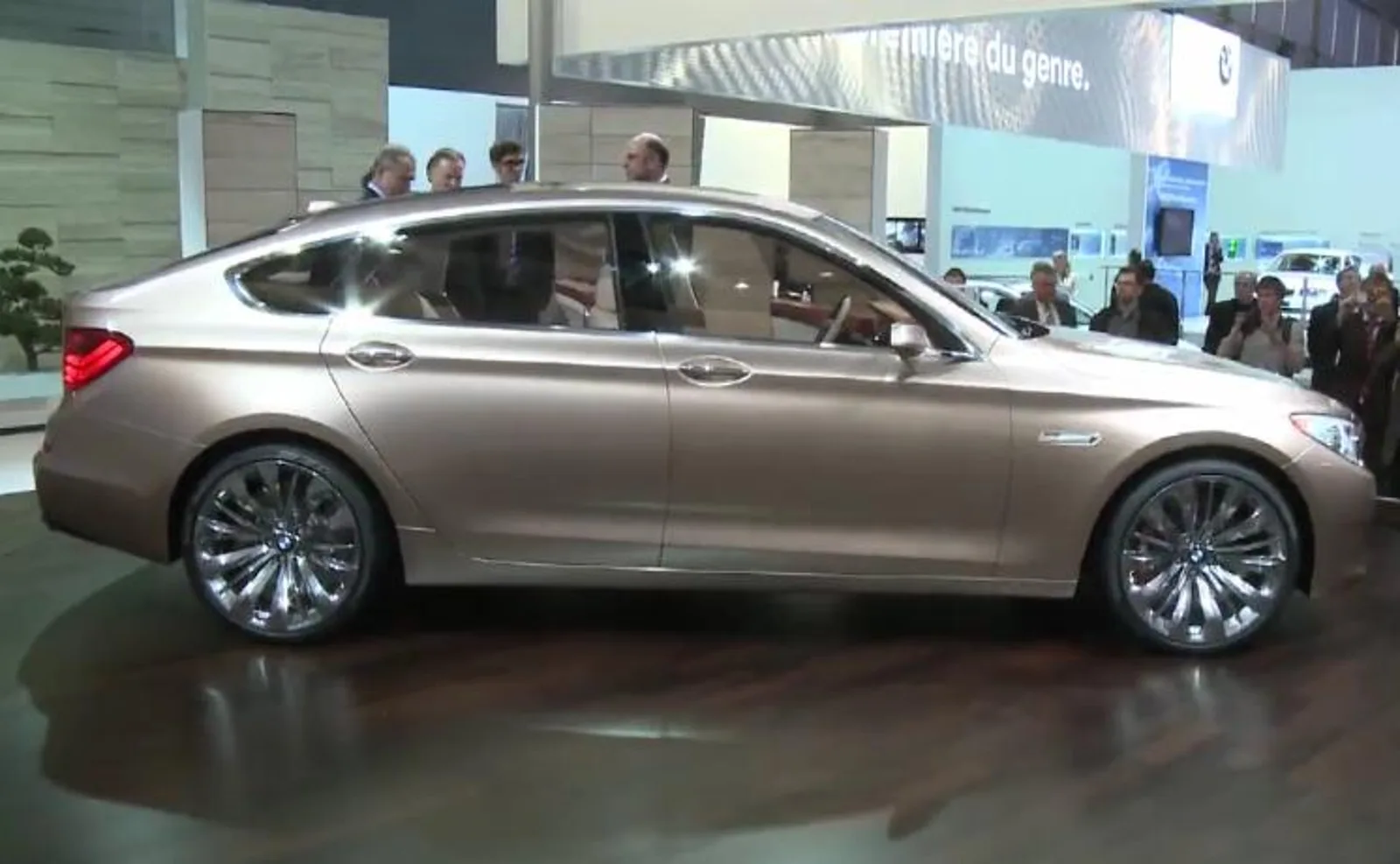
A five-door fastback that BMW sold alongside the F10 saloon from 2009 to 2017, with a two-way tailgate, a 7 Series wheelbase and a hybrid, V8 and M5 family around it.
The F07 5 Series Gran Turismo was a five-door fastback built from 2009 to 2017 alongside the F10 saloon. It shared its wheelbase with the 7 Series and offered up to 1,801 litres of cargo space. BMW moved the body style into the 6 Series range for the G32 generation.
BMW's fastback 5 Series, coded F07, arrived in 2009 as part of the sixth-generation family and stayed on sale until 2017. It was the only 5 Series with a fastback body and a hatchback opening, and it shared its wheelbase and track with the 7 Series. Its successor moved into the 6 Series range.
Where did the Gran Turismo come from?
The F07 Gran Turismo was part of the sixth-generation 5 Series, which also included the F10 saloon, the long-wheelbase F18 and the F11 Touring. Production of the Gran Turismo began in early September 2009, and the car reached German showrooms in late October that year.
The idea was first shown as the Concept 5 Series Gran Turismo at the Geneva show in 2009. The production car appeared at the Frankfurt show later that year, and sales opened in the final quarter of 2009. Since it went on sale beside the earlier E60 and E61 in most countries, it was the first car of the F10 family to reach customers.
Munich saw the F10 saloon unveiled on 23 November 2009, and series production followed in January 2010. The Touring version was revealed at the 2010 Leipzig Auto Show, with production beginning the same month.
A five-door fastback that shared the F10 platform and a 7 Series wheelbase, with a tailgate that opened two ways.
How was the Gran Turismo body designed?
The Gran Turismo was a five-door fastback with a hatchback rear door. At 4,998 mm (196.8 in) long, it was longer and taller than the saloon and Touring models. Its tailgate could open like a conventional boot, or the whole hatch could lift in the manner of an SUV for bulky loads.
Its tall proportions earned it the 7 Series hatchback nickname. Its wheelbase, 3,066 mm (120.7 in), matched the 7 Series, and the track measured 1,610 mm (63.4 in) at the front and 1,654 mm (65.1 in) at the rear. The raised roofline gave more passenger and luggage room than the E61 5 Series wagon, with headroom close to that of the E70 X5 and the F01 7 Series.
The GT also had frameless doors, a first for a four-door BMW. Exterior design work between November 2005 and December 2006 was led by Adrian van Hooydonk, with Jacek Frohlich on the saloon, Jean-Francois Alexandre Huet on the Touring and Christopher Weil on the Gran Turismo.
How much luggage space did the Gran Turismo have?
The Gran Turismo offered 439 litres (15.5 cu ft) of cargo space with the rear seats raised. With the rear seats folded flat and the partition stowed, capacity grew to 1,801 litres (63.6 cu ft). Every F07 used an 8-speed automatic gearbox.
The F10 family turned the centre console back towards the driver, a layout the 5 Series had last used between 1981 and 2003. Rear passengers gained 13 mm (0.5 in) more knee room, and the iDrive system was updated.
What engines did the Gran Turismo use?
Among the Gran Turismos, the 535i was the first to carry the N55, a turbocharged straight-six that succeeded the N54 in the line-up. From June 2010, xDrive all-wheel drive could be specified on the fastback as well.
Engines varied from one market to the next. European sixes used the direct-injection N53, while many other countries kept the older N52 because local petrol had higher sulphur content. In Greece and Turkey the 520i ran a 1.6-litre N20 four, rated at 170 PS (125 kW; 168 hp) at 5,000 rpm.
Diesel buyers could add an M Performance kit to the 530d in some markets, raising power to 286 PS (210 kW; 282 hp) and torque to 443 lb-ft (600 N-m). North American 535d cars borrowed the 190 kW engine from the European 530d, which made 258 PS (255 hp).
What made the F10 generation technically notable?
The F10 introduced the first hybrid drivetrain in a 5 Series, alongside a turbocharged V8 and an 8-speed automatic. It also brought Integral Active Steering, which steers the rear wheels, plus electric power steering and an LCD instrument cluster called the Black Panel Display.
Suspension was double-wishbone at the front, with double-pivot lower arms, where earlier 5 Series used MacPherson struts. The rear was a five-link multi-link layout called Integral V. The body was built from several grades of steel and came out 55% stiffer than the E60 it replaced.
BMW used aluminium for the bonnet, front fenders and doors to save weight. Compared with the aluminium front structure of the E60, the F10's steel parts were heavier but cheaper to produce and repair.
Driver aids included Active Cruise Control with Stop and Go, which could bring the car to a halt and pull away again. Blind-spot monitoring, a lane departure warning and a head-up display were available, and a camera-based speed-limit display read road signs.
What were the M5, Alpina and special models?
Power for the M5 came from a twin-turbo S63 V8 that delivered 560 PS (412 kW; 553 hp) with 502 lb-ft (680 N-m) of torque. A 2014 Competition Package took output to 600 PS, or 591 hp (441 kW), and lifted torque to 516 lb-ft (700 N-m). Alpina built the B5 and D5 alongside it.
Officially the M5 covered 0-100 km/h in 4.4 seconds. An electronic cap held it to 250 km/h (155 mph), a figure the M Driver's Package could push to 305 km/h (190 mph). A seven-speed dual-clutch gearbox and a limited-slip differential that vectored torque between the rear wheels completed the drivetrain.
The B5 Bi-Turbo was based on the 550i and used an Alpina-modified N63 twin-turbo V8. The first version made 500 bhp (373 kW) and 520 lb-ft (700 N-m). The Edition 50 that arrived in 2015 reached 591 bhp (441 kW) and 590 lb-ft (800 N-m), while the D5 Bi-Turbo made 345 bhp (257 kW) from a modified N57 straight-six, with 520 lb-ft (700 N-m) of torque.
The M550d xDrive sat at the top of the diesel range. It was launched at the 2012 Geneva show as part of the M Performance sub-brand, and it ran until 2016. Its triple-turbo N57S straight-six was rated at 381 PS (280 kW; 375 hp) and 546 lb-ft (740 N-m), and it reached 100 km/h in 4.7 seconds, or 4.9 seconds for the Touring. The ZF 8HP automatic sent power to all four wheels through xDrive.
The ActiveHybrid 5 paired a turbocharged 3.0-litre straight-six from the 535i with a 40 kW (54 bhp) electric motor built into the automatic gearbox. Its 1.35 kWh lithium-ion battery shrank the boot to 375 litres from 520 litres. Electric-only running was possible up to 60 km/h (37 mph), with BMW putting the electric distance at 4 km (2.5 mi). The Environmental Protection Agency rated the 2013 model at 26 mpg-US combined, and the car ran from 2011 to 2016.
The 530Le was a China-only plug-in hybrid version of the F18 long-wheelbase saloon. It combined a 160 kW (210 bhp) N20 engine with a 70 kW (94 hp) motor, reached 120 km/h (75 mph) in electric mode and offered 58 km (36 mi) of electric range. Its combined fuel use was 2.1 L/100 km.
How did the 2014 facelift change the F10?
The facelift, known as LCI, began production in July 2013. The 550i received an upgraded N63B44O2 engine rated at 331 kW (444 bhp), Bi-Xenon headlights became standard, and a 518d joined the range. Gran Turismo models gained a revised tailgate that added 60 litres (2.1 cu ft) of luggage capacity.
Other changes included an improved Stop/Start system, tablets for rear passengers and a touchpad on top of the iDrive controller. ConnectedDrive had already arrived for 2012, bringing real-time traffic information, an upgraded head-up display and hands-free tailgate opening.
Where was the F10 built?
The F10 was built at the BMW Group plant in Dingolfing, Germany, and at BMW Brilliance in China. Production began in January 2010, and the final example left the line in February 2017. German-built kits went together abroad too, in Russia, Indonesia, India, Egypt, Malaysia and Thailand.
The F18 long-wheelbase saloon was created for China, where it offered a cheaper route than the 7 Series. Its wheelbase ran 14 cm (5.5 in) longer than the standard saloon, and its total length reached 5,039 mm (198 in). BMW Plant Shenyang built it.
How did the Gran Turismo end its run?
The G30 5 Series took over from the F10 in February 2017. For the new generation the Gran Turismo moved into the 6 Series line-up, where it became the G32 6 Series Gran Turismo, built on the G30 platform.
Euro NCAP gave the 2010 530d five stars overall. Safety data for the rear-drive 2011 535i quotes a 9.3% rollover risk alongside a five-star overall score.
Marketing also stood out. In 2011 BMW North America released 'Refuel', a commercial featuring an F10 saloon and a jet plane, to promote economy and the Ultimate Driving Machine motto. BMW Canada's 2012 M5 film showed the car launched from a tube into a line of targets. The F10 M5 became the Nurburgring Ring Taxi in April 2012, replacing the E90 M3.
BMW 5 Series Gran Turismo specifications at a glance
| Feature | Gran Turismo (F07) | F10 saloon |
|---|---|---|
| Body | Five-door fastback with hatchback tailgate | Four-door saloon, with Touring (F11) estate |
| Length | 4,998 mm (196.8 in) | 4,899 mm (192.9 in) |
| Wheelbase and track | 3,066 mm (120.7 in); front 1,610 mm (63.4 in), rear 1,654 mm (65.1 in) | Shares the F01 7 Series platform; figures not listed |
| Cargo | 439 L (15.5 cu ft) seats up; 1,801 L (63.6 cu ft) seats down | Not listed |
| Transmission | 8-speed automatic; xDrive all-wheel drive from June 2010 | Six-speed manual or 8-speed ZF 8HP automatic |
| Flagship engine | N55 turbocharged straight-six (535i GT) | M5 S63 twin-turbo V8, 412 kW (560 PS; 553 hp) |
| Production | Early September 2009 to 2017 | Series production from 7 January 2010; last car February 2017 |
| Successor | G32 6 Series Gran Turismo | G30 5 Series, February 2017 |