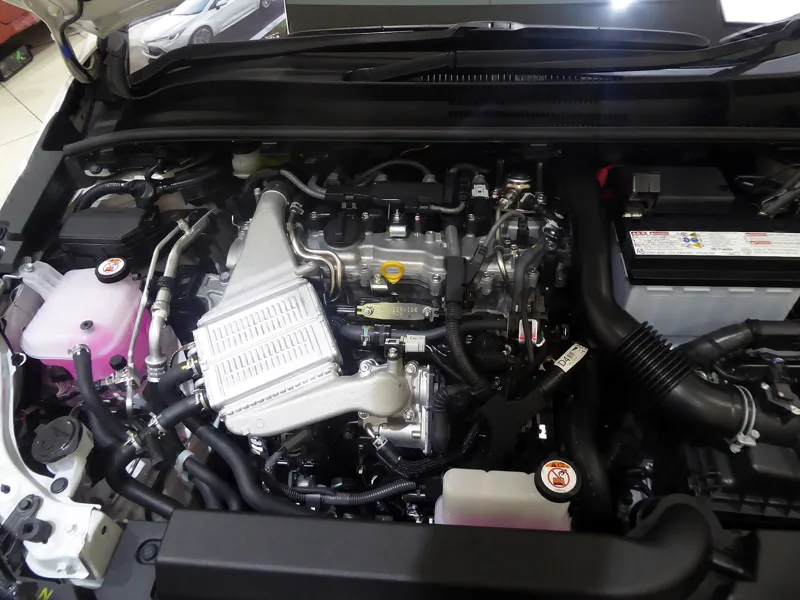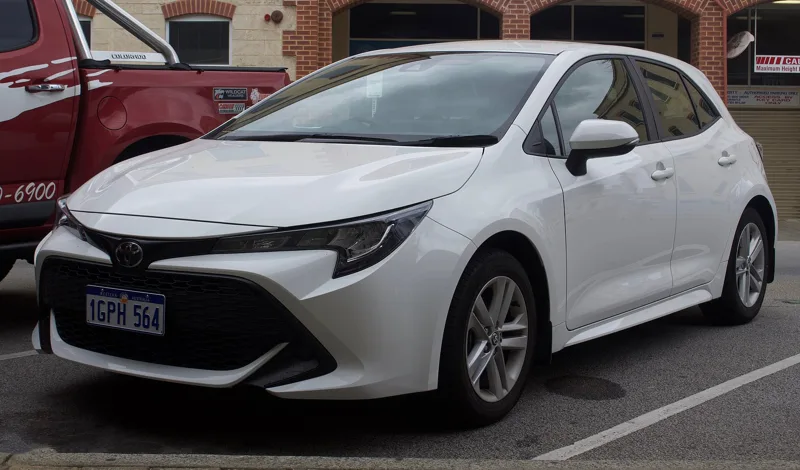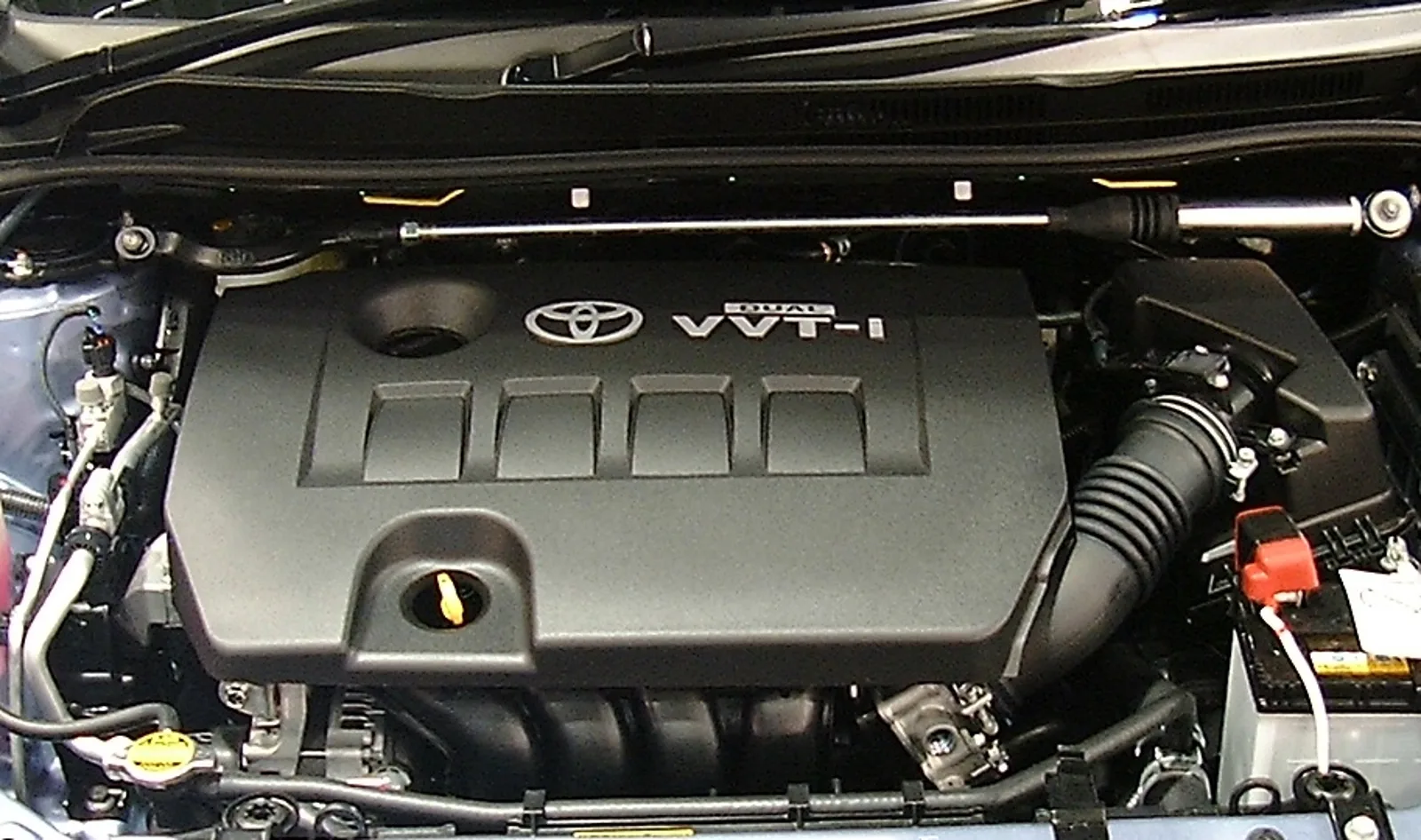
A straight-four family from 2007 that brought Valvematic to Toyota's mainstream cars and later drove the Prius hybrid.
The Toyota ZR family is a set of 1.6 to 2.0 litre straight-four petrol engines with dual VVT-i, produced from 2007, including the first Valvematic lift system and the 2ZR-FXE hybrid.
The ZR engines are a family of straight-four petrol units from Toyota, built from 2007 with die-cast aluminium blocks and capacities from 1.6 to 2.0 litres. Most carry dual VVT-i, and the family introduced Toyota's Valvematic variable lift system, which first appeared on the Noah and Voxy.
What did the ZR family introduce?
The ZR family brought Valvematic into Toyota's line-up. The system varies intake valve lift, and its first application came in the Noah and Voxy in 2007. The European Avensis followed in 2009. Dual VVT-i, which adjusts intake and exhaust timing together, runs through most of the family.
A 1.6 to 2.0 litre straight-four family that brought Valvematic to Toyota's mainstream and later drove the Prius hybrid.
Where were ZR engines built?
Production began in April 2007 at Tianjin FAW Toyota Engine's Plant No. 2, which built the 1.6 and 1.8 litre ZR units. The West Virginia plant builds ZR engines for the Corolla in the United States and Canada, and the 1.8 litre hybrid FXE comes from Deeside in the United Kingdom.
Deeside's engine parts also supply Toyota's assembly lines in France, Turkey, South Africa and Japan. The hybrid engines are fitted at Burnaston to the Corolla Hatch and Touring Sport versions.
How did the 1ZR and 2ZR engines compare?
The 1ZR-FE is a 1.6 litre (1,598 cc) engine with dual VVT-i, making 122 hp (91 kW) at 6400 rpm. The 2ZR-FE is its 1.8 litre (1,798 cc) partner, making 98 to 103 kW (132 to 138 hp) at 6000 rpm. The Valvematic versions of both added power, and the 2ZR-FAE also used less fuel.
The 1ZR-FE replaced the 3ZZ-FE in most applications. Buyers could choose a 5 or 6-speed manual, a multi-mode manual or a 4-speed automatic. Torque was 113 lb-ft (153 N m) at 5200 rpm, net, the compression ratio was 10.2:1, and the bore and stroke measured 80.5 mm and 78.5 mm.
The 1ZR-FAE added the Valvematic lift system to dual VVT-i. Output rose to 132 hp (98 kW) at 6400 rpm and torque to 118 lb-ft (160 N m) at 4400 rpm. Compression increased to 10.7:1, with a redline of 6600 rpm. Intake valve lift varies between 1 and 11 mm according to load and speed, and the engine weighs 123 kg without fuel.
Applications included the Auris, Corolla, Avensis and Verso, along with the Lotus Elise from 2010 to 2021, and the engine was rated at 16.67 km/L. The flex-fuel 1ZR-FBE carried the same features into Southeast Asia, where it made 125 hp (93 kW) at 6000 rpm and 116 lb-ft (157 N m) at 5200 rpm.
What was the 2ZR-FE 1.8 litre engine?
The 2ZR-FE is a 1.8 litre DOHC 16-valve engine with dual VVT-i, a bore of 80.5 mm and a stroke of 88.3 mm. It replaced the 1ZZ-FE in most applications and produces 98 to 103 kW (132 to 138 hp) at 6000 rpm, according to the application.
Torque was 173 N m (127.5 lb-ft) at 4400 rpm in the Corolla, Matrix and Vibe. The Scion xD, by contrast, produced 95 kW (128 hp) with 171 N m (126 lb-ft). The engine weighs 97 kg and was rated at 15.2 km/L on the Australian and New Zealand test cycle.
Forced induction came to the 2ZR too. A supercharged Yaris GRMN produced 205 hp (153 kW), and a supercharged Lotus Elise reached 217 bhp (162 kW).
What did the 2ZR-FAE change?
The 2ZR-FAE is a 1.8 litre DOHC 16-valve engine with Valvematic. It progressively replaced the Japan-built 1ZZ-FE and the 2ZR-FE in most applications, and it uses between 5 and 10 per cent less fuel than the 2ZR-FE, depending on the car.
Its outputs run from 104 to 110 kW (139 to 148 bhp), with torque between 171 and 175 N m (126 to 129 lbf-ft). Compression is 10.5:1 and the redline reaches 6600 rpm. A version for the Taiwanese Sienta simply added Valvematic to the standard 2ZR-FE, producing 140 PS (103 kW; 138 hp) at 6200 rpm and 172 N m (127 lbf-ft) at 4000 rpm.
The flex-fuel 2ZR-FBE broadened the choice further, producing 141 hp (105 kW) at 6000 rpm. The Atkinson cycle 2ZR-FXE sits alongside them as the hybrid option.
How did the hybrid 2ZR-FXE work?
The 2ZR-FXE is a 1.8 litre Atkinson cycle engine with a 13.0:1 compression ratio, paired with electric motor generators in Toyota's hybrid drive. On its own it produces 73 kW (98 hp; 99 PS) at 5200 rpm, and its maximum thermal efficiency is about 38.5 per cent.
With the fifth-generation Hybrid Synergy Drive, introduced in 2023, the engine and electric motors together produce up to 103 kW (138 hp; 140 PS) and 207 N m (153 lb-ft). The older fourth-generation system managed up to 88 kW (118 hp; 120 PS).
In the 2016 Prius, the engine alone gave 95 hp (71 kW) at 5200 rpm, and torque of 105 lb-ft (142 N m) at 3600 rpm. The combined system produced up to 121 hp (90 kW), and the quoted maximum thermal efficiency was about 40 per cent for that generation.
The 2ZR-FXE powered the Prius across its XW30, XW50 and XW60 generations, along with the Prius Plug-in, Prius v and Lexus CT. The Corolla E210, the C-HR, the Auris and the Noah and Voxy also used it.
What is the 3ZR-FE 2.0 litre engine?
The 3ZR-FE is a 2.0 litre (1,986 cc) DOHC 16-valve engine with dual VVT-i, measuring 80.5 mm by 97.6 mm. In Japan it produced 143 PS (141 hp; 105 kW) at 5600 rpm, with 194 N m (143.1 lb-ft) of torque at 3900 rpm, and it powered the Voxy, Noah and Avensis.
Outside Japan the 3ZR-FE reached the 2009 Corolla Altis across the Asia-Pacific region, the 2013 RAV4 and a 2013 Corolla sold in the Middle East. Its Japanese fuel figure of 13.4 km/L was measured on the 10-15 Japanese test cycle in the Voxy and Noah, which is a useful reminder that cycle and market change the numbers.
The 3ZR-FAE of 2007 was Toyota's first engine with a Valvematic intake, making 158 PS (116 kW; 156 hp) at 6200 rpm, with 195 N m at 4400 rpm. It went into the Allion, Premio, Wish, C-HR and Harrier, and it was also fitted to the Noah and Voxy.
A flex-fuel 3ZR-FBE arrived in Brazil in March 2010, with 142 PS (104 kW; 140 bhp) on petrol and 153 PS (113 kW; 151 bhp) on ethanol. Brazil used it in the Corolla from 2010 to 2019. The TOMS Toyota TZR42 was the racing version of the 3ZR-FE, and it powered the Dome F110 in Formula 4.
Which ZR engines were built only for China?
Several ZR units were developed as China-only analogues of their wider-market cousins. The 4ZR-FE is a counterpart of the 1ZR-FE, the 6ZR-FE mirrors the 3ZR-FE for the RAV4, and the 7ZR-FE follows the 2ZR-FE for the Levin.
The 4ZR-FE made 117 hp (87 kW; 119 PS) at 6000 rpm and 150 N m (111 lb-ft) at 4400 rpm. Its China-market sibling, the 6ZR-FE, has the same 2.0 litre capacity and 10.0:1 compression as the 3ZR-FE it mirrors, while the 6ZR-FAE carries the Valvematic lift system.
The 5ZR-FXE and 8ZR-FXE are the Chinese hybrid analogues of the 2ZR-FXE, and both keep its 13.0:1 compression. They went into the Prius and CT200h in China, and into hybrid Corolla and Levin versions, so the hybrid range in China followed the same architecture as the rest of the family.
Why does the ZR family matter?
The ZR family matters because it carried Valvematic into mainstream Toyotas and then became the engine behind several Prius generations. Its range stretches from 1.6 to 2.0 litres, covering economy cars, people carriers and the hybrid systems that followed.
Several threads run through it: variable valve lift on the 1ZR-FAE, 2ZR-FAE and 3ZR-FAE, Atkinson cycle hybrids from the 2ZR-FXE onward, and flex-fuel versions for Brazil and Southeast Asia. Each shows Toyota adapting one architecture to different fuel standards and different buyers.
Its longest-lived legacy may be the hybrid line, where the Atkinson cycle engine carried on through successive Prius generations.