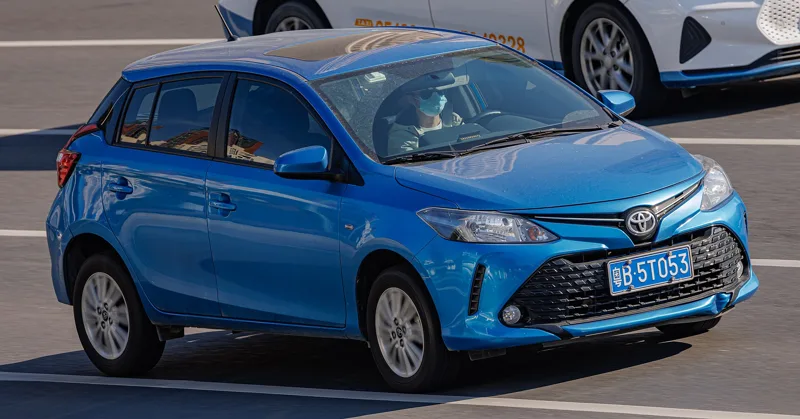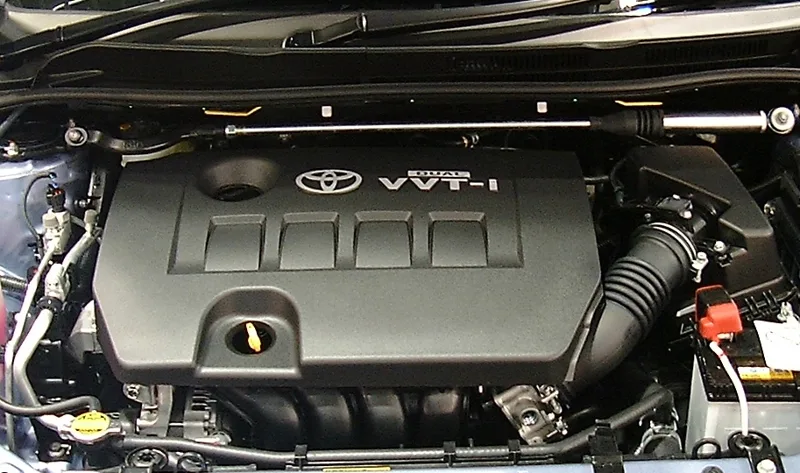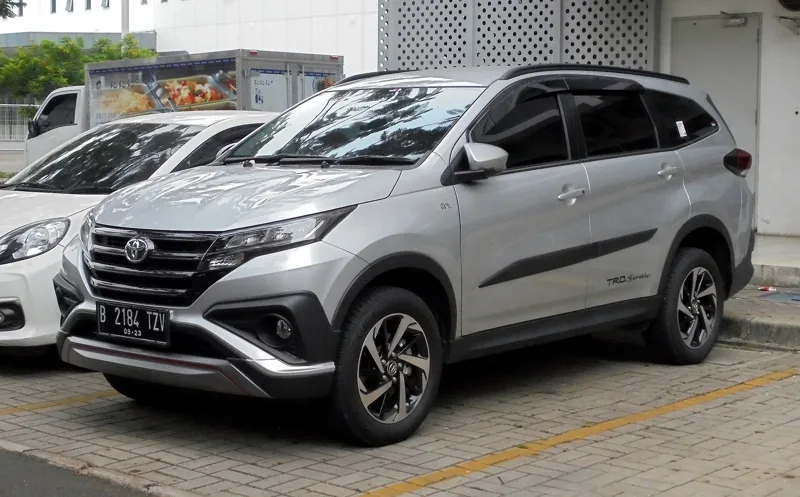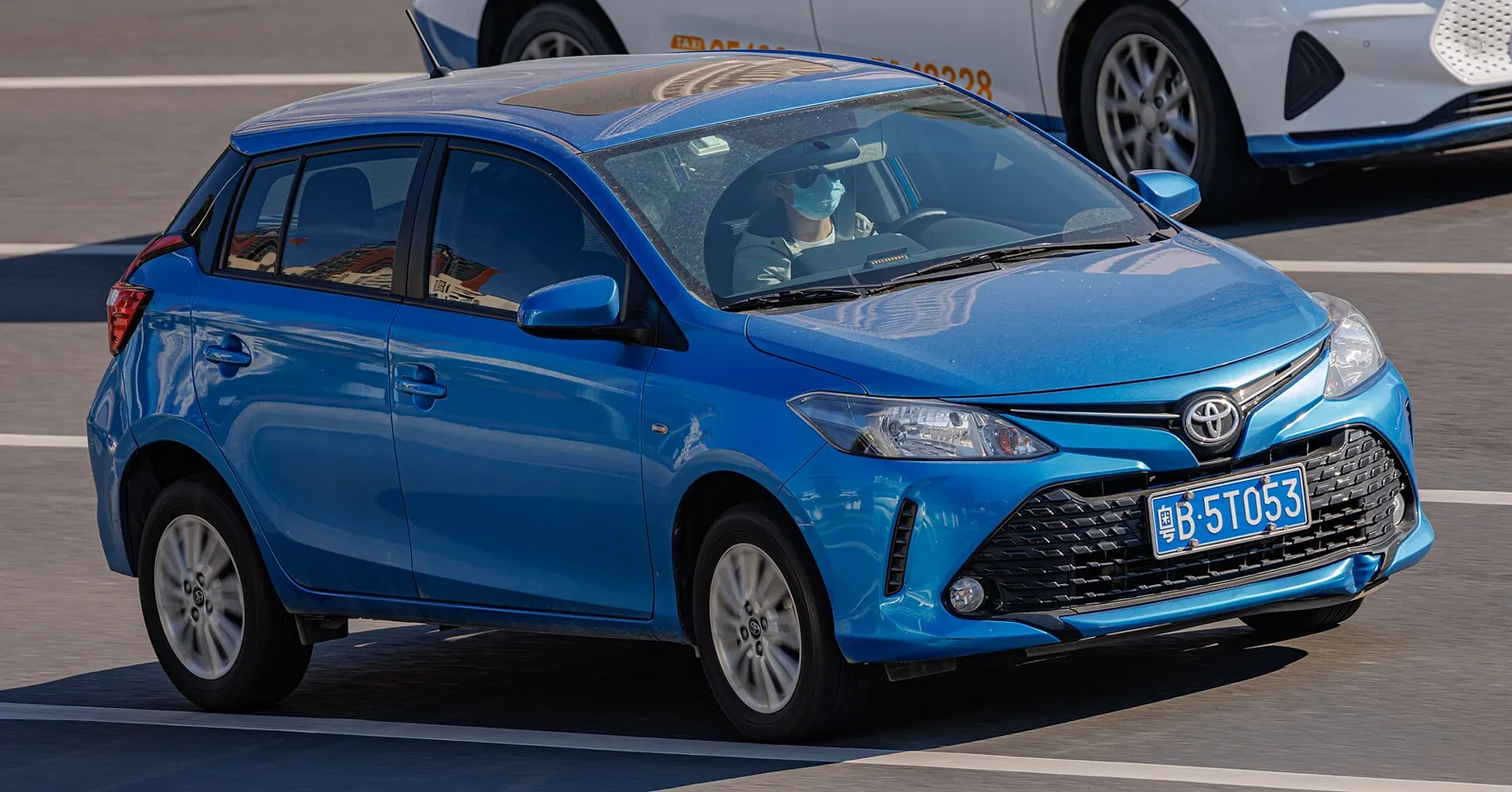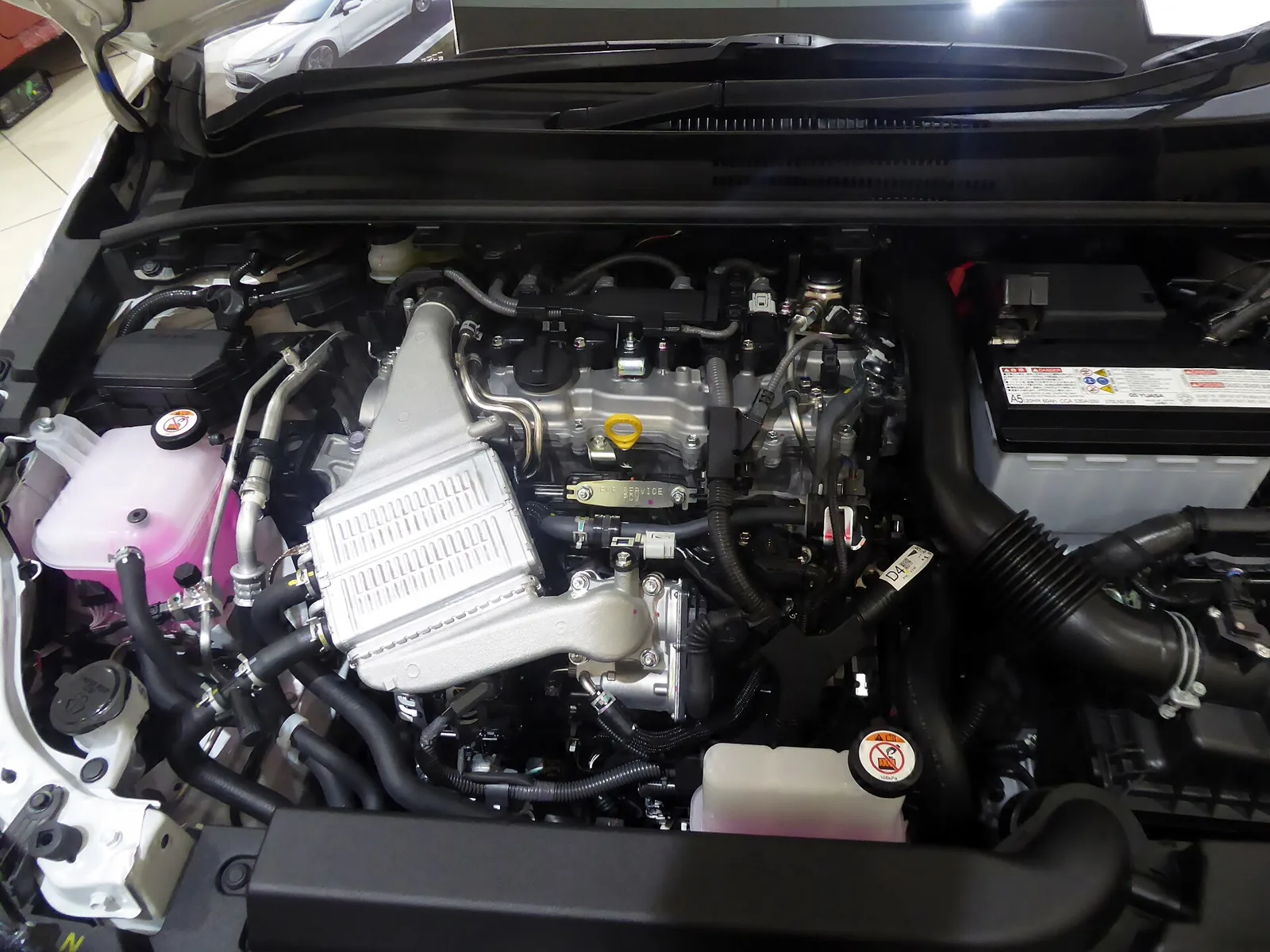
Compact aluminium fours that powered the Yaris, Corolla, Vios and Avanza, from the 1NR-FE of 2008 to the turbocharged 8NR-FTS.
The Toyota NR family is a set of small aluminium inline-fours from 1.2 to 1.5 litres with DOHC heads and Dual VVT-i, used in the Yaris, Corolla, Vios and Avanza.
The Toyota NR engines are a family of small inline-four petrol units with capacities from 1.2 to 1.5 litres. They were built for compact cars such as the Yaris, Corolla, Vios and Avanza, with aluminium blocks and heads, four valves per cylinder and DOHC valve gear throughout.
What do the NR engines have in common?
The NR series uses an aluminium block and cylinder head, with four valves per cylinder operated by a DOHC layout. Toyota's Dual VVT-i and VVT-iW variable valve timing systems appear across the range, and the engines use either multi-point or direct fuel injection. The 1NR to 7NR units have Dual VVT-i as standard.
The 8NR-FTS is the exception on the valve side, since it carries VVT-iW, which lets it run on the Otto cycle or a modified Atkinson cycle to improve thermal efficiency. That flexibility sets the later turbocharged unit apart from the naturally aspirated engines that came before it.
A compact aluminium four that moved from the 1NR-FE's efficiency focus to a turbocharged 8NR-FTS in a single family.
How did the 1NR-FE become a compact staple?
The 1NR-FE is a 1.3 litre inline-four with a capacity of 1,329 cc and a bore and stroke of 72.5 mm by 80.5 mm. It entered the European market in late 2008 in the Yaris XP9F, and Stop and Start technology came with it. Improved performance, lower emissions and better fuel consumption were the main aims of its development.
Toyota's engineers reworked the intake channel, used computer simulation to improve airflow, smoothed internal surfaces and rounded off sharp edges. The pistons were made smaller and lighter, with a reduced contact area, and they used carbon ceramide, a material that Formula One engineers also favour, to cut friction. Cooled exhaust gas recirculation was fitted to cold-area specification models to reduce pumping losses and nitrogen oxide emissions.
Output depends on the emissions standard. The Euro 4 version produced 105 PS (104 hp; 77 kW) at 6000 rpm, while the Euro 5 version rated 73 kW (98 bhp; 99 PS) at the same speed. Torque came in at 132 N m (97 lb-ft) at 3800 rpm in Euro 4 form and 128 N m (94 lb-ft) at 3800 rpm in Euro 5 form. Indonesian and Malaysian versions were tuned differently again.
The engine runs a compression ratio of 11.5:1, or 10.5:1 in the Indonesian Euro 4 version, with a redline of 6200 rpm and an idle speed of 700 rpm. Its service mass, including coolant and oil, is 89.5 kg (197 lb). Applications read like a list of Toyota's small-car range, including the Yaris, Corolla, Auris, iQ, Passo, Ractis, Probox, Urban Cruiser and Vios, along with the Subaru Trezia.
What did the 1NR-VE and 1NR-FKE add?
Daihatsu adapted the 1NR for its own models as the 1NR-VE, and the Avanza and Xenia used it first. Perodua later fitted it to the Bezza, which is based on the 1.3 litre 1NR-FE. ECE fuel consumption figures for the manual Avanza variant were 21.7 km/L (4.6 L/100 km), and the automatic came in at 21 km/L.
Later Perodua Bezza Advance and third-generation Myvi versions reached 22 km/L (4.5 L/100 km), helped by the Eco Idle stop-start system and regenerative braking. The 1NR-VE produces 69 to 73 kW (93 to 98 hp) and 121 N m (89 lbf-ft) of torque, and it appears in both transverse and longitudinal installations.
The 1NR-FKE, introduced in the second quarter of 2014, moved the 1NR-FE onto the Atkinson cycle, as used by Toyota's hybrid-dedicated engines. Toyota claimed a maximum thermal efficiency of 38 per cent. Its valves are driven by VVT-iE, and the intake port has a new shape that creates a strong vertical tumble flow. Output is 73 kW (99 PS; 98 bhp) at 6000 rpm, and torque is 121 N m (89 lb-ft) at 4400 rpm. The expansion ratio is 13.5:1.
Toyota said the 1NR-FKE, combined with idling stop and other functions, would bring fuel efficiency gains of about 15 per cent. Applications included the Etios, Yaris, the Vitz after April 2014 and the Subaru Trezia after May 2014. A flex-fuel 1NR-FBE was also made for the Brazilian Etios and Yaris.
How did the 2NR-FE 1.5 litre engine evolve?
The 2NR-FE is a 1.5 litre engine of 1,496 cc with a bore of 72.5 mm and a stroke of 90.6 mm. It arrived in the fourth quarter of 2010 for the Toyota Etios, and it was the first new Toyota engine in more than eight years to lack VVT-i, a cost-driven choice for that car. Its exhaust manifold was integrated into the cylinder head to reduce emissions.
A Dual VVT-i version came later, first used in the Avanza and in many 1.5 litre models in Asian markets from the 2017 model year. Without Dual VVT-i the engine made 66 kW (90 PS; 89 bhp) at 5600 rpm and 132 N m (97 lbf-ft) at 3000 rpm. With Dual VVT-i it rose to 79 kW (107 PS; 106 bhp) at 6000 rpm, and torque reached 140 N m (103 lbf-ft) at 4200 rpm.
The Daihatsu-adapted 2NR-VE took the same base engine into Daihatsu and Toyota products built on the Daihatsu New Global Architecture. An idle stop-start system was added for the Perodua Myvi and, since 2021, the Toyota Rush. Output in that form runs from 97 to 106 PS (71 to 78 kW; 96 to 105 hp) at 6000 rpm, with commercial variants retuned for the Daihatsu Gran Max.
The 2NR-VEX takes a different path. It pairs an Atkinson cycle engine with an electric motor and a lithium-ion battery, rated at 67 kW (90 hp; 91 PS) and 121 N m (89 lb-ft). It powers the Yaris Cross Hybrid and the Vios and Yaris Ativ Hybrid, as well as the Veloz Hybrid.
The 2NR-FBE is a flex-fuel version for the Etios and Yaris in Brazil, able to run on petrol or any ethanol blend up to full E100 ethanol. Its output reaches 108 bhp (81 kW; 109 PS) at 5600 rpm, with 149 N m (110 lb-ft) at 4000 rpm. The 2NR-FKE uses VVT-iE and a Miller/Atkinson cycle with a 13.5:1 compression ratio, and it supported the Corolla Axio from April 2015.
What were the 3NR and later small engines?
The 3NR-FE is a 1.2 litre unit of 1,197 cc, introduced in the second quarter of 2011 for the Etios Liva. Its output of 88 PS (65 kW; 87 bhp) at 5600 rpm and torque of 104 N m (77 lbf-ft) at 3100 rpm made it the smallest NR. Later Dual VVT-i and a higher compression ratio of 11.5:1 followed for Thai-built Yaris models.
Daihatsu's 3NR-VE brought roller rocker arms, Dual VVT-i, an improved cylinder head and a longer intake valve for better low-speed torque. It is compatible with E20 fuel, and its VVT-iE version made 94 PS (69 kW; 93 bhp) at 6000 rpm. The 3NR-FKE used the Atkinson cycle with 13.5:1 expansion and reached 92 PS (68 kW; 91 bhp) at 6000 rpm, with CO2 output of 99 g/km.
The 4NR-FE and 5NR-FE were 1.3 and 1.5 litre units for the third-generation Vios, and both were sold only in China. The 6NR-FE and 7NR-FE filled the same role for the third-generation Yaris. These China-market engines show how the NR design was adapted for particular markets rather than offered as one global unit.
| Variant | Capacity | Valvetrain | Published output | Notable applications |
|---|---|---|---|---|
| 1NR-FE | 1.3 L (1,329 cc) | DOHC, Dual VVT-i | 105 PS (104 hp; 77 kW) at 6000 rpm, Euro 4 | Yaris, Corolla, Auris, iQ, Passo |
| 1NR-FKE | 1.3 L (1,329 cc) | DOHC, VVT-iE, Atkinson | 73 kW (99 PS; 98 bhp) at 6000 rpm | Etios, Yaris, Vitz, Trezia |
| 2NR-FE | 1.5 L (1,496 cc) | DOHC, Dual VVT-i | 79 kW (107 PS; 106 bhp) at 6000 rpm | Etios, Avanza, Vios, Yaris |
| 2NR-VEX | 1.5 L (1,496 cc), hybrid | Atkinson cycle | 67 kW (90 hp; 91 PS) | Yaris Cross Hybrid, Veloz Hybrid |
| 3NR-FE | 1.2 L (1,197 cc) | DOHC, Dual VVT-i | 88 PS (65 kW; 87 bhp) at 5600 rpm | Etios Liva, Yaris (Thailand) |
| 3NR-VE | 1.2 L (1,197 cc) | DOHC, Dual VVT-iE | 94 PS (69 kW; 93 bhp) at 6000 rpm | Calya, Sigra, Agya, Ayla |
| 4NR-FE | 1.3 L (1,329 cc) | DOHC | 99 PS (73 kW; 98 bhp) at 6000 rpm | Vios (China) |
| 8NR-FTS | 1.2 L (1,197 cc), turbo | DOHC, VVT-iW, direct injection | 85 kW (116 PS; 114 hp) at 5200-5600 rpm | Auris, C-HR, Corolla E210 |
Which turbocharged NR engine came later?
The 8NR-FTS is a 1.2 litre turbocharged variant with direct injection, first introduced in the Toyota Auris in 2015. Its bore and stroke are 71.5 mm and 74.5 mm, and its compression ratio is 10.0:1. It uses VVT-iW, and Toyota rated its maximum thermal efficiency above 36 per cent.
Output is 85 kW (116 PS; 114 hp) at 5200 to 5600 rpm, with 185 N m (136 lb-ft) of torque from 1500 to 4000 rpm. The engine appears in the Auris E180, the C-HR and the Corolla E210. A China-market version, the 9NR-FTS, serves the Corolla and Levin, with the same basic specification and a peak torque figure of 185 N m at 1500 rpm.
Why does the NR family matter?
The NR family matters because it shows how a single compact design was adapted for emissions rules, fuel economy targets and very different markets. The naturally aspirated 1NR and 2NR engines, the Atkinson variants and the 8NR turbo all share the same aluminium architecture and four-valve layout.
Its reach is wide. The engines powered small Toyotas and Daihatsus sold across Asia, South America and Europe, and Perodua used them in Malaysia. The turbocharged 8NR-FTS then carried the family into the Corolla range, showing that a small aluminium four could take turbocharging without changing its fundamental layout.