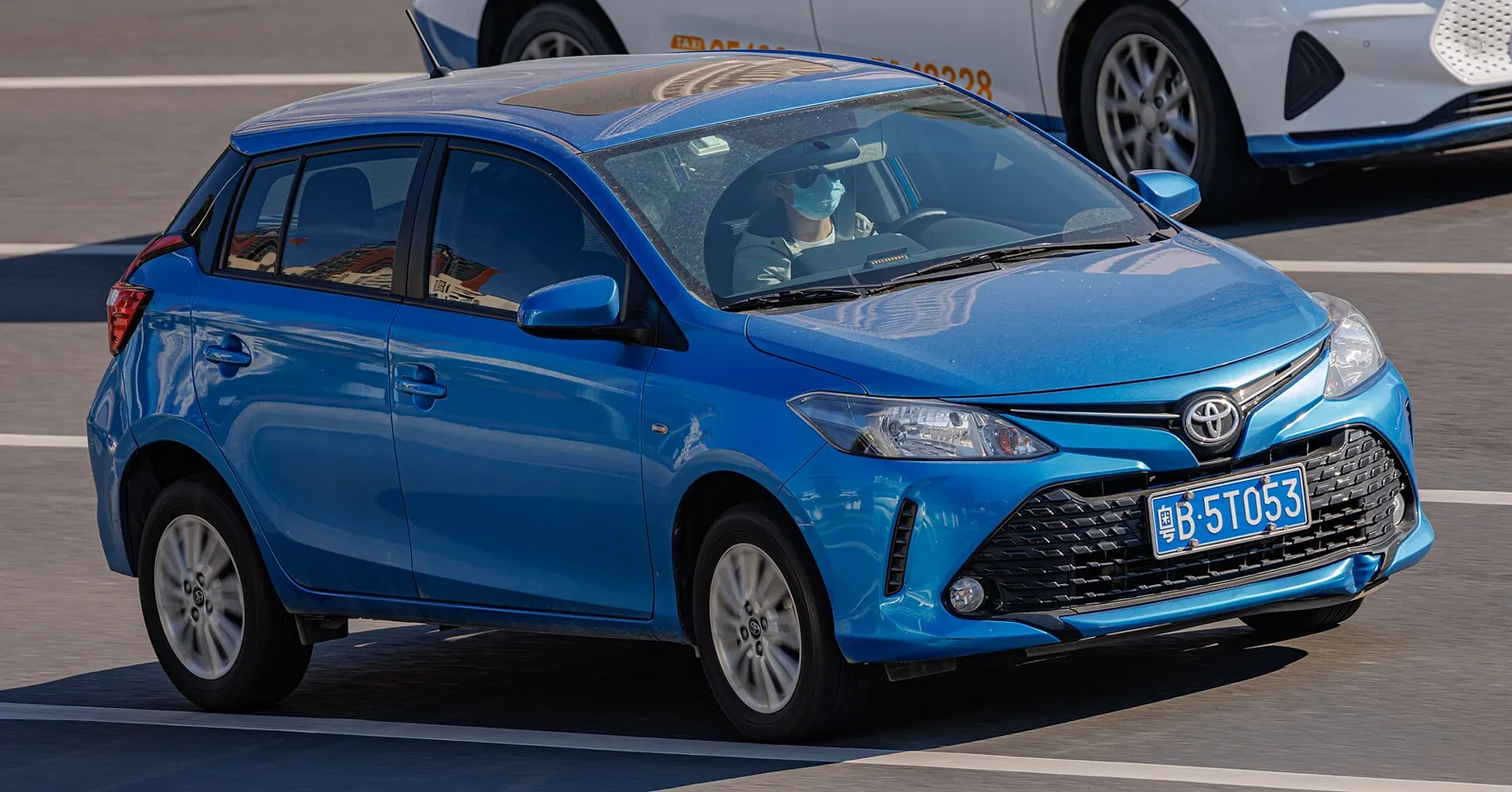
A subcompact sedan from 2002 that became Toyota's best-selling car in parts of Asia, went through four generations and was sold under several names.
Launched in 2002 as a subcompact below the Corolla, the Vios was adapted from the Platz. It has since passed through four generations and sold strongly across several Asian markets, including Vietnam, where it led the sales charts for several years.
The Toyota Vios is a subcompact sedan that Toyota has sold since 2002, mainly in Southeast Asia, China and Taiwan. It sits below the Corolla and has gone through four generations, while sharing its name with a hatchback sold as the Yaris in many countries. In parts of Asia it has been among the strongest sellers in its class for years.
Where did the Vios come from?
The Vios replaced the Tercel, which was sold as the Soluna in Thailand from 1997 and in Indonesia from 2000. The Tercel had filled the subcompact sedan class in the region, and the Vios took over that role. It also succeeded the entry-level versions of the E110 series Corolla in markets such as the Philippines and Vietnam.
The first generation, codenamed XP40, was previewed as the Toyota T-1 prototype at Auto China 2002 in Beijing in June. The concept borrowed its foundation from a car sold in China as the Xiali 2000, the Echo, and Toyota said it had a drag coefficient of 0.29.
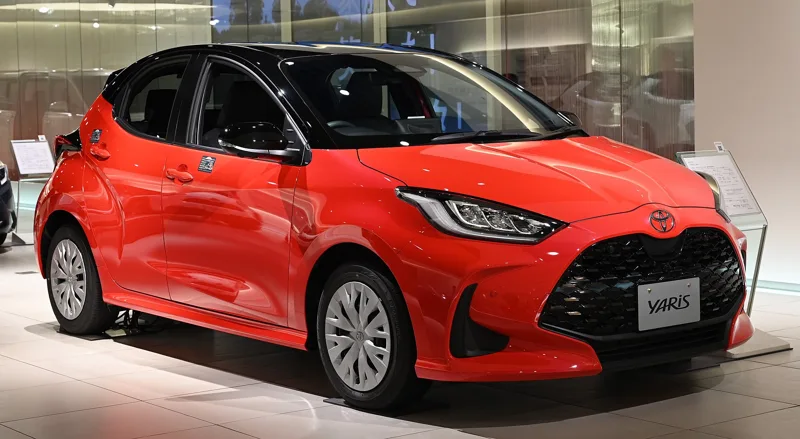
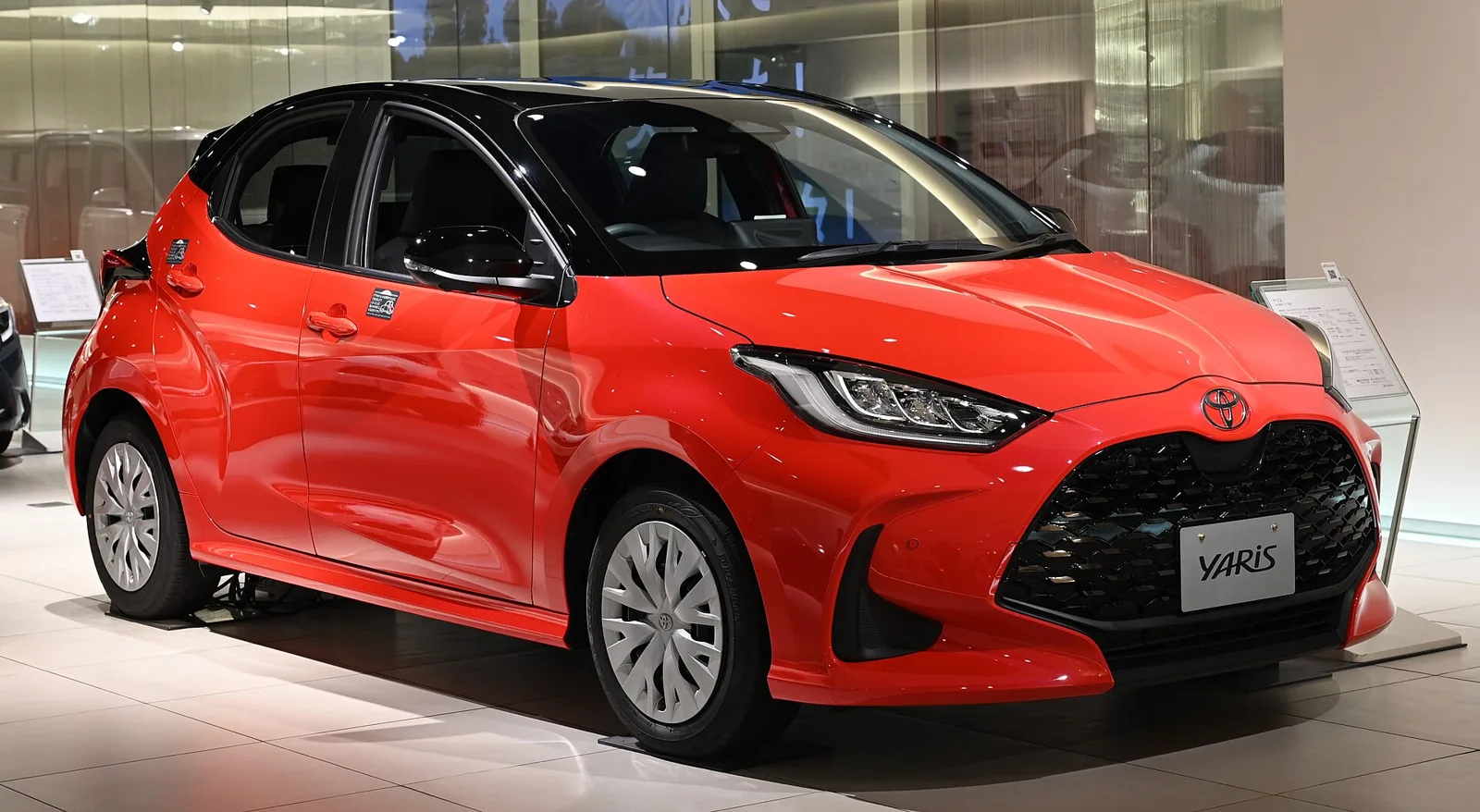
From 2005 the Vios was also marketed next to its hatchback sibling, the Yaris, in many countries. The two cars shared a family resemblance.
The name comes from the Latin word vio, which means to go or travel forward. Toyota marketed the car in Indonesia in 2007 under a playful backronym, Very Intelligent, Outstanding Sedan.
A subcompact sedan that shares a name with Toyota's hatchback, sold on a Latin root and turned into a taxi and race car.
How did the first-generation Vios look and sell?
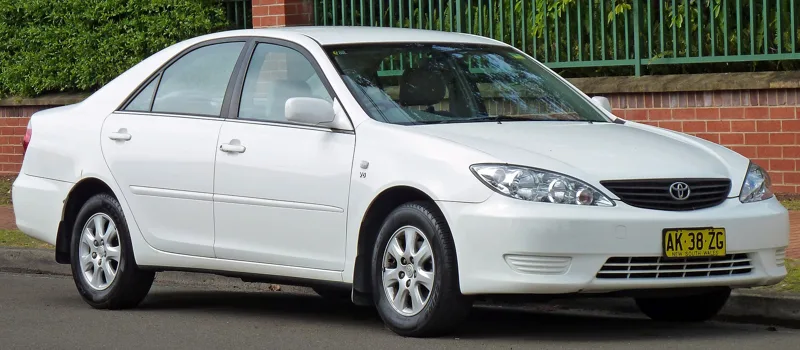
The first-generation car was adapted from the Platz, with modified body panels and some styling cues from the E120 series Corolla. Like the Vitz and Platz, it carried its instrument panel on the top centre of the dashboard. Its styling was refreshed in 2005, as described below.
Production began in October 2002, when Tianjin FAW Toyota started assembling the car in China. It was also built at Toyota's Gateway plant in Gateway City, Chachoengsao Province, Thailand, as part of a joint project between Thai engineers and Toyota's Japanese designers.
In September 2005 the car received cosmetic changes for the 2006 model year, including a new front bumper, headlights, tail lights, redesigned alloy wheels, a new speedometer dial and a console box inside.
In Indonesia a no-frills version was marketed as the Toyota Limo for the taxi fleet market, and it was sold that way across three generations. Taxi versions had less equipment and were rebadged.
What engines did the first-generation Vios use?
In Thailand, Sri Lanka, Indonesia, Singapore, Brunei, Malaysia and Taiwan, the Vios used a 1.5 litre 1NZ-FE engine with VVT-i. The Philippines offered that engine as well as a smaller 1.3 litre 2NZ-FE unit, while China used a 1.3 litre 8A-FE and a 1.5 litre 5A-FE.
Trim levels for Southeast Asian markets included J, E, G and S, while China offered the DLX, GL, GLX and GLXi. The Chinese 5A-FE was replaced by the 2SZ-FE and 3SZ-VE engines in 2006.
In Singapore the car came in E, G and S trims, all with the 1.5 litre 1NZ-FE. The top S trim offered only a four-speed automatic, along with a digital speedometer and chrome door handles.
What was the Vios Turbo?
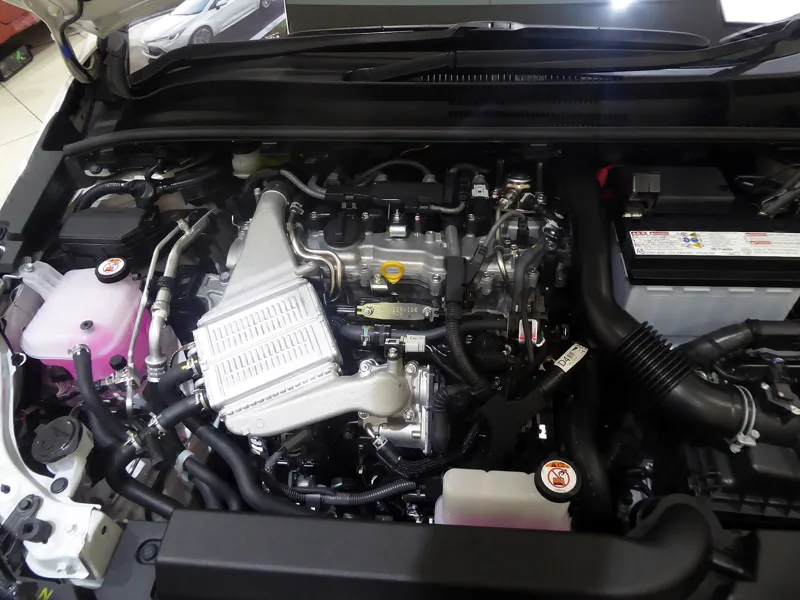
A turbocharged version of the first-generation Vios was built for Thailand alone, and only about 600 were produced. Its 1.5 litre engine had an air-to-air intercooler and produced 143 PS (105 kW; 141 hp) at 6,400 rpm, along with 196 N m (145 lb ft) of torque.
The Turbo could reach 100 km/h from a standstill in 8.1 seconds. It had a functional bonnet scoop, wrap-around body kits, stiffer springs, firmer dampers and 16-inch alloy wheels, and its transmission and differential ratios were based on those of the MR-S.
Colours were limited to red, black and silver. The car was a limited run, so it is rarely seen today.
How did the second and third generations differ?
The second generation, codenamed XP90, was a renamed Japanese Belta sedan, sold in Southeast Asia and China from April 2007 to March 2013. The model shared its platform with the XP90 Vitz and Yaris, and it was also sold as the Yaris sedan in North and Latin America and in Australia.
The third generation, XP150, was unveiled on 25 March 2013 at the 34th Bangkok International Motor Show. Its design was previewed by the Dear Qin sedan concept shown at the April 2012 Auto China, and Toyota wanted it to become a global model for markets outside Asia.
The XP150 Vios was sold as the Yaris Sedan in South America, the Caribbean and the Middle East, where it ran alongside a Mazda2-based Yaris until 2020. It was not offered in the United States, Canada, Australia or New Zealand.
A 2016 facelift appeared at Auto China in April 2016, bringing projector headlamps with LED light guides and a wider T-shaped grille. The 2017 update went further, with new sheet metal, a new interior and the front styling of the Yaris hatchback.
What did the 2018 facelift bring to the Vios?
From 2018 most Asian countries received a major facelift with all-new body panels and an interior to match. Cars with the 1.5 litre engine used the model code NSP151, while the 1.3 litre models were coded NSP150. The car was also offered as the Yaris Sedan in India, the Middle East and Latin America.
The facelifted car measured 10 mm (0.4 in) longer and 30 mm (1.2 in) wider than its predecessor. Its platform was revised with extra welds for more rigidity, and it gained better handling and ride comfort in the process.
Singapore, Brunei, Vietnam, Indonesia, Malaysia, Taiwan, the Philippines, Myanmar, Laos and Cambodia received the car, with the 1.5 litre 2NR-FE engine in the first six and the smaller 1.3 litre 1NR-FE in the last three. Traction control and seven SRS airbags were part of the safety package.
A minor facelift in July 2020 gave the range a redesigned front bumper and grille, and a further update on 10 May 2023 was made exclusively for Vietnam.
How did Vietnam become a key market for the Vios?
The Vios was the best-selling car in Vietnam from 2014 to 2018, with 67,787 cars sold in that period. It stayed at the top of the yearly sales charts until 2020, which made it one of the most important models for Toyota in that market.
The Vietnamese Vios was offered in two trims, E with a five-speed manual or CVT and G with a CVT, all with the 1.5 litre engine. In May 2023 Vietnam received a third facelift that adopted the front fascia, rims and rear bumper of the Thai Yaris, with added pre-collision and lane departure warning on the G trim.
What is the fourth-generation Vios?
The fourth generation, codenamed AC100, debuted on 9 August 2022 in Thailand under the Yaris Ativ name, because the Vios nameplate had been dropped there. Daihatsu developed the car through the Emerging-market Compact Car Company, a joint Toyota-Daihatsu company, under executive chief engineer Hideyuki Kamino.
The car rides on the DNGA-B platform, which it shares with the Avanza and Veloz, and it has a 70 mm (2.8 in) longer wheelbase at 2,620 mm (103.1 in). A fastback-style sloping rear roof gives it a different profile from its predecessor, and its interior is more premium, with soft-touch materials and an optional 64-colour ambient lighting system.
Toyota builds the car in two countries, Malaysia for the Malaysian market and Thailand for the Thai and export markets. Most markets offer three grades, often called base, E and G, with 1.2, 1.3 or 1.5 litre engines and a five-speed manual or a seven-speed simulated CVT.
What does the hybrid Vios offer?
The first hybrid Vios was released in Thailand as the Yaris Ativ Hybrid. It used the 2NR-VEX engine with an electric motor and a 0.76 kWh lithium-ion battery. The combined system produced 82 kW (111 PS; 110 hp), with torque of 262 N m, or 26.7 kg m and 193 lb ft, sent through an e-CVT gearbox.
The hybrid rides on 16-inch alloy wheels with five lugs, rather than the four lugs of the petrol cars, which supports the extra weight of about 120 kg. The GR Sport version uses 17-inch wheels instead.
The hybrid has since reached more markets. It arrived in Laos in September 2025 in a single trim, and it went on sale in Malaysia on 29 January 2026 with a 10.1-inch display audio.
Why did Daihatsu and Toyota face a safety test problem?
On 28 April 2023 Daihatsu confirmed that it had committed wrongdoings in the approval process for side collision tests under UN-R95 for four vehicles, including the AC100 Yaris Ativ and Vios. The inside lining of the front door had been notched, a modification that was not present on production cars.
The affected units numbered 76,289 and had already been sold in Thailand, the GCC, Mexico and other markets. Toyota chairman Akio Toyoda and president Koji Sato apologised publicly, and Toyota suspended deliveries to Thailand until the cars could pass a further witnessed test.
Has the Vios raced?
The Vios is officially campaigned by Toyota in the One Make Race in the Philippines and Malaysia, and previously in Thailand. Team Toyota Indonesia raced the first-generation car in the 2003 to 2005 Indonesian Touring Car Championship, winning the first season before the Yaris took over in 2006.
Toyota Motor Philippines has held the Vios Cup since 2014, and Toyota Malaysia has run the Vios Challenge since 2017 as part of the TGR Festival. Toyota Motor Philippines also offered a race version of the NSP151 Vios to buyers, based on the G with a manual gearbox.
Why is the Vios ending in Taiwan?
In September 2026 Hotai Motor confirmed that the Vios would end production in Taiwan at the end of 2026. It cited lower demand for sedans and the use of the factory to build the Noah and Voxy as the reasons for the decision.
The Taiwanese car had a long run. The third generation arrived there in the second quarter of 2014, and the 2018 major facelift used new body panels and the 2NR-FE engine with a CVT as the only gearbox.
Toyota Vios specifications
| Specification | Detail |
|---|---|
| First generation | XP40, from 2002 |
| Second generation | XP90, April 2007 to March 2013 |
| Third generation | XP150, unveiled 25 March 2013 |
| Fourth generation | AC100, debuted 9 August 2022 |
| Turbo (Thailand) | about 600 built; peak 6,400 rpm, 141 hp (105 kW) |
| Hybrid system | 82 kW (111 PS; 110 hp) combined, 0.76 kWh battery |
| Wheelbase (fourth generation) | 2,620 mm (103.1 in) |
| Vietnam sales | 67,787 cars, 2014 to 2018 |
| Taiwan production | Ending late 2026 |