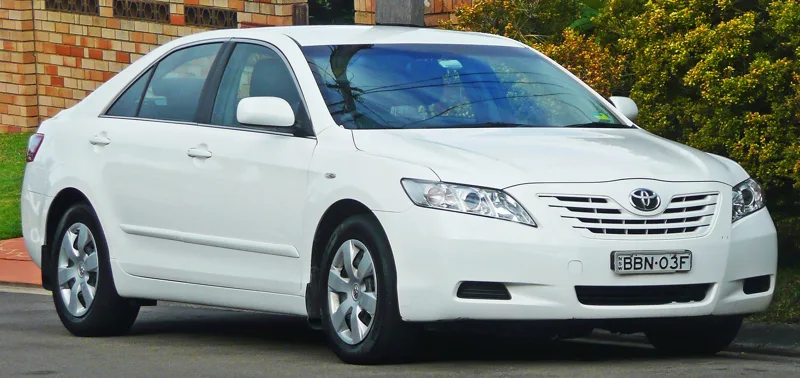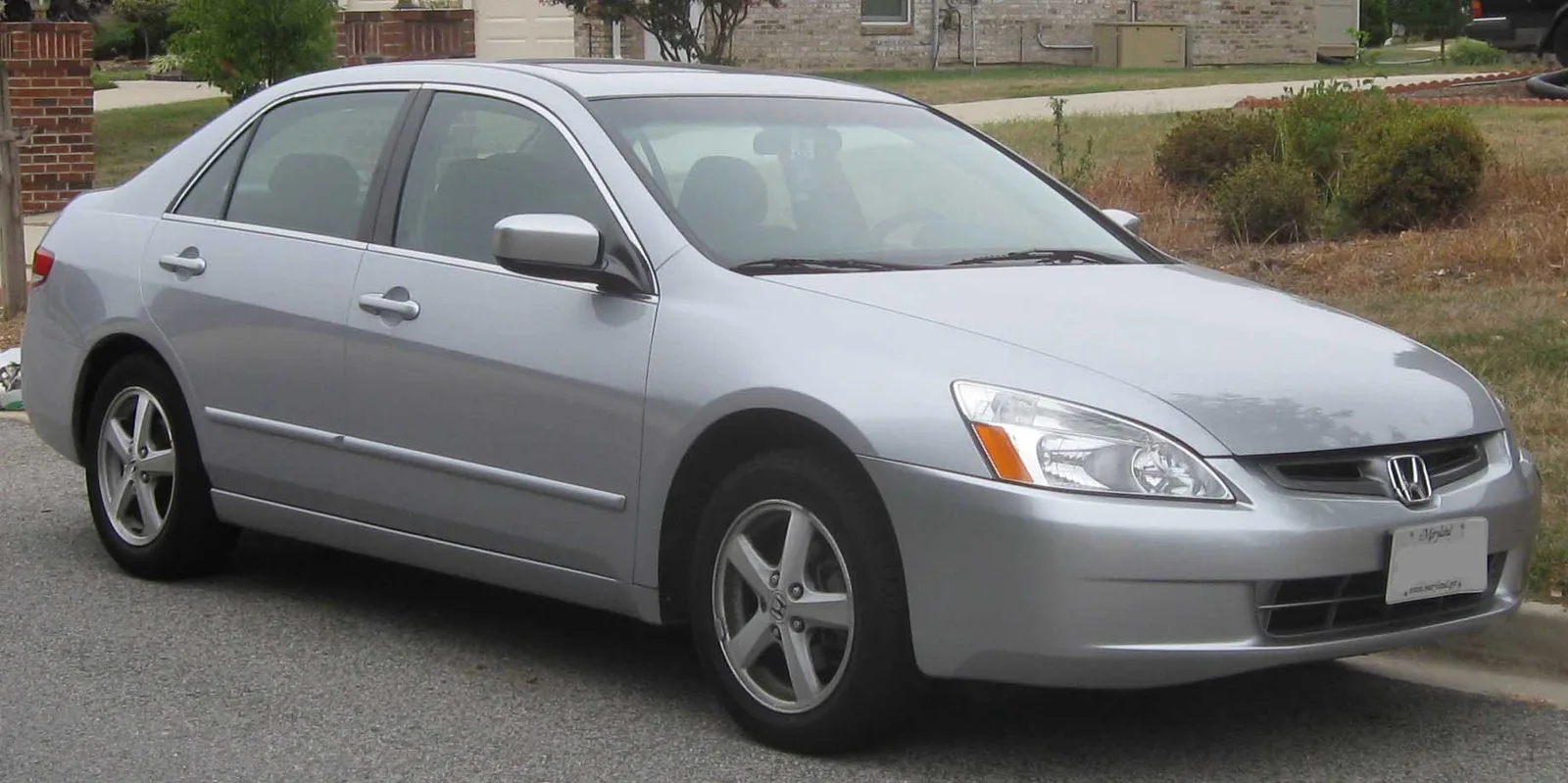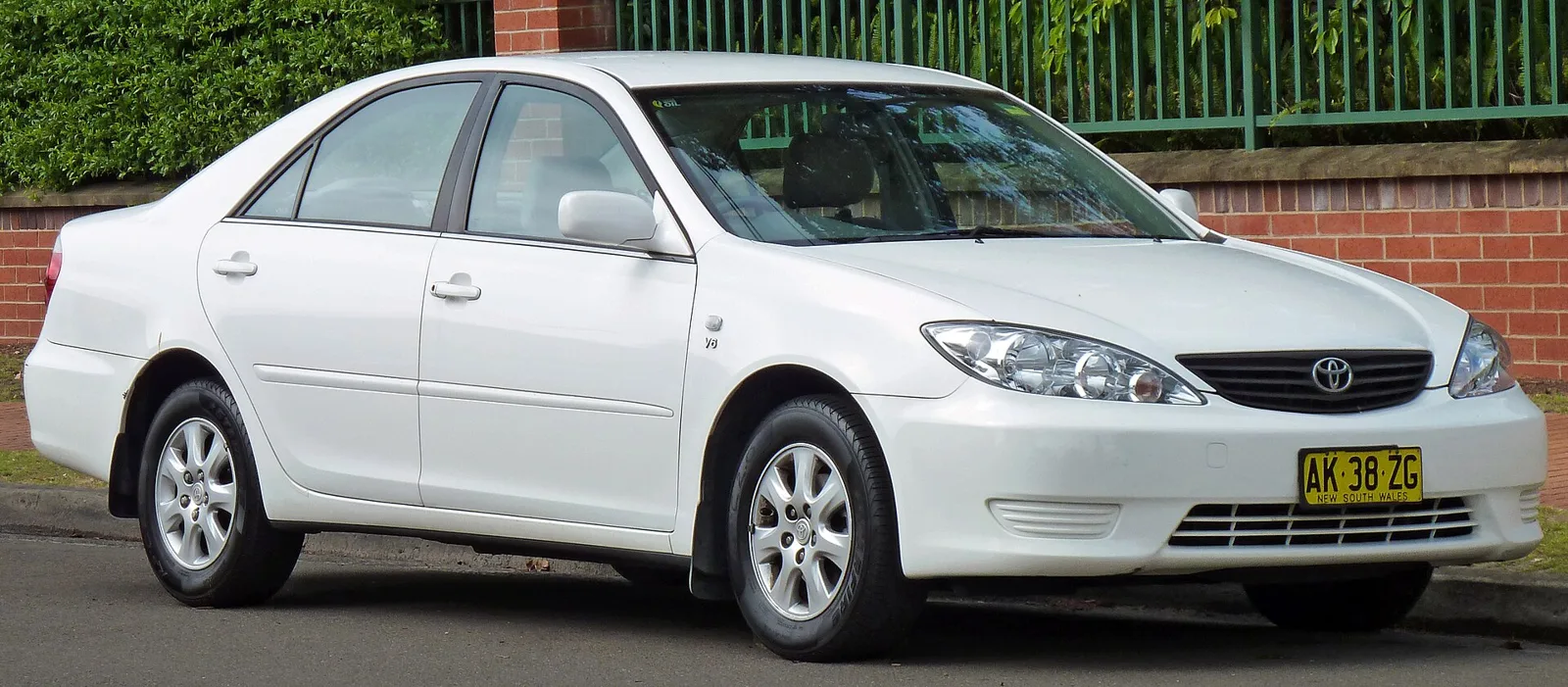
A taller, longer sedan with a 2.4-litre four, a 3.0 and 3.3-litre V6 and a body that dropped the wagon, built from 2001 until January 2006.
The Toyota Camry XV30 was a fifth-generation mid-size car built from 2001 to 2006. It was taller and longer than its predecessor, used a 2.4-litre four or a V6, and dropped the station wagon.
The Toyota Camry XV30 was a mid-size car built from June 2001 to January 2006. It was the fifth generation of the Camry outside Japan, and it was the first Camry without a station wagon. Its design was taller and longer than the car it replaced, and it was offered with a new 2.4-litre four-cylinder engine and a carried-over 3.0-litre V6.
When did the Camry XV30 go on sale?
The car was released on 27 August 2001 as a 2002 model year vehicle. It was offered as a sedan only, because station wagons had lost popularity to minivans and crossover SUVs. The wagon's role passed to the Sienna minivan in North America and to the Highlander SUV, which both used the Camry platform.
Japanese production began in September 2001, and US production started on 23 July 2001. Toyota also built the car in Australia, at Altona, and in Thailand, at the Gateway Plant, with other facilities in Malaysia, Indonesia and Taiwan serving their own regions.
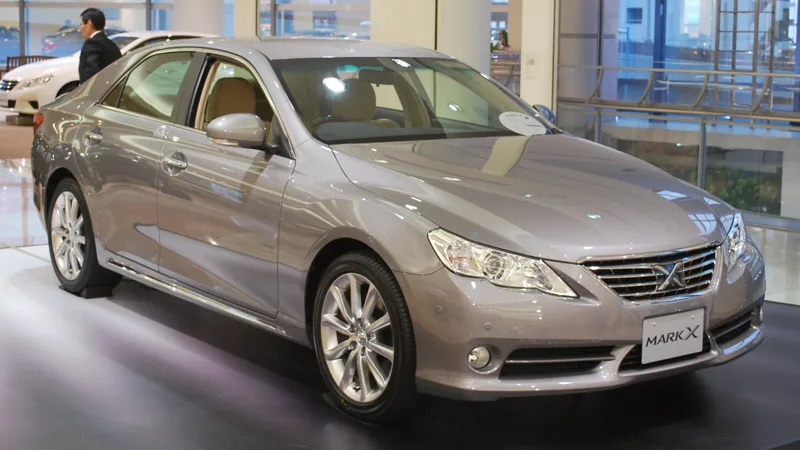
In Japan the XV30 was launched in September 2001. Daihatsu continued with its Altis twin, which was available with the same 2.4-litre four-cylinder engine. The Verossa, a rear-wheel drive sedan with optional all-wheel drive, was not a strong seller and was replaced by the Mark X in 2004.
Production took place at Tsutsumi in Japan, Altona in Australia, Georgetown in Kentucky and the Gateway Plant in Thailand. Other plants in Malaysia, Indonesia and Taiwan supported their own regional markets.
A taller, longer fifth-generation Camry that gave up the wagon and built a Solara and Altise line-up around it.
How was the XV30 designed?
Development began in 1997 under chief engineer Kosaku Yamada, after the launch of the XV20. A new design by Hiroyuki Metsugi was chosen in 1999 and frozen in July 1999 for production in June 2001. The development period was cut from 36 months to 26 months, and a Japanese design patent was registered as 1142401.
The XV30 was a decidedly tall car. It stood 64 mm (2.5 in) taller than the XV20 and had a wheelbase 51 mm (2 in) longer. Its front end was relatively short, which left more of the length for the cabin, a technique more often seen on compact cars.
The coefficient of drag was reduced to Cd 0.28. Styling took cues from the Vitz, the Corolla and the Solara, as Toyota sought a more modern look for the mid-size range.
Which engines did the XV30 offer?
Two engines were available at launch. The all-new 2.4-litre 2AZ-FE VVT-i four-cylinder was joined by the carry-over 3.0-litre 1MZ-FE V6. Both engines were ULEV certified in the United States, which was a notable emissions achievement for the period.
Any model could be fitted with either engine, though the manual transmission was not offered on V6 models outside Australia and New Zealand. At the front sat MacPherson struts, and the rear used a dual-link arrangement, with each end mounted on its own subframe.
In 2003 the US V6 gained VVT-i, which raised output from 142 kW to 157 kW (190 to 210 bhp). For 2004 the SE received a 3.3-litre 3MZ-FE V6 in place of the smaller 3.0-litre unit.
How safe was the XV30?
Anti-lock brakes, stability control, curtain airbags and torso airbags for the front seats were all optional at launch. The Insurance Institute for Highway Safety rated the car Good overall in its frontal offset crash test.
In the IIHS side impact test, models fitted with side airbags were rated Good overall. Models without side airbags were rated Poor overall. ABS became standard on all US trims for the 2005 model year.
Model years 2002 to 2006 with side and curtain airbags carry the number 0 in position seven of the Vehicle Description Section of the VIN. That detail lets owners and buyers identify cars fitted with the full airbag package.
What was the Camry Solara?
Until the 2003 model year the Camry Solara stayed on the previous XV20 chassis, with only minor styling changes at the front and rear. It did receive the same 2.4-litre 2AZ-FE engine as the Camry sedan.
The second-generation Solara arrived in 2003 as a 2004 model. Its styling took cues from the Lexus SC 430 rather than from the Camry.
How did the XV30 sell in Australia and New Zealand?
The Australian Camry was released in September 2002 in five trims: Altise, Ateva, Sportivo, Grande and Azura. The Grande and Azura were added as the range was revised. The Altise, Ateva and Sportivo were available with either the 2.4-litre four or the 3.0-litre V6.
Australian and New Zealand cars were significantly different from other Camrys, and they used about 77 percent local components. The brakes, body panels, headlights, seats, radio antenna and suspension were all developed locally.
In the United States the basic CE model was dropped, and the trims were the LE, SE and XLE. The LE was offered with the 2.4-litre four with either a five-speed manual or a four-speed automatic. The 2005 refresh added a chrome grille and a five-speed automatic transmission.
The Altise Sport V6 arrived in 2003, and the Sportivo was roughly equivalent to the American SE. The Altise Sport, V6 Sportivo and Azura produced 145 kW (194 bhp) through a high-flow rear muffler, compared with 141 kW (189 bhp) for the standard V6.
The Grande and Azura came with satellite navigation as standard and were the first Toyotas in Australia with the Toyota Link system. A one millionth Camry was built in Australia in September 2004, and a ten millionth Camry came off the Altona line in October 2005.
Which markets bought the XV30 in volume?
More than 90 percent of Australian Camry exports were left-hand drive cars for the Middle East. In the Middle East the fifth-generation Camry was offered in four variants: XLi, GLi, Touring and Grande V6. The XLi was a common choice for taxis.
Fifth-generation Camrys were also popular in Saudi Arabia for a pastime known as Tafheet, or Arab drifting. Drivers slid the car sideways along long stretches of road, sometimes in the flow of traffic. The practice was highly dangerous, and there were instances of rear suspension components failing.
In China the car arrived from Japan in 2004 and was sold with only the 2.4-litre engine and a four-speed automatic. Taiwan and Southeast Asian versions had a thicker grille and larger, all-white headlights.
What was the Camry TS-01?
The Toyota Camry TS-01 was a high-performance concept shown at the 2005 Melbourne International Motor Show. It had significant performance and visual upgrades over the production car and hinted at the TRD Aurion.
What are the Camry XV30 specifications?
| Specification | Detail |
|---|---|
| Production | June 2001 to January 2006 |
| Launch | 27 August 2001 (2002 model year) |
| Four-cylinder | 2.4-litre 2AZ-FE VVT-i |
| V6 | 3.0-litre 1MZ-FE; 3.3-litre 3MZ-FE in the US SE from 2004 |
| Drag coefficient | Cd 0.28 |
| Height change | 64 mm (2.5 in) taller than the XV20 |
| Wheelbase change | 51 mm (2 in) longer than the XV20 |