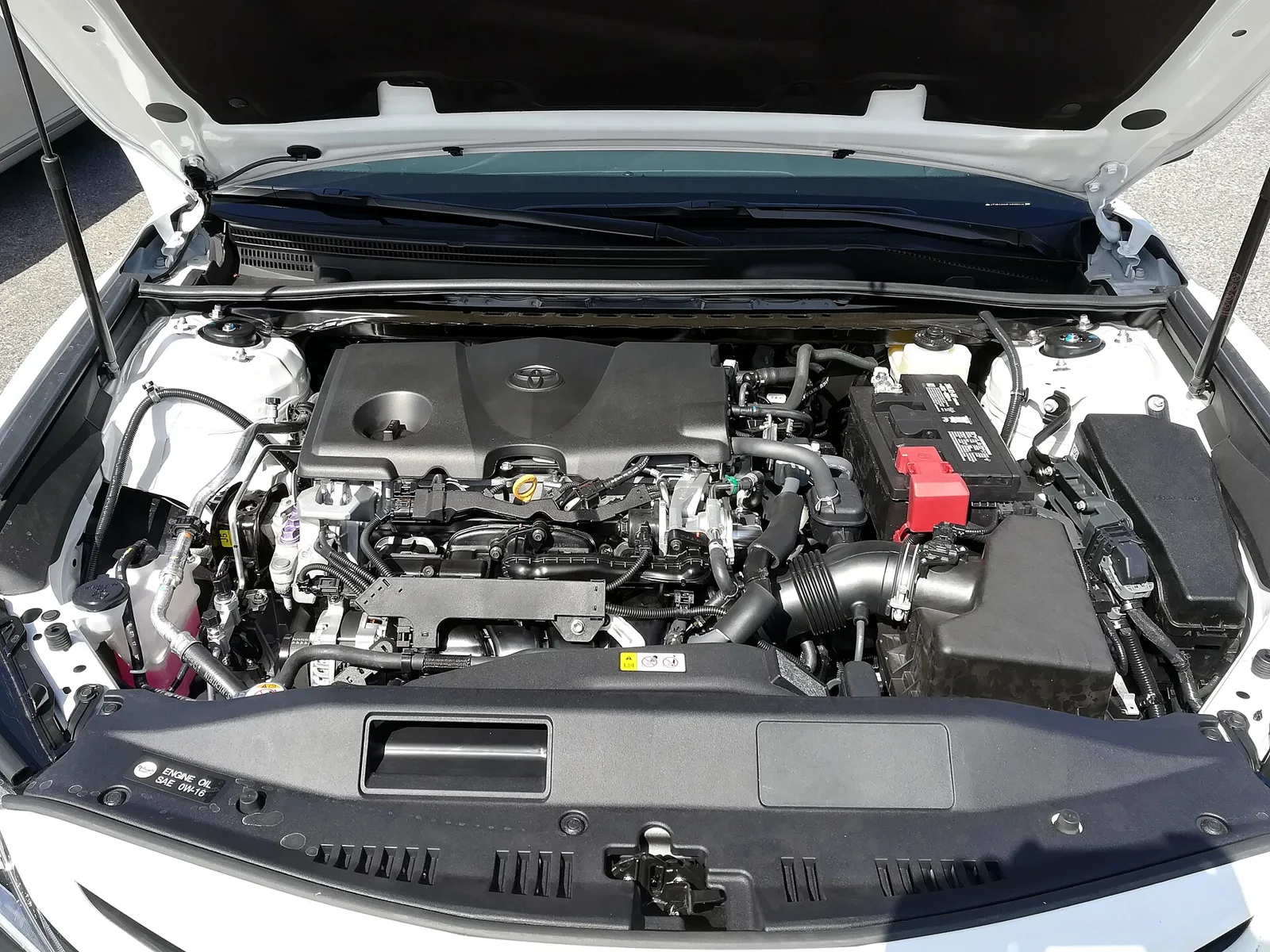
From the 2017 Camry four-cylinder to the twin-turbo V6 at the centre of a major recall, how Toyota rebuilt its engine range around one design.
The Toyota Dynamic Force engines are I3, I4 and V6 units developed under TNGA, first sold in the 2017 Camry. They run on petrol or ethanol, pair with hybrid systems and include the V35A V6 at the centre of a recall covering over 270,000 vehicles.
The Toyota Dynamic Force engine is a family of three-cylinder, four-cylinder and V6 engines built under Toyota's New Global Architecture strategy, known as TNGA. The first member, the A25A four-cylinder, arrived in June 2017 in the XV70 Camry. The family now covers petrol and flex-fuel versions, many of them paired with electric motors in hybrid systems.
What is the Toyota Dynamic Force engine family?
The Dynamic Force engines are a set of I3, I4 and V6 units designed alongside Toyota's TNGA vehicle platforms. The programme was a company-wide effort to simplify what Toyota and Lexus build. The engines can run on petrol or ethanol, and they can be combined with electric motors for a hybrid drivetrain.
Toyota describes the engines as a route to both driving performance and environmental performance. The stated aim is a direct feeling and smooth, pleasant acceleration, delivered with high efficiency and low fuel consumption.
One engine design, scaled from three cylinders to a V6, and a single recall campaign that reached more than 270,000 vehicles.
Why did Toyota redesign its engine range?
Toyota had built about 800 engine variants before the Dynamic Force programme. Most of those were set to be consolidated into 17 versions drawn from nine Dynamic Force engines. The company also planned to simplify its transmissions, hybrid systems and all-wheel drive systems at the same time.
Toyota called the result a completely new engine design built on TNGA principles.
How do the engines achieve their efficiency?
The Dynamic Force engines combine several changes that work together. The cylinder head and intake port design improves tumble flow, which is a swirling motion in the cylinder. The valve clamping angle, between the intake and exhaust valve centrelines, was widened to 41 degrees from 31 degrees in the previous design.
Other features include hydraulic variable valve timing on both the intake and exhaust camshafts, and a very high compression Atkinson cycle. The stroke is longer than the bore, which is an under-square layout. The port end shape and seat inner diameter were also changed, and an updated D-4S multi-hole injection system supports what Toyota calls high-speed combustion.
Toyota also offsets the cylinder centreline from the crankshaft centreline. That offset means piston top dead centre always corresponds to several degrees of crankshaft rotation. Toyota claims a thermal efficiency above 40% for the design.
How do the engine names work?
The naming system changed with the Dynamic Force family. Older Toyota engines used a generation number and a letter code, such as 5M-GE or 4GR-FE. The new names put the displacement in the middle of a two-letter code, so the M20A carries a 2.0-litre engine and the number 20 marks that capacity.
The letter that follows the family code identifies the variant. The suffixes FKS, FXS and FTS describe the standard, hybrid and turbocharged versions respectively, while the FKB suffix marks flex-fuel engines able to run on ethanol blends.
What are the M15 and M20 families?
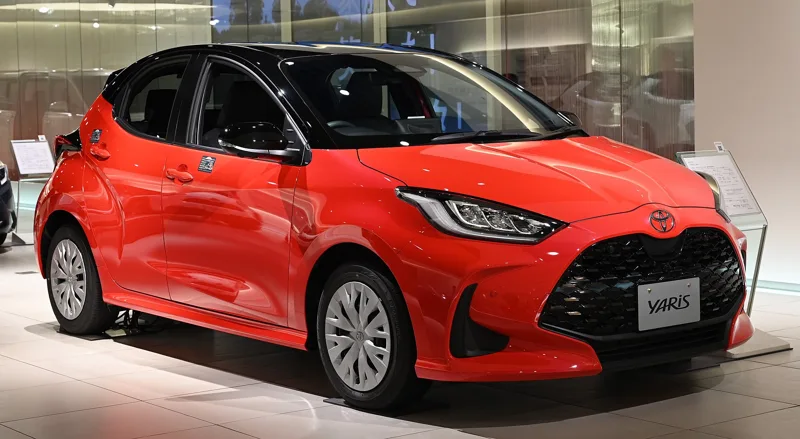
The M15 is a straight-three family that first arrived in 2019 for the XP210 Yaris, a model designed specifically for Japan, Europe, Australia and New Zealand. The standard M15A-FKS has a 13.0:1 compression ratio and a claimed 40% thermal efficiency. The hybrid M15A-FXE raises compression to 14.0:1 and reaches 41%, and it powers the Yaris Hybrid, the Aqua and the Lexus LBX.
The M20 is a straight-four family first introduced in 2018 for the E210 Corolla. The M20A-FKS powers the Corolla, C-HR, RAV4, Camry and Lexus models in several markets. The M20A-FXS hybrid has 14.0:1 compression and appears in the Corolla Hybrid, the C-HR Hybrid and the Prius. Regional variants, including China-only M20C and M20F units, supply local models.
Some China-only units are narrower still. The M20B-FXS, made by FTCE, appeared only in the IZOA Hybrid from 2020 to 2022. The M20E-FKS, also from FTCE, powers the IZOA from 2018 and the Allion from 2021. The M20G-FXS, another FTCE hybrid, arrived in 2022 for the IZOA Hybrid, with the Allion Hybrid and the Corolla Cross Hybrid following in 2023.
| Family | Introduced | Layout | First application |
|---|---|---|---|
| A25 | 2017 | Straight-four | XV70 Camry |
| M20 | 2018 | Straight-four | E210 Corolla |
| M15 | 2019 | Straight-three | XP210 Yaris |
| V35A | 2017 | V6 | XF50 Lexus LS |
| S20A | 2022 | Straight-four | Chinese-market Highlander and Crown Kluger |
| T24A | 2021 | Turbocharged straight-four | AZ20 Lexus NX |
What are the A25 and T24A engines?
The A25 is the long-running four-cylinder family, which began in 2017 for the XV70 Camry. The A25A-FKS standard version has a 13.0:1 compression ratio, and the A25A-FXS hybrid uses 14.0:1. The hybrid version is fitted to a wide range of Toyota and Lexus models, including the Highlander, RAV4 and Crown.
The T24A is the first turbocharged four-cylinder in the family, introduced on 12 June 2021 for the AZ20 Lexus NX. It replaced the naturally aspirated 2GR-FKS V6 in several applications. Toyota said the turbo unit gives more peak torque at lower speeds, with better fuel economy and emissions.
The T24A-FTS shares 54% of its common parts between body-on-frame truck and SUV applications and the passenger models such as the Highlander. Two hybrid layouts exist: a transverse arrangement sold as Dual Boost in Japan and Hybrid MAX in North America, and a longitudinal layout marketed as i-FORCE MAX.
What is the V35A engine?
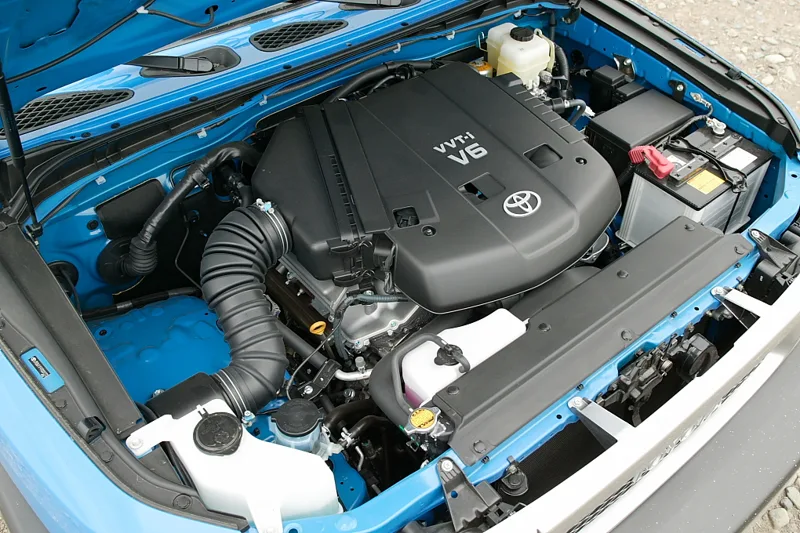
The V35A is a V6 family introduced in 2017 for the XF50 Lexus LS. Its name suggests 3.5 litres, but the measured capacity is 3.4 L (3,445 cc). The same engine also powers the third-generation LMP3 prototype race car, where modified turbochargers and a dry sump system lifted output to 350 kW (470 hp).
The production V35A-FTS is a twin-turbocharged unit with 10.5:1 compression. Electrified wastegates reduce pumping losses, and the engine reaches 37% thermal efficiency. A hybrid version, sold in North America as i-FORCE MAX, uses the same engine designation. Ward's named the hybrid to its World's 10 Best Engines list in 2022.
Why were the V35A engines recalled?
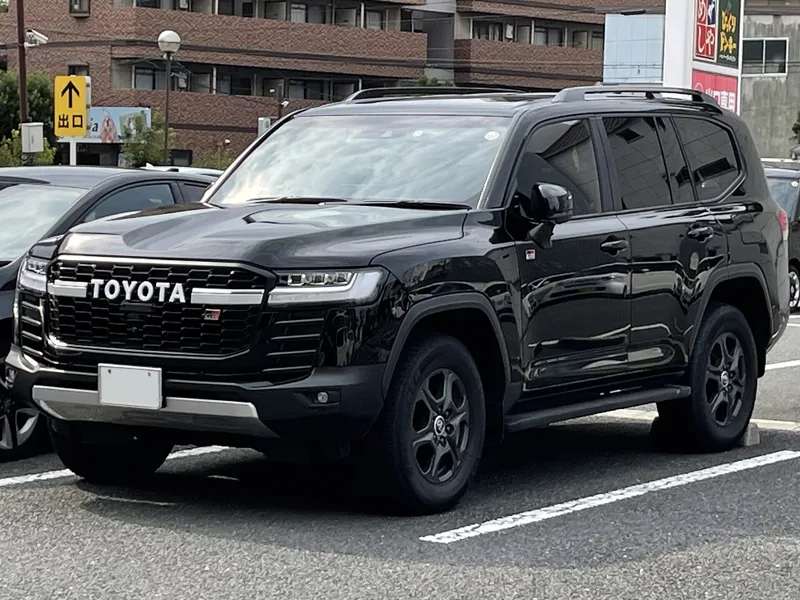
Toyota changed the V35A when it prepared the engine for mass production in higher-volume trucks and SUVs. From 2022 the revised engine was linked to premature main bearing wear, engine knocking and, in some cases, sudden seizure. Toyota reported that certain engines left the factory with machining debris in the crankcase, which could travel to the number one main bearing and wear it or cause failure.
Outside teardowns, among them work by the YouTube channel I Do Cars, found bearing wear, metallic debris and crankshaft scoring. Some replacement engines fitted under recall showed similar signs. Those findings suggested that the problem could extend beyond contamination to the engine's lubrication system.
Toyota issued three major campaigns between 2024 and 2026. Recall 24V-381 covered about 102,000 Tundra pickups and Lexus GX550 and LX600 vehicles for engine replacement. Recall 25V-767 expanded to 126,691 vehicles and introduced an inspection-based remedy, and Recall 26V-320 added 43,566 vehicles built at Toyota's Alabama plant.
Across the campaigns the recalls now cover more than 270,000 vehicles, and over 70,000 engines had been replaced by mid-2026. Critics have pointed out that the V35A replaced Toyota's long-running 4.6L and 5.7L V8 engines, which had a reputation for reliability. The recalls are considered among the largest modern engine-related defects in the company's history.
What is the S20A?
The S20A is a straight-four family introduced in 2022 for the Chinese market, where it powers the Highlander and the Crown Kluger. Its turbocharged variant, the S20A-FTS, follows the same suffix convention as the other turbo units, with FTS marking the turbocharged version of the engine.
The S20A-FTS reached the Lexus RX 300 from 2024, which extended the family into a Lexus crossover. It is one of the smaller additions to the range, and it shows the family's reach beyond the Camry and Corolla platforms.
Which regional versions were built for other markets?
Toyota built several Dynamic Force engines locally for China and India. The M15B-FKS is a China-only M15 unit made by FTCE, the FAW Toyota Changchun Engine company, and it powers the Corolla in that market. The M15C-FKS comes from GTE, Guangqi Toyota Engine, and it is fitted to the Levin.
In India the M15D-FXE is a hybrid built in Jigani, Bangalore, by Toyota Industries Engine India. It appeared in the Urban Cruiser Hyryder Hybrid and the Suzuki Grand Vitara Hybrid from 2022, and it reached the Suzuki Victoris Hybrid in 2025.
China also received a large group of localised M20 and A25 units. The M20C-FKS, built by GTE, powers the Camry from 2019 and the Wildlander from 2020. The A25D-FXS, another GTE unit, sits in the Camry Hybrid and several SUVs, while FTCE supplies the A25F-FXS hybrid for the RAV4 Plug-in Hybrid and the Harrier Hybrid.
What does the T24A do in trucks and SUVs?
The T24A-FTS is used in both passenger SUVs and body-on-frame trucks, and hybrid versions exist in both forms. The turbo four covers a wide spread of Lexus and Toyota models, which makes it one of the most widely shared units in the family.
Early passenger applications include the Lexus NX 350 from 2021 and the Lexus RX 350 from 2022, along with the Highlander and Kluger from 2022. The Grand Highlander followed in 2023, and the Land Cruiser Prado arrived in 2024. The Tacoma and the 4Runner brought the engine to pickups and body-on-frame SUVs in 2023 and 2025.
The hybrid versions use two different layouts. The transverse Dual Boost or Hybrid MAX system appears in the Lexus RX 500h from 2022, the Crown Crossover from the same year and the Lexus LM 500h and TX 500h from 2023. The longitudinal i-FORCE MAX layout, which places a traction assist and generator motor between engine and transmission, is fitted to the Tacoma, Land Cruiser Prado and 4Runner.
Where else did the V35A appear?
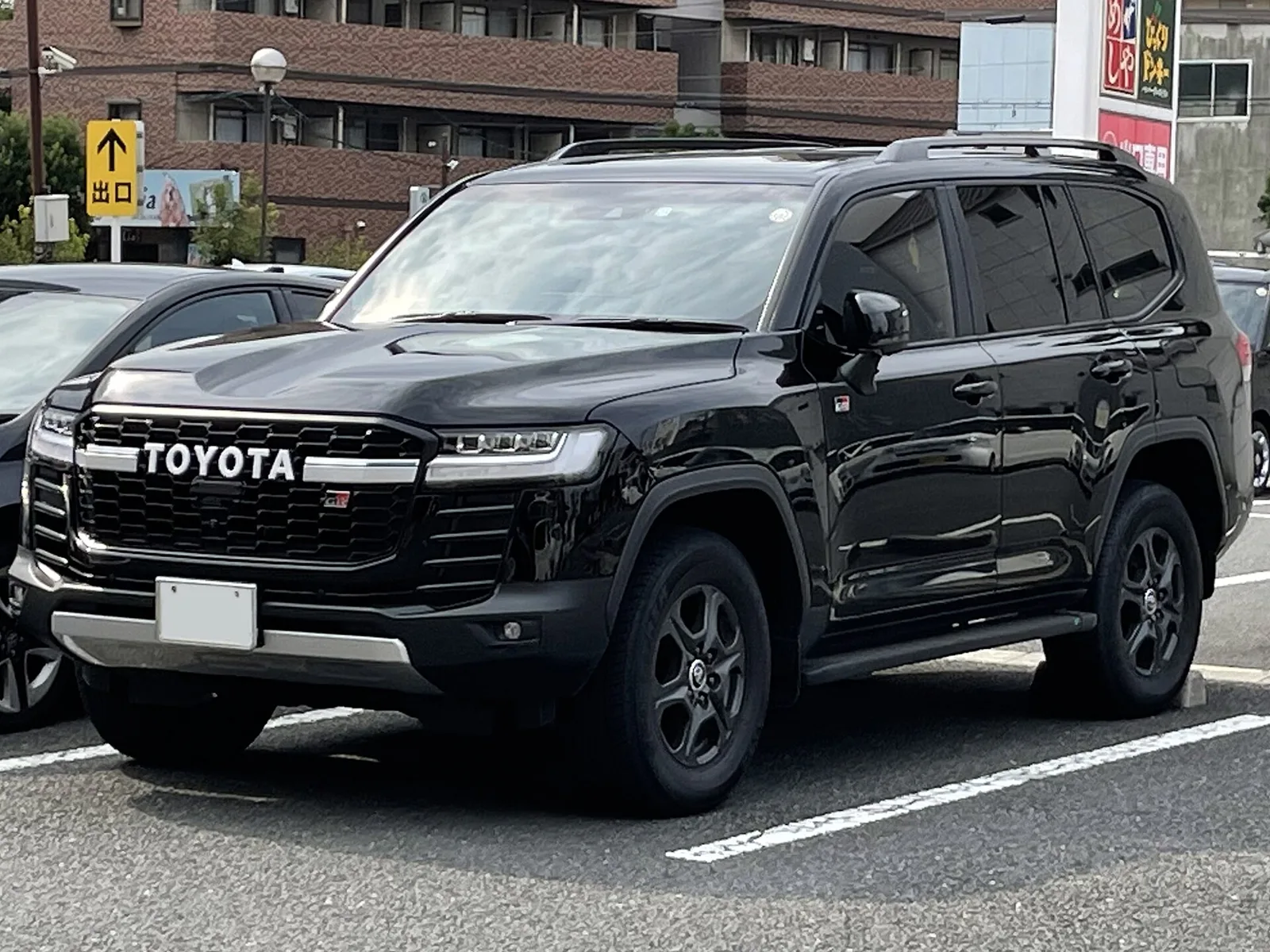
The V35A's production applications began with the Lexus LS 500 in 2017. The Land Cruiser, the Tundra and the Lexus LX 600 followed in 2021, and the Lexus GX 550 was added in 2023. Those vehicles made the V35A one of the more widely used large engines in Toyota's range before the recalls.
The i-FORCE MAX hybrid form of the V35A reached the Tundra in 2021, the Sequoia in 2022 and the Lexus LX 700h and Land Cruiser hybrid in 2025. The engine also served the third-generation LMP3 race spec from 2025, where it produced the racing output described earlier.