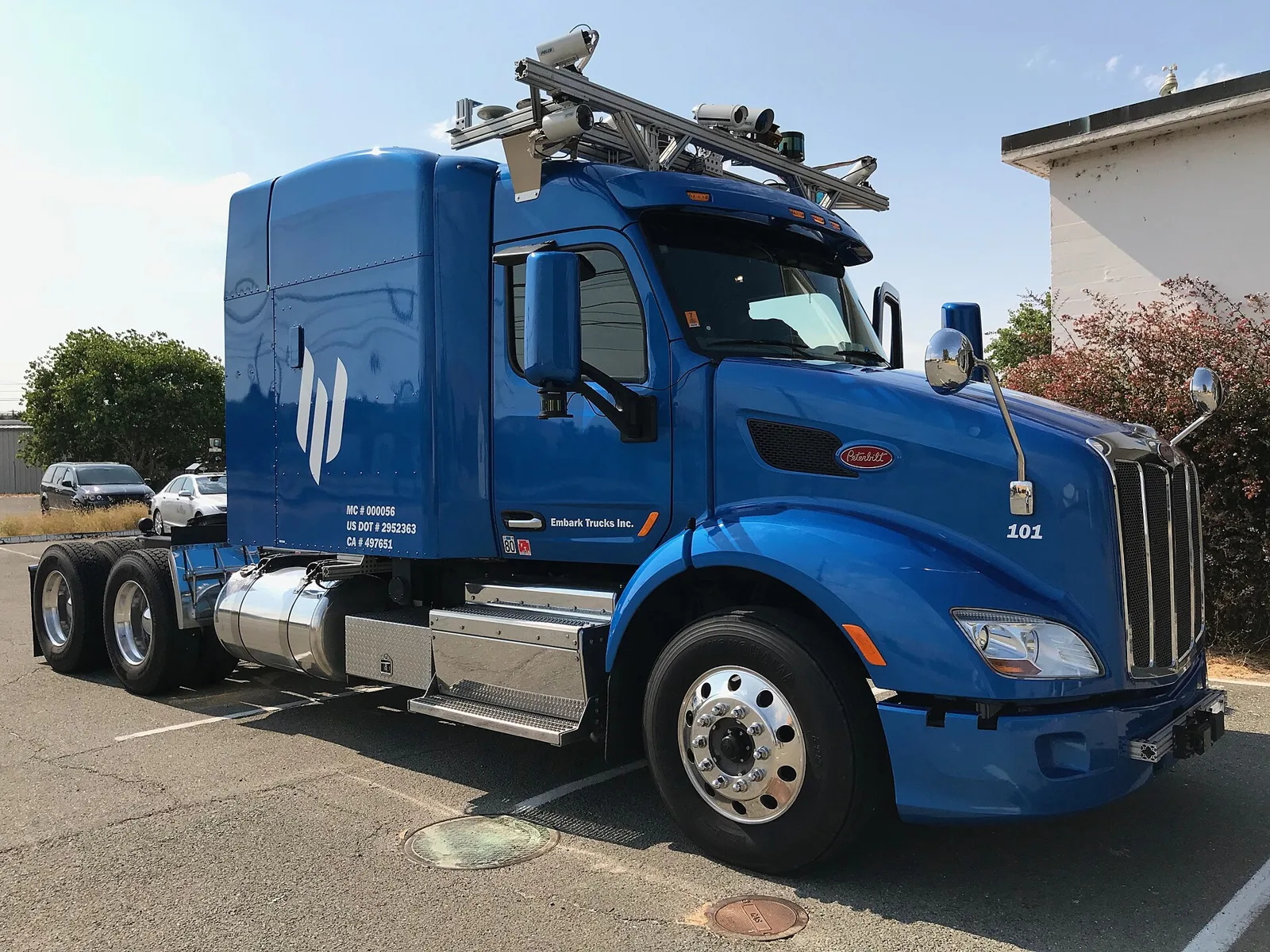
Manufacturers, operators, insurers and drivers can all be drawn into a claim, and the answer changes with the country, the automation level and the facts of the crash.
Liability for a self-driving car crash depends on who was in control, the level of automation and the law where the crash happened. Operators, manufacturers, technology suppliers and insurers can all face claims, and several countries have written specific rules that set out who pays first.
When a self-driving car causes a crash, the question of who pays is less settled than many drivers assume. Liability can fall on the operator, the vehicle maker, the company that built the finished car or the firm that supplied the software and sensors. Which party bears the cost depends on the jurisdiction, the level of automation and the facts of the crash.
This guide explains the main legal theories, how the UK, France, Germany and the US have approached the question, and what insurers and manufacturers have said so far. It is an overview of the law and policy debate rather than legal advice.
Who is liable when a self-driving car crashes?
Liability depends on who was in control at the moment of the crash and on the law where it happened. Drivers, operators, manufacturers and technology suppliers can all be targeted, while some jurisdictions have written specific rules for automated vehicles. Where the system was in charge, manufacturers often face the strongest claims.
The issue arises because the law was built around human drivers. Today crashes are handled through tort claims against drivers and insurers, and through product claims against manufacturers. Neither was designed for software that makes driving decisions, so the legal rules may need updating to decide who answers for harm to people and property.
The shift is gradual. Advanced driver assistance systems already share control with drivers in many cars, and higher automation levels, Level 3 and Level 4, move more of the task to the vehicle. As that happens, insurers may see more commercial and product liability lines and less personal motor cover.
Conflicts of interest matter too. Human occupants, system operators, insurers and the public purse can have different incentives, so a workable framework has to say clearly who bears each cost. Potential users may also be reluctant to trust an operator that seems to be passing its normal liability on to others.
When the software is driving, the legal question moves from the person behind the wheel to the company that wrote the code.
What are the three tort theories that apply?
Lawyers usually sort the relevant claims into three families: negligence, no-fault and strict liability. Negligence asks whether a duty of care was breached, no-fault schemes compensate victims without identifying fault, and strict liability holds a party responsible for a dangerous product whatever care it took. Each one would allocate a self-driving crash differently.
Negligence is the classic route. The manufacturer would probably be the target, since a user without control is difficult to blame for breaching a duty of care. The motive for the manufacturer is clear: a finding of negligence would push it to reduce risks wherever that is cost-effective.
The Nilsson case shows the pattern. A Chevy Bolt in self-driving mode moved across into the lane of a motorcyclist named Nilsson, knocking him off the bike, and he sued General Motors for negligence. The claim rested on the car's duty to follow traffic rules and on the lane change itself, but the case settled before reaching court.
Because it settled, the central question remains open: was the self-driving car's error foreseeable? Settlement avoids a precedent, which leaves future claimants without a clear answer. No-fault systems offer a different model that would compensate victims quickly without that question, which is why some observers find them attractive.
The crash statistics add weight to the no-fault argument. A US crash causation survey found drivers were critical in over 90% of crashes, representing about 2 million US crashes. If automation removes most of the human error, negligence claims would fall, and the case for no-fault cover would grow stronger.
How does product liability apply to software?
Product liability covers manufacturers under negligence and strict liability. Its hardest question for autonomous cars is whether software counts as a product defect at all, because no court had applied manufacturing defect rules to software. The consumer-expectations and cost-benefit tests are difficult to apply to driving logic.
Manufacturing defects require a product that failed to work as its maker specified. A software error that causes a crash is hard to fit into that framework, since software is not manufactured in the physical sense. That gap is a significant hurdle for injured people, who must show that a coding fault, rather than a sensor or a part, caused the harm.
Courts have used two tests for design defects. Under the consumer-expectations test, the question is whether a product poses more danger than ordinary buyers reasonably anticipate, judged by its intended and foreseeable use. The cost-benefit test weighs the benefits of a design against its costs, and a plaintiff could argue that a different design, in the hardware or the software, would have been safer.
Plaintiffs face a high burden under either test. They must show that a feasible alternative existed, and they need qualified experts to explain how the system should have behaved. In Nevada, the Supreme Court in Ford vs. Trejo applied the consumer expectation test, which means a plaintiff had to show the manufacturer fell short of what ordinary consumers expect.
Who can be sued after a self-driving crash?
A plaintiff may pursue up to four parties: the operator, the car manufacturer, the company that finished the car and the company that built the autonomous technology. The operator's identity depends on local law, and Volvo has pledged to accept full responsibility for crashes caused by its own self-driving technology.
Operator definitions vary. In Florida and Nevada the operator is whoever starts the automation, even from outside the car. California's test is positional: whoever sits in the driver's seat counts as the operator, and an empty seat shifts the question to whoever starts the system.
Viability depends on the level of autonomy. Where a passenger can hand over full control, a crash caused by the technology would be unlikely to be that passenger's fault. Liability then shifts toward the parties that designed and controlled the system.
The manufacturer question has its own wrinkles. A claimant has to prove whether the maker played any role in fitting the autonomous technology, and Florida limits product liability for manufacturers, which changes the balance. Companies that built the software or the sensor systems are also possible targets.
What defences could manufacturers use?
Manufacturers could argue comparative negligence, product misuse and the state of the art. Comparative negligence points to interference by a driver or passenger, product misuse points to someone who disregarded directions or altered the vehicle, and the state-of-the-art defence says no safer design was feasible at the time of manufacture.
Each defence depends on the facts. Comparative negligence requires real interference, and product misuse requires a clear disregard of instructions or an alteration that affected performance. The state-of-the-art defence becomes harder to sustain when safer alternatives are already available to other makers.
Cyber risk adds another layer. Connected cars that store data in the vehicle and in the cloud expose manufacturers to claims about collection, storage and hacking. Manufacturers already demand indemnity from vendors and subcontractors, including dealers and repair facilities, and that practice is likely to extend to autonomous technology developers.
How do UK rules treat automated vehicle accidents?
The Automated and Electric Vehicles Act 2018 sets the UK rules. Where an insured automated vehicle causes an accident while driving itself, the insurer is liable for the damage, and where the vehicle is uninsured the owner can be liable in some cases. Insurers may also limit cover for unauthorised software changes.
The Act treats software as central. Policies may carve out damage that flows straight from software tinkering the policy forbids, or from skipping an update the owner should have recognised as critical for safety. That puts a duty on owners as well as on the companies that build the systems.
The UK could also create a regulator. When no user is in charge, the police would contact the regulator, which could sanction the automated driving system entity, with withdrawal of authorisation as the last step. That model keeps accountability with the system rather than with an absent driver.
What rules have France and Germany set?
France issued ordinance 2021-443 on 14 April 2021. It set the criminal liability regime for vehicles with delegated driving at Level 3, and for certain automated freight transport. France then updated its highway code on 1 July 2021 to clarify the roles and responsibilities of the driver and the car.
The French approach treats the question as one of criminal responsibility as well as civil damages. By setting rules in an ordinance, France defined when a delegated-driving vehicle may be used and who answers for offences committed while it is in that mode.
Germany took a different angle. Mercedes Drive Pilot's launch in 2021 raised whether Daimler would be on the hook for insurance claims, which varies by jurisdiction. Level 3 lets drivers legally look away from the road, so insurance responsibility may shift toward the manufacturer.
A proposed German law in 2021 would have required an operating permit for a self-driving vehicle used as an automated vehicle. That permit idea connects licensing with liability, because it makes the approved system and its operator answerable to the state from the start.
What have US policymakers and agencies said?
US regulation leaves most liability questions to the states. NHTSA's September 2016 guidance said states should decide how to allocate liability among owners, operators, passengers and manufacturers. The House passed the SELF DRIVE Act unanimously in 2017, although the federal role it created does not yet settle liability for individual crashes.
NHTSA's guidance also said that deciding who or what counts as the driver of a highly automated vehicle does not necessarily determine who is liable for a crash. Rules allocating tort liability could strongly affect consumer acceptance and the rate of deployment, along with the level and incidence of automobile insurance costs.
The SELF DRIVE Act aimed to advance safety through consumer protection and clearer federal rules for highly automated vehicles. Some commentators saw it as a shift toward stricter standards for producers, which could change the liability balance over time.
Several states have written explicit provisions. Michigan, Nevada and Washington DC address how liability will be treated, and Arizona's March 1 rules spelled out licensing and registration duties for operators of autonomous cars. Those state-level rules show how different the picture can be from one state to the next.
Policy experts have warned about overload on manufacturers. Marchant and Lindor argued that makers cannot anticipate every scenario, so the most costly collisions may be the ones they failed to foresee. RAND recommended tort preemption and a federal insurance backstop as ways to share those costs fairly.
Liability frameworks compared
| Jurisdiction | Main rule | Who usually bears liability |
|---|---|---|
| UK | Automated and Electric Vehicles Act 2018 | Insurer for an insured vehicle driving itself; owner in some cases if uninsured |
| France | Ordinance 2021-443, 14 April 2021 | Criminal liability regime for Level 3 and certain automated freight |
| Germany | Proposed 2021 bill on operating permits | Manufacturer may carry insurance liability for Level 3 operation |
| US federal | SELF DRIVE Act (H.R. 3388) | Federal standards for consumer protection; passed the House in 2017 |
| US states | State rules, including Michigan, Nevada and Washington DC | Allocation left to each state; Arizona sets operator licensing |
| Mercedes-Benz (US) | Drive Pilot Level 3 acceptance | Company accepts liability from September 2023 while the user operates the system as designed |
Have carmakers accepted liability?
Some have. In 2015 Volvo said it would take on liability for any time its cars were driving autonomously. Mercedes-Benz accepts Level 3 Drive Pilot liability in the US from September 2023, provided the user operates the system as designed. Both pledges put the cost of software faults on the maker rather than the buyer.
The reasoning behind such pledges is that a fault in the brakes or the software belongs to the manufacturer, not the customer. A company that designs the braking system and writes the control software is better placed to bear the risk than a buyer who cannot inspect either.
Mercedes-Benz's commitment comes with conditions. Drivers must stay ready to take control at all times when prompted to intervene, so accepting liability does not remove the driver's duty to stay alert. The line between the company's responsibility and the driver's responsibility is therefore drawn with care.
How could insurance change as automation grows?
Insurers expect personal motor cover to shrink and commercial and product liability to grow. KPMG estimated personal auto at 87% of loss insurance in 2013, projecting 58% by 2040, with commercial auto rising to 28% and product liability gaining 14%.
KPMG's reasoning is that personal liability falls as responsibility shifts to the vehicle, while mobility on demand takes a greater hold. The overall pool of losses covered by liability policies may shrink as autonomous cars cause fewer collisions, which is a significant change for an industry built around personal policies.
Not everyone agrees on the pace. 32% of insurance leaders expected driverless vehicles to have no material effect on the industry over the next decade. New entrants are already moving in, and Metromile offers usage-based cover for low-mileage drivers, a product that fits the lower-risk profile of automated driving.
Some states have started to set specific rules for autonomous car insurance, which may make the market more fragmented before it becomes more uniform. Insurers will need to price risk for both human drivers and automated systems for a long period, which adds complexity.