From 1990s military convoy concepts to Kodiak's driverless service in West Texas, with the SAE levels, safety data and the jobs debate.
A self-driving truck is a freight vehicle that operates without human input, using sensors, mapping and software. Developers target light, medium and heavy-duty trucks, with semi trucks the main focus, and Kodiak began driverless commercial work in West Texas in December 2024.
Self-driving trucks are freight vehicles built to complete the driving task without a person at the controls, relying on sensors, detailed maps and software. The technology is being developed for every weight class, though most attention falls on semi trucks that carry goods over long highway stretches. A commercial driverless service began on private lease roads in West Texas in December 2024.
Interest is older than many readers might expect. Military and mining projects tested convoy and haul-truck concepts long before today's freight pilots, and the current field mixes specialist developers with established truck makers.
What is a self-driving truck?
A self-driving truck, also called an autonomous truck or robo-truck, applies self-driving technology to freight vehicles so they can operate without human input. Development covers light, medium and heavy-duty trucks, though semi trucks receive the most attention because they run long highway stretches in delivery chains.
The onboard software and hardware control steering, acceleration and braking, along with obstacle avoidance and collision detection. Those functions are what separate a self-driving truck from a conventional truck fitted with driver aids.
Driverless freight has reached commercial work on private roads, and the debate over jobs, safety and liability is still open.
How did self-driving trucks develop?
Early work dates to the 1990s, when combat convoy concepts used a single human-driven lead truck. Mining fleets were under test from 2005, and a run of military, European and US projects followed before the first commercial driverless service arrived in December 2024.
A 1995 Popular Science report described convoys in which only the lead truck had a driver. The trucks behind relied on satellite navigation, inertial guidance and ground-speed sensors to hold their place in line.
Komatsu tested five Ultra Class trucks at a Codelco mine in Chile in 2005. By 2007 it had installed the first working fleet at Gabriela Mistral, another Codelco site.
Lockheed Martin built a convoy system for the US Army called the Autonomous Mobility Applique System, or AMAS. By 2014 it had been fitted to more than nine vehicle types and had logged over 55,000 hours of driving, with top speeds of 64 km/h (40 mph). The Army planned to field 100-200 trucks by 2017 under a rapid-fielding program.
Europe's Safe Road Trains for the Environment project ended in September 2012. Daimler has run tests on Nevada's open highways since May 2015.
In 2021 MAN trialled an autonomous truck at Hamburg's CTA terminal. The vehicle drove across the site and navigated mixed traffic before parking with precise reversing, while a driver took control outside the terminal.
The most recent long-haul milestone came in 2026, when Aurora trucks could drive nonstop from Phoenix to Fort Worth. That trip covers about 1,000 miles and took roughly 15 hours. At the time the autonomous fleet numbered 5 trucks that operated across Dallas/Ft Worth, El Paso and Houston.
Which truck classes are being automated?
Automation work covers light, medium and heavy-duty trucks, but agencies draw the weight lines differently. The EPA and the US Census Bureau disagree on where light-duty ends and heavy-duty begins, and the table below sets out the main thresholds in metric and US units.
Light-duty vehicles include pickups, sport utility vehicles and vans. A 2023 Ford F-150 appears as a light-duty example, paired with BlueCruise 1.2 technology. Medium-duty vehicles such as box trucks and school buses sit in the middle band, while heavy-duty machines range from cement mixers and mobile cranes to semi-trailer tractors.
| Class | EPA (US) | Census Bureau (US) | Typical examples |
|---|---|---|---|
| Light-duty | Payload up to 4,000 pounds; weight up to 8,500 pounds | Weight up to 10,000 pounds | Pickups, SUVs, vans |
| Medium-duty | No separate class | 10,000 to 26,000 pounds | Box trucks, school buses |
| Heavy-duty | Minimum weight 8,500 pounds | Minimum weight 26,000 pounds | Cement mixers, mobile cranes, semi trucks |
Europe sets a lower light-duty ceiling of 7,720 pounds. Separately, the UK government awarded 81 million euros for self-driving technology in public buses, which shows medium-duty vehicles are part of the wider push.
What do the SAE levels mean for trucks?
SAE International sets six levels of driving automation, from Level 0 with no automation to Level 5 with full automation. Levels 0, 1 and 2 cover driver support, such as adaptive cruise control and lane centring, while Levels 3, 4 and 5 cover systems that take over the driving task.
Trucks share much of their technology with cars, but freight adds weight and complexity that changes the engineering. Ford BlueCruise contains SAE Level 2 features on light-duty trucks, while Torc is moving toward Level 4 and Level 5 features.
Platooning sits on a different track. Partial platooning systems, where trucks run in close formation, contain at least Level 1 features and offer economic and environmental benefits.
How do self-driving trucks sense the road?
Self-driving trucks combine lidar, radar, cameras, ultrasonic sensors and GPS, because no single sensor performs every task well. High-resolution maps refreshed with live sensor data give the truck a precise sense of where it is, and machine learning helps it interpret what surrounds it.
Continental's multi-sensor system is one example. Many pre-calibrated sensors run in sync to deliver Level 4 and above features in modern trucks, and the approach avoids depending on one device.
Software is the other half of the stack. Plus is developing predictive analytics that try to flag hazards before a truck reaches them. AI systems also factor in distance, weather, freight loads, rest-stop and depot density, plus the rules for autonomous vehicles when they plan routes.
People still read context better than current AI systems do, but the software is expected to improve substantially over the next decade.
What is the self-driving truck market worth?
The US trucking industry generates around $740 billion a year, and about 2.1 million truck drivers worked in the country in 2021. Allied Market Research put the global self-driving truck market at roughly $1 billion in 2020, with projected growth toward $1.7 billion by 2025.
The projected growth rate is 10.4 percent a year from 2020 to 2025. A median US truck driver earned $48,310, a figure that frames the economics for fleet operators weighing automated freight against wages.
Will self-driving trucks take driver jobs?
The impact is debated. The UC Berkeley Labor Center estimates that about 294,000 long-distance drivers face the highest risk of displacement, although one scenario, a transfer hub model, could generate between 26,400 and 35,100 new technical and local logistics jobs a year by 2026.
Those new roles may not match the earnings or benefits of long-haul careers, and reskilling is a hurdle because many drivers say they are unwilling to retrain. Remote operations centres, where people pilot trucks from an office, and autonomous maintenance are often cited as routes for displaced drivers.
Supply pressure runs the other way. Some 160,000 truck drivers are projected to be missing by 2030, and an ageing workforce with high retirement rates means change may arrive through natural attrition rather than mass layoffs. The median truck driver is 46 years old.
Rural towns face a separate risk. Nearly half of truck miles occur on rural roads, where truck stops, diners and motels depend on driver spending, and about $200 billion of activity supported by the sector is at risk.
Are driverless trucks on the road now?
Partly. Kodiak began commercial driverless operations in December 2024, running on private lease roads in West Texas and selling a driver-as-a-service model on customer-owned heavy-duty trucks. Daily testing since 2022 has mostly used human safety drivers, with driverless runs limited to validation work on test tracks.
Developers set a high bar before removing people from the cab, and that self-imposed standard explains why many programmes still keep a person aboard. Wider highway deployment in the United States is expected by 2027.
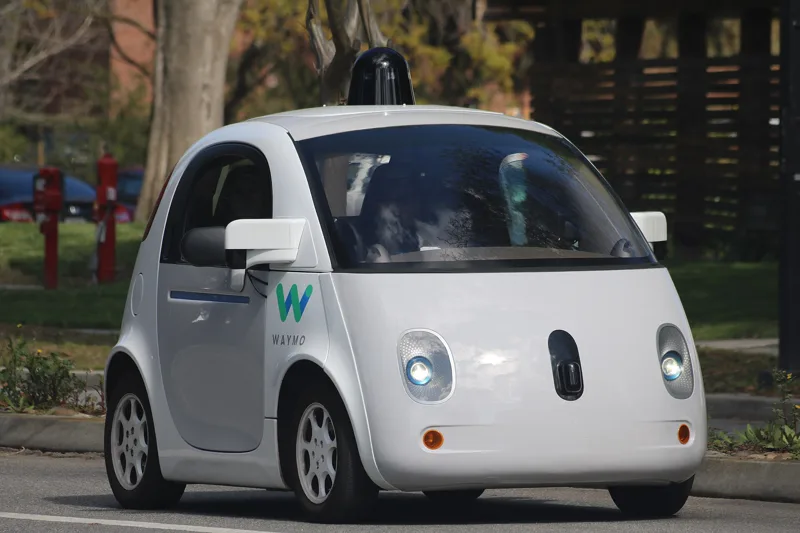
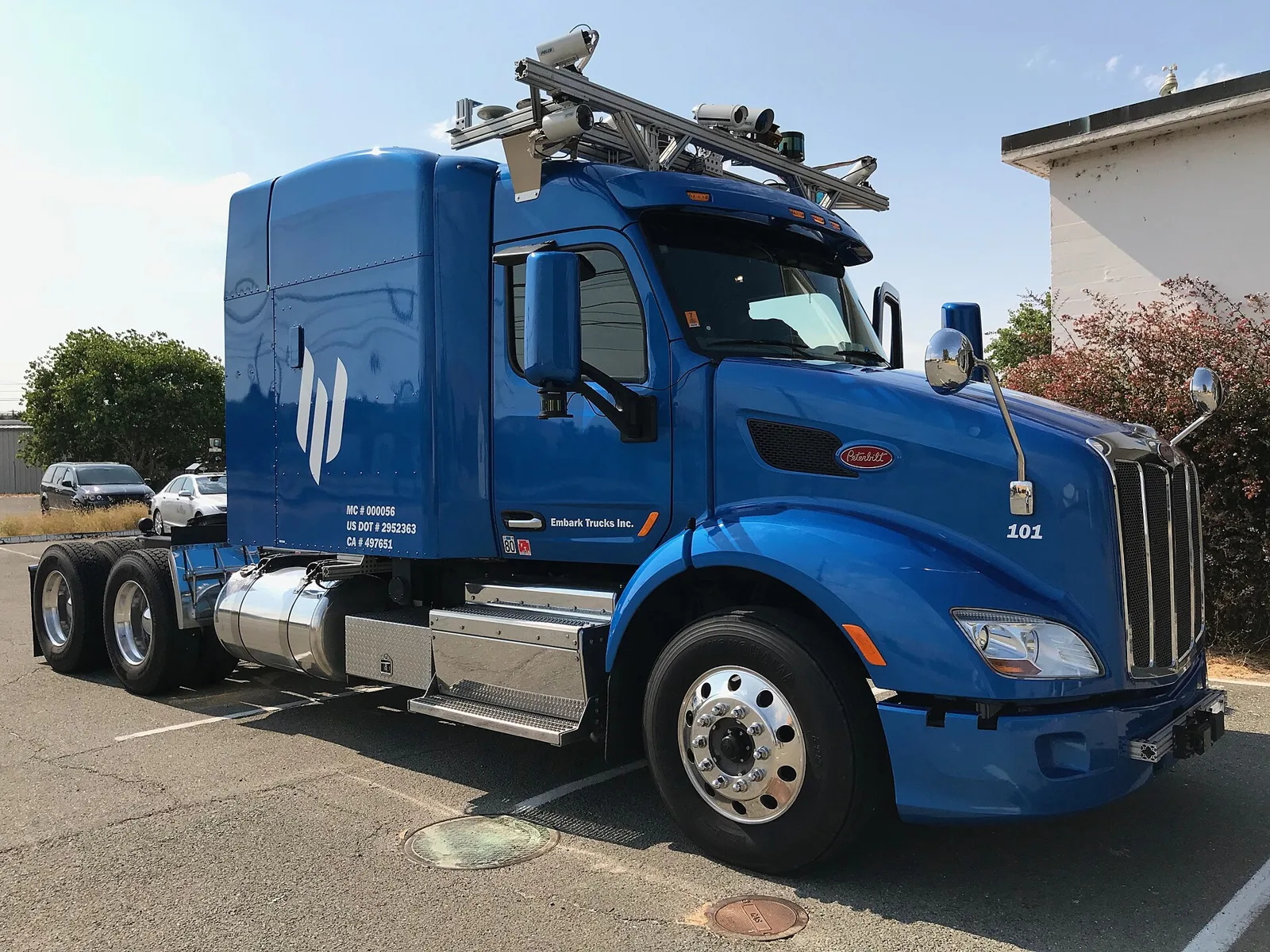
Industry lists have shifted too. Guidehouse Insights put ten firms at the head of automated trucking in September 2022, with Waymo and Aurora among them. Transport Topics counted fourteen companies that November, and its February 2024 update dropped Waymo, TuSimple, Embark and Locomation.
How safe are self-driving trucks?
Supporters argue that automation removes the human errors behind most crashes. Human error contributes to roughly 94% of motor vehicle crashes, and large-truck crashes killed 5,340 people in 2024, a figure up nearly 40% over the last decade.
Automated systems are designed to avoid distraction, fatigue and impairment. They also avoid the cognitive decline that builds over hours at the wheel, which could prevent the roughly 10% of crashes linked to driver incapacitation.
Sensors give 360-degree awareness and react faster than a person. Researchers modelled 29 fatal crashes on the I-45 highway in Texas, and the technology would have avoided every one. Projections suggest about 600,000 fatalities could be averted over 35 years if autonomous trucks were 10% safer than the average human driver.
Projections of this kind are estimates rather than measured results, so the figures should be read with that in mind.
What rules apply to self-driving trucks?
Rules differ by country and state. Nevada has addressed self-driving vehicles since the 2010s, and by 2017, 33 states had promulgated regulations. California now requires a human driver to be present in all self-driving vehicles, while the EU has worked on legislation to allow Level 4 trucks without a person on board.
Federal policy in the US runs through NHTSA. Its 2019 guidelines followed the Self Drive Act and cover SAE levels, testing before public operation, revised safety self-assessments, alignment of federal and state rules, and jurisdiction. Earlier NHTSA guidelines, revised in 2016, focused on cutting fatalities.
Germany became the first nation to write legal rules covering automated cars and trucks; those rules arrived in 2021 and 2022. Besides safety, California's motivation included concern for the trucking workforce, which makes up 6% of the total US workforce.
What challenges still hold self-driving trucks back?
Liability is a leading problem, because nobody sits in the cab to blame in a crash. In the US, someone hurt in a collision with a semi can pursue the driver and the employer, but not the truck maker, which complicates matters for automated fleets.
Roads and cities also need work. Designated lanes and parking areas may be needed, because many roads and cities were not built with automated vehicles in mind.
Trucks can already change lanes and enter merging traffic, but they are not yet designed to handle sudden changes such as a freeway closure or a live collision. Until manufacturers can drop safety drivers altogether, that gap will remain a central test.