GM's first homegrown DOHC four, from the 180 bhp High Output to the 2.4-litre Twin Cam and the prototypes that pushed it far beyond the road.
The Quad 4 was a family of Oldsmobile four-cylinder engines, with DOHC versions built from 1987 to 2002. It powered Oldsmobile, Pontiac, Buick and Chevrolet cars across a long run of models, from the base LD2 to the 2.4-litre Twin Cam.
The Quad 4 was a family of four-cylinder engines built by Oldsmobile, with DOHC versions produced from 1987 to 2002. It was the first DOHC four that General Motors designed and built for regular domestic production, and its variants ran from the base 2.3-litre to race-bred prototypes with power far beyond the road cars.
Why was the Quad 4 important for General Motors?
Oldsmobile's Quad 4 was GM's first homegrown DOHC four built for regular domestic production. The only earlier example was the Chevrolet Cosworth Vega, whose DOHC head Cosworth designed in England. The engine was first expected in 1987, but its launch slipped by a year.
Oldsmobile announced a high-output version with 180 bhp (134 kW) soon after, and the company then promoted the engine as a performance feature of its cars.
GM's first homegrown DOHC four ran from 1988 to 2002 and went from family car engine to hot rod icon.
When and where was the Quad 4 built?
Oldsmobile first offered the Quad 4 as a regular production option on the 1988 Cutlass Calais and Pontiac Grand Am. Every Quad 4 family engine was built at the Lansing Engine Plant, known as plant five, in Delta Township near Lansing, Michigan.
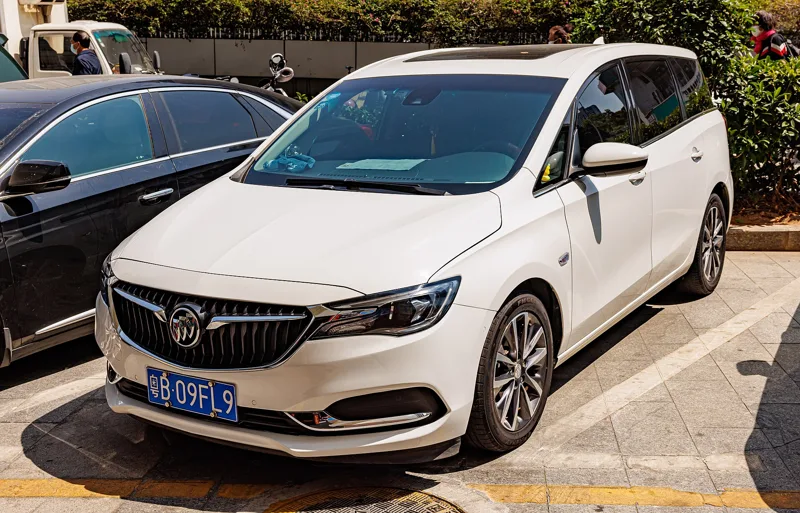
Buick took the engine in late 1988 and Chevrolet followed in 1990, after which the Quad 4 became a mainstay of GM's lineup. The Twin Cam was the last engine that Oldsmobile engineered and produced alone, because the Aurora V8 and Shortstar V6 were built on Cadillac Northstar V8 architecture.
How was the Quad 4 put together?
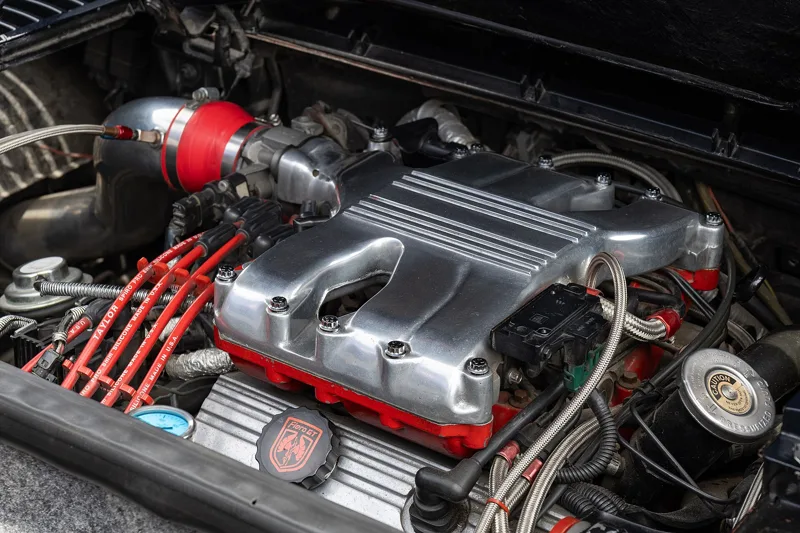
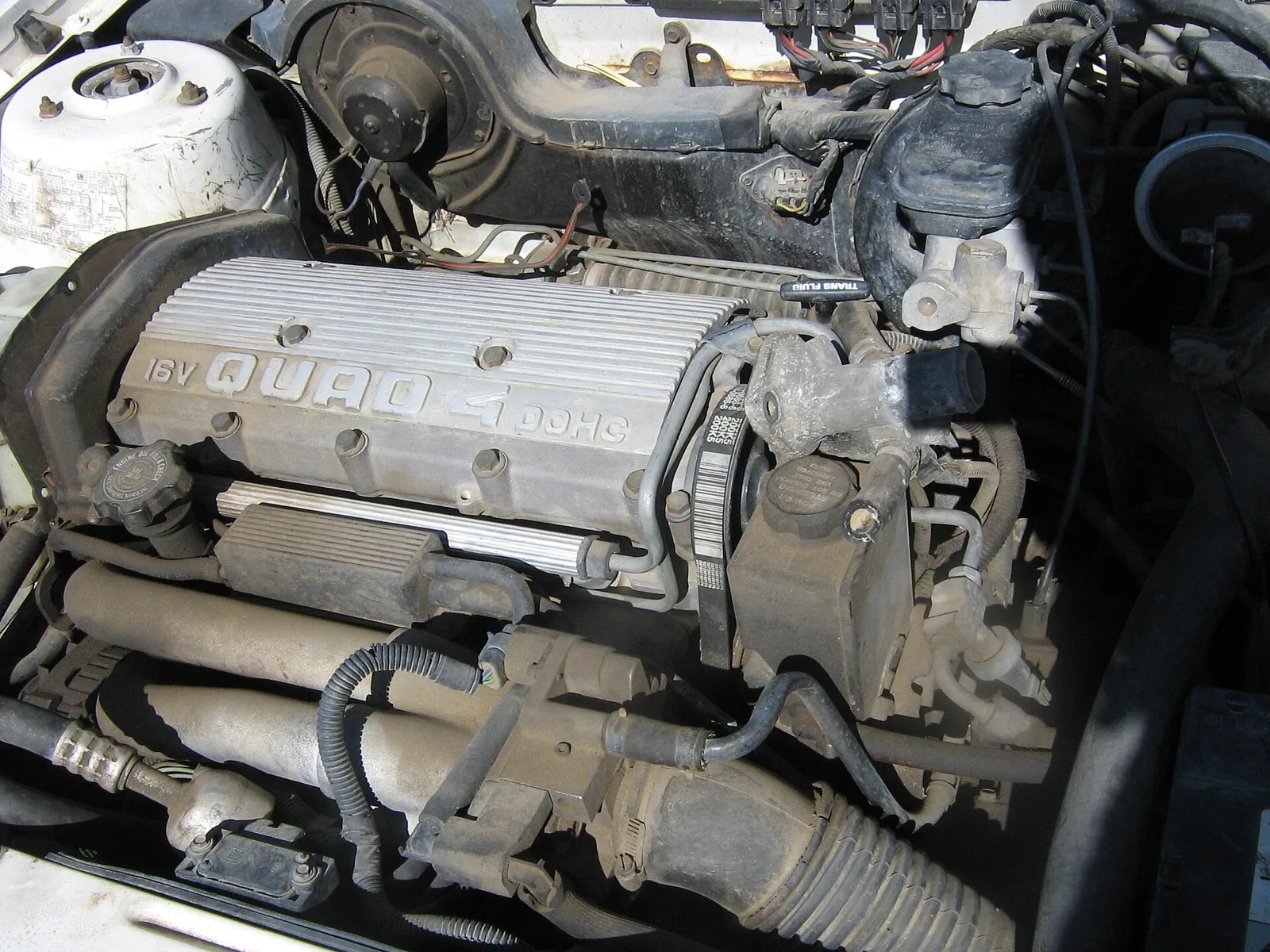
The Quad 4 had a cast iron block, with aluminium for the head, camshaft carriers and timing chain cover, and a die-cast aluminium sump. Its name came from the four cylinders and four valves per cylinder. Timing chains drove both camshafts and the water pump, a choice that went against the cogged timing belts popular on overhead cam designs of the period.
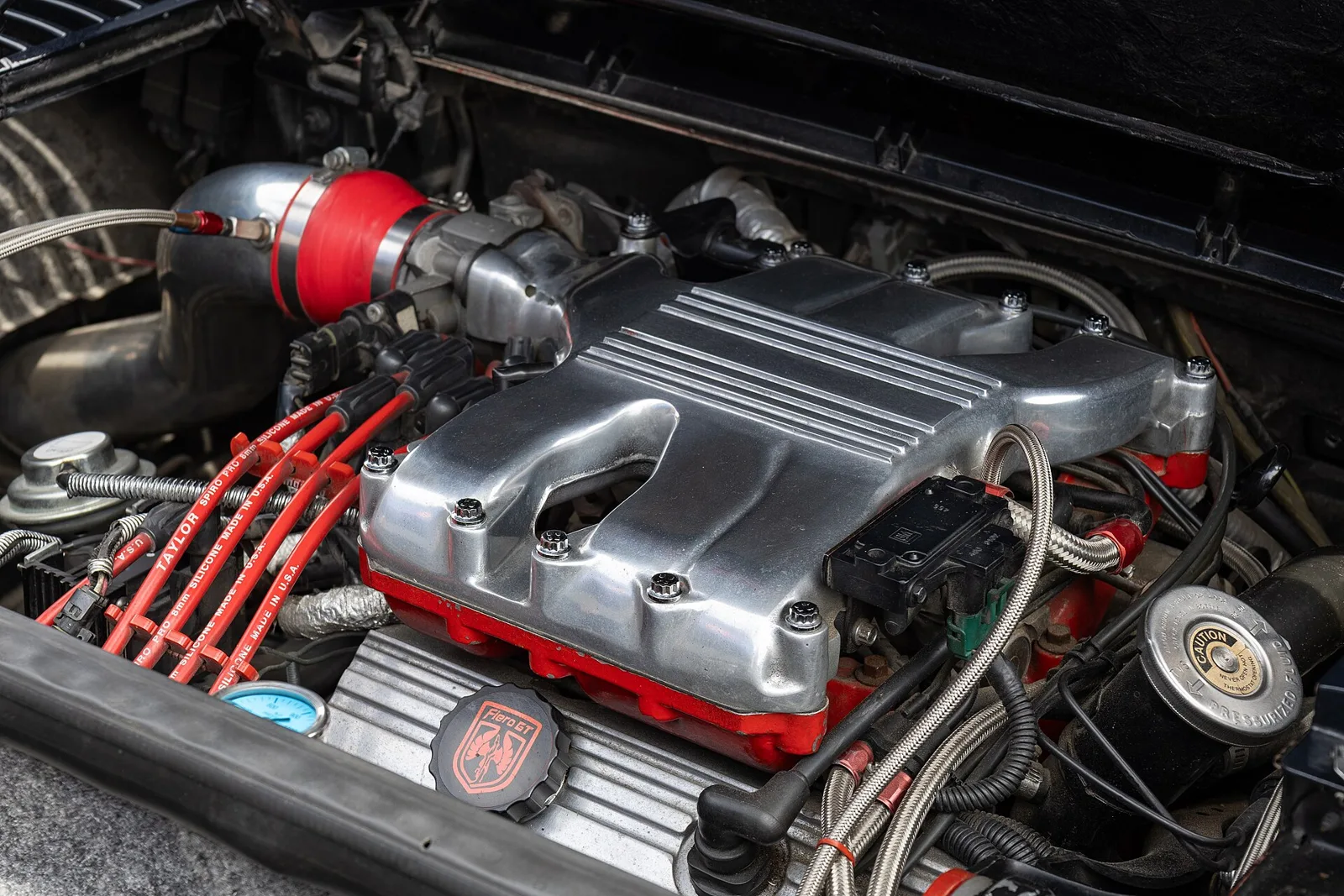
Fuel was delivered by electronic injection, and spark came from a distributorless system called direct-fire. It fired two coils in turn, both sitting under the cast aluminium engine cover. A single-plane serpentine belt drove the accessories.
How did the press and public react to the Quad 4?
Early sales brought positive reviews, but the automotive press later criticised the Quad 4 for its noise, vibration and harshness levels compared with rivals. Oldsmobile had used the Aerotech showcase cars to build interest in the name, and that attention continued even as the criticism grew.
A Cutlass Supreme convertible, fitted with a turbocharged production Quad 4, served as the 1988 Indianapolis 500 pace car. The engine also won a following among hot rodders, who liked how its ribbed aluminium cover, once removed, showed tall cam towers resembling a 1930s Offenhauser.
What was the base LD2 engine?
The LD2 was the original Quad 4, with a 92 mm x 85 mm (3.6 in x 3.3 in) bore and stroke and a displacement of 2,260 cc (137.9 cu in). Base output was 150 bhp (112 kW) from 1988 to 1989 and 160 bhp (119 kW) from 1990 to 1992, all from a 9.5:1 compression ratio without EGR.
Running changes to the base engine included different crankshafts, cams and manifolds, all aimed at more torque and less NVH. The LD2 was fitted to a long list of cars:
- 1988 to 1991 Buick Skylark
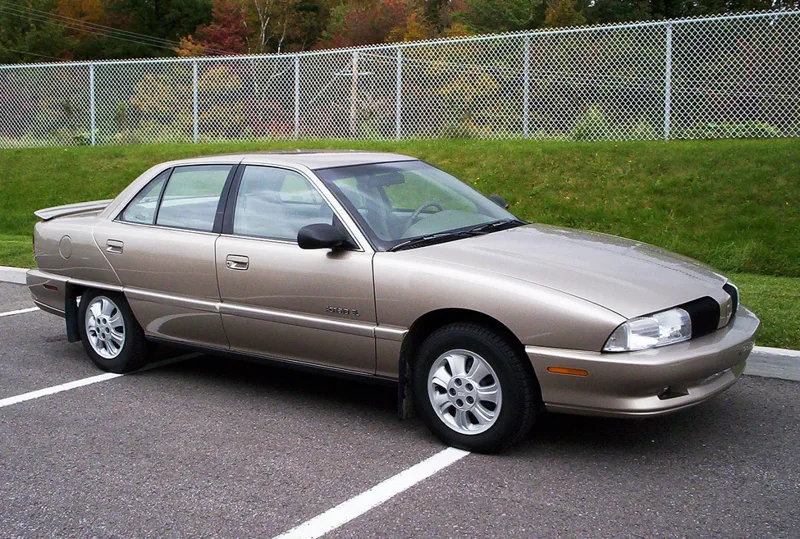
- 1992 to 1994 Oldsmobile Achieva
- 1988 to 1991 Oldsmobile Cutlass Calais
- 1990 to 1991 Oldsmobile Cutlass Supreme
- 1988 to 1994 Pontiac Grand Am
- 1990 to 1991 Pontiac Grand Prix
- 1993 to 1997 Pontiac Trans Sport, Europe only
What did the 1995 balance shaft engine change?
For 1995 only, a balance shaft version of the 2.3-litre was built to reduce vibration. The shafts spun at twice engine speed, which forced the redline down from 6800 to 6500 rpm. Output was 150 bhp (112 kW) and 150 lb-ft (203 N-m).
The crank drove one shaft, which drove the second, and that in turn drove the oil pump, so the shafts always carried a steady load. The 1995 model was the only Quad 4 produced that year and marked a transitional period for the family.
How strong was the LG0 High Output?
The LG0 High Output was rated at 180 hp (134 kW) from 1989 to 1992, then 175 hp (130 kW) in 1993 and 170 hp (127 kW) in 1994. Its red line sat at 6800 rpm, and the later power cuts followed the first two rounds of exhaust port reductions made for NVH control.
Compared with the LD2, it had a tuned intake manifold, aggressive camshafts and a compression ratio raised from 9.5:1 to 10.0:1. Premium fuel rated at 91 octane or higher was recommended because of that compression.
Only the High Output and W41 could be ordered with the heavy-duty Getrag-designed HM-282/NVG-T550 five-speed manual. Final drive was 3.61:1 on 1988 to 1992 half-year transmissions and 3.94:1 from the 1992 half-year through 1994.
Two special runs were built at launch: 200 Cutlass Calais International Series coupes and 200 Grand Am SE coupes, each finished in bright red with grey interiors. The High Output was fitted to these applications:
- 1990 to 1993 Chevrolet Beretta GTZ
- 1994 Chevrolet Beretta Z26
- 1989 to 1991 Pontiac Grand Am SE
- 1992 to 1994 Pontiac Grand Am GT
- 1989 to 1991 Oldsmobile Cutlass Calais International Series
- 1992 to 1994 Oldsmobile Achieva SC
What made the W41 the most powerful Quad 4?
The W41 was the most powerful Quad 4, rated at 190 hp (142 kW) at 6,800 rpm and 160 lb-ft at 5,200 rpm in 1991 and 1992. Its redline was 7400 rpm, and its cams were specified at 218 degrees on both intake and exhaust, with .410 inch lift.
Compared with the standard High Output, the W41 gained 10 hp (7 kW) from longer duration cams and a different PROM. In 1993 the W41 was rated at 185 hp (138 kW) with a 7200 rpm redline, after exhaust port reductions were introduced.
The W41 used a specific HM-282/NVG-T550 with a gear set not otherwise available, and every W41 five-speed had a 3.94:1 final drive. It was offered in the 1990 to 1991 Cutlass Calais 442 and the 1992 to 1993 Achieva SCX.
What was the SOHC Quad OHC?
The L40 Quad OHC was a SOHC variant intended to replace the Pontiac 2.5 L Tech IV Iron Duke engine. It debuted in 1992 as an eight-valve unit with 120 hp (89 kW), which was 40 hp (30 kW) less than the DOHC Quad 4 of the same era, and it made 140 lb-ft (190 N-m) of torque.
Power dropped to 115 hp (86 kW) in 1993 as GM tried to reduce the NVH of the engine. Power and fuel economy still beat the Tech IV, but the Quad OHC was retired after 1994, when the DOHC version became standard. It was fitted to the Oldsmobile Achieva, Pontiac Grand Am and Buick Skylark from 1992 to 1994.
What changed with the Twin Cam?
The LD9 Twin Cam was a 2.4-litre Quad 4 that debuted in 1996 with balance shafts and a redesigned cylinder head. Its bore was reduced from 92 to 90 mm (3.62 to 3.54 in) and its stroke increased from 85 to 94 mm (3.35 to 3.70 in), with the aim of better torque. Power came in at 150 bhp (112 kW).
The Twin Cam was known for timing chain failures and water pump failures, and the pumps were difficult and costly to reach. Its very small oil passages gave less than adequate lubrication, so engine repairs could be expensive without careful maintenance.
A mid-1999 update removed exhaust gas recirculation, raised the compression ratio from 9.5:1 to 9.7:1 and switched to high impedance fuel injectors. In 2001 GM fitted a smaller knock sensor, flat-top pistons and a stronger timing chain, and an improved belt tensioner followed in 2002. These applications used the Twin Cam:
- 1996 to 2002 Chevrolet Cavalier Z24
- 1996 to 2002 Pontiac Sunfire GT
- 1996 to 2001 Pontiac Grand Am
- 1996 to 1998 Oldsmobile Achieva
- 1999 to 2001 Oldsmobile Alero
- 1997 to 1999 Chevrolet Malibu
- 1996 to 1998 Buick Skylark
What are the main Quad 4 specifications?
| Version | Years | Displacement | Peak output | Torque |
|---|---|---|---|---|
| LD2 base | 1988 to 1992 | 2,260 cc (137.9 cu in) | 160 bhp (119 kW), 1990 to 1992 | |
| LG0 High Output | 1989 to 1992 | 2.3 L | 180 hp (134 kW) | |
| W41 | 1991 to 1992 | 2.3 L | 190 hp (142 kW) at 6,800 rpm | 160 lb-ft at 5,200 rpm |
| Balance shaft 2.3 | 1995 | 2.3 L | 150 bhp (112 kW) | 150 lb-ft (203 N-m) |
| L40 Quad OHC | 1992 to 1994 | 120 hp (89 kW) | 140 lb-ft (190 N-m) | |
| LD9 Twin Cam | 1996 to 2002 | 2.4 L | 150 bhp (112 kW) |
What were the Aerotech and turbocharged prototypes?
Oldsmobile treated the Quad 4 as a platform for showcase cars. Its 1988 plans for a turbocharged version quoted up to 250 bhp (186 kW), and a previewed Oldsmobile 98 carried a turbo unit reported at 200 hp (149 kW). None of the turbocharged versions reached production.
The Aerotech II, shown in 1989, was a wagon-back sports coupe concept with a 230 hp (170 kW) forced-induction 2.3-litre. The Aerotech III previewed the 1990 Oldsmobile Cutlass Supreme sedan and used a supercharged version rated at 230 hp (170 kW).
The pace car for the 1988 Indianapolis 500 used a turbocharged 2.3-litre built mainly from factory parts, which produced 250 hp (190 kW) at 6400 rpm.
What were the Batten and Feuling engines?
Two experimental twin-cam engines were built for the Aerotech land speed program. They were based on engineering parameters derived from the Quad 4, which Oldsmobile called the production architecture, and they kept the four-stroke cycle, double overhead cams, multi-valve heads and 100 mm (3.94 in) bore spacing.
The Batten RE was designed by Rudy Sayn and Andy Schwartz of Batten Heads in Detroit. It had a wet-sleeve layout of 1,955 cc (119.30 cu in), with a 3.5 in (89 mm) bore, a 3.1 in (79 mm) stroke and a single turbocharger from Garrett AiResearch. Output estimates ran from 750 to 900 hp (560 to 670 kW), and it powered the short-tail Aerotech.
Feuling Engineering in Ventura, California, built the BE to the same restrictions. Its all-aluminium design used timing belts, a deep-skirted Y-block from Keith Black Racing Engines and aluminium and Nikasil liners from Mahle. Output was estimated at about 1,000 hp (750 kW), and the BE powered the long-tail Aerotech.
Ted Louckes, chief engineer in Oldsmobile engineering, and Bill Porterfield of Future Systems and Technology started the program to find more power and better efficiency from the engine.
Did a Quad 8 V8 ever reach production?
No. The Quad 8 was an Oldsmobile V8 developed with Quad 4 technology, and it appeared in an early 1988 MotorWeek episode. What was shown was apparently a mock-up, possibly built by Feuling Engineering, and it never went into production.
The engine made an appearance at a SEMA show in Las Vegas, and American Rodder featured it in the June 1993 issue. Neither showing led to production.
What is the legacy of the Quad 4?
The Quad 4 gave GM a homegrown DOHC four that ran across Oldsmobile, Pontiac, Buick and Chevrolet, from the base LD2 to the Twin Cam. Its engineering choices, including timing chains and direct-fire ignition, set it apart from the belt-driven designs of the time.
The Quad 4 lineup was cancelled after the 2002 model year, and the Ecotec replaced it for the 2003 model year.