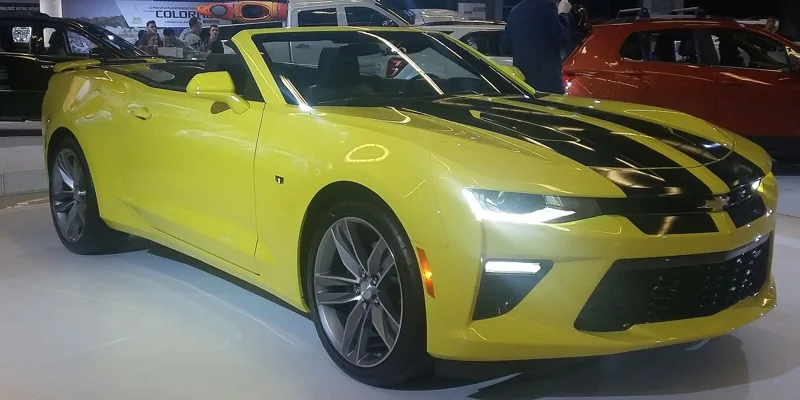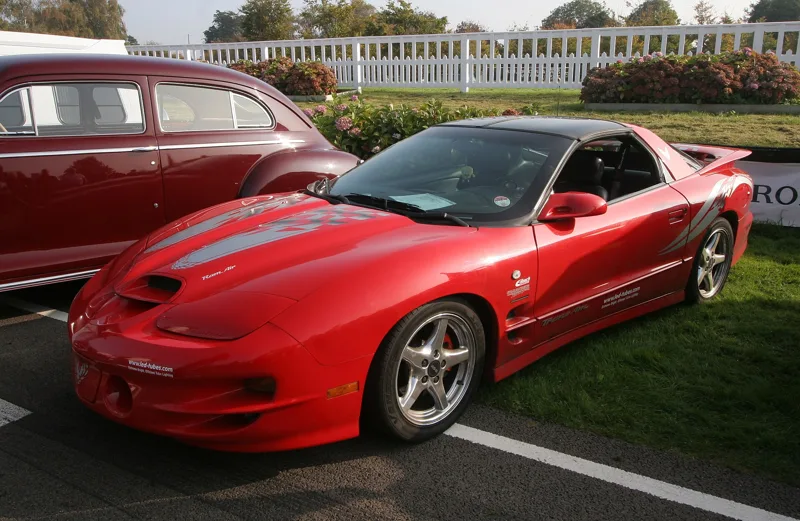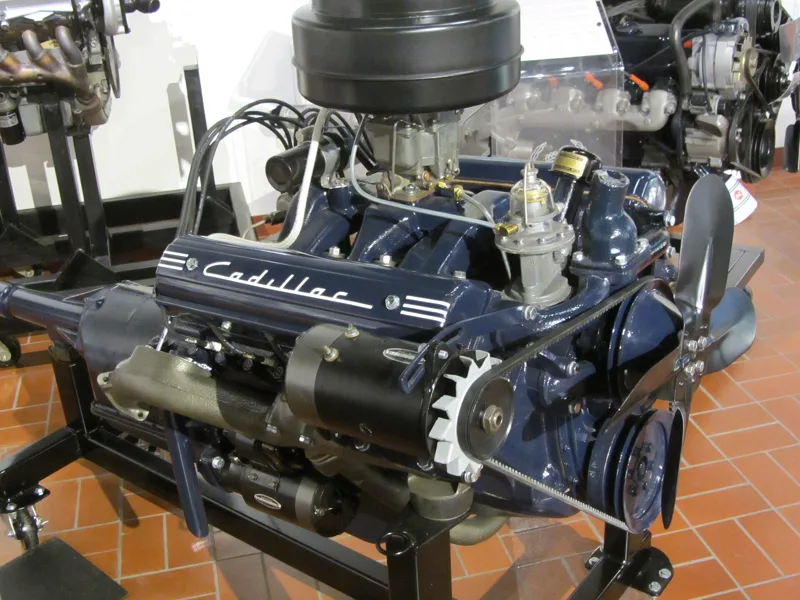
A 2.8 to 3.4 litre V6 that served GM front- and rear-drive cars from 1980, through three generations, to China-built engines sold until 2010.
The GM 60-degree V6 was a family of V6 engines developed by Chevrolet in 1980. Displacement ran from 2.8 to 3.4 litres, and the engines powered many GM cars and trucks until production ended in the US in 2005.
The General Motors 60-degree V6 is a family of V6 engines built for longitudinal and transverse installations between 1980 and 2005 in the United States. Displacement ran from 2.8 litres (2,837 cc) to 3.4 litres (3,350 cc), and China-built versions stayed in production until 2010.
Where did the GM 60-degree V6 come from?
The 60-degree V6 was developed by Chevrolet and used by many GM divisions, the exceptions being Saturn and Geo. It was first fitted to X-body cars, which gave the engine its informal name, the X engine. It became the foundation of the GM High Value family, and it has no connection to the GMC V6 built for commercial vehicles.
Most versions used twelve valves in a cam-in-block or overhead valve layout, with a cast-iron block whose heads were either cast iron or aluminium. The LQ1 was the exception, using 24 valves operated by dual overhead cams. The heads moved from iron in the first generation to aluminium from the second, and a third generation arrived in 1993.
A 60-degree V6 that began as a transverse X-body engine and ended as a China-built unit sold until 2010.
How did the first LE2 engine perform?
The LE2, at 2.8 L (2,837 cc), opened the family and was a transverse unit built from 1980 through 1986 for A-body and X-body cars. It was the standard engine for the X-code line and relied on a two-barrel carburettor.
Power stood at 115 hp (86 kW) for 1980 and 1981, then 112 hp (84 kW) for 1982 to 1986. High-output versions reached 135 lb-ft (183 N-m) of torque. The bore measured 89 mm (3.5 in) and the stroke 76 mm (2.99 in), which made the engine oversquare, with a bore larger than its stroke.
Applications covered the Buick Skylark and Century, the Chevrolet Citation and Celebrity, the Oldsmobile Omega and Cutlass Ciera, and the Pontiac Phoenix and 6000, with the Cutlass Cruiser wagon among the bodies that used it.
What were the high-output LH7 and L44 versions?
The LH7 arrived in 1981 as a High Output Z-code variant of the LE2, aimed at higher-performance X-cars such as the Chevrolet Citation X-11 and the Pontiac 6000 STE. It kept the two-barrel carburettor and made 135 hp (101 kW).
Torque was 165 lb-ft (224 N-m) for 1981 and 145 lb-ft (197 N-m) for 1982 to 1984. The LH7 was replaced after 1984 by the MFI L44, which was the first transverse 2.8 to use multiport fuel injection.
The L44 ran from 1985 to 1988 as a High Output 9-code option for A-cars, X-cars and the Pontiac Fiero. Output peaked at 140 hp (104 kW) at 5200 rpm, and torque sat at 170 lb-ft (230 N-m) by 3600 rpm. Its cam and cylinder heads were later carried over to the 3.4 L L32.
The LB6, a W-code 2.8 with multiport injection, replaced the original LE2 in 1985. Peak power was 130 hp (97 kW) at 4500 rpm, with torque of 160 lb-ft (217 N-m) arriving at 3600 rpm. Applications included the Buick Skylark, Cadillac Cimarron, Chevrolet Cavalier and Oldsmobile Firenza GT.
What did the Generation I 3.1 L bring?
The 3.1 L LG6, a D-code engine, spanned 1990 to 1996 and served transverse and longitudinal layouts alike. Its fuel system was throttle-body injection, with iron heads, and it delivered 120 hp (89 kW), plus 170 lb-ft (230 N-m) of torque.
The LG6 went into the Chevrolet Lumina APV, the Isuzu Pickup and Rodeo, and the Oldsmobile Silhouette and Pontiac Trans Sport, which covered both vans and trucks.
The 1985 update added bigger main journals for durability, plus either multi-point injection or an E2SE carburettor, together with OBD I. Those changes applied across the Generation I line.
What were the longitudinal engines?
The longitudinal versions were minor variants of the transverse engines they were based on. The first of them arrived in 1982 alongside the LC1 and LR2, and they never gained the aluminium heads of Generation II.
The LC1 was a 1-code, two-barrel 2.8 for F-body cars, built from 1982 to 1984 at 102 hp (76 kW), producing 145 lb-ft (197 N-m) of torque. The LB8 succeeded it in 1985. The LR2, a B-code truck version, ran from 1982 to 1986 with a two-barrel carburettor. Power was 115 hp (86 kW), and torque 150 lb-ft (203 N-m).
The LL1 was a high-output LC1 built in 1983 and 1984 as an optional L-code unit for the Pontiac Firebird, rated at 125 hp (93 kW). The LB8, an S-code multiport unit, replaced the LC1 in 1985 and ran until 1989, making 135 hp (101 kW) and 165 lb-ft (224 N-m).
The 3.1 L LH0 used in rear-drive applications differed significantly from the front-drive unit, which kept the Generation I block and heads. Ratings read 140 hp (104 kW) and 180 lb-ft (244 N-m). The 3.4 L L32, an S-code engine for the Camaro and Firebird, delivered 160 hp (119 kW) at 4,600 rpm, while 200 lb-ft (271 N-m) arrived at 3,600 rpm. Its bore was 92 mm and its stroke 84 mm.
What changed with Generation II?
Generation II arrived in 1987 at the same 2.8 L (2,837 cc) size, but it brought aluminium heads with splayed valves and an aluminium front cover. It was built only for transverse front-wheel drive and ended, with the OHV line, in 1994.
In 1988 Chevrolet put a full-production long-stroke 3.1 L (3,135 cc) into the Pontiac 6000 STE AWD. Its 89 mm bore matched the 2.8, but its 84 mm stroke was longer than the 76 mm of the smaller engine.
The 3.1 and 2.8 ran side by side in compact and midsized vehicles until 1990, when the 2.8 was dropped. Both used MPFI, and a full-production turbo version was offered on the 3.1. The 2.8 applications included the Buick Century and Regal, the Cadillac Cimarron, several Chevrolet compacts and the Oldsmobile Cutlass Ciera and Supreme.
The T-code LH0 3.1, launched in 1988 on the Pontiac 6000 STE AWD, used more advanced multiport injection. Early examples were rated 135 hp (101 kW) and 180 lb-ft (244 N-m) in 1988 and 1989. Later ones climbed to 140 hp (104 kW) at 4800 rpm, with 185 lb-ft (251 N-m) of torque at 3600 rpm. Production ran to 1994, or 1996 in Mexico.
Which special versions stood out?
Two special variants stood out. The L64 W-code was a flexible-fuel 3.1 introduced in 1991 that could run M85 (85% methanol) or E85 (85% ethanol). The LG5 V-code was a turbocharged 3.1 built with McLaren for the 1989 and 1990 model years.
The LG5 shared its multiport manifolds and throttle body with the LH0, with an air-to-air intercooler and a T25 water-cooled turbo. Peak power reached 205 hp (153 kW) at 5200 rpm, and 225 lb-ft (305 N-m) of torque came in at 2100 rpm, on an 8.8:1 compression ratio.
Around 3,700 LG5 engines were built each year. Its block used more nickel and had hardened internals, and its heads featured roomier combustion chambers, akin to those of the later LX9 3.5. The LG5 went into the Pontiac Grand Prix Turbo and the Grand Prix Turbo STE.
What was the LQ1 DOHC engine?
The LQ1, nicknamed TDC for its Twin Dual Cam layout, was a 3.4 L (3,350 cc) DOHC V6 built from 1991 to 1997. It went only into front-drive cars on the first W-body platform, and it was the only member of the family with four valves per cylinder driven by overhead cams.
From 1991 to 1993 the engine ran tuned multiport fuel injection, making 200 to 210 hp (149 to 157 kW) at 5200 rpm. Torque was 215 lb-ft (292 N-m) at 4000 rpm. From 1994 to 1997 sequential port injection lifted peak power to 210 hp (157 kW), reached at 5200 rpm, while torque stayed unchanged.
The engine used a block similar to its pushrod relatives, the 3.1 L LH0 and the 2.8 L LB6. A chain-driven intermediate shaft drove four overhead cams through a cogged belt, which pushed the engine's height up considerably. The compression ratio was 9.7:1.
The 1996 model year brought redesigned heads with better flow and OBD-II compliance, and it made the engine an interference design. By the 1996 and 1997 cars, output had risen to 215 hp (160 kW), and torque to 220 lb-ft (298 N-m). An optional Getrag 284 five-speed was offered from 1991 to 1993, with the Hydramatic 4T60-E four-speed as the usual alternative.
What are the key outputs across the family?
| Version | Years | Displacement | Output | Torque |
|---|---|---|---|---|
| LE2 (X-code) | 1980-1986 | 2.8 L (2,837 cc) | 115 hp (86 kW), 1980-81; 112 hp (84 kW), 1982-86 | 135 lb-ft (183 N-m), high output |
| LH7 (Z-code) | 1981-1984 | 2.8 L (2,837 cc) | 135 hp (101 kW) | 165 lb-ft (224 N-m) in 1981; 145 lb-ft (197 N-m) 1982-1984 |
| L44 (9-code) | 1985-1988 | 2.8 L (2,837 cc) | 140 hp (104 kW) at 5200 rpm | 170 lb-ft (230 N-m) at 3600 rpm |
| LB6 (W-code) | 1985 onward | 2.8 L (2,837 cc) | 130 hp (97 kW) at 4500 rpm | 160 lb-ft (217 N-m) at 3600 rpm |
| LC1 (1-code) | 1982-1984 | 2.8 L (2,837 cc) | 102 hp (76 kW) | 145 lb-ft (197 N-m) |
| LR2 (B-code) | 1982-1986 | 2.8 L (2,837 cc) | 115 hp (86 kW) | 150 lb-ft (203 N-m) |
| LB8 (S-code) | 1985-1989 | 2.8 L (2,837 cc) | 135 hp (101 kW) | 165 lb-ft (224 N-m) |
| LG6 (D-code) | 1990-1996 | 3.1 L (3,135 cc) | 120 hp (89 kW) | 170 lb-ft (230 N-m) |
| LH0 (T-code) | 1988-1994 | 3.1 L (3,135 cc) | 135 hp (101 kW) in 1988-89; 140 hp (104 kW) at 4800 rpm later | 180 lb-ft (244 N-m) in 1988-89; 185 lb-ft (251 N-m) at 3600 rpm later |
| LG5 (V-code) | 1989-1990 | 3.1 L (3,135 cc), turbocharged | 205 hp (153 kW) at 5200 rpm | 225 lb-ft (305 N-m) at 2100 rpm |
| LQ1 (Twin Dual Cam) | 1991-1997 | 3.4 L (3,350 cc), DOHC | 200-210 hp (149-157 kW) at 5200 rpm, 1991-93 | 215 lb-ft (292 N-m) at 4000 rpm |
| L82 (M-code) | 1993-1999 | 3.1 L (3,135 cc) | 160 hp (119 kW) at 5200 rpm | 185 lb-ft (251 N-m) at 4000 rpm |
| L32 (S-code) | 1993-1995 | 3.4 L (3,350 cc) | 160 hp (119 kW) at 4,600 rpm | 200 lb-ft (271 N-m) at 3,600 rpm |
| LG8 (J-code) | 2000-2005 | 3.1 L (3,135 cc) | 170-175 hp (127-130 kW) at 5200 rpm | 190-195 lb-ft (258-264 N-m) at 4000 rpm |
| LNJ | 2005-2009 | Updated 3400, built in China | 185 hp (138 kW) | 210 lb-ft (285 N-m) |
The 1996 and 1997 LQ1 topped the naturally aspirated versions in the table at 215 hp (160 kW), while torque hit 220 lb-ft (298 N-m). The turbocharged LG5 made 225 lb-ft (305 N-m), the highest torque figure shown, from a 3.1 L block.
What did Generation III introduce?
Generation III arrived in the 1993 Oldsmobile Cutlass Supreme. It kept an overhead valve layout with two valves per cylinder, but it used roller tappets in place of flat tappets, a stiffened cast-iron block and standard sequential multiport fuel injection.
The engine kept its cast-iron block, while the aluminium heads and intake manifold were reworked to improve breathing. An aluminium structural oil pan also became standard across the range.
The L82 M-code 3.1 replaced the LH0 from 1993 to 1999 as a sequential-injection update with a structural oil pan and a stiffer block. Peak power was 160 hp (119 kW) at 5200 rpm, 20 hp (15 kW) above the Generation II unit it succeeded, and torque reached 185 lb-ft (251 N-m) at 4000 rpm. Its 9.5:1 compression ratio, 89 mm bore and 84 mm stroke gave it a displacement of 3,135 cc.
The LG8 J-code was an updated 3.1 with an iron block, two-valve pushrod aluminium heads and full sequential port injection. It had a 9.6:1 compression ratio, delivering 170 to 175 hp (127 to 130 kW) at 5200 rpm, plus torque of 190 to 195 lb-ft (258 to 264 N-m) peaking at 4000 rpm. Production took place at Ramos Arizpe in Mexico and at Tonawanda in New York.
The LA1 3400, an E-code, was a bigger-bore variant of the L82 that first appeared in the 1996 U-platform minivans. With 3,350 cc, a 92 mm by 84 mm bore and stroke and a 9.5:1 compression ratio, it used a 56 mm throttle body. Emissions were handled by exhaust gas recirculation and a catalytic converter, and fuel shut-off came at 6000 rpm.
From around 2000, most vehicles carried GM's Engine Oil Life Monitor. The LA1 was assembled at both the Tonawanda and Ramos Arizpe plants and served in the Chevrolet Impala and Monte Carlo, the Oldsmobile Alero and Silhouette, and the Pontiac Aztek and Montana.
How did production move to China?
GM and SAIC Motor formed SAIC-GM in 1997 to build variants of the 60-degree V6 in China, mainly for Chinese-market GM products. The LNJ, built in China, went into the Chevrolet Equinox and Pontiac Torrent from 2005 to 2009.
The LB8 is GM's base V6 in China, derived from the LG8 and keeping its 89 mm bore, with a shorter 66.7 mm stroke for 2.5 L (2,490 cc). It keeps an iron block with pushrods and an aluminium two-valve head, while its output is 145 hp (108 kW) and its torque 155 lb-ft (210 N-m). It was fitted to the Buick GL, GLX, GL8 and Regal sold in China.
The LW9 used an 80 mm stroke for 3.0 L (2,986 cc). It makes 170 hp (127 kW), and its torque reaches 185 lb-ft (251 N-m). The LNJ, an updated 3400, received a fresh block and manifold along with a new oil pan, cover and fuel system, plus electronic throttle control. Its ratings stand at 185 hp (138 kW) and 210 lb-ft (285 N-m).
What is the legacy of the 60-degree V6?
The 60-degree V6 served GM from 1980 to 2005 in compacts, midsize cars, pickups, vans and sports cars. Its design also underpinned the High Value family that followed.
The 2.8 and 3.1 Isuzu engines ended production in 1994, and all longitudinal 60-degree V6s ended in 1996. GM's performance-parts division kept a related crate engine available after 1999.
The Generation II and III engines moved to aluminium heads, and the LQ1 showed that the layout could support DOHC performance. The China-built LB8, LW9 and LNJ carried the design forward after US production ended in 2005.