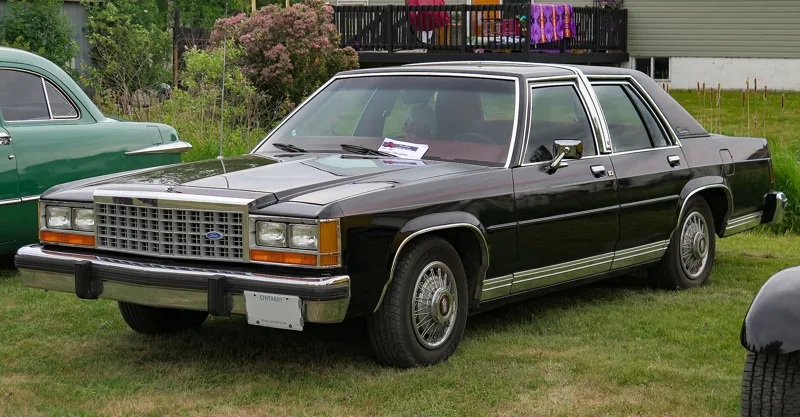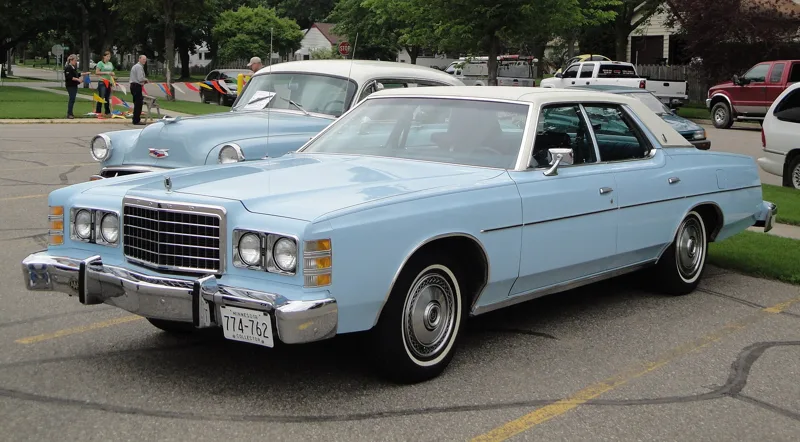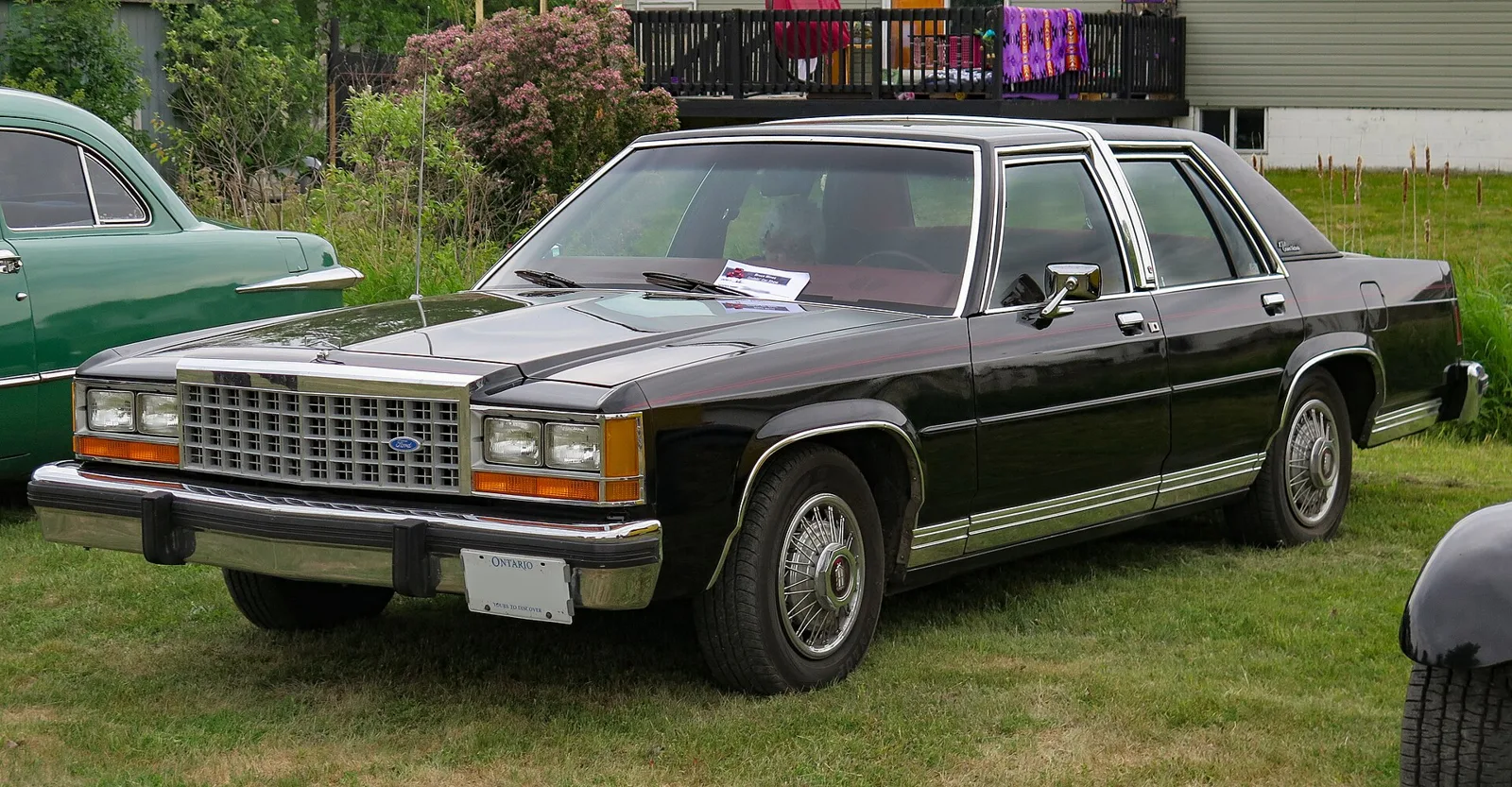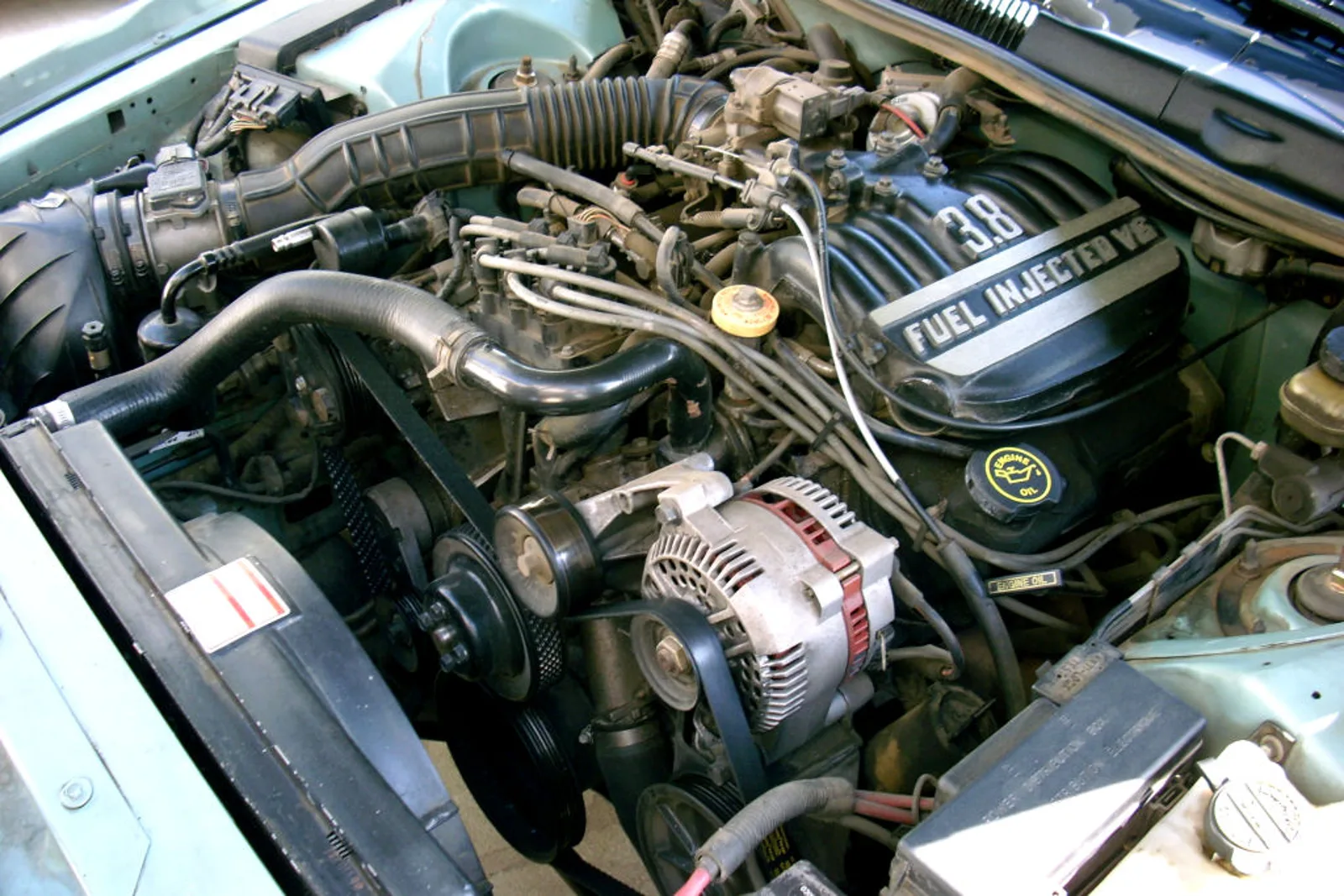
Built in Windsor, Ontario from 1982, the Essex V6 ran from 3.8 to 4.2 litres in cars, minivans and F-150 pickups until the 2008 model year.
The Ford Essex V6 was a 90-degree V6 built at Windsor, Ontario from 1982. It ran from 3.8 to 4.2 litres and powered cars, minivans and F-150 pickups until 2008.
Ford built the 90-degree Essex V6 family at its plant in Windsor, Ontario, Canada. It was introduced in 1982, and it ran in everything from subcompacts to large cars, minivans and some pickups before its last use in the 2008 F-150.
Where did the Essex V6 come from?
Ford began the project in 1977, when it saw a need for a new engine for mid-size cars and light trucks in the 1980s. The goal was a V6 that was lightweight, fuel efficient and reliable, and the engine was not related to Ford's British Essex V6.
The engine is overhead-valve, with a 90-degree bank angle, one camshaft in the block and two valves for each cylinder. Pushrods and rockers work the valves, and split crank pins keep the firing evenly spaced.
Front-engine, front-drive versions have a different bellhousing pattern from the rear-drive layouts.
A Windsor-built 90-degree V6 that powered Granadas, Thunderbirds and F-150s for more than two decades.
Was the Essex V6 copied from another engine?
Two rumours have circulated about its origin. One says the Essex is a Ford small-block V8 with two cylinders removed, and the other says it copies the Buick V6. A technical paper on the engine does not support either story.
The first rumour rests on similarities such as the 90-degree angle and the overhead-valve valvetrain. Removing two cylinders from a 5.0 L V8 gives a V6 of roughly 3.70 to 3.75 L, but the bore, stroke and bore spacing differ from the small block, and the front-drive version matched the 3.0 L Vulcan V6 bellhousing instead.
The second rumour points to shared features such as a short rigid block, similar bore and stroke dimensions, and split rod pins for even firing. A paper in the Society of Automotive Engineers Transactions describes the Essex as an all-new lightweight 90-degree V6, and it mentions the Ford 5.0 L V8 only as a test platform.
How was the early Essex V6 designed?
Aluminium went into a long list of parts, from the intake manifold and front cover to the pumps, block and heads. The rocker covers were glass-filled nylon, which further cut weight.
The first engines were complete in early 1978 and met their design objectives, but rising tooling and material costs prompted a redesign. The new version used a cast iron block while keeping aluminium heads, and it dropped the hollow-core crankshaft, stamped steel exhaust manifolds and aluminium harmonic balancer.
Cast iron versions were ready by February 1979. Even after the weight increase, the engine was the lightest V6 of any displacement built in North America up to that point.
What went wrong with the early blocks?
The earliest production blocks could crack at the camshaft bearing bulkhead, and the crack could run down to the bearing bore at high speed. The cause was rapid cooling of blocks cast at full production speed.
Ford fixed the problem by widening the rib. Around 5000 engines had already been completed with the flawed block, so the company ran the assembly line backwards, disassembling those engines and storing their internal components.
The line then ran forward again, and the engines were rebuilt using the stockpiled components and new blocks. It was an unusual recovery that kept the affected engines in service.
What was the 3.8 L Essex?
The first Essex to reach buyers was a 3.8 L, offered as an option on the 1982 Ford Granada. Its bore and stroke were 96.8 mm and 86 mm, and its displacement came to 3,797 cc (231.7 cu in).
Early output was 112 hp (84 kW) at 4200 rpm. Torque stood at 175 lb-ft (237 N-m) at 2800 rpm. Most early engines used a two-barrel Motorcraft 2150 carburettor, while 50-state Lincoln Continentals and California Granada, Cougar, Thunderbird and XR7 cars received a Motorcraft 7200 with variable venturi.
Central fuel injection arrived in 1984 and lifted the output to 120 hp (89 kW) at 3600 rpm. In the models so equipped, torque rose to 205 lb-ft (278 N-m) at 1600 rpm. Single-port multi-point injection became standard in 1988, raising the rating to 140 hp (104 kW).
Units updated with Ford's EEC-V engine computer gained a little more, to 155 hp (116 kW), where no other enhancements were fitted. The 1991 to 1995 police Taurus, the 1991 to 1994 Lincoln Continental and the 1995 Windstar had a high-output version rated between 155 and 160 hp.
How did Split Port Induction change the engine?
In 1996 the Essex received Ford's Split Port Induction system, a form of variable-length intake manifold. Each intake port was split into a primary and a secondary passage, and the primary passage carried the injector and fed air tangentially for maximum swirl.
The secondary passage held an intake manifold runner control valve, which opened at high speed and wide-open throttle to give a lightly restricted route for extra air. That raised volumetric efficiency and power when the engine needed them most.
SPI came with lighter valves, larger intake valves, revised exhaust ports and valve seats, and a higher compression ratio. The new cylinder heads were shared by the 3.8 L and the 4.2 L, although the upper intake manifold differed between the two.
On the 3.8 L, SPI brought a 33 percent increase in peak power, a 7 percent increase in peak torque and a 2 percent cut in fuel consumption. The 4.2 L saw similar gains, and its longer stroke gave an even larger rise in low-speed torque.
What were the 1996 and 1999 SPI versions?
The first 3.8 L SPI engine appeared in the 1996 Windstar. With a compression ratio of 9.3:1, it was rated at 200 hp (149 kW) at 5000 rpm, while torque hit 230 lb-ft (312 N-m) at 3000 rpm. A sticker on the forward plenum of the upper intake manifold marks the Split Port Induction system.
For 1999 the 3.8 in the Mustang adopted the split port heads from the Windstar, but it went without the runner control valves, leaving every one of its twelve runners open continuously. That version delivered 190 hp (142 kW) at 5250 rpm and 220 lb-ft (298 N-m) by 2750 rpm.
The Mustang regained the runner control in 2001, and output rose slightly to 193 hp (144 kW) at 5500 rpm, while torque climbed to 225 lb-ft (305 N-m) at 2800 rpm. Each engine carries a nine-digit serial number on a label on the right-hand valve cover.
How did the supercharged 3.8 work?
Ford developed a supercharged 3.8 L that was used in two MN12 platform cars from the late 1980s. The blower was a belt-driven Eaton M90, a roots-type unit that turned 2.6 times engine speed, reaching a maximum of 15,000 rpm at the 6000 rpm redline.
The blower delivered up to 12 psi (0.83 bar) of boost, and an intercooler cooled the charge. Internal changes included a block and heads modified for greater coolant flow, a fully counterweighted forged crankshaft and a billet camshaft with revised profiles.
The pistons were hypereutectic alloy, and the compression ratio fell to 8.2:1 to suit the boost. The supercharged engine produced 210 hp (157 kW) at 4000 rpm, and its torque peaked at 315 lb-ft (427 N-m) at 2600 rpm.
Which cars carried the supercharged Essex?
The supercharged 3.8 arrived with the 1989 Thunderbird Super Coupe and Cougar XR-7, both new that year. Before it, the last American supercharged production engine had been the Studebaker Silver Hawk, from the late 1950s or early 1960s.
The standard transmission in the Super Coupe was a Mazda M5R2-RKE five-speed manual, while a four-speed AOD automatic was optional. The supercharged engine was dropped from the Cougar XR-7 in favour of a V8 soon after the 1991 model year began, but it stayed in the Super Coupe.
Five Thunderbirds with pre-release supercharged Essex engines went to the Arizona Highway Patrol for road testing in 1988, although no official police package ever included the blown engine. In 1991 production Thunderbird SCs went to the same patrol for hot weather testing.
For 1994 and 1995 the engine was revised to 230 hp (172 kW) at 4400 rpm, and torque reached 330 lb-ft (447 N-m) at 2500 rpm. The supercharger received a larger square-style inlet, a bigger inlet plenum and Teflon-coated rotors, and the compression ratio rose to 8.5:1. The Super Coupe ended in 1995, and the engine's production stopped with it.
What was the 4.2 L Essex in the F-150?
The largest Essex arrived for 1997, taking over from the Ford 300 straight six in the F-150. It kept the 3.8's bore, but its stroke lengthened to 95 mm (3.74 in), giving 4,195 cc (256.0 cu in). It produced 205 hp (153 kW) at 4750 rpm, while torque was 260 lb-ft (353 N-m) at 3000 rpm.
Many owners regarded the 4.2 L as one of the sturdier F-150 engines of its day, although early units had known problems. Every 1997 and 1998 engine built at the Canadian plant received a faulty front cover gasket. Ford used a thicker gasket for 1999, and in 2004 it swapped in a fully redesigned gasket.
The lower intake manifold was also known to crack at fairly modest mileage. The 2008 F-150 offered the 4.2 L as its base engine, and the 2009 and 2010 models were V8 only. The 2011 model year brought the 3.7 L Cyclone as standard, and 2008 marked the end of the Essex V6 in cars and trucks.
What were the ESG-642 and the 3.9 L engines?
Ford Power Products also sold an industrial 4.2 L, the ESG-642. It could run on gasoline, natural gas or liquefied petroleum gas, and it stayed available until 2015. It was then succeeded by the newer 3.7 L Cyclone-based CSG-637.
A revised smaller Essex, the 3.9 L, arrived in 2004. It kept the 96.8 mm bore of the 3.8 and 4.2, but its stroke measured 88 mm (3.46 in), giving 3,886 cc (237.1 cu in). Its output was unchanged from the earlier 3.8.
The 3.9 appeared as a running change on late 2004 Mustangs from October 7, 2003. It gave way to the 4.0 L SOHC Cologne V6 in the 2005 Mustang redesign. The Freestar minivan kept the 3.9 until production ended on September 4, 2006.
How do the main Essex V6 versions compare?
| Version | Years | Displacement | Bore and stroke | Output |
|---|---|---|---|---|
| 3.8 L | 1982 onward | 3,797 cc (231.7 cu in) | 96.8 mm x 86 mm | 112 hp (84 kW) at 4200 rpm |
| 3.8 L SPI | 1996 onward | 3,797 cc (231.7 cu in) | 96.8 mm x 86 mm | 200 hp (149 kW) at 5000 rpm |
| Supercharged 3.8 L | 1989-1995 | 3,797 cc (231.7 cu in) | 96.8 mm x 86 mm | 210 hp (157 kW) at 4000 rpm; 230 hp (172 kW) at 4400 rpm from 1994 |
| 4.2 L | 1997-2008 | 4,195 cc (256.0 cu in) | 96.8 mm x 95 mm | 205 hp (153 kW) at 4750 rpm |
| 3.9 L | 2004-2006 | 3,886 cc (237.1 cu in) | 96.8 mm x 88 mm | - |
The spread from the 112 hp early 3.8 to the 230 hp revised supercharged unit shows how far the family was pushed. The 4.2 and the 3.9 cover the later years of the family.
What is the legacy of the Essex V6?
The Essex V6 served from 1982 until the 2008 F-150, and it gave way to the Cyclone family, a newer Ford design. Its industrial variant remained in production until 2015, which gave it a longer working life than its car applications.
The engine's history shows how a lightweight design can be reshaped by cost and production pressures. The early aluminium-block plan gave way to cast iron, while the aluminium heads stayed, and the SPI and supercharged versions later added performance without changing the basic architecture.
The Essex brought a 90-degree V6 to a wide range of cars and trucks, from subcompacts to F-150 pickups.