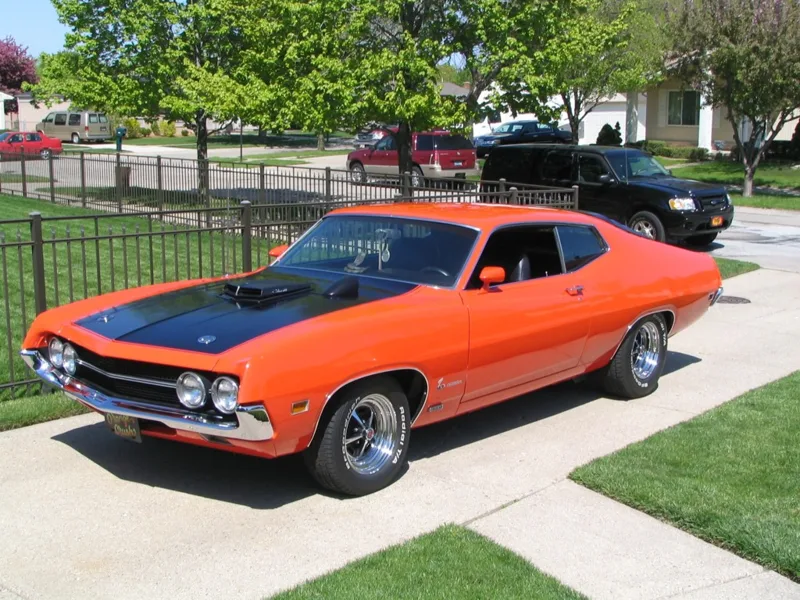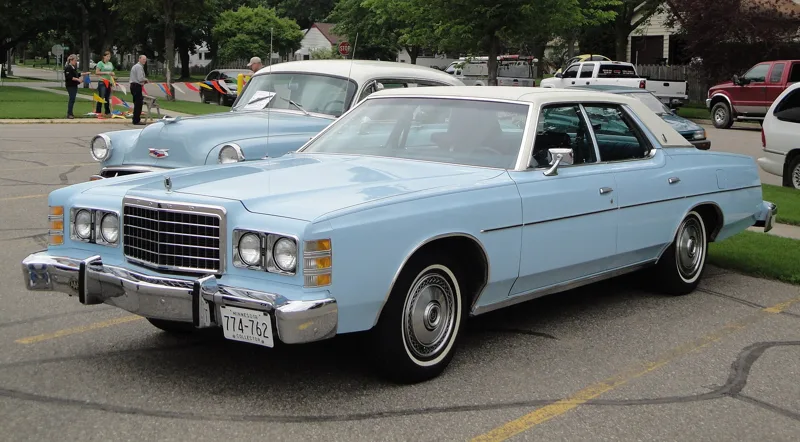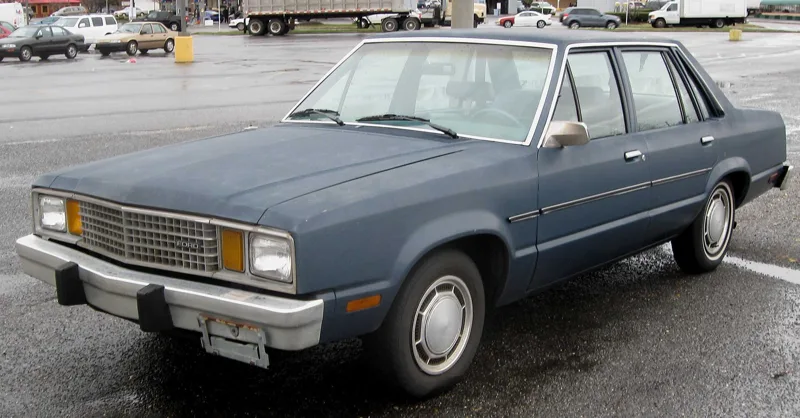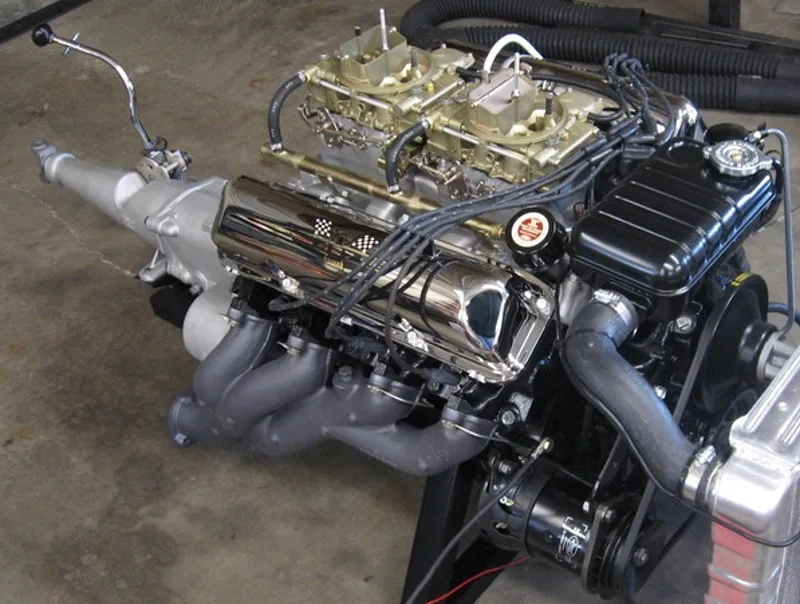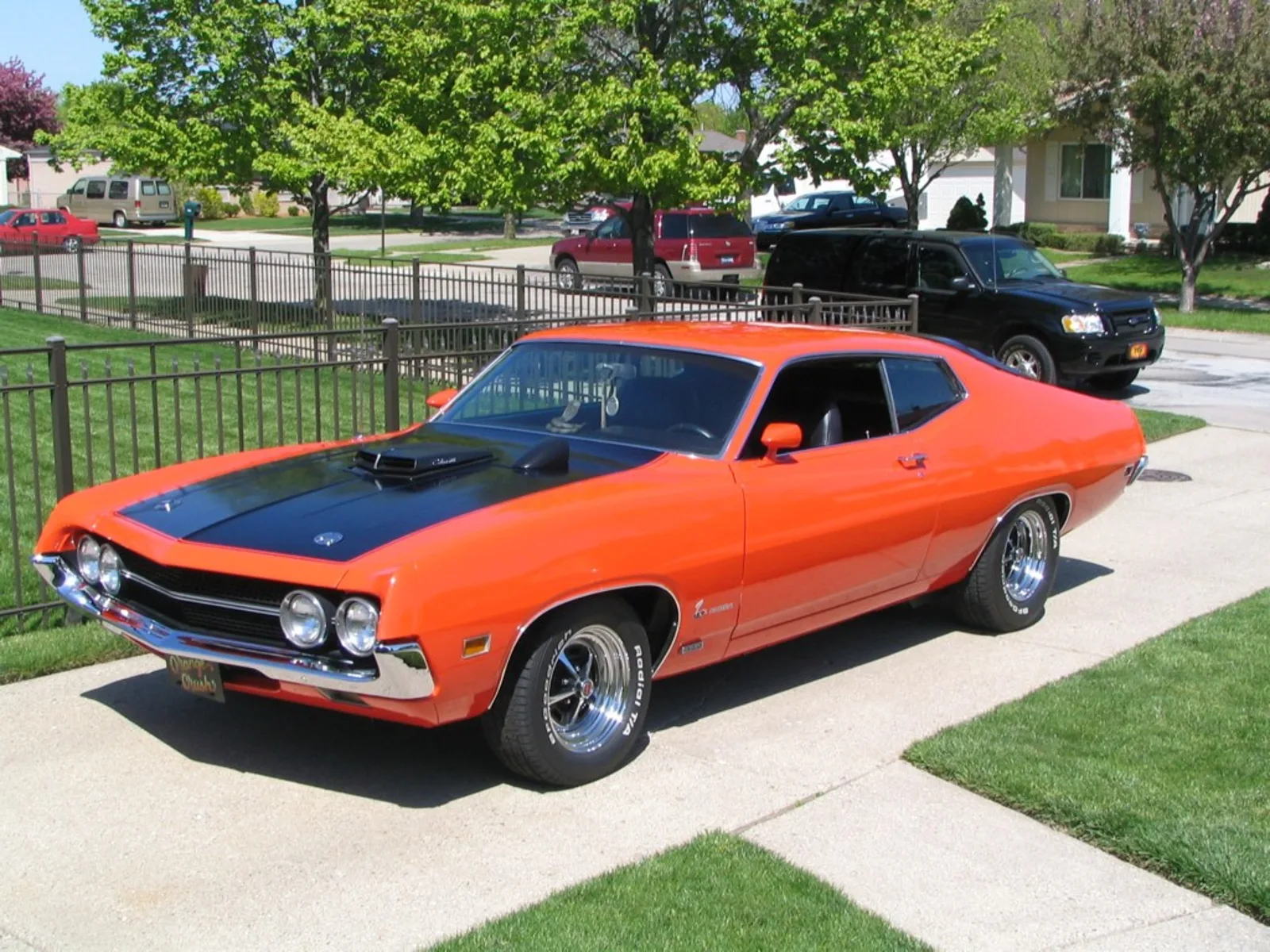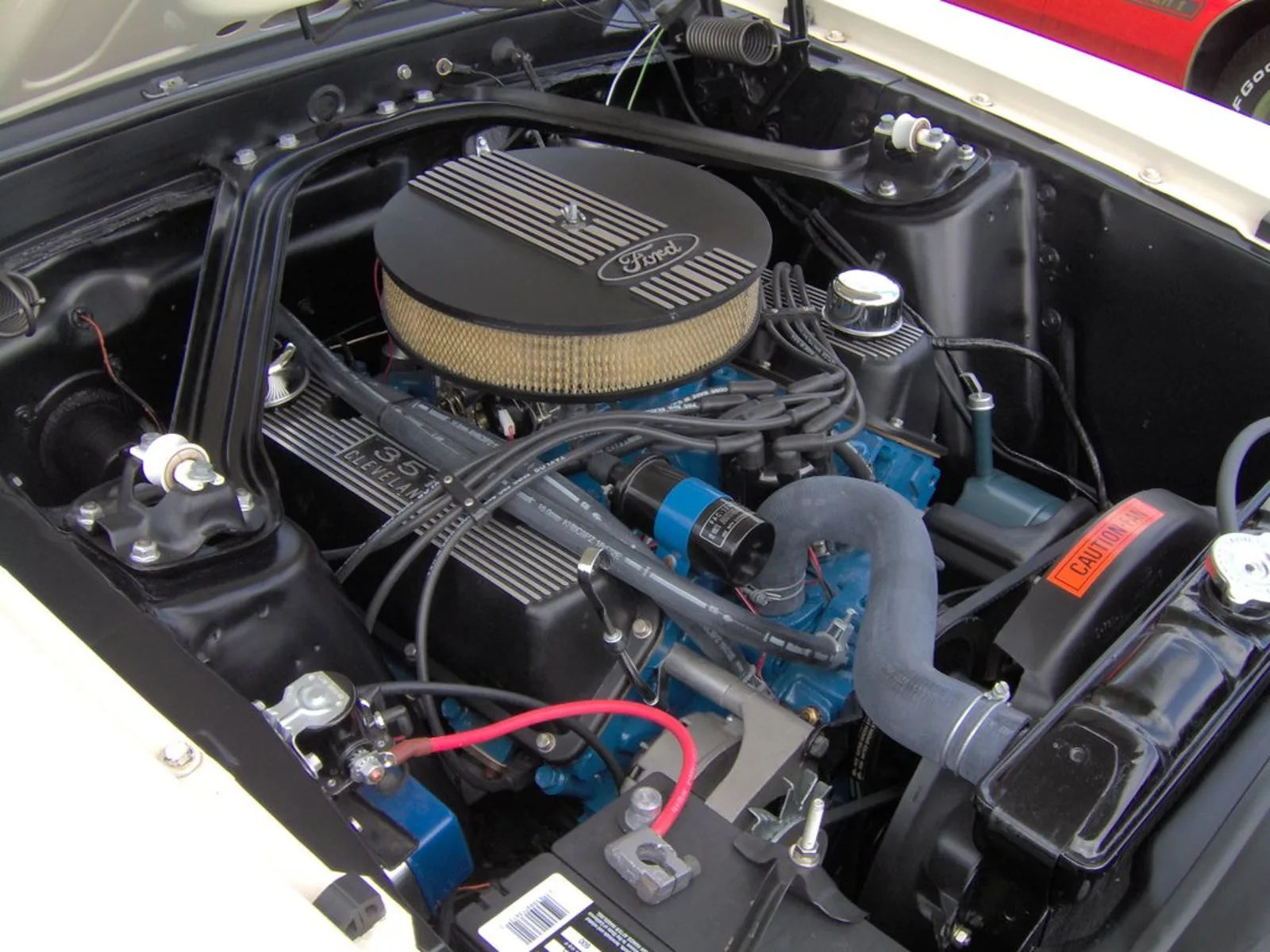
Ford's 335-series V8s, from the 351 Cleveland of 1969 to the 400 and 351M, with the Boss 351, Cobra Jet and the Geelong-built engines of Australia.
Ford's 335 engines spanned 1969 to 1982 and started life as the 351 Cleveland. Later members included the 400 and 351M, while Geelong in Australia built a parallel range of its own for another decade. The heads and blocks were the common thread across all of those versions.
Ford's 335 family of overhead valve V8s ran from 1969 to 1982 and centred on the 351 Cleveland. Its engines ranged from the race-bred Boss 351 to an economy 302 built only in Australia, and the family grew from one 351 into a set of four main displacements.
What was the 335 engine family?
The 335 series was a set of overhead valve V8s that Ford built from 1969 to 1982. The name came from a planned 335 cu in engine with room to grow, and production opened with a 351 cu in unit that later became known as the 351C.
The family replaced the FE V8 family, which had been in production from 1958 to 1978. The 335 series outlived the FE by only about half a decade before the more compact small-block family took over the mid-size market.
Ford's Windsor plant in Ontario could not keep up with demand for the new 351 Windsor small block, so demand forecasts for 1969 exceeded what Windsor could build, so a second production line was planned at the Cleveland works in Ohio. Engineers decided to upgrade the design at the same time, and the result went into production in July 1969.
A two-valve Cleveland with canted valves, a Boss that raced, and an Australian line that built over 250,000 V8s.
Where does the Cleveland name come from?
Most 335-series engines were manufactured at the Cleveland plant in Brook Park, Ohio, which is why the 351C became known as the 351 Cleveland. The complex included a grey iron foundry and two engine assembly plants, and it supplied the family for more than a decade.
The Cleveland Casting Plant closed in May 2012, as newer engines moved to aluminium blocks. The name nonetheless stayed with the family.
How did the 335 block differ from the small-block V8?
The block was short-skirted, but it was longer and heavier than the existing Ford small block. Ford borrowed ideas from the 385 big-block series, including canted valves, the valvetrain design and thin-wall casting technology, and the result was a rugged block with large main caps.
Bore spacing matched the small block at 4.38 in (111 mm), and the cylinder head bolt pattern was the same too. The block carried a roughly two-inch extension at the front that formed an integrated timing cover, sealed by a flat steel plate rather than a bulky cast cover.
The intake was dry. The radiator hose ran vertically into the block above the timing chain cover, where a small-block engine would have used a wet manifold with a horizontal hose. The 335 also took smaller 14mm spark plugs and had a square eight-bolt rocker cover, where the small block had a rounder six-bolt cover.
To save money Ford removed one of the three main oil galleries from the casting. The result had two galleries, which was adequate for street engines but short of what high-revolution racing needed without modification.
What were the 335 cylinder heads like?
The cylinder head was the most distinctive feature of the family. Every head used an intake valve and an exhaust valve for each cylinder, with large free-flowing ports and polyangle, or canted, valves. Separating the intake and exhaust valve angles allowed larger valves with shorter, less tortuous ports than the small block could manage.
Engines with 2-barrel carburettors used small-port 2V heads, while those with 4-barrel units used large-port 4V heads. The 2V ports flowed slightly better than the 4V heads at low valve lift, while the 4V heads flowed strongly at high lift and could out-flow the Chevrolet Double Hump heads.
There were also open and closed chamber designs. Closed chambers, sometimes called quench chambers, gave better low-speed swirl and needed less machining to reach high compression. Open chambers exposed the valves more, which improved low-lift airflow and emissions.
The Boss 302 used a 335-series head with a large-port closed chamber, modified to fit the 302 block. Its intake valves measured 2.23 in, reduced to 2.19 in on the 351C 4V heads.
Most 335 engines used stamped rocker arms on cast fulcrums, which made the valvetrain non-adjustable. The Boss 351 and 351 HO were the exceptions, with adjustable rocker arms on screw-in studs.
Which 351C models were built?
The H-code 351 was a low-performance engine with low compression and two-barrel carburettors, built from 1970 to 1974 on regular fuel. Its compression fell from 9.5:1 in 1970 to 8.0:1 in 1973 and 1974, and it used the small-port 2V heads throughout.
The M-code was the high-compression performance version of 1970 and 1971. It had large-port heads, closed chambers and flat-top cast aluminium pistons, along with a hydraulic camshaft. The 1970 engine peaked at 5400 rpm with 300 bhp (224 kW; 304 PS) and needed premium fuel, while the 1971 version dropped to 285 bhp.
The Boss 351 was the most potent of the 351C range and came only in the 1971 Mustang of that name. It used a four-barrel Autolite spread-bore carburettor, four-bolt main caps, a forged crankshaft and an adjustable valvetrain, and output was 330 bhp (246 kW). Ford built 1,806 of them in 1971, and the Ram Air induction was standard.
A 2010 Hot Rod project rebuilt a Boss 351 to original internal specifications but added open headers and a larger carburettor. It produced 383 hp (286 kW) gross at 6,100 rpm, The figure was a gross rating, and a net figure would be lower once accessories were fitted.
The Q-code 351 Cobra Jet ran from May 1971 to 1974. Its lower compression allowed regular fuel, and it used open-chamber 4V heads with four-bolt main caps. Its 1971 output was 280 bhp (209 kW; 284 PS), and it fell to 255 hp by 1974 in the Ranchero, Torino, Montego and Cougar.
The 351 HO of 1972 used a camshaft with less duration but more lift, flat-top pistons and open-chamber heads to meet that year's emission rules. Its compression was 9.2:1, and it made 275 hp net in the Mustang, the only car to carry it.
What made the 400 and 351M different?
The 400 arrived for 1971 to take over from the 390 V8. Ford positioned it as a larger relative of the 351C. It shared its basis with the 351 Cleveland, yet its stroke was half an inch longer, giving 402.1 cu in (6.6 L), and its deck height was raised to 10.297 in (262 mm) to suit that stroke.
The 400's connecting rods were longer than the 351C's, although the rod-to-stroke ratio stayed the same. Nearly every 400 block had the large bell housing pattern of the 385 family, with the heavy-duty C6 transmission, and its main journals were 3.00 in, matching the 351 Windsor.
The 351M replaced the 351C for the 1975 model year. It used the tall-deck 400 block with a crankshaft giving 89 mm (3.5 in) of stroke, which gave a connecting rod ratio of 1.88:1. It was only ever fitted with a two-barrel carburettor and open-chamber small-port heads.
The 400 had a well-known problem with detonation. Its deck clearance was too large because the piston compression height had been reduced to control compression, and once unleaded fuel arrived the detonation risk became serious. Ford reduced compression again for 1975, with a larger 15cc piston dish, and retarded the timing.
The 400 and 351M shared a naming problem. Some say the M stood for Modified, others for the Michigan Casting Center where production began, and Ford's own catalogues called the engine a Modified. The 400 is often mislabelled as a 400M, even though it was the design base for the 351M.
Blocks made at the Michigan Casting Center before March 2, 1977, also developed water-jacket cracks above the lifter bores. The cause was possibly a coring problem, although others regarded it as normal freeze cracking.
What happened to the 335 family in Australia?
Ford of Australia imported about 17,000 302 and 351 Windsor V8s in 1969. The 351 Cleveland replaced the Windsor for 1970, and local production began at Geelong in November 1971, with both 2V and 4V versions along with a short-stroke 302 cu in engine.
In 1973 Ford of the United States announced that the 351 Cleveland would end after 1974, so Ford of Australia ordered about 60,000 engine blocks. Geelong began casting its own blocks in 1975 and continued until December 1981, and the plant built more than 250,000 Cleveland V8s in total.
The last Australian car to receive a Cleveland was a Fairmont Ghia built on 25 November 1982, and the last Bronco left the line in August 1985. Some 12,020 of the engines went into commercial vehicles.
The 302 Cleveland was an economy engine built only in Australia. It used the 351C block with a shorter 3.0 in (76 mm) crankshaft and a closed-chamber head with small ports, and its combustion volume was the smallest of any 335-series head.
De Tomaso used Australian-built 351s in the Pantera, Longchamp and Deauville, and after tuning in Switzerland these engines reached 360 PS (265 kW; 355 hp). Australian racers also used four-bolt 5.8 litre engines until the end of 1984.
Why did the 335 family end?
The 400 and 351M were last offered in Ford passenger cars in 1979, and they remained in light trucks until 1982. Reduced demand for large engines under tightening fuel economy rules ended the production line in Cleveland, and by 1980 mid-sized V8s had almost disappeared from Ford option lists.
Second-generation emissions controls were also hard to fit. Thermactor air was injected into the exhaust ports of the M-block, which left no room for the oxygen sensor that the new systems needed upstream of the injection point.
Only the full-size Panther platform cars kept a larger V8, and the 351 Windsor filled that need. The 335 family had no further place in the range.
What were the main 335 specifications?
| Engine | Displacement | Stroke and bore | Output |
|---|---|---|---|
| 351C (1970) | 351 cu in (5.8 L) | Stroke 3.5 in, bore not recorded | Peak 5400 rpm, 300 bhp (224 kW; 304 PS), M-code |
| Boss 351 (1971) | 351 cu in (5.8 L) | Four-bolt main caps | 330 bhp (246 kW) |
| Cobra Jet (1971) | 351 cu in (5.8 L) | Four-bolt main caps | 280 bhp (209 kW; 284 PS) |
| 400 (1971) | 402.1 cu in (6.6 L) | Bore 4.0 in, stroke 4.0 in | Not recorded in this table |
| 351M (1975) | 351 cu in (5.8 L) | Stroke 3.5 in | Two-barrel carburettor only |
| 302 Cleveland (Australia) | 301.6 cu in (4.9 L) | Stroke 3.0 in | Economy engine, Australia only |