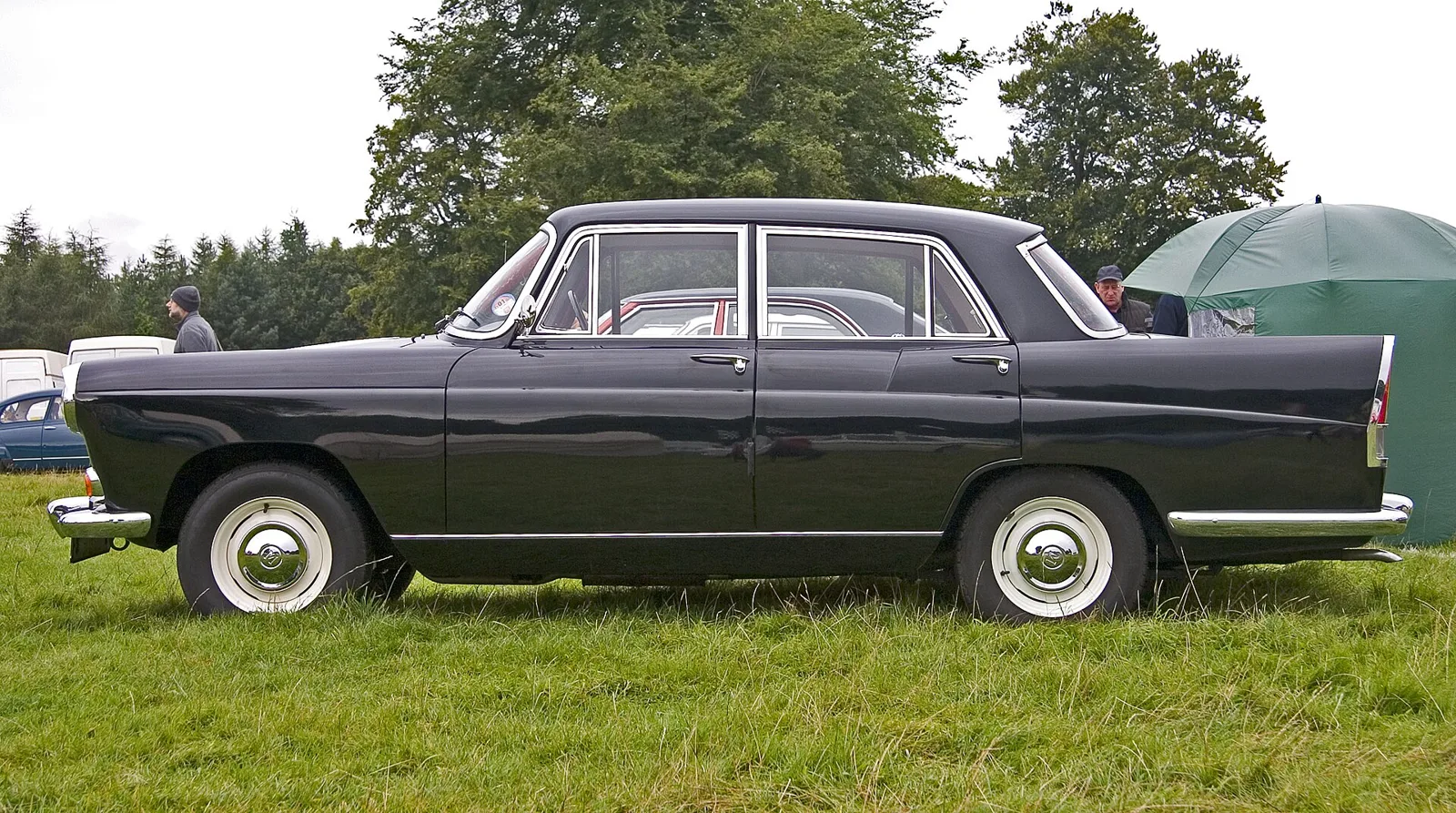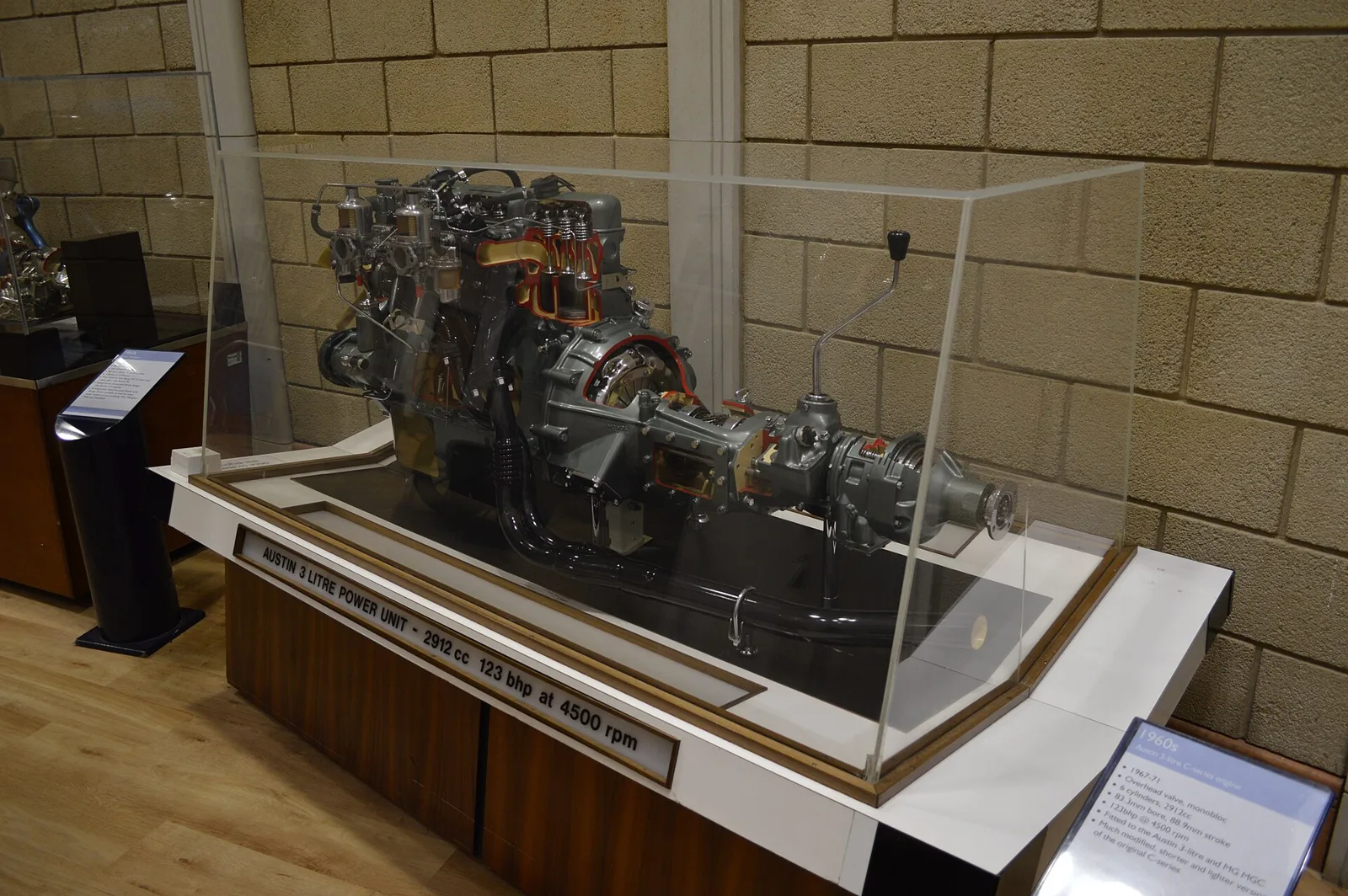
A pushrod straight-six from Coventry that grew from 2.6 litres to 2.9 litres, powered Austin, Morris, Wolseley and Riley cars and ended in 1971.
The BMC C-Series was a straight-six engine built from 1954 to 1971, designed by Morris Engines in Coventry. It used pushrod overhead valves and grew from 2.6 litres to 2.9 litres, powering Austin, Morris, Wolseley and Riley saloons along with sports cars.
The BMC C-Series was a pushrod straight-six that BMC built from 1954 to 1971. Designed at the Morris Engines drawing office in Coventry, it grew from 2.6 litres (2,639 cc) to 2.9 litres (2,912 cc) and powered a wide range of Austin, Morris, Wolseley and Riley saloons, plus the Austin-Healey 3000 and the MGC sports car. Its successor, the E-Series, arrived in 1972.
Where did the C-Series come from?
The C-Series grew out of an earlier Morris and Wolseley 2.2-litre straight-six with an overhead camshaft, which ran from 1948 to 1954. BMC needed a conventional, serviceable engine to replace prewar engines of 150 cu in and the Austin BS1 four-cylinder. Its brief put reliability and long service life ahead of outright performance.
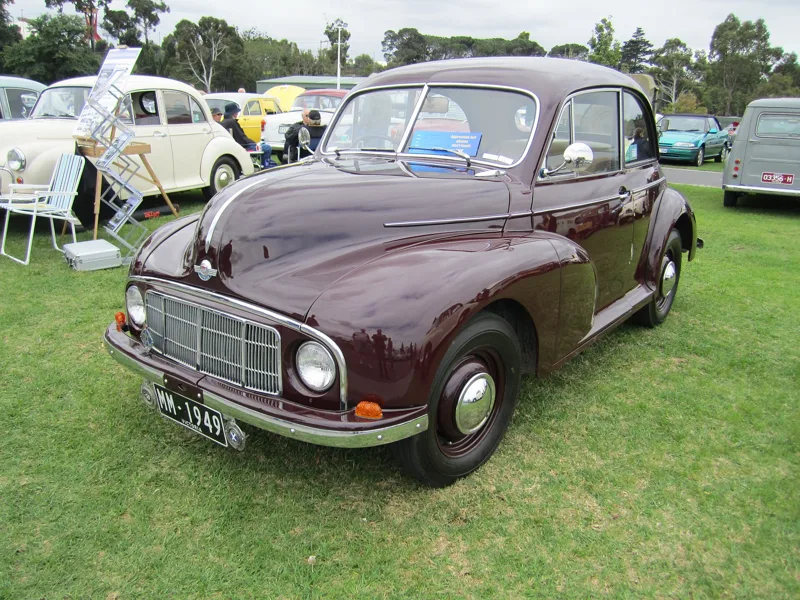
Morris Engines produced the design, so its layout differed from the Austin-designed A-Series and B-Series. In essence the C-Series was an enlarged overhead-valve version of the 2.2 L unit that powered the Morris Six MS and Wolseley 6/80. The Austin BS1 it was meant to replace had started life as a late-wartime Rix and Bareham design.
A reliable, conventional six that was never designed to be fast, and grew into a sports engine only in competition.
How did the C-Series differ from the A-Series and B-Series?
The camshaft sat on the right-hand side of the block when viewed from inside the car, whereas the Austin engines had theirs on the left. The cast iron block and head carried a heart-shaped combustion chamber by Harry Weslake, and the cylinders were pushrod-operated overhead valves.
Timing and oiling were also distinctive. A hydraulic tensioner kept the timing chain taut, and skew-cut gears on the camshaft drove both the oil pump and the distributor. Most contemporaries drove those two items from one shaft, so the separate gears reduced load and wear and helped the ignition timing stay in specification over time.
Why did the C-Series struggle to make power?
The intake gallery was cast into the cylinder head, with the carburettors bolted directly to it. That made the engine easy to build, allowed different carburettor arrangements to be accommodated and eliminated carburettor icing. The restrictive gallery and the four-bearing crankshaft, however, limited maximum power and speed.
Austin's engineers blamed the poor cylinder head design for the weak output. In 1957 a twelve-port head with a conventional intake manifold added 15 bhp (11 kW) to the Austin-Healey, a gain of fifteen per cent. Carburettors were revised in 1959, Harry Weslake reportedly modified the head in 1960, and in 1961 the inlet tract was improved, exhaust timing adjusted and twin exhausts added.
What were the 2.6 and 2.9 litre versions?
The 2.6-litre engine was announced on 18 October 1954, and the 2.9-litre four-bearing version followed on 17 July 1959. Output depended on the application, running from 85 bhp in the Austin A90 Westminster to between 136 and 150 bhp in the Austin-Healey 3000. The table sets out the main versions.
| Version | Capacity | Application and years | Output |
|---|---|---|---|
| 2.6 L, four-bearing | 2,639 cc | Austin A90 Westminster, 1954 to 1959 | 85 bhp (63 kW) |
| 2.6 L, four-bearing | 2,639 cc | Austin-Healey 100-6, 1956 to 1959 | 102 bhp (76 kW) rising to 117 bhp (87 kW) |
| 2.6 L, four-bearing | 2,639 cc | Riley Two-Point-Six, 1958 to 1959 | 95 bhp (71 kW) rising to 101 bhp (75 kW) |
| 2.9 L, four-bearing | 2,912 cc | Austin A110 Westminster, 1961 to 1968 | 120 bhp (89 kW) |
| 2.9 L, four-bearing | 2,912 cc | Austin-Healey 3000, 1959 to 1967 | 136 to 150 bhp (101 to 112 kW) |
| 2.9 L, seven-bearing | 2,912 cc | Austin 3-Litre, 1967 to 1971 | 126 PS (93 kW; 125 hp) |
| 2.9 L, seven-bearing | 2,912 cc | MGC, 1967 to 1970 | 147 PS (108 kW; 145 hp) |
Which saloons used the 2.6-litre engine?
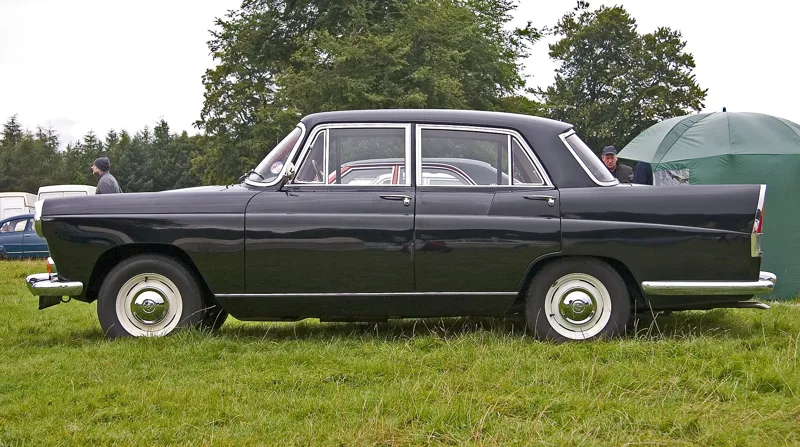
The 2.6-litre unit went into a broad spread of saloons. The Austin A95 and A105 Westminsters ran it from 1956 to 1959 with 91 bhp and 102 bhp respectively, while the Morris Isis Series I produced 86 bhp (64 kW) from 1955 to 1956. The Series II raised that to 90 bhp (67 kW) between 1956 and 1958.
Wolseley's 6/90 offered 95 bhp (71 kW) from 1954 to 1959, and the Morris Marshal used the engine at 63 kW (84 bhp) between 1957 and 1959. The Riley Two-Point-Six, which ran from 1958 to 1959, rose from 95 bhp (71 kW) to 101 bhp (75 kW) in that time.
What changed in the seven-bearing revision?
The 2.9-litre engine was redesigned with seven main bearings and came out noticeably shorter than the original. BMC had aimed for a 30 per cent weight cut to 175 lb (79 kg) and around 200 bhp in competition tune. The result was only 45 lb (20 kg) lighter, and output settled at 145 bhp (108 kW; 147 PS).
The Mark 2 is easy to spot from its rocker cover, which is only around half the width of the cylinder head. The original engine had a nearly full-width cover. The extra bearings added internal friction with the same carburation and tuning carried over, so output stayed below the old Austin-Healey 3000 engine.
Which cars received the seven-bearing engine?
By the time the revised engine arrived, the Austin-Healey 3000 had been dropped, and the MGC took its place in the sports car range. The Austin 3-Litre used the seven-bearing unit from 1967 to 1971 with 126 PS (93 kW; 125 hp), while the MGC offered 147 PS (108 kW; 145 hp) from 1967 to 1970.
How did the MGC GTS racing engines differ?
Six MGC GTS racing cars were built for the 12 Hours of Sebring in 1968 and 1969. The first car had an early aluminium block, which proved troublesome, so the cars settled on an iron block with an alloy head. That head used larger valves from the Ford Essex V6, revised porting and a redesigned exhaust system, along with triple twin-choke Weber carburettors.
The racing engines made an easy and reliable 200 bhp (149 kW; 203 PS). The gains were not adopted for production units, and the poor sales of the MGC and Austin 3-Litre meant that road cars did not benefit from them.
Why did production of the C-Series end?
The C-Series was an all-iron overhead-valve design, and it was becoming outdated in construction and in power-to-weight ratio. Poor sales of the last two cars it powered, the MGC and the Austin 3-Litre, did not help. After a short gap BMC replaced it with the E-Series straight-six engines of 2.2 and 2.6 litres, introduced in 1972.
Which applications used the 2.9 litre engine?
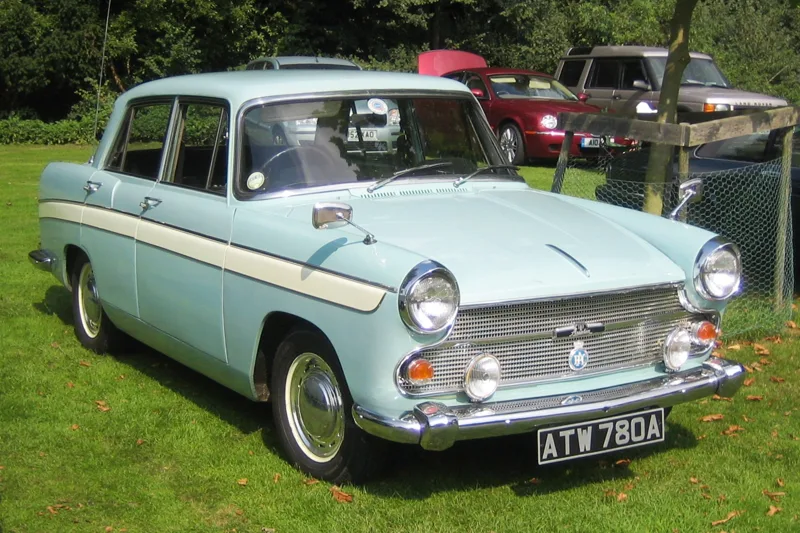
The 2.9-litre four-bearing engine was announced on 17 July 1959 and went into a range of saloons and sports cars. The Austin A99 Westminster offered 103 to 108 bhp (77 to 81 kW) between 1959 and 1961, and the Vanden Plas Princess 3-Litre used the same output in its first two years. The Austin-Healey 3000 was the sports car version, producing 136 to 150 bhp (101 to 112 kW) from 1959 to 1967.
By 1961 the Austin A110 Westminster offered 120 bhp (89 kW), which it kept until 1968, and the Vanden Plas Princess 3-Litre followed with the same 120 bhp from 1961 to 1964. Wolseley's 6/99 made 102 bhp net and 112 bhp gross between 1959 and 1961, and its 6/110 successor was rated at 120 bhp from 1961 to 1968. A low-compression export version of the 2.9 produced 115 bhp (86 kW) for certain markets.