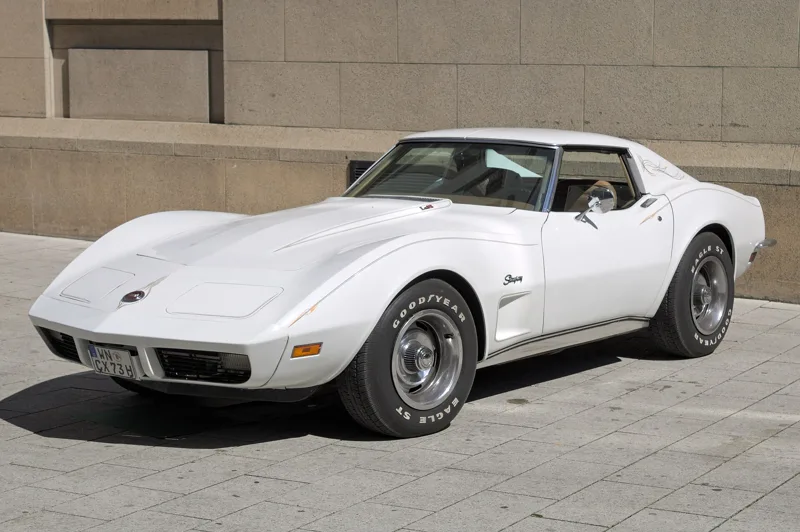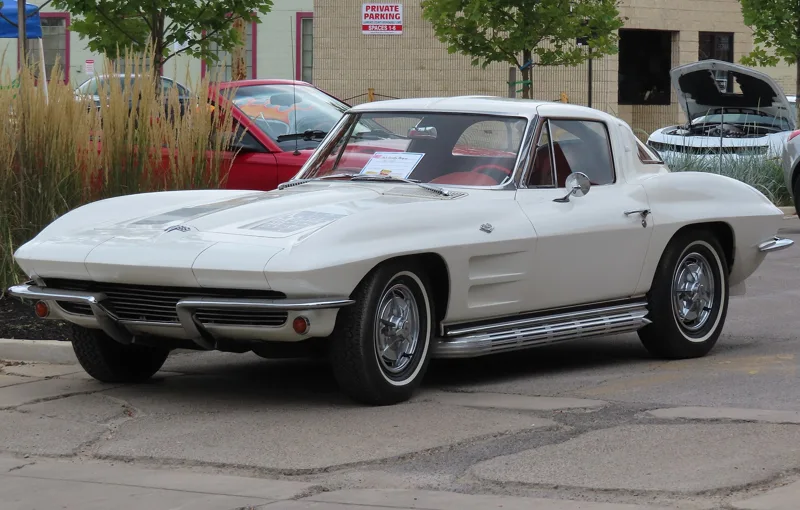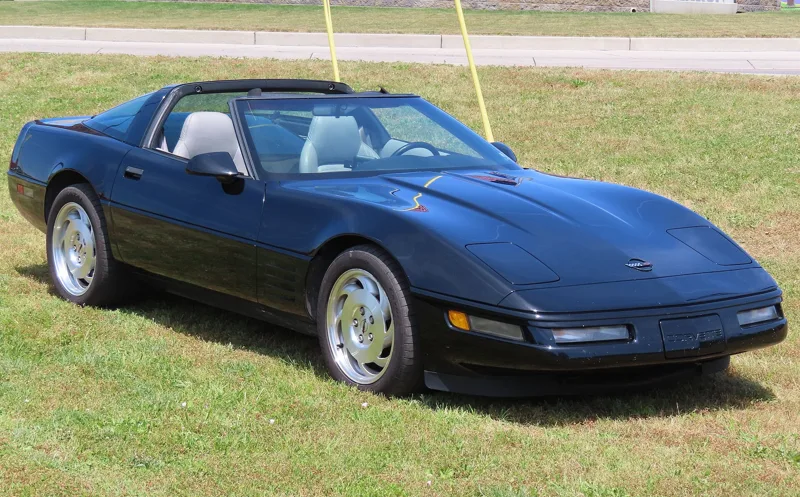
A run of experimental Chevrolet cars from 1959 to 1997, from a rear-engined handling test rig to the mule that prepared the C5 Corvette.
The Chevrolet Engineering Research Vehicle was a series of experimental Chevrolet cars built from 1959 to 1997. The CERV I was a rear-engined handling research car with a 350 hp V8, and the CERV IV-B tested ideas for the C5 Corvette.
The Chevrolet Engineering Research Vehicle, known as the CERV, is a series of experimental Chevrolet cars that ran from the late 1950s to the late 1990s. The first, CERV I, was a rear-engined handling test rig with a 350 hp V8. Later cars explored four-wheel drive, four-wheel steering and electronics, and the final car, CERV IV-B, was built as a mule for the C5 Corvette.
The series is one of the most unusual threads in Chevrolet's history. Its cars were built for engineers rather than showrooms, and at least one was developed in secret. The sections below follow each car, the technology it carried and the parts of the Corvette that it influenced.
What does CERV stand for and why did Chevrolet build it?
CERV stands for Chevrolet Engineering Research Vehicle, although some sources give the first word as Experimental. The programme began when Zora Arkus-Duntov, a Chevrolet staff engineer, designer and race car driver, started work on the CERV I in 1959. Its purpose was to give engineers a platform for studying ride and handling under amplified conditions.
The CERV I was unveiled to the public at Riverside International Raceway in November 1960, and it was built at the Chevrolet Engineering Center in Warren, Michigan. Work on the CERV II began in 1963 and was completed in 1964.
A research car built to make handling visible, and a test mule that paved the way for the C5 Corvette.
What was the CERV I built to do?
The CERV I was designed as a research tool for Chevrolet's continuous effort to understand ride and handling behaviour in realistic conditions. Its concept and configuration followed from that purpose. To make small handling effects visible, the car had to be far more capable than a normal passenger car, so a high power-to-weight ratio was essential.
The body was streamlined and abbreviated, enclosing the engine and transaxle while leaving an open cockpit. Engineers could see all four wheels in contact with the road, which was the point of the design. The driver sat well forward on the centreline, the only person in the car, for the best possible view of the tyres.
The car had a wheelbase of 96 in (2,438 mm) and weighed about 1,600 lb (730 kg), ready to run. Its chassis was a stiff chrome-molybdenum steel tube frame, weighing about 125 lb (57 kg). The glass fibre body weighed about 80 lb (36 kg) and was thinner than the Corvette body. The wheels were left fully exposed so that engineers could watch tyre-to-road contact.
How did the CERV I engine produce 350 hp?
Power came from a specially developed, lightweight version of the Chevrolet 283 cubic-inch V8, which made 350 hp (261 kW) and weighed only 350 lb (160 kg). That worked out to about one pound per horsepower, a level of specific output that piston engines rarely reached even in highly developed aircraft.
The weight came down through aluminium for the cylinder block, cylinder heads, water pump, starter body and flywheel. The block had no bore liners, so the pistons ran directly on treated aluminium bores. Magnesium went into the clutch housing and the fuel injection manifold. In total the metal choices saved more than 175 lb (79 kg) compared with a standard engine and clutch.
Several details helped the engine make its power. The fuel injection ram tubes had a larger cross-section and were longer than the production parts. Exhaust pipes were tuned in length, joined into large collectors and had no mufflers. There was no cooling fan, and the smaller crankshaft pulley reduced water pump speed by 30%. A small generator and a lightweight aircraft-style battery completed the electrical side.
Cooling used an aluminium radiator mounted ahead of the driver, with two oil cooler radiators, one on each side of the main radiator. Power passed through a lightweight flywheel and clutch to a Corvette-type four-speed transmission. The final drive could be changed to new ratios quickly, so the car could be tailored to a new environment, and four universal-jointed axle shafts carried the power to the wheels.
The engine's afterlife is also worth noting. In 1972 Hot Rod magazine tested a prototype Chevrolet Vega with an all-aluminium V8 bored out to 302 cu in (4.9 L). That engine descended from one of the 283 units used in CERV I development in the late 1950s. With a Turbo Hydramatic, the Vega prototype ran quarter-mile times under 14 seconds.
How did the CERV I handle and stop?
The rear suspension allowed each wheel to move independently. Two links controlled vertical movement, with the upper link doubling as the axle shaft, and a rubber-bushed rod formed the lower link. A third link carried driving and braking thrust. Variable-rate coil springs with double-acting shock absorbers sat at each rear wheel, and adjustments allowed camber and toe-in to be varied for engineering studies.
The front suspension used high roll-centre geometry and similar coil springs and shock absorbers. The independent rear design became the basis of the 1963 Corvette Sting Ray suspension, which is the most direct production legacy of the CERV I. Two rubber fuel cells held 20 gallons in total and sat either side of the car near the centre of gravity, so the fuel load did not change weight distribution.
Braking used parts similar to the Corvette HD type, with sintered iron linings and cooled drums. Brake effort was split 57% front and 43% rear, and the rear brakes were mounted inboard next to the differential. A two-piston master cylinder worked in series, so if either the front or the rear circuit failed, the other could still stop the car.
The steering used a 12:1 recirculating ball gear with a balanced relay linkage and an overall ratio of 13.5:1. Wheels were cast magnesium with knock-off hubs for quick changes, available in 15, 16, 17 and 18 inch diameters.
What did the CERV II add?
Zora Arkus-Duntov began work on the CERV II in 1963, and it was completed in 1964. The initial plan called for six machines, split between three competition cars and three spares. Larry Shinoda and Tony Lapine styled the body, which sat on a monocoque chassis rather than a frame.
Power came from a 377 cubic-inch all-aluminium SOHC V8 with Hilborn injection, rated at 500 hp (370 kW). Test results suggested a top speed of 210 mph (338 km/h) and a 0-60 mph time of 2.8 to 3.0 seconds, although Victory By Design put the top speed at 200 mph (322 km/h). The transmission was a two-speed unit on each axle, with torque transferable between the front and rear axles.
In 1970 the CERV II was used to test a tire with a ZL-1 engine. Both the CERV I and the CERV II ended up at the Briggs Cunningham Museum in Costa Mesa, California. The 1964 CERV II chassis number P-3910 later sold at RM New York in 2013 for $1,000,000, or $1,100,000 after the buyer's premium.
What did the CERV III show about the future?
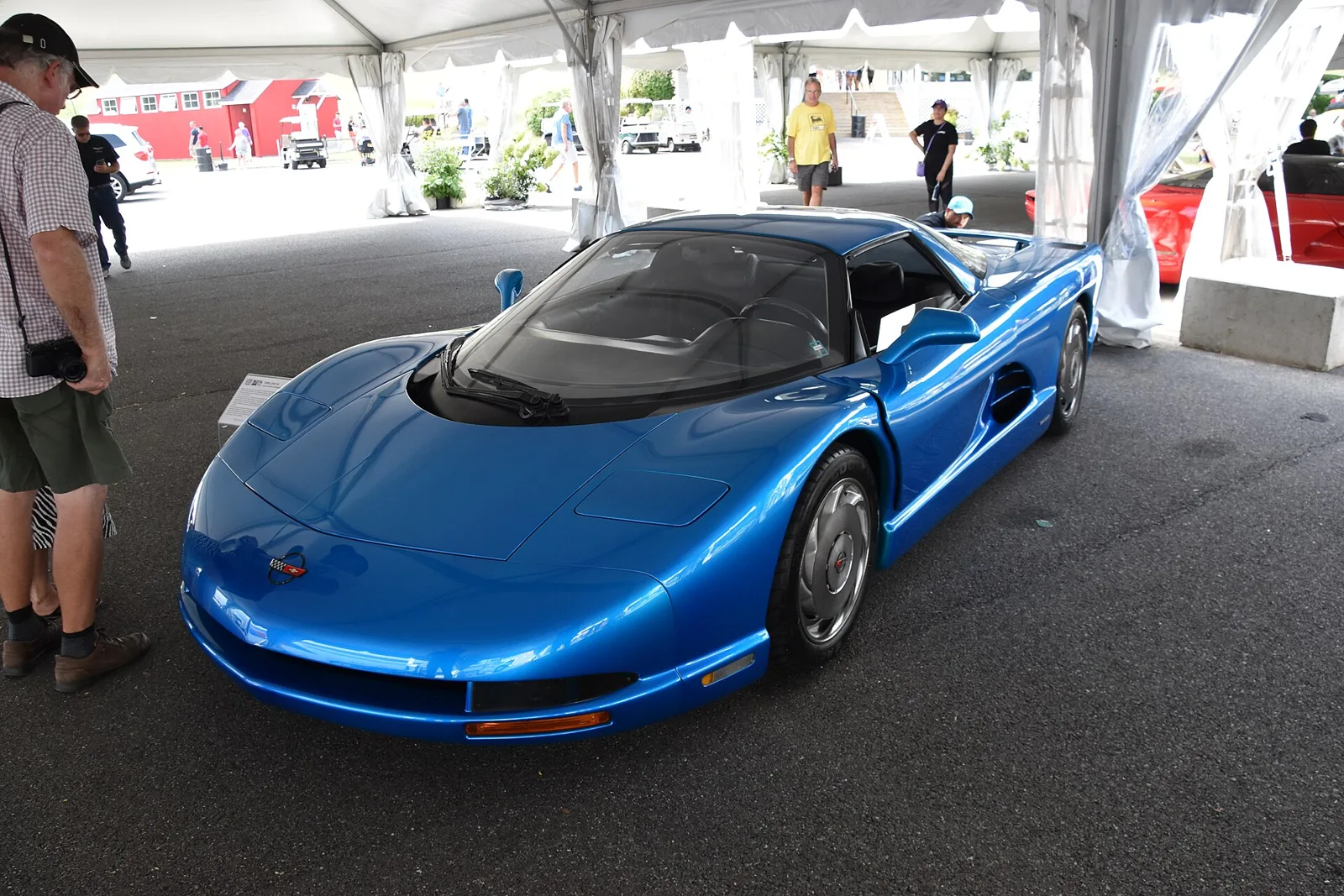
The CERV III, or Corporate Engineering Research Vehicle III, first appeared as the Corvette Indy prototype at the Detroit Automobile Show in January 1986. It had four-wheel drive, four-wheel steering and CRT cockpit screens, and its styling came from Jerry Palmer of Chevrolet's III studio.
The CERV III made its debut in January 1990 at the Detroit show. Its mid-mounted 5.7-litre 32-valve DOHC LT5 V8 had twin turbochargers and internal modifications, producing 650 hp (485 kW) and 655 lb ft (888 N m) of torque. The top speed was quoted at 225 mph (362 km/h). The carbon fibre body had a fibreglass-finish coating, and the estimated price was $300k-400k.
The car carried a long list of advanced systems for its time. These included computer-controlled active suspension, ABS, traction control, a six-speed automatic, all-wheel drive, four-wheel steering and a fully multiplexed electrical architecture. CERV III also appeared as a playable car in the racing game Test Drive III, where it was named Chevrolet Cerv III.
The CERV III had its roots in 1985, when Chevrolet chief engineer Don Runkle and Tony Rudd of Lotus discussed a new show car that would demonstrate their engineering expertise. That discussion became the CERV III, which kept the four-wheel systems and electronics that made the car a showcase.
Why was the CERV IV built in secret?
In December 1992 the Corvette group at General Motors quietly hired TDM, Inc. to build a prototype for the 1997 model. The vehicle was officially named CERV-4, short for Corvette Engineering Research Vehicle. The Chevrolet division paid for it. General Motors management was not told about the project, because the Corvette group feared it might be cancelled.
Corvette chief engineer Dave Hill unveiled the CERV IV on 3 May 1993 at the GM Technical Center in Warren. The car cost roughly US$1.2 million to build. It served as a test vehicle for the 1997 Corvette.
What did the CERV IV-B test for the C5 Corvette?
The CERV IV-B was a 1997 test mule for the upcoming Corvette C5. It carried a 5.7L LT-1 V8 with a six-speed manual transmission, four-wheel disc brakes and front 255/45ZR17 and rear 285/40ZR17 tyres on BBS basket wheels. It had side curtains instead of side window glass and a modified production interior.
The car sold at the 2009 Barrett-Jackson Palm Beach auction for $34000 before buyer's premium. It is now on display at the MY Garage Museum in Effingham, Illinois, owned by Michael and Blake Yager. It is the last car in the CERV series and the one most directly tied to a production Corvette.
| Car | Shown | Engine | Purpose |
|---|---|---|---|
| CERV I | November 1960, Riverside | Lightweight 283 cu in V8, 350 hp (261 kW) | Ride and handling research |
| CERV II | 1964 | 377 cu in SOHC V8, 500 hp (370 kW) | Competition car project, six cars planned |
| CERV III | January 1990, Detroit | 5.7-litre LT5 twin-turbo V8, 650 hp (485 kW) | Four-wheel drive and electronics showcase |
| CERV IV | 3 May 1993 | Corvette test car for the 1997 model | Engineering test for the C5 Corvette |
| CERV IV-B | 1997 | 5.7L LT-1 V8 | Test mule for the C5 Corvette |
How did the CERV programme influence Corvette?
The most direct influence was the rear suspension, which became the basis for the 1963 Corvette Sting Ray. The CERV IV programme also prepared the way for the C5 generation, and the CERV IV-B remains the clearest link between the experimental series and a production car. The CERV III's four-wheel drive, four-wheel steering and multiplexed electrics were tested in a public show car rather than a Corvette.
The CERV cars also show a pattern in Chevrolet's engineering history. The series began with a handling research tool in 1960 and ended with a test mule for a production car in 1997.