Chris Paine's documentary on the General Motors EV1, the suspects it names, the carmakers' reply and why the film still shapes the electric car debate.
Chris Paine's 2006 documentary asks who ended the battery electric car. It centres on General Motors' EV1 of the mid-1990s and weighs the parts played by automakers, oil firms, governments, batteries and consumers. The film reached cinemas in June 2006 after a Sundance premiere.
Who Killed the Electric Car? is a 2006 documentary by Chris Paine about the General Motors EV1, a battery electric car that was leased to drivers in the 1990s. It asks who was responsible for the car's disappearance and names a series of suspects, from carmakers to oil companies. The film's answers are contested, and the company it blames has answered back in public.
What is Who Killed the Electric Car? about?
The film examines the creation, limited sales and destruction of the battery electric car in the United States, with a focus on General Motors' EV1 from the mid-1990s. It looks at the roles of automakers, the oil industry, governments, batteries and consumers, and it presents the story as a case of a promising technology being starved of support.
Premiering at the 2006 Sundance Film Festival, the documentary was released in cinemas by Sony Pictures Classics on June 28, 2006. A follow-up, Revenge of the Electric Car, arrived in 2011 and carried the story forward.
Paine wrote and directed the film, and Jessie Deeter produced it. Michael Brook composed the score. The interviewees range from actors who drove the car, such as Ed Begley Jr., Mel Gibson and Tom Hanks, to public figures including Ralph Nader and James Woolsey, and to the engineers who built and defended the EV1.
A documentary that turns one leased car into a case study of suspects, from carmakers to the oil industry.
What was the General Motors EV1?
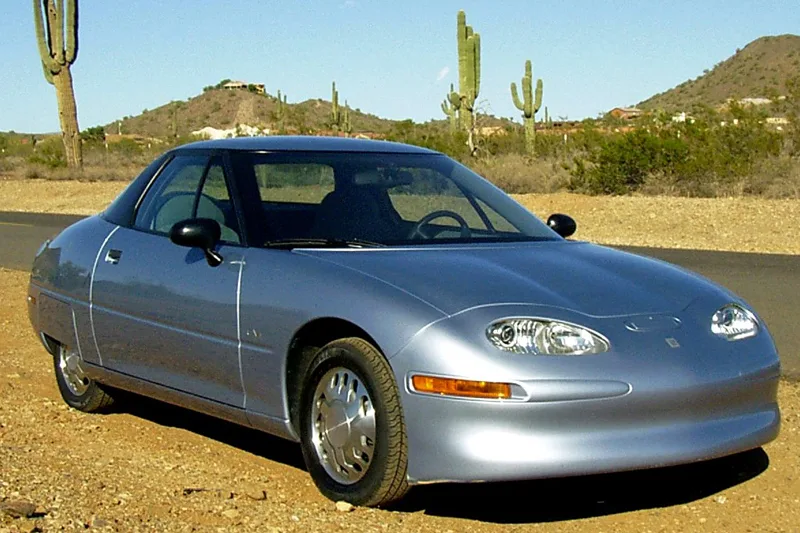
The EV1 was a battery electric car leased to drivers in the mid-1990s, mainly in Southern California. Its first lead-acid battery pack gave a range of ninety-seven kilometres (60 miles), while later models with more advanced batteries offered one hundred and sixty-one kilometres (100 miles) or more. GM never offered the car for outright sale, only leases.
The film presents the EV1 as a serious engineering achievement, and it features drivers who were devoted to their cars. It also covers the limits that GM later cited, namely range and price.
GM spokesman Dave Barthmuss later argued that consumers were not interested because of the car's range and high price.
Why did California require electric cars?
The California Air Resources Board passed a zero-emissions vehicle mandate in 1990. It required seven major automakers to offer electric vehicles if they wanted to keep selling gasoline cars in the state. The rule produced nearly 5000 electric cars from six manufacturers, many of which were later destroyed or donated.
The six makers were Chrysler, Ford, GM, Honda, Nissan and Toyota. Each of them designed and made electric cars for the market.
The mandate was eventually reversed after relentless pressure and lawsuits from the carmakers. The film also points to continual lobbying from the oil industry, orchestrated hype around a future hydrogen car, and the final shift in federal policy under the George W. Bush administration.
What happened to the EV1 fleet?
GM ended the programme and took its EV1s back rather than selling them. Almost all of the remaining cars were found crushed, while a few went to museums and universities. An offer of $1.9 million was made for the remaining 78 cars in Burbank, California, but GM never responded to the drivers' wider offer to pay the residual lease value.
The film shows activists trying to stop the carriers that were taking the last EV1s away. Several of them, including the actresses Alexandra Paul and Colette Divine, were arrested during the protest.
Late in the documentary, car #99, a deactivated EV1, turns up in a garage at the Petersen Automotive Museum. Chelsea Sexton, a former EV sales representative, is invited to visit it. The film also covers the failed attempts by enthusiasts to save the surviving vehicles.
Who does the film blame?
The film is organised around a set of suspects: American consumers, batteries, oil companies, car companies, the US government, the California Air Resources Board and the hydrogen fuel cell. Batteries are the only suspect the film does not blame, while every other suspect is treated as a cause of the EV1's end.
Wally Rippel, an engineer in the film, argues that the oil companies feared losing their monopoly on transport fuel over the coming decades. The auto companies, he suggests, feared short-term costs and long-term revenue loss, since electric cars need no tuneups or oil changes.
GM disagrees with that reading. Its spokesman argued that the cause was a lack of consumer interest, linked to the car's range and high price. The film sets these explanations side by side.
The suspects at a glance
| Suspect | Film's verdict | Main evidence in the film |
|---|---|---|
| American consumers | Guilty | Low interest, SUV popularity and cheap petrol reduced demand |
| Batteries | Not guilty | Later batteries offered a range of at least 100 miles |
| Oil companies | Guilty | Lobbying, front groups and advertising against public charging |
| Car companies | Guilty | Lease-only sales, doomsday advertising and cancelled programmes |
| US government | Guilty | Joined the auto-industry suit against California in 2002 |
| California Air Resources Board | Guilty | Scaled back the mandate in 2003 after more than 12 years |
| Hydrogen fuel cell | Guilty | Presented as a distraction from battery electric cars |
Were batteries really to blame?
No. The film treats batteries as the one suspect it clears. It argues that improved battery chemistry could have given the EV1 a far longer range than the original ninety-seven kilometres (60 miles).
The film argues that the first EV1 battery was not a serious limit for most drivers. Average daily driving of forty-eight kilometres (30 miles) or less means that for 90% of Americans, electric cars would have worked as a daily commute car or a second car.
Later models used nickel-metal-hydride batteries, and some rivals offered lithium-ion packs, with ranges that cleared 100 miles, which is more than the first model could manage. The film says the battery supplier Ovonics was reportedly held back from announcing improved batteries with double the range, because that news might have convinced regulators that batteries were getting better.
Alan Cocconi, the engineer, argues that laptop lithium-ion cells could have pushed the EV1 to four hundred and eighty-three kilometres (300 miles) on a charge. He makes the point in front of his T-Zero prototype, which inspired the Tesla Roadster that reached the market two years after the film.
Chevron later acquired patents and a controlling stake in Ovonics. The film suggests that the stated aim was to keep nickel-metal-hydride batteries out of non-hybrid electric cars.
How does the film treat the oil industry?
The film accuses the oil industry of using its lobbying power to oppose public charging stations and of backing front groups. It says the Western States Petroleum Association funded campaigns against utility efforts to build charging stations, and that oil companies advertised against electric cars in national publications.
The astroturf group Californians Against Utility Abuse is central to this account. Its members presented themselves as consumers, but the film says they were in fact working for oil-industry interests.
Mobil and other oil companies, the film says, advertised directly against electric cars, even when those cars had little to do with their core business. The film also cites overseas suppliers' manipulation of oil prices during the 1980s as a case of the industry blocking rivals.
How did the carmakers respond?
The film holds GM mainly responsible. It describes GM running both positive and doomsday-style advertising, leasing the cars rather than selling them, and ending the programme in favour of more profitable trucks and the Hummer. GM replied in a 2006 blog post that argued the EV1 was never a viable commercial success.
In its earlier days GM ran Super Bowl commercials for the EV1, produced by Industrial Light and Magic. Later the advertising took on a doomsday tone, and the company's customer surveys highlighted drawbacks that the film says the EV1 did not actually have.
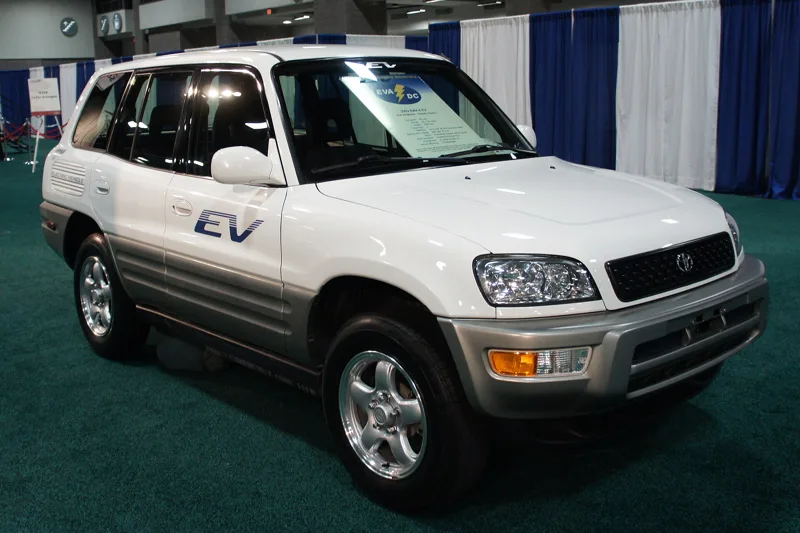
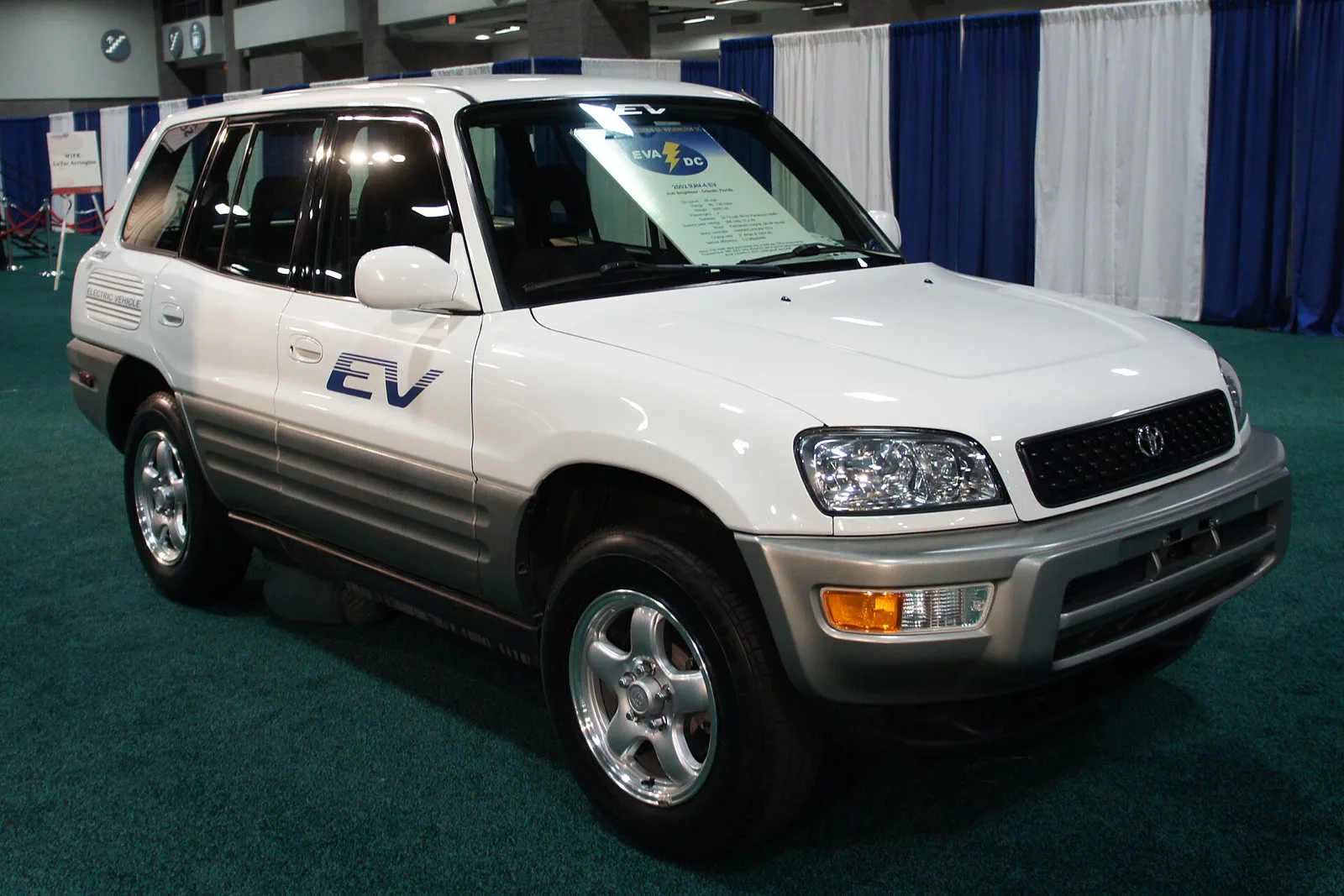
The film also covers other cancellations. The Toyota RAV4 EV and the Honda EV Plus were both cancelled, and the crushing of the Honda EV Plus only attracted attention after it appeared by accident on a PBS programme, California's Gold.
Tom Everhart, a retired GM board member and physicist, says GM dropped the EV1 to focus on more immediately profitable products such as the Hummer and truck brands. Ralph Nader, in a brief appearance, says carmakers usually respond only to regulation, whether the issue is seat belts, airbags or fuel economy.
Dealers feature in the story as well. The film says electric cars threatened dealer profits because they need so little servicing.
Did the US government take part?
The film says the federal government joined the auto-industry lawsuit against California in 2002, which pushed the state to abandon its zero-emissions rules. It also links officials of the Bush administration to the oil and auto industries, including Andrew Card, who had led an auto industry group.
The film argues that the federal government served short-term industry interests rather than long-range leadership on oil dependency and cleaner cars. It says that the government had failed to make meaningful progress on fuel economy standards and then intervened in California.
The film is not overtly political, but its case rests on the timing of the federal lawsuit and on the backgrounds of officials who moved from industry into government.
Why did California change its rules?
In 2003 the California Air Resources Board, led by Alan Lloyd, scaled back the zero-emissions mandate after pressure from the carmakers. The board had defended the rule for more than 12 years. The film also raises a conflict of interest, since Lloyd was director of the California Fuel Cell Partnership.
The revised rules favoured a marginal number of hydrogen cars in the future, rather than the immediate growth of electric car requirements. Footage from the board's meetings shows Lloyd cutting off battery electric car supporters while giving the carmakers all the time they wanted.
The film frames the change as a product of industry pressure and of the chairman's conflict of interest.
What did the film say about hydrogen cars?
The film presents hydrogen fuel cells as a distraction from the battery electric car. It describes hydrogen as a future possibility that automakers and oil companies embraced to buy time and profits for the status quo. It also cites the claim that a hydrogen car made with electricity uses three to four times more energy than a battery car.
The film interviews Joseph J. Romm, who lists the problems he sees with hydrogen vehicles: high cost, limits on driving range from current materials, high hydrogen fuel costs, the need for entirely new fuelling infrastructure, and competition from hybrids.
On price and carbon, the film says that hydrogen has fallen to $4-6/kg because cheap shale gas from hydraulic fracturing lowered the cost of the feedstock. A kilo of hydrogen has the energy of a gallon of gasoline, but its production creates 12.5 kg CO2, 39% above the 8.91 kg from a gallon of gasoline.
How was the film received?
Critics gave the film a warm reception, with 89% approval on Rotten Tomatoes from 105 reviews and a Metacritic score of 70 from 28 reviews. Manohla Dargis of The New York Times praised its bite, and the film won several awards from festivals and critics' groups.
Dargis pointed to a newspaper report that had doubted whether consumers would accept the cars. She said the film pushes beyond that ostensibly disinterested account, and she noted the chairman's link to the California Fuel Cell Partnership.
Matt Coker of OC Weekly said the film works best when it sticks to the record, particularly its account of the Air Resources Board caving in to the automakers.
The film won the Special Jury Prize at MountainFilm in Telluride in 2006 and the Audience Award at the Canberra International Film Festival. It was also nominated for the Environmental Media Awards in 2006 and a Broadcast Film Critics Association award in 2007.
What was the film's legacy?
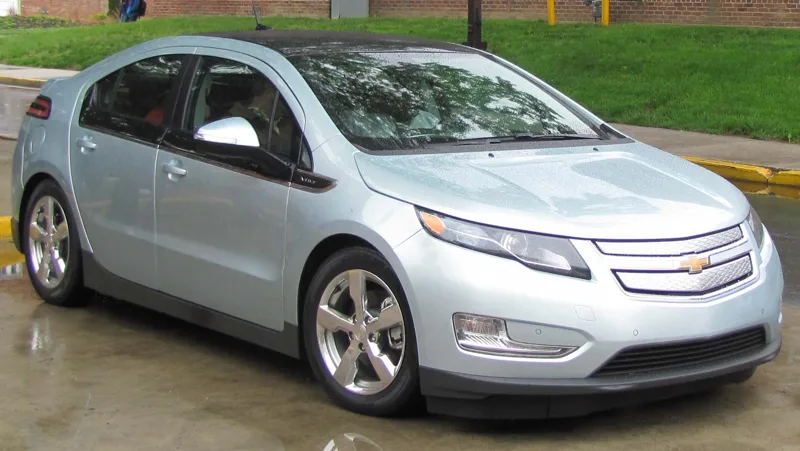
The film's legacy lies in its record of the EV1 and in the debate it reopened about electric cars. GM challenged the film's claims, but in March 2009 GM's outgoing chief executive, Rick Wagoner, said killing the EV1 was his biggest mistake. The company then championed its electric expertise in the Volt, Spark EV and Bolt.
The film also looked ahead to the Tesla Roadster, which reached the market two years after the film's release.
The Smithsonian dropped its EV1 exhibit only a week before the film opened. GM is a Smithsonian museum donor.
Musician Tha truth released a song in 2008 that summarised the film on the album Tha People's Music.