Kenji Sasaki's 1995 arcade racer tied handling to the surface under the tyres, and its Saturn conversion became a defining title for the console.
Released in 1995 by Sega, this arcade rally title on the Model 2 board made the car's grip depend on the surface beneath it. Its Saturn version sold 1.2 million copies, and the franchise that followed carried the formula forward into later hardware.
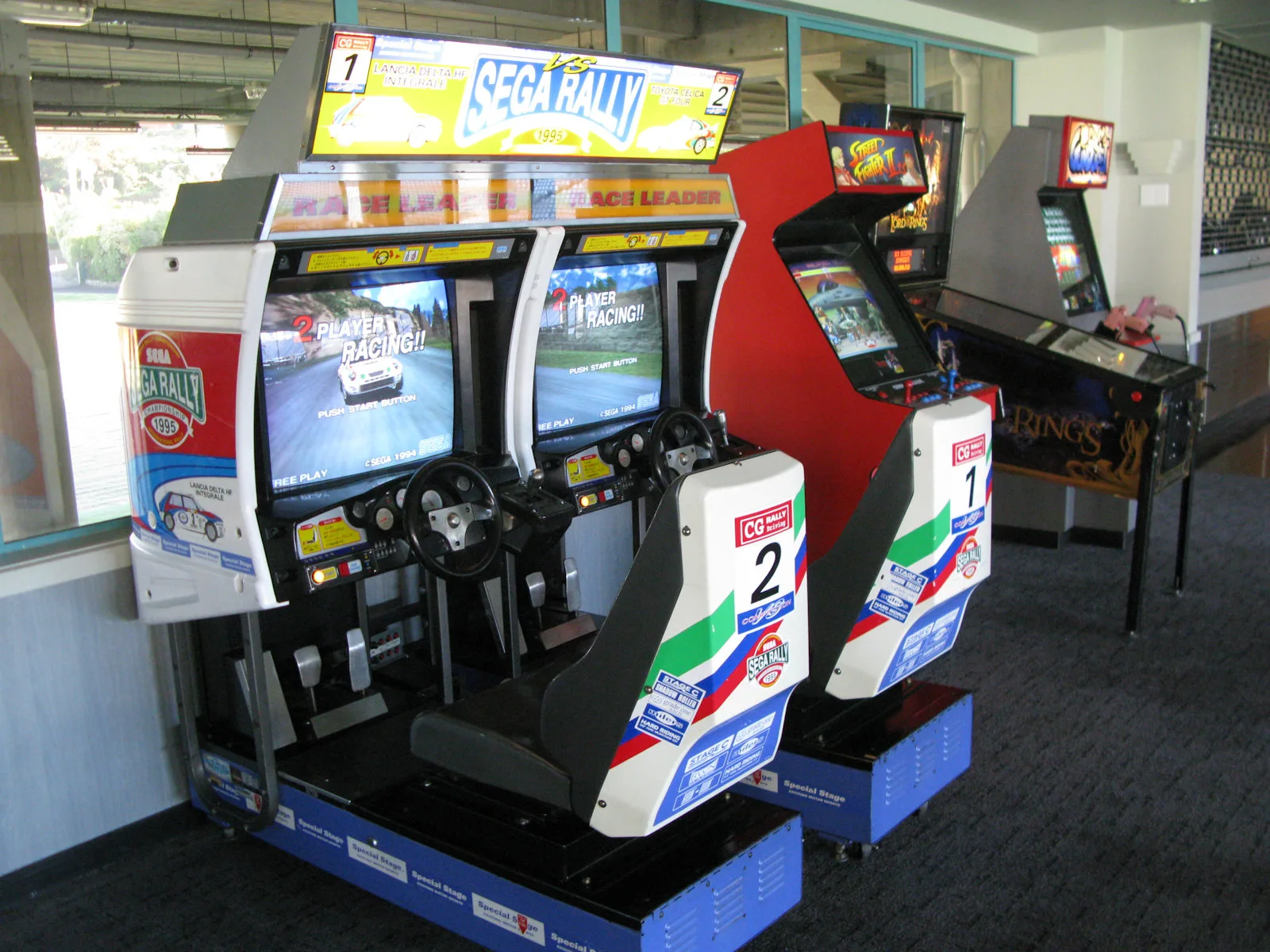
Sega Rally Championship is a 1995 rally racing game from Sega, first released in arcades on the Sega Model 2 board. It was the first racing game to change handling according to the surface beneath the car, and its Saturn version sold 1.2 million copies. It spawned the Sega Rally series and remains one of the most respected racing games of its generation.
Why did Sega choose rallying?
Director Kenji Sasaki, a former Namco employee who had worked on Ridge Racer, wanted something distinct from popular arcade titles like Ridge Racer and Daytona USA. He picked the rally subgenre, which many in the Japanese gaming community considered taboo, because he loved engine sounds, cool cars and the sensation of motorsport racing.
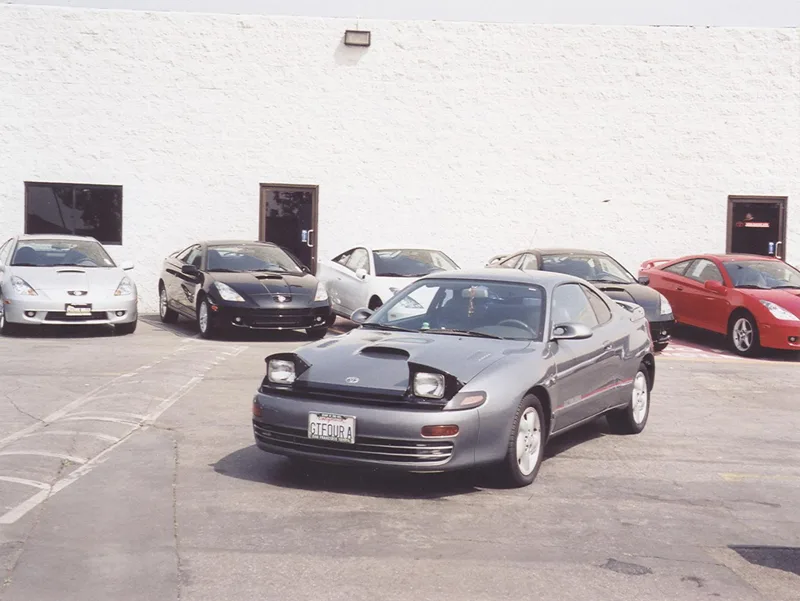
The choice of cars was just as deliberate. The game used real rally machinery, including Didier Auriol's Toyota Celica GT-Four and Juha Kankkunen's Lancia Delta HF Integrale, both available from the start. The team considered a Toyota Supra as a third car, but felt it would play much like the Celica, so a hidden Lancia Stratos was added as a reward instead.
Sasaki's concept also had a clear point of view. The game was distinguished by its stylised handling and tuning options, which made it accessible while still rewarding players who learned the power-slide technique and the rhythm of each surface.
Changing grip under the tyres made Sega Rally Championship a milestone that still feels fresh to fans.
How did the team build its locations?
Over three weeks the team travelled from the American West Coast down to Mexico, taking photographs to use as textures for the locations. Sasaki's own drive into the mountains inspired the third mountain stage, and the moment reminded him why driving was such a thrill to begin with.
The game began in the style of The Cannonball Run, and the forest was first based on Redwood National Park. The release of Cruis'n USA prompted the team to change direction, so the forest was redesigned around Yosemite National Park to avoid similarities with that game.
Music came from two teams. Takenobu Mitsuyoshi composed the arcade soundtrack, while the Saturn version combined new music by Naofumi Hataya with arrangements of the arcade originals, which were later released on an album.
How did the game play?
World Championship mode runs across three stages: desert, forest and mountain. The finishing position at one stage carries into the start of the next, so first place cannot be reached by the end of the first stage. Players need to pass as many rivals as they can on each stage while beating the clock, building a lead across the course.
If the player finishes first on the third stage, they advance to an extra fourth course called Lakeside. On the Saturn, finishing Lakeside first unlocks Sandro Munari's Lancia Stratos HF, while the arcade version hides the same car behind an easter egg. Every car can be driven with either manual or automatic gears.
The arcade version supports up to four players using linked cabinets, while the Saturn version supports two-player split-screen multiplayer. Drifting was one of the hardest techniques to reproduce on a pad, because the arcade game was built for a steering wheel with haptic feedback.
The handling rewards commitment. Drivers who set up slides into corners could carry speed through the loose sections, while those who braked too early lost time. Because the grip changed with the surface, players had to read each stage, and that central idea is what made the game a milestone.
How was the Saturn version made?
The Saturn version was almost completely remade, using the arcade graphics only as a reference. Mizuguchi produced both projects, but the Saturn team was entirely different from the arcade team. The developers studied the arcade locations and spent about two weeks discussing the work before committing to the car settings.
The Saturn team also worked without the Sega Graphics Library, which was not finished when work began. For the same reason, split-screen replaced the Saturn link cable for multiplayer. The developers felt it was important that multiplayer be available to every owner of the console, not only those who had bought a link cable.
To understand the cars, the Saturn team travelled to the Asian Pacific Indonesian Rally and spent three days studying the machines. The result was a conversion that matched the arcade version closely enough to convince many critics.
Release dates and versions
In Japan, the Saturn version shared the full title of the arcade game, Sega Rally Championship 1995, and it was released on 29 December 1995. The year was dropped from the North American and European titles. The Saturn version was rushed to North America for the Christmas shopping season.
The European release was scheduled for December 1995, but it slipped to the end of January 1996. By the time it reached Japan and Europe, the team had added graphical improvements, bug fixes and front-end options, as well as online play via Sega Net Link.
A Windows version followed in 1997 and was less well received. An enhanced Saturn version in 1998 added analog support for the Saturn 3D Pad and online play, giving the console version a second life.
How did critics and players respond?
The Saturn version was met with near-universal praise. Reviewers praised its high-speed visuals and quick responses, and found the physics and handling remarkable. Consoles+ awarded it 96%, while Console Mania gave it 96 out of 100, both praising a faithful conversion.
The arcade game was also a hit. It sold 12,000 units on release and ranked second among Japanese dedicated arcade earners of 1995. In America it placed among the six strongest arcade sellers of that year and won a Platinum Award from the AAMA, while in Europe it proved even more popular than in America.
The Saturn version sold 1.2 million copies and topped the Japanese charts on release. It was the fastest-selling CD game in the United Kingdom at the time, and it topped German Saturn sales charts from April to July 1996.
What is the legacy of Sega Rally Championship?
The game spawned the Sega Rally series, with several ports and sequels appearing on later platforms. Codemasters cited it as a strong influence on its first Colin McRae Rally in 1998, and the producer of the early Colin McRae games said its car handling was an excellent basis for the new title.
Its fans included celebrities of the era. Jeremy Clarkson owned a linked pair of arcade machines at home and wrote that he had played them extensively, holding all ten of their fastest recorded times. Former AS Monaco footballer Eric Di Meco recalled many evenings playing it with Thierry Henry and other younger players at the club.
Recognition has been wide. Guinness World Records: Gamer's Edition 2009 placed the Saturn version 44th in its top 50 console games. Retro Gamer named Sega Rally Championship the best racing game of all time, and The Guardian ranked it the third best Sega arcade game in 2024.
What did the Windows port offer?
The 1997 Windows version was a straight port of the arcade game, and it lacked many features standard to PC racing games. Critics said the fun gameplay survived, but frame rates were mediocre unless the game ran at low resolution, and that mode looked blockier and less detailed than the Saturn release.
Mark Clarkson of Computer Gaming World judged the biggest problem to be the lack of longevity expected of a PC game, though he found it fun while it lasted. Next Generation said the version would suffice for players who specifically wanted it, while GameSpot felt the content was just not enough.
How did European critics respond to the Saturn version?
Reception in continental Europe was highly positive. MAN!AC gave the game 89 out of 100, praising the driving mechanics, the presentation and how closely it matched the cabinet. Hobby Consolas gave it 95 out of 100 for its realistic handling and multiplayer gameplay, calling it one of the strongest driving games on the console.
Did the Saturn version matter beyond sales charts?
Yes. In Italy Game Power described it as a killer application for the Saturn, crediting it with Virtua Fighter 2 for helping the console begin catching up with the PlayStation. Its popularity also reached sport, as the former Portuguese international footballer Domingos Paciencia recalled that it was a favourite at national-team training camps.
How did the game sit in awards lists?
It topped many rankings. Next Generation placed it 57th on its 1996 top 100 list, GamesMaster gave it the number one spot on its Saturn top 10, and Next Generation later put it 19th on its top 50 list in 1999. Retro Gamer named it the best racing game of all time.
Other publications followed. Electronic Gaming Monthly included it in a 1997 list of the best games of all time, and Computer and Video Games named it among the best games in 2000. Edge and NowGamer also listed it among the best games ever made.
How did reviewers describe the rally physics?
Next Generation found the physics and handling remarkable, and praised the high-speed visuals and quick, responsive control. Sega Saturn Magazine said the game convinced players that its programmers understood rally driving, without demanding real driving skill to enjoy it, which made it both approachable and convincing.
Sega Saturn Magazine later ranked the game the second best on the platform, arguing that it remained the best racer on a console two years after its release. Players had to master power-slides with the Saturn pad to get the most from it.