A 2013 Windows simulator built for race teams, with a thermomechanical tyre model, dynamic Real Road surface and a modding community that never stopped growing.
rFactor 2 is a 2013 physics-focused simulator for Windows that grew from a family of engines used by professional teams. Its tyre model, Real Road surface and AI with over 100 opponents set it apart, and modders have built many cars and circuits for it.
rFactor 2 is a racing simulator built to be modified and used by race teams. Released for Windows in 2013 by Image Space Incorporated, it has since passed to Studio 397 and then to Motorsport Games. Its physics, tyre model and modding tools remain its defining features.
What is rFactor 2?
rFactor 2 is a computer racing simulator that reached Windows in 2013. The developers designed it for modification, so that professional racing teams could use it to train drivers and develop race cars, as they did with its predecessor. It can model nearly any multi-wheeled vehicle, from four-wheeled cars to six-wheeled machines.
The simulation rests on advanced physics, suspension and tyre models. Much of its source code comes from rFactor Pro, which is used by professional racers and by most Formula One teams and NASCAR manufacturers. The same code base therefore links the game to the working tools of real motorsport.
A racing simulator built to be taken apart, modified and used by the professionals who race for real.
Where did the engine come from?
The simulator grew out of the isiMotor engine family developed by Image Space Incorporated, usually abbreviated ISI. isiMotor is the umbrella term for the whole engine, which includes gMotor for graphics and Motor for physics. Each new generation of the software carried ISI's racing titles forward.
ISI used its own Motor1 engine for titles including F1 2002 and F1 Challenge '99-'02, which followed the company's Sports Car GT in 1999. After F1 Challenge, isiMotor was licensed for the first time, to SimBin, which went on to produce GTR and GTR 2.
rFactor, released in 2005, was the first ISI title to use the isiMotor2 engine. It had an open architecture, and ISI supplied tools so modders could build outside content. isiMotor2 was then licensed to Slightly Mad, Reiza and 2Pez, and it also became the foundation for rFactor Pro.
rFactor 2 took the experience gained from isiMotor2 and rFactor Pro and moved on to a further version, which ISI named isiMotor2.5. The game also incorporated code developed for rFpro, which continues to use ISI's later developments to the rFactor codebase.
How long did rFactor 2 take to reach release?
Development became public in March 2009, when Gjon Camaj of ISI posted work-in-progress screenshots. The first open beta, Test Build 49, arrived on 10 January 2012, and the game was out of beta by early 2013. Its official Steam listing gives the release date as 28 March 2013.
In October 2010 Camaj outlined plans for licensed content, a reworked interface, dynamic weather, a new racing surface technology, improved AI logic and a force feedback system with lower input lag. The steering rack forces were to be faster and more direct than before.
By December 2011, further features had been confirmed for the open beta. They included rain, transitions between wet and dry track, dynamic track elements such as groove and marbles, a new tyre model along with reworked physics and collisions.
Tyre degradation was introduced in February 2013 through beta build 146, and more tyre physics updates followed. In November 2014 a build brought in new tyre contact patch physics, but no car used it yet.
How did ISI expand the game after launch?
Free content came early. The Corvette G6.R, the Nissan GTR and the Chevrolet Camaro GT3, released in August 2013, were joined by the Silverstone and Lime Rock Park circuits. Historical cars followed. The Formula Renault 3.5 came out in May 2014, the Dallara DW12 came soon after, and the Indianapolis Motor Speedway brought the first oval content.
Steam was the next step. Between 2014 and 2015, ISI handed Marcel Offermans of Luminis, a Dutch software firm, the job of getting rFactor onto Steam, which was completed in March 2015. A Steam version of rFactor 2 followed in November 2015, and the non-Steam version remained available until May 2016.
In May 2016 an official physics development blog for modders launched, with detailed information on the physics engine and on creating cars for rF2. It included posts on the tyre creation process.
Who took over development in 2016?
ISI partnered with Luminis at the Simracing Expo in September 2016, and the partnership created Studio 397 in Apeldoorn. Studio 397's managing director, Marcel Offermans, said the plans included a more web-based interface, a DirectX 11 graphics engine and virtual reality support for Oculus Rift and HTC Vive.
Studio 397 also planned a paid-content system that would let ISI add licensed content. New licences came in for the U.S. F2000 series, Radical Sportscars and NOLA Motorsports Park. Initially the new version could be bought only through Steam.
The first build in December 2016 made online racing free to all users and removed the previous subscription model. The DirectX 11 open beta arrived in May 2017 and became the default later that year, ending support for DirectX 9. Virtual reality came with the DirectX 11 engine.
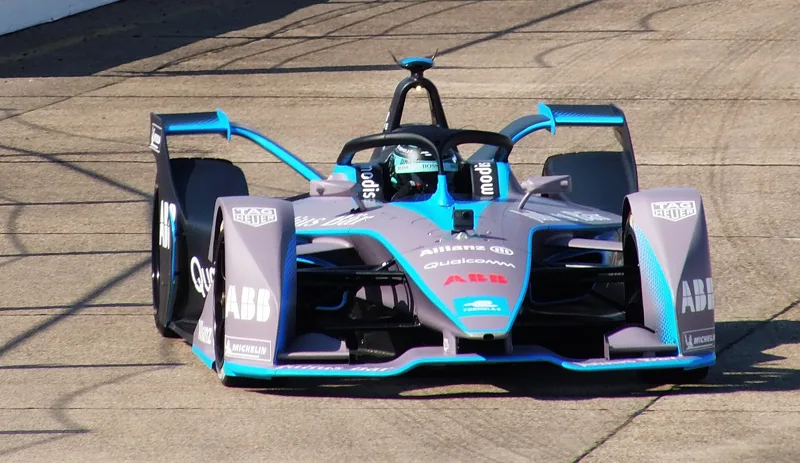
Paid content began in August 2017 with the McLaren 650S GT3. A larger GT3 pack followed in October, and the first Formula E content arrived the next month. Tyre model updates began in July 2017 with the Radical SR3 RSX.
What makes the tyre and physics model different?
rFactor 2 uses a thermomechanical tyre model built from first principles. It simulates the carcass, the tread and the contact patch, with heat transfer, accurate tyre wear, flat spots and visual deformation. Chassis flex and accurate suspension geometry add further realism to the handling.
The tyre model grew out of ISI's work with professional teams using rFactor Pro. Observers call it the first consumer simulation with this kind of tyre model, and it was also first to handle genuinely dynamic track surfaces. A tool called the ISI TGM Tyre Tool was released for third-party modders.
Locking the brakes creates a flat spot, which sends force feedback vibrations through the wheel and leaves the car unbalanced until the tyres are changed in the pits. Overheating and uneven wear punish poor technique, and newcomers often push the car too hard with excess steering.
Physics work has continued. A contact patch model update arrived in October 2017, and a further change in December that year was described by its developer as the biggest since the contact patch model appeared in 2014. After the February 2020 Le Mans Virtual, Michelin also said that tyre wear in rF2 ran higher than in real life.
Some limits remain. Running minimum tyre pressures gives an undue advantage, and sliding all four tyres helps rotate a car through a corner. Racing lines in wet conditions also ignore the fact that a rubbered track becomes more slippery when wet.
What is Real Road?
Real Road is a dynamic surface system in which the player and the AI lay rubber onto the track during each session. Rubber carries over into later sessions, so grip changes through a race weekend. Players can pick a rubber preset, start on a green track, or choose how fast the build-up runs.
The system also creates grip-affecting marbles outside the normal racing line. Rain washes away the built-up rubber and the marbles, so the track must be rubbered in again. The wet surface then dries in a drying line, which forms as cars run over it and as temperature, sun and wind act on it.
How does the AI behave?
Its AI reads the track in space, with sliders to set strength and aggression, and it can learn more efficient racing lines to set faster lap times. It can even drive the player's car on their behalf, and races can include over 100 AI opponents running alongside each other.
Why is rFactor 2 so popular with modders?
rFactor 2 was designed specifically to be modified. A dedicated mod packaging system came first among race sims, and the Steam release added Steam Workshop integration. Modders have since produced endurance series, historic Formula 1 cars and laser-scanned tracks for the platform.
Popular mods include the Endurance Series from EnduRacers, Formula 1 cars such as the MP4/4, MP4/8 and MP4/9 from the MAK-Corp team, a Formula 3 car, Pikes Peak Hillclimb, and LIDAR-scanned Laguna Seca, plus Mid-Ohio and Highlands circuits.
Studio 397 also added official laser-scanned track data. The Sebring circuit was scanned with Lidar technology in February 2018, and the 24 Hours of Le Mans and Monaco circuits were added in 2019, completing the triple crown of tracks.
Where has rFactor 2 been used in official esports?
rFactor 2 has been used in several official esports events, including the Formula SimRacing World Championship organised by the International SimRacing Club since 2014, the Formula E Race at Home Challenge from April to June 2020, and the 24 Hours of Le Mans Virtual.
The 2020 Le Mans Virtual, held on 14 June 2020, was stopped by red flag twice after server trouble forced restarts. Race leader Max Verstappen criticised the event. In the 2023 edition the race was red-flagged again after a security breach, and several drivers' games crashed, including Verstappen's, who said he would uninstall the game.
The platform also moved into professional series content. IndyCar IR-18 arrived in February 2022 with official liveries for the full IndyCar line-up, which hinted at a possible move of an official IndyCar esports series to rFactor 2.
Who owns rFactor 2 now?
Motorsport Games agreed in March 2021 to buy 100% of Studio 397 and rFactor 2 from Luminis International for 16 million USD. The purchase closed in May 2021, and the company then used the rF2 physics engine across its own titles.
NASCAR 21: Ignition launched in October 2021 with the rF2 physics engine and the Unreal graphics engine. Motorsport Games planned British Touring Car Championship and IndyCar games with the same combination, but both were cancelled in 2023.
Goodyear provided tyre data for the Formula Pro car released in July 2021, and the updates have since reached other cars such as the BMW M4 Class 1. A release candidate in April 2022 added better particle and sound effects, along with a photo mode.
How does the competition system work?
The competition system entered beta in December 2020, and Linked Sessions arrived in July 2021. Esports series in the beta included the BMW SIM M2 CS Racing Cup, a Formula Challenge and a GT Challenge, with daily races for multiple series.
The main goals are to provide daily races, a ranking system that matches drivers of similar skill, support for league racing, and an optional ladder path up the rankings. Planned additions are a protest system and some kind of ranked racing.
Key specifications at a glance
| Specification | Detail |
|---|---|
| Developer | Image Space Incorporated, then Studio 397 from 2016 |
| Release | 2013 for Windows |
| Engine | isiMotor2.5 |
| Tyre model | Thermomechanical, simulating carcass, thread and contact patch |
| AI opponents | Over 100 in a single race |
| Open beta | Test Build 49, 10 January 2012 |
| Steam listing | 28 March 2013, build 198 |
| Modding | Mod packaging system and Steam Workshop integration |
| Owner | Motorsport Games, after a 16 million USD deal in 2021 |