How the electric series moved from a 28 kWh first-generation chassis to a car that could finish a race, and what the third and fourth generations change.
The Formula E car is the electric single-seater built to FIA rules for the Formula E Championship, raced mostly on temporary street circuits. The Spark-Renault SRT 01E served the first four seasons, the Spark SRT05e followed from 2018-19, and later generations added front motors and four-wheel drive.
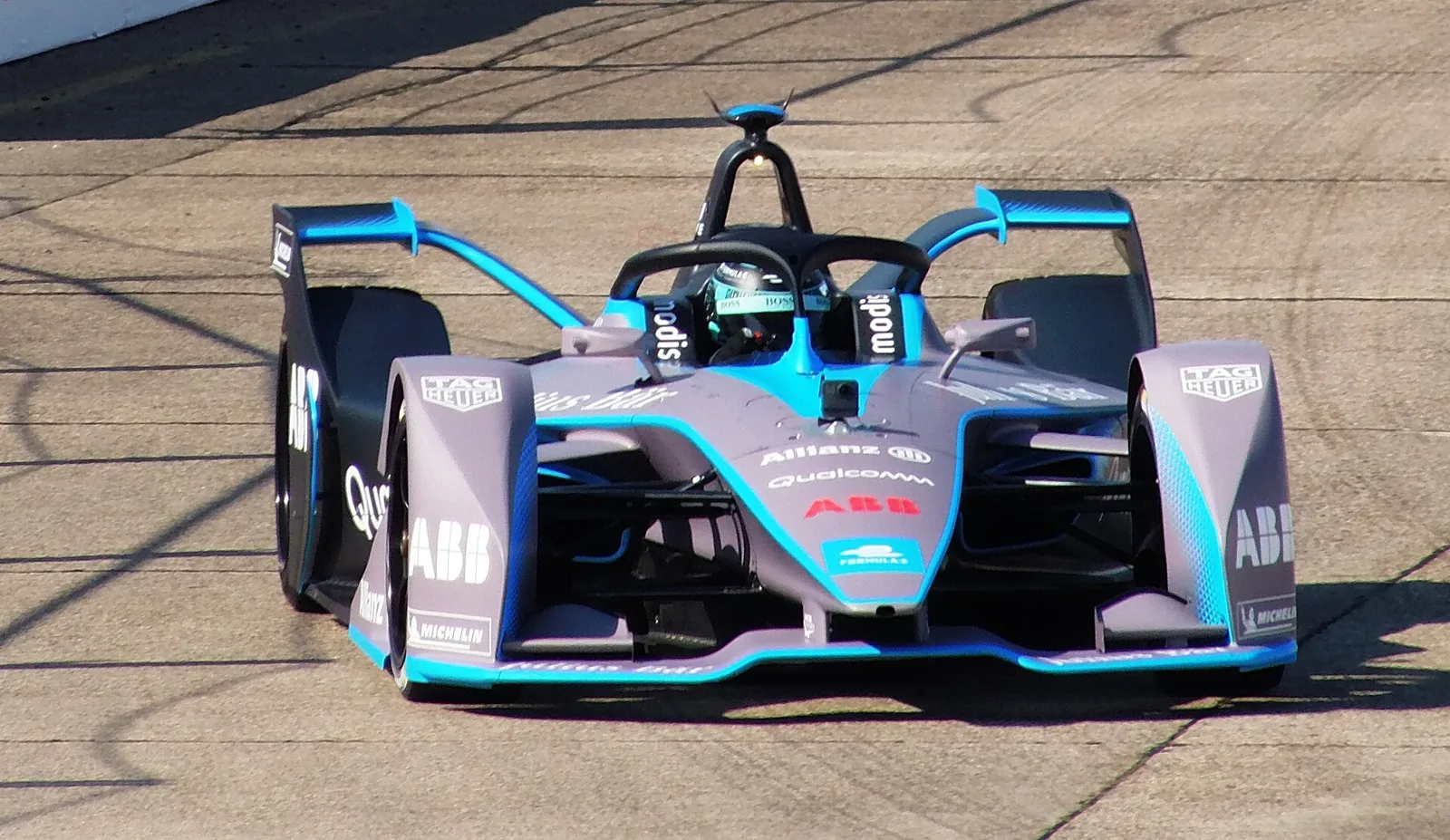
The Spark SRT05e, launched in 2018, broke new ground as the first Formula E car able to run a full race distance, helped by a battery quoted at 56 kWh. It also brought the halo cockpit protection system to the electric series. It replaced the Spark-Renault SRT 01E, the chassis Formula E had used for its first four seasons, and it set the template for the cars that followed.
What is a Formula E car?
Formula E cars are battery-powered single-seaters with open wheels, constructed to the FIA's regulations for its Formula E Championship and raced mainly on temporary street circuits closed off for the occasion. Three major generations had appeared by 2026, with a fourth planned to start in the 2027 season.
The SRT05e was the first Formula E car able to complete a full race distance.
How do the Formula E generations compare?
| Generation | Seasons | Car | Defining feature |
|---|---|---|---|
| Gen1 and Gen1Evo | 2014-15 to 2017-18 | Spark-Renault SRT 01E | 28 kWh battery and 200 kW maximum power |
| Gen2 | 2018-19 to 2021-22 | Spark SRT05e | Halo, a McLaren battery of 56 kWh, 250 kW peak |
| Gen3 and Gen3Evo | 2022-23 to 2025-26 | Gen3 | 250 kW front and 350 kW rear motors, regenerative rear braking |
| Gen4 | 2026-2027 onwards | Gen4 | Permanent four-wheel drive |
An Evo update arrives every second season, usually bringing a stronger motor system and better aerodynamics. The exception was Gen2: its Evo, Gen2Evo, was never raced.
How did the Spark-Renault SRT 01E come about?
Work began in September 2012. Lucas di Grassi, the series' official test driver, demonstrated the prototype, the Formulec EF01, built in 2010 with a chassis from Mercedes GP and motors from Siemens. It featured in the promotional video and in demonstrations in host cities.
Five organisations worked together for 10 months to produce the real car: Renault, Dallara, Williams Advanced Engineering, McLaren Electronic Systems and Spark Racing Technology. On 1 November 2012 McLaren was named as supplier of the motor, transmission and electronics. The series ordered 42 cars from Spark, which brought in the formula-car specialist Dallara. Michelin became exclusive tyre supplier on 28 March 2013, Renault joined Spark as technical partner on 15 May 2013, and the Williams group's engineering arm took charge of the battery design.
The car was revealed at the Frankfurt Motor Show on 10 September 2013 by the FIA's president, Jean Todt, and Formula E Holdings boss Alejandro Agag. Its first official trial came on 3 July 2014 at Donington Park and ran until around 21 August, with every team running all four of its cars for a combined 1222 laps. The fastest time was 1:29.920, set by the Abt team. For comparison, a McLaren MP4-12C had lapped in 1:29.679 during the 2012 British GT season.
Though the FIA had first hoped for several chassis makers, the SRT 01E was the only licensed model for the inaugural 2014-15 season. Renault assembled the electrical components, Dallara designed the chassis and Spark put the car together. In season two, in 2015-16, teams were allowed to develop their own motor, gearbox and rear suspension, and the car became known as the SRT01-e.
What were the technical specifications of the SRT 01E?
The heart of the car was a Rechargeable Energy Storage System, or RESS: in plain terms, the battery pack and its management electronics. The design was free but needed FIA approval, and Williams supplied the traction batteries and management system. Rules capped the cell weight at 200 kg, and the traction battery held 28 kWh. If you think of a petrol tank, 28 kWh is the size of the fuel tank, and the kilowatt figures describe how fast the engine can drink from it.
The motor came from McLaren. It weighed 26 kg, produced a maximum of 270 bhp with instant torque of 140 Nm, a unit that began life in the McLaren P1. Power was limited to 200 kW (268 hp) in practice and qualifying. In races the car dropped to a power-saving 180 kW (245 hp), and a push-to-pass system could temporarily restore full power. FanBoost added a further 30 kW (40 hp). The energy fed to the motor generator was capped at 30 kWh and monitored by the FIA. Estimated performance was 0-100 km/h in 3 seconds and a limited top speed of 225 km/h (140 mph).
The rules allowed at most two motor generator units, linked only to the rear axle, and traction control was forbidden. Minimum weight with driver was 888 kg (1,958 lb), of which the batteries alone accounted for 320 kg (705 lb). The car could be no longer than 5,000 mm (197 in), no wider than 1,800 mm (71 in), no taller than 1,250 mm (49 in), and had a maximum ride height of 75 mm (3 in).
Dallara built the chassis around a carbon and aluminium honeycomb survival cell, with carbon wings and bodywork of carbon and Kevlar honeycomb. The gearbox was a Hewland paddle-shift sequential with fixed ratios. Suspension was double steel wishbones with pushrods at the front and springs at the rear, and Koni dampers. The brakes ran two separate hydraulic circuits operated by one pedal. Tyres were bespoke 18-inch Michelins on O.Z. Racing magnesium wheels, with a single treaded compound suited to wet and dry running that was expected to last a whole race weekend. Telemetry was not permitted.
Rules let cars take on charge in practice, qualifying and the race itself, plus a few other set points in a weekend. Drayson Racing and its technical partner QualcommHALO were developing a way to charge wirelessly through a pad under a parking space. Series organisers also commissioned a simulator version from MAK-Corp, and the car appears in Forza Motorsport 5, rFactor 2 and Real Racing 3.
What was new about the Spark SRT05e?
Built by Spark Racing Technology with help from Dallara, the SRT05e, also known as the Spark Gen2, was used by every team and manufacturer from 2018-19 and succeeded the SRT01-e. Its new McLaren Applied Technologies battery was quoted at 56 kWh (202 MJ), and it added the halo.
The tender had called for a 200 kg cell-weight limit, 200 kW peak power and 28 kWh of usable energy. The battery that was built weighed 385 kg (849 lb) and gave 250 kW of peak power, using Murata cells, Lucid Motors integration and McLaren track handling.
The path to the track began in March 2016, when the FIA and Formula E Holdings chose to keep a specification chassis for the second generation to hold down costs. McLaren Applied Technologies won the exclusive battery tender on 28 September 2016. The tender first covered two seasons, but battery development was later opened up only for the third-generation car, to reduce costs for teams. Spark won the chassis tender on 9 January 2017, and concept images came out on 12 February.
Testing began in secret. In September 2017 Anthoine Hubert drove the first shakedown at Circuit Ecuyers in Reims, France, covering more than 400 km without the halo or full bodywork, to evaluate the new battery. In October the car completed its first endurance tests in a three-day run at Monteblanco in Spain, with full bodywork but still no halo. Hubert and Frederic Makowiecki shared four full-race simulations. On 1 December 2017 Michelin was confirmed as exclusive tyre supplier until 2021.
After computer-generated images on 30 January 2018, the car was launched on 6 March at the Geneva International Motor Show by Jean Todt and Alejandro Agag. It was presented as the first race car conceived and led from start to finish by the FIA itself, which organised everything from design to manufacture. Manufacturers got their first group test, closed to the public, at Monteblanco from 28 to 30 March 2018. Two temporary chicanes were added to the track, lap times were expected around 1:01, and on day one alone the teams ran 2000 km.
What do the SRT05e rules say about motors, charging and tyres?
Teams can run their own motor designs, provided the FIA has homologated them, or buy one from an existing manufacturer with an approved design for no more than 250,000 euros. Teams do the charging before the race. The car wears 18in (47 cm) Michelin Pilot Sport All-Weather tyres, one set per car, expected to last a whole weekend. Compared with the previous car's tyres, each front weighs 2 kg less and each rear 2.5 kg less, which adds up to 9 kg, other factors aside.
Why was the Formula E Gen2 Evo cancelled?
On 18 January 2019 the series confirmed that, like its predecessor, the SRT05e would get a bodywork update for what would have been its third season, 2020-21, with its service life extended to 2021-22. The Gen2 car then proved much stronger than the original SRT01-e. Drivers became more aggressive and made contact with each other, so a redesign was proposed with a more fragile front end to punish excessive contact.
Formula E unveiled the design, named Gen2EVO, on 4 February 2020. The COVID-19 pandemic and its emergency technical measures delayed the debut to 2021-22, and on 11 May 2020 it was reported that the update might be dropped entirely. Cancellation was confirmed on 19 August 2020. With Gen3 due for 2022-23, running the new bodywork for a single season was judged uneconomical.
How did Formula E gearboxes change?
In 2014-15 every team used the same Hewland five-speed sequential gearbox, operated by paddles on the steering wheel in the semi-automatic style of other racing series. Rules were then relaxed, and teams used single-speed gearboxes or as many as four gears. More gears can keep an electric motor in its most efficient range, but whether they help depends on the motor's torque curve at different speeds. By season four, 2017-18, all teams ran single-speed gearboxes.
Single-speed cars are sometimes wrongly called direct-drive. In fact the first- and second-generation regulations required a reduction gear, so there was always a fixed gear between motor and wheels.
How loud is a Formula E car?
At about 80 decibels, the second-generation car from 2017 is put at 10 dB above a typical petrol road car, comparable to a household vacuum cleaner.
What do the Gen3 and Gen4 Formula E cars change?
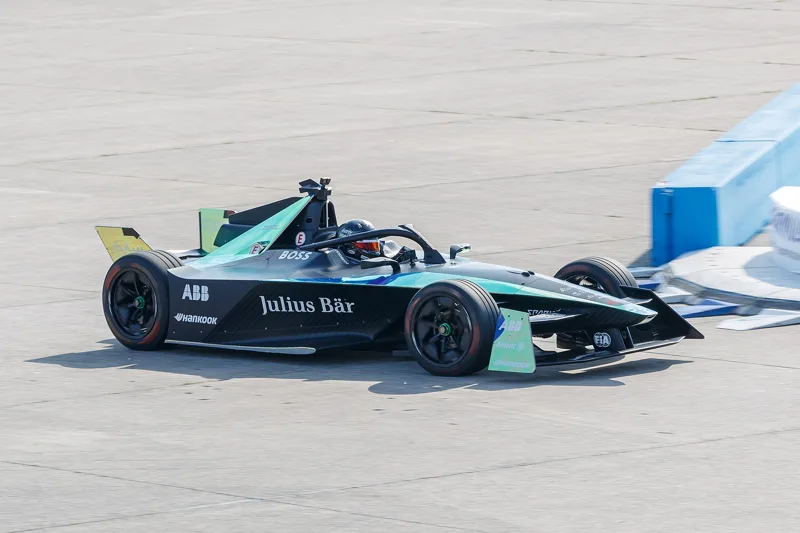
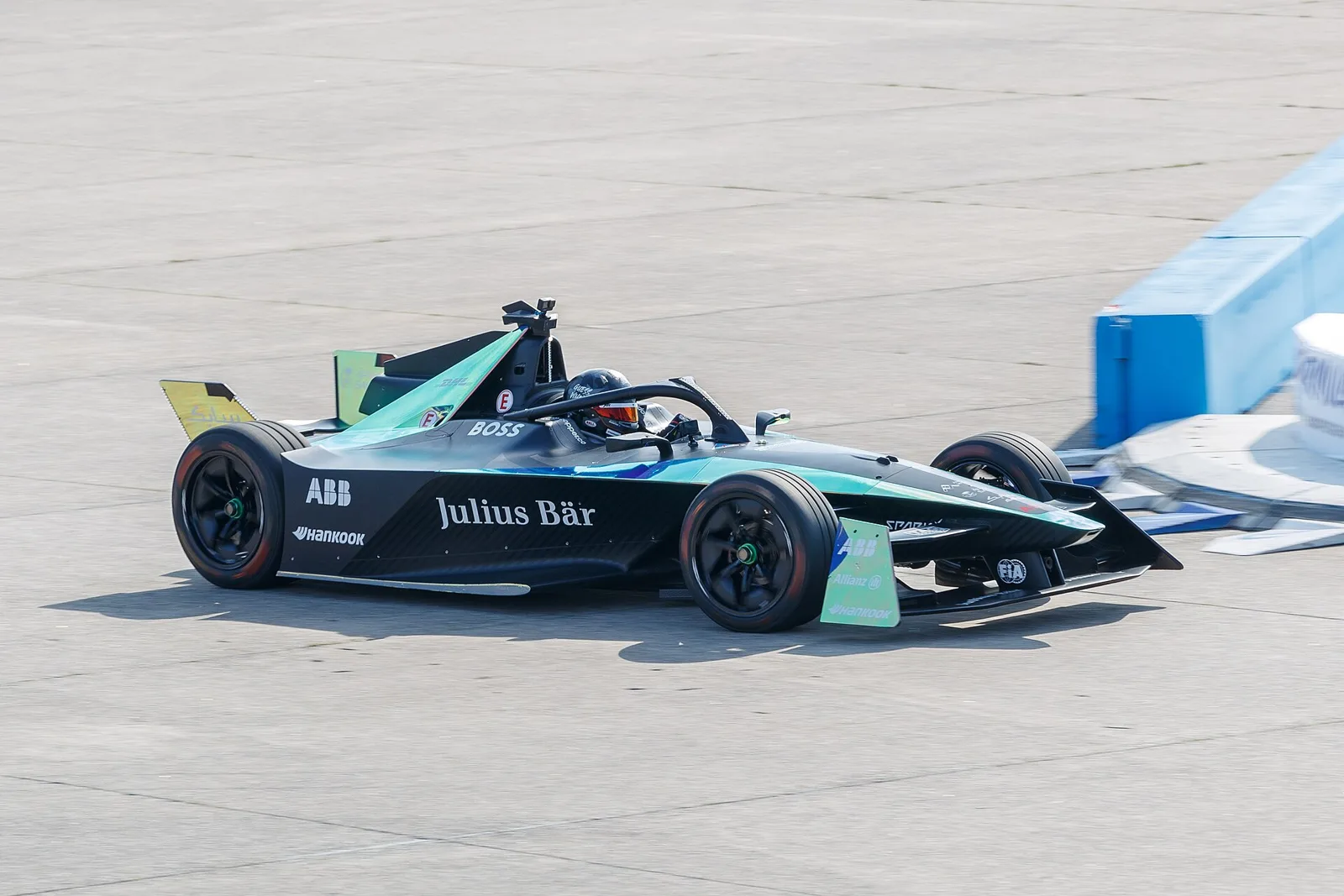
The third generation, from 2022, is lighter and smaller than Gen2 to encourage wheel-to-wheel racing. It was billed as the first formula car to carry powertrains at both ends: a 250 kW motor-generator at the front, there mainly to regenerate energy under braking, and a 350 kW motor driving the rear. It was also billed as the first without rear hydraulic brakes, relying on the rear motor's regeneration for braking, with only a single-use emergency disc system to save weight.
The series claims at least 40% of the energy used in a race will come from regenerative braking, and described it at launch as the most energy efficient race car ever. Lap times were expected to be 2 to 4 seconds quicker than Gen2 in qualifying and races.
After two seasons it became the Gen3 Evo, with grippier Hankook tyres and a front motor that now sends 67 hp (50 kW) to the front wheels for extra traction in qualifying and Attack Mode. The aim was to answer complaints about grip, and about how little Attack Mode achieved in the early seasons. The front wing was replaced with a sturdier design.
What will the Gen4 Formula E car change in 2026/27?
Gen4 is due to race for the first time in 2026/27. It is planned to run with four-wheel drive permanently engaged, whereas today's car uses it only in the duel phase of qualifying, at the start and in Attack Mode.