A 2014 racer that rebuilt its handling model, added wear and damage systems and brought the cockpit view back to the series.
Grid Autosport is a 2014 racing game from Codemasters, the third in the Grid series. It returned the series to a race-first design with a rebuilt handling model, wear and damage systems and the cockpit view. It came out on PC, PlayStation 3 and Xbox 360 and later reached several other platforms before its online servers closed in 2026.
Grid Autosport was a 2014 racing game from Codemasters that set out to move the series back toward authentic, race-first driving. It reworked the handling model, widened the damage and wear systems and brought the cockpit view back after its absence in the previous game. It launched on Windows, PlayStation 3 and Xbox 360 in June 2014, and later reached macOS, Linux, iOS, Nintendo Switch and Android.
Why did Codemasters make Grid Autosport?
Grid Autosport was a response to Grid 2, which the studio felt had not satisfied its core fanbase. Codemasters chose to return the series to more authentic racing, cutting the narrator-led career mode and the extra menus that got in the way of the racing itself. The result was a leaner game built around the race.
Development started as Grid 2 neared completion in spring 2013, and the new game was announced in April 2014 via the studio's blog, less than a year after its predecessor. Producer Toby Evan-Jones described a team that wanted more optimisation, more touring car content, the return of the cockpit camera and a nudge back toward simulation rather than arcade play.
Lead designer James Nicholls noted that the people and tools were already in place, which mattered on a schedule of under twelve months. The team built on Codemasters' in-house EGO 3.0 engine, which had been tuned to run better on weaker machines, while DirectX 11 support improved the rendering of grass and light compared with Grid 2.
A race-first rebuild that restored the cockpit view and added wear, damage and a new handling model.
How did the handling model change?
Grid Autosport dropped the TrueFeel handling introduced in Grid 2 but did not simply go back to the older model. Codemasters built an improved version that better simulates how grip falls away as a tyre approaches its slip angle. The new model was checked by Autosport magazine experts and working racing drivers, and it was adopted on 23 January 2014.
Open-wheel cars and American muscle cars proved the hardest to model, so the team re-tuned the grip falloff graph for each car and redid the AI benchmarking that had been well underway on the old model. Car audio was captured with up to 16 microphones placed on and around real cars, and changes such as camera position and damage were built into the sound design.
What did career and online play look like?
Career mode runs in seasons, and at the start of each one the player chooses from offers made by racing teams. Teams set their own season and sponsor objectives, and reaching them grants bonus XP. Online play runs through RaceNet, where players form clubs and spend the XP and cash they earn on cars and garage slots.
The design introduced five disciplines, Touring, Endurance, Open Wheel, Tuner and Street, each with its own machinery and race types. Endurance races use tyre wear, and a wear and tear system gradually reduces the performance of car parts through general use. A suspension damage system was added, and the team radio lets the player ask about car damage, gaps and the positions of rivals and teammates.
The Flashback feature from earlier Grid games returned, letting players rewind a few seconds and resume from an earlier point. Cockpit view came back after its absence in Grid 2, although it was one of the most criticised parts of the game at launch. Customising a car was limited in single-player career, with vehicle customisation mainly available online.
Most of the teams from Race Driver: Grid returned, including the well-regarded Ravenwest. Soon after launch Codemasters also introduced RaceNet Challenges, which were specific sets of challenges announced for players to tackle.
Cars and tracks in Grid Autosport
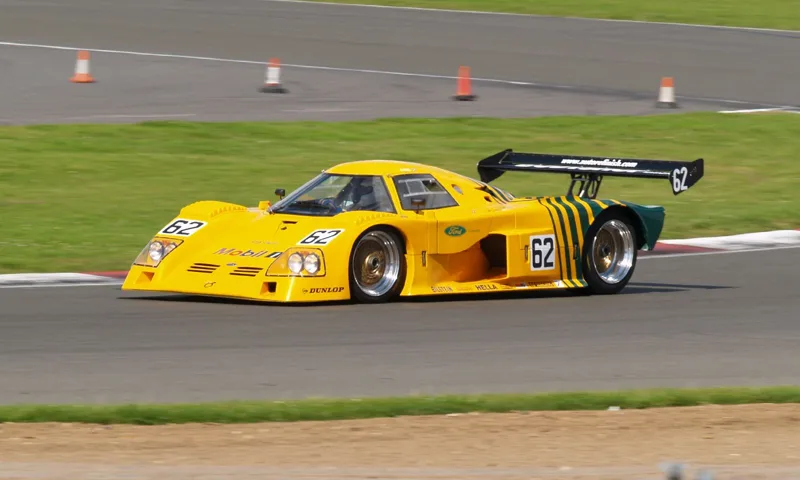
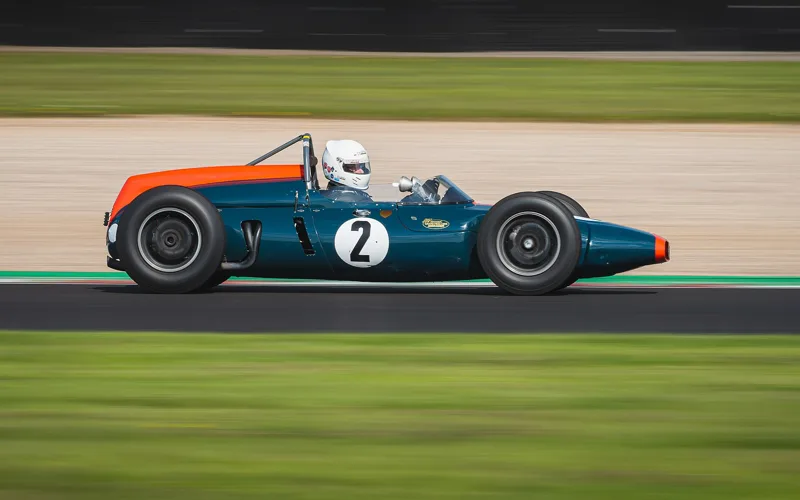
The game offers 103 cars including downloadable content. The Touring line-up includes BTCC, Stock Car Brasil and V8 Supercars machinery, while Endurance brings present-day and classic GT cars such as the Mercedes-Benz SLS AMG GT3 and the Ford GT40 Mk I. Open Wheel uses the Dallara DW12 IndyCar chassis, and the Street discipline is led by the Koenigsegg Agera R and the Bugatti Veyron 16.4 Super Sport.
The car list is notable for what it leaves out. It is the second Grid game without Toyota cars and the first in the series without a Chevrolet Corvette. American muscle cars represented the Tuner discipline, alongside other machinery.
Tracks are mostly real permanent circuits. The game includes 15 real-world permanent circuits, 2 fictional permanent circuits, 7 street circuits and 4 point-to-point tracks, adding up to 28 locations with over 130 configurations. Indianapolis, Mount Panorama, Brands Hatch and Spa-Francorchamps stand among the historic venues, next to newer facilities and city streets.
Which platforms did it reach, and when?
Launch dates were 24 June 2014 for North America and 27 June for Europe, on Windows, PlayStation 3 and Xbox 360. Feral Interactive later ported the game to macOS and Linux, and the iOS, Switch and Android versions followed in the years after. The table below lists the main release dates.
| Platform | Release or event |
|---|---|
| Windows, PlayStation 3, Xbox 360 | 24 June 2014 (North America); 27 June 2014 (Europe) |
| macOS and Linux | 10 December 2015, by Feral Interactive |
| iOS | 27 November 2017 |
| Nintendo Switch | 19 September 2019 |
| Android | 26 November 2019 |
| Online servers | Shut down 16 March 2026 |
The Black Edition came with a Mercedes-Benz SLS AMG Coupe Black Series, plus extra sponsors and liveries that applied to both offline and online play. Steam pre-orders went live a week later than planned in May 2014, and owners of Grid 2 got 10% off and a free copy of Dirt Showdown.
Downloadable content arrived roughly every fortnight until November 2014. Three mini expansions and three car packs were released, and a Season Pass covered six packs at a discount. The Touring Legends Pack added Donington Park and Silverstone, the Sprint Pack introduced the Sprint race type, and the Drag Pack added drag racing with three drag cars.
Some extras were less welcome. The Boost Pack, priced like the car packs, accelerated XP gains in career and online modes, and the choice drew criticism. Patch support also fixed save corruption issues and online playlist problems, and time trials were eventually added after being missing from the base game.
How did critics receive the game?
Critics were broadly positive. Metacritic gave the game 78 out of 100 on PC and 75 out of 100 on PlayStation 3 and Xbox 360. The handling, the stripped-down approach and the damage model drew the most praise, while the cockpit view was widely criticised for its blurred look.
Reviewers found the computer opponents could be overly aggressive, and the absence of pit stops and puncture repairs puzzled several critics. IGN called the pit omission a strange choice that weakened the racing. Eurogamer found the career slow to progress, and several reviewers noted that many cars and tracks were reused from earlier Codemasters games.
The game was praised for its atmosphere. Reviewers liked the ambient effects, the crowd-like details at race venues and the clean, fast-loading menus. The team radio drew mixed comments, with some critics finding the pit audio repetitive.
Legacy and the road to Grid
Grid Autosport is best remembered as the course correction that followed Grid 2. It proved that Codemasters could return to a race-first approach and restore features fans had asked for, including cockpit view and a stricter damage model. The game sold more than 100,000 copies on iOS alone by 24 July 2018.
The studio followed it with Grid, released in October 2019 for Windows, PlayStation 4, Xbox One and Stadia. The online servers for Grid Autosport closed on 16 March 2026, so the multiplayer side of the game is no longer available, although the single-player content remains a reference point for fans of the series.
How the presentation came together
Graphics were a major focus. Codemasters tuned its long-standing engine for better performance on low-end machines, and DirectX 11 support let the programmers improve the rendering of grass and light. Intel's collaboration added high-end visual optimisations, touch-screen input, tablet support and WiDi, its wireless second-screen technology.
The interface was stripped back as well. Reviewers praised the pared-down menus for loading quickly, and the sound design earned praise for small touches, such as hearing the commentators over the track. Edge praised the clean, pared-down design, which suited the game's race-first approach.
How did the disciplines change the career?
The disciplines replaced a loose list of events with five clear categories, and each season is built around one event in one category. Cars and race formats differ widely between disciplines, so a driver can specialise or spread a career across several of them.
Race types went beyond standard races. Endurance races used tyre wear, and time attack and drift events were available in the Custom Cup mode. Downloadable content added Time Trials, drag races and point-to-point Sprint races, while Custom Cup also offered special events such as Checkpoint, Eliminator and Demolition derby.
How did the AI and damage behave?
Computer opponents were built to race hard, and several reviewers said they could take the player out at least once in a race. Edge noted that they did not always concede the way a human driver might. Damage, by contrast, was widely praised, since each car responded accurately to collisions.
Some critics thought the AI was too aggressive, though it could also be rewarding when an opponent made a clever cut-back. Crashes had a substantial effect on performance, and Edge called the damage system a triumph. The tyre wear introduced in endurance events was welcomed because it became integral to the driving process.