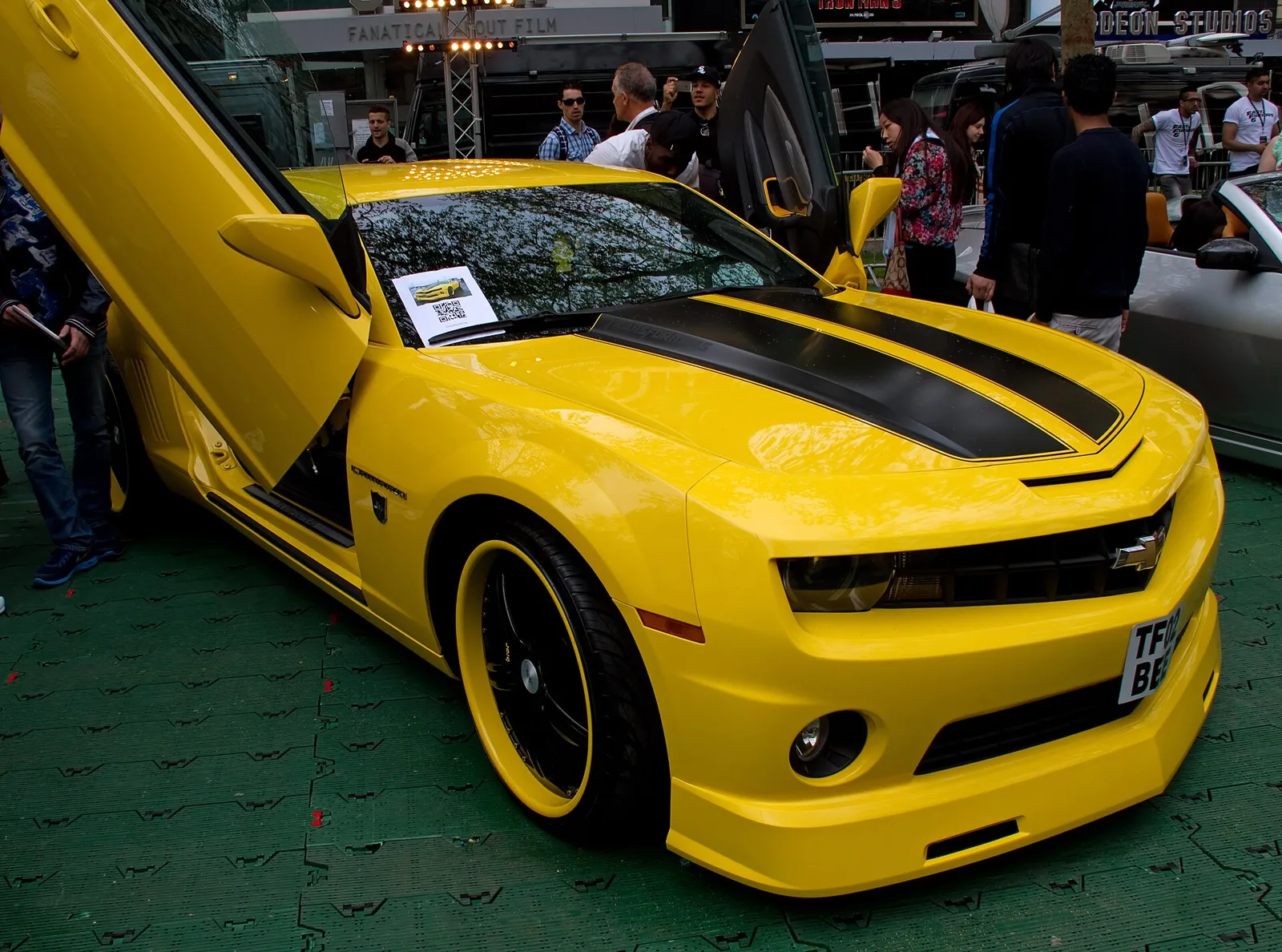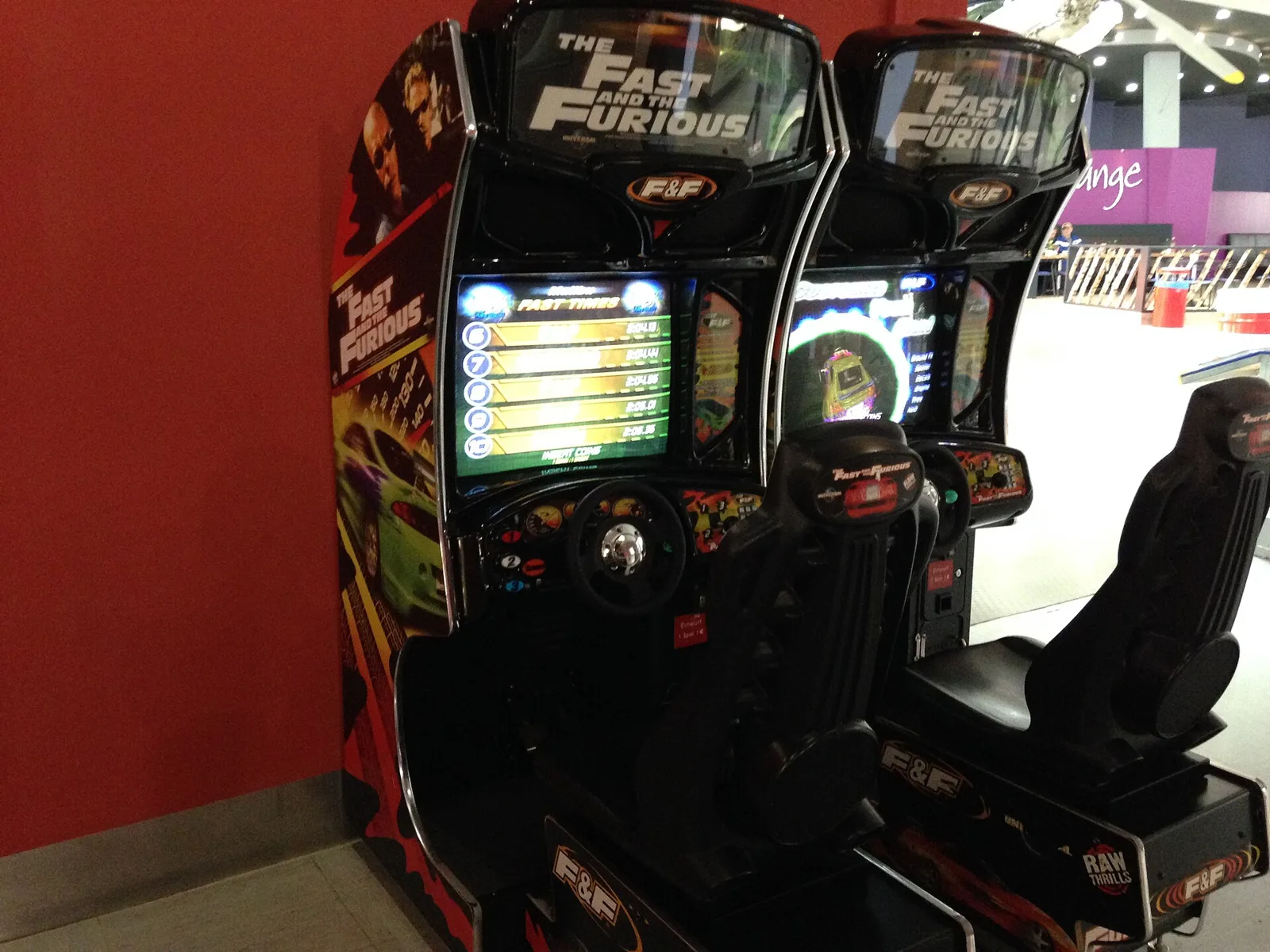
Justin Lin's 2009 return to street racing, the replica cars and fuel-heist trucks built for it and the box office that made it the franchise's biggest to that date.
Fast & Furious is a 2009 Justin Lin film, the fourth in the series, reuniting Vin Diesel and Paul Walker. It involves a fuel heist, a drug smuggling plot and replica muscle cars, and it became the franchise's biggest earner to that date.
Fast & Furious, released in 2009 and also known as Fast & Furious 4, saw Diesel, Walker, Rodriguez and Brewster return under director Justin Lin. The film reset the franchise's box-office expectations and became the highest-grossing entry in the series at the time, with $360 million taken worldwide. It was also the first theatrical release to use 4DX and D-BOX motion technology.
What is the story about?
Five years after escaping Los Angeles, Dom and his crew are running fuel tanker raids in the Dominican Republic. When Dom hears that Letty has been killed, he returns to Los Angeles to attend the funeral. At the crash site he finds traces of nitromethane, which leads him to a buyer and a green 1972 Ford Torino Sport that is the only car in the area using the fuel.
Brian O'Conner, a reinstated FBI agent, is hunting the drug lord Arturo Braga, whose public identity is unknown. His search crosses paths with the same buyer, and the two men are forced into an uneasy alliance. The FBI's informant gets Brian into a street race, and the winner joins a team that smuggles heroin across the Mexico-US border.
The story moves through a Mexican desert, a series of tunnels and a final chase that brings Dom back to Los Angeles. Brian and Dom store the heroin at a police impound yard, and the trap they set for Braga fails when a decoy takes the place of the real man. The ending sends Dom to prison, and Brian, Mia and the crew arrive to intercept the bus that is carrying him away.
The fuel heist brings the rest of the crew into the picture. Sung Kang plays Han Lue, who joins Dom in the oil heist, while Don Omar and Tego Calderon play Santos and Tego, the heist team members. The heist scenes give the ensemble a chance to share the screen before the story narrows to Dom, Brian and Braga.
Along the way, Gisele Yashar, a liaison for Braga, takes an interest in Dom and helps the pair follow the trail into Mexico. Fenix Calderon, Braga's right-hand man, is the most dangerous figure in the story, having killed Letty when she tried to escape him. Dom's final confrontation with Fenix is therefore personal as well as strategic.
A reunion built on fuel trucks, replica muscle cars and an old friendship, with the franchise's biggest opening still ahead of it.
Which cars and trucks define the film?
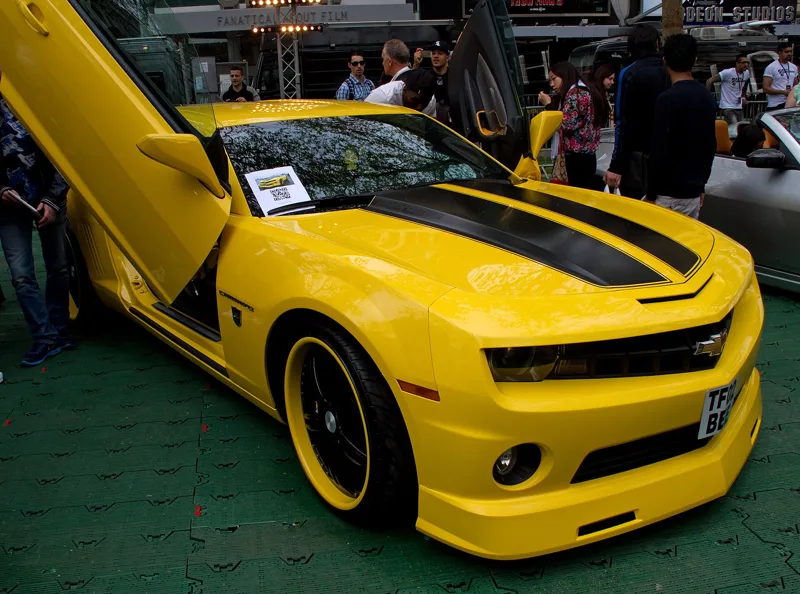
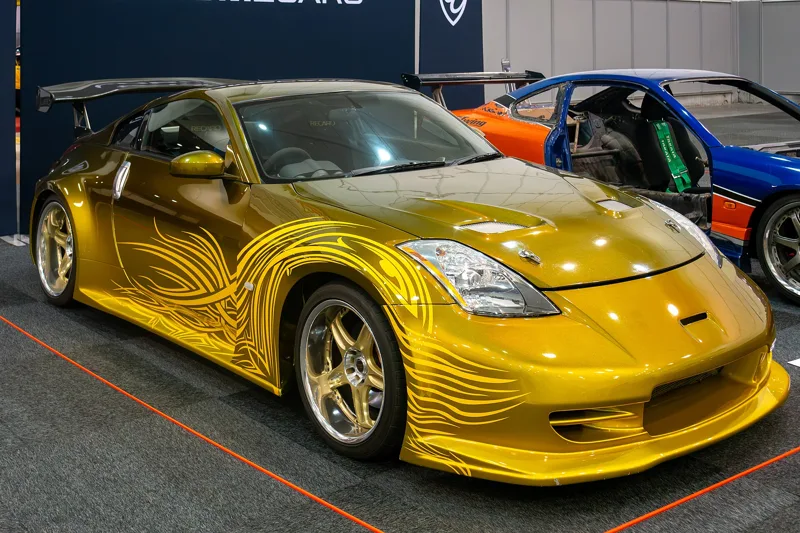
The cars work as characters, and the production used a range of muscle cars, imports and oversized trucks to mark each member of the crew. Brian's race car is a 2002 Nissan Skyline GT-R R34 taken from the impound yard, while Dom races a 1970 Chevrolet Chevelle SS. The table below lists the vehicles that carry the main action.
| Vehicle | Owner or driver | Role in the film |
|---|---|---|
| Green 1972 Ford Torino Sport | Fenix Calderon | The only nitromethane car in the area, linked to Letty's death |
| Modified 2002 Nissan Skyline GT-R R34 | Brian O'Conner | Brian's race car in the opening street race |
| 1970 Chevrolet Chevelle SS | Dominic Toretto | Dom's race car, and the car seen in the first film's end credits |
| 1999 Hummer H1 | Brian O'Conner | Hijacked while carrying heroin worth $60 million |
| Modified 2008 Subaru Impreza WRX STI | Brian and Dom | Picked up from a police impound lot |
| Rebuilt 1970 Dodge Charger R/T | Dom | Used in the final tunnel run toward Braga's capture |
The fuel heist depended on two oversized Chevy trucks built with 502ci GM big-block motors. The older truck had airbag suspension and a 10-ton semi rear axle, while the newer Crew Cab used twin full-floating axles and could perform four-wheel burnouts. Both were built for stunts that were far beyond ordinary road use.
Principal photography ran from early February 2008 to August 2008, with filming in Los Angeles and the Dominican Republic. Lin, Morgan and Tyler returned from Tokyo Drift, and the film was the first in the franchise to be produced by Diesel. That continuity gave the production a sense of unity even as the plot pushed the characters into new territory.
How were the cars built for the film?
About 240 cars were built in the San Fernando Valley, and most were replicas rather than the original vehicles. The replicas did not match their real counterparts. The replica of F-Bomb, a 1973 Chevrolet Camaro, used a 300 hp crate V8 with a three-speed automatic, while the original had a twin-turbo engine with 1,500 hp and a five-speed gearbox.
The production also reworked older cars for continuity. The Charger from the first film was a 1970 model, but the car in this film was a 1969 Charger R/T with a changed grille and taillights to look like a 1970. The original 1970 Charger was in pieces during restoration, so the crew had to make do with a substitute.
The blue Nissan Skyline GT-R R34 used in the film was based on a car owned by an uncredited owner, and it reached 241 mph at the Bayshore Route highway in Japan. Because the car was hard to build for production, the team made clones from Nissan Skyline 25GTs styled to look like the original. The Skyline used in the desert was a dune buggy built around an R34 shell.
How were the visual effects made?
Double Negative handled the tunnel sequences, which were set inside an abandoned mine shaft used by drug smugglers. Rather than building the whole chase in computer graphics, the team shot the cars as live action and recreated the tunnel environment around them. That approach kept the vehicles real while the surroundings were digital.
Rhythm & Hues produced the opening blast of the fuel tanker, and they were involved early with Universal, the visual effects supervisor Thad Beier and director Justin Lin to plan how the plates would be shot. Hydraulx also provided visual effects, with Bill Kunin and Colin Strause as supervisors. The combination of studios reflected the scale of the film's set pieces.
The tanker crash itself drew on older action films, and the production's visual effects leads have said that Twister and Licence to Kill helped shape the sequence.
What is the music like?
Brian Tyler wrote the score, which the Hollywood Studio Symphony performed on a scoring stage at 20th Century Fox. The score album, released on CD by Varese Sarabande, runs for more than 78 minutes of music, giving the score a long and varied life beyond the film.
The official soundtrack came out on March 31, 2009 on Star Trak, with production handled mainly by The Neptunes. Its singles included Blanco and Krazy by Pitbull and Bad Girls by Robin Thicke. The trailers used Does It Offend You, Yeah? and a remix of Crank That by Soulja Boy, though that song was left off the soundtrack album.
The Japanese version of the film adds Before I Decay by the rock group The Gazette, a choice that suits the local market.
How did the film perform at the box office?
The film premiered at the Gibson Amphitheatre in late winter 2009, and Universal Pictures opened it in US cinemas on April 3. It was first set for June, then moved twice before settling on April, and it became the first theatrical film to use motion feedback technologies in selected theatres.
On its first day the film grossed $30.6 million. Its opening weekend reached $70,950,500 and ranked number one, and it set records for the highest-grossing April opening weekend and for a car-themed film, beating the $60.1 million opening of Cars. The films that broke the record later included Fast Five in 2011, with an opening of $86.2 million.
The weekend alone was larger than the entire domestic run of Tokyo Drift, a comparison that shows how far the franchise had risen since its lowest-grossing entry.
In the second weekend it dropped to second place with $27,237,905, behind Hannah Montana: The Movie. The international opening weekend brought in $102.6 million, and the final worldwide gross reached $360,405,638. The film ranked seventeenth among the year's worldwide releases, which made it the largest in the franchise up to that point.
The film's opening weekend also made it the largest ever for a Universal release at that time, surpassing a long-standing record set by The Lost World.
The overseas figures were strong in several markets. Britain, Russia, France and Germany all contributed heavily during the international opening, with Russia alone delivering $8.6 million, which made it a truly global hit.
How did critics respond?
Reviews were mixed to negative. Rotten Tomatoes recorded 28% of 176 critics as positive, with an average of 4.7/10, and Metacritic gave the film 46 from 28 critics. Audiences were kinder, with a CinemaScore of A-.
Most reviewers agreed that the story was thin compared with the action sequences, which were the film's strongest asset.
Lisa Schwarzbaum of Entertainment Weekly gave the film a B+, while Roger Ebert found it profoundly indifferent and asked why a fourth film was needed. Kirk Honeycutt of The Hollywood Reporter called it the first true sequel of the bunch, a point that many reviewers echoed, while Betsy Sharkey of the Los Angeles Times described it as a strange piece of nostalgia.
How did the film lead into the rest of the franchise?
The film came out on DVD and Blu-ray on July 28, 2009, as a two-disc set with bonus material, including a digital copy. Sales were strong: by June 2021 the discs had sold 4,616,164 units and earned $77,846,318.
Vin Diesel wrote and directed the short film Los Bandoleros, which was produced in the Dominican Republic and shows the events that lead up to the film's opening. It was released free on the iTunes Store and later included on the DVD.
The film was the last in the franchise to feature street racing before the series shifted toward heist films with Fast Five in 2011. Fast & Furious 6 followed in 2013 and Furious 7 in 2015, while The Fate of the Furious in 2017 began a new trilogy that includes F9 and Fast X. The final mainline film, Fast Forever, is in production and will bring street racing back to where it began.