Rob Cohen's 2001 street-racing thriller, the Honda, Mitsubishi and Toyota cars behind it, the Race Wars shoot and the franchise it launched.
A 2001 Rob Cohen film, this street-racing thriller follows an undercover LAPD officer who infiltrates a crew. Starring Paul Walker and Vin Diesel, it grossed $212 million worldwide and launched a long-running franchise.
Released in 2001, The Fast and the Furious brought illegal street racing to mainstream cinemas. Rob Cohen directed Paul Walker and Vin Diesel in a story about an undercover officer who infiltrates a racing crew, and the film went on to start a franchise that is still expanding. The film earned $212 million across the globe against a $38 million cost.
What is the story about?
Brian O'Conner is an undercover LAPD officer working with a joint task force that includes the FBI. A crew is hijacking trailers loaded with electronics in Los Angeles, and Brian is sent to find the people behind the thefts by getting close to the street-racing scene. That mission pulls him into the orbit of Dominic Toretto, the crew's charismatic leader.
Brian earns his place with a car and a bet. He turns up at a car meet with a modified 1995 Mitsubishi Eclipse RS, but the car malfunctions during its race and Dom wins. The loss does not end the story, because the rivalry turns into a wary respect and then a friendship that complicates Brian's assignment.
The climax joins the heist and a personal confrontation. Brian and Dom race a quarter mile over a railroad crossing, and the result leaves Brian with a choice between his badge and his loyalty. The closing gesture is simple. He hands over the keys to the Toyota Supra that the crew restored, which pays off a debt he owed Dom from earlier in the film.
A film about the racers of Los Angeles that became the first chapter of a franchise built around its cars and its crew.
Which cars define the film?
The cars carry much of the film's meaning, and each one points to a different part of the street-racing world. The heist crew drives three modified Honda Civics, Brian uses a Mitsubishi Eclipse to get in the door, and Dom's Mazda RX-7 is the car he uses to win his first race. The garage of Dom's crew then restores an MK4 Toyota Supra that Brian delivers.
| Car | Owner or driver | Role in the story |
|---|---|---|
| Three modified Honda Civics | Heist crew | Hijacking of the electronics trailer |
| Modified 1995 Mitsubishi Eclipse RS | Brian O'Conner | Car meet race, later destroyed by a rival gang |
| Mazda RX-7 | Dominic Toretto | Wins the first street race |
| MK4 Toyota Supra | Restored in Dom's garage | Handed back to Dom at the end |
| Honda S2000 | Johnny Tran | Drag race against Jesse at Race Wars |
| MK3 Volkswagen Jetta | Jesse's father's car | Lost in a drag race |
| 1970 Dodge Charger R/T | Dom's father's car | Used to pursue Tran and avenge Jesse |
| 1970 Chevrolet Chevelle SS | Dominic Toretto | Closing shot through Baja California |
Stunt coordinator Mic Rodgers developed a special vehicle, the Mic Rig, with the film's special effects department. The production relied on real modified cars, which suits a film so focused on car culture.
The contrast between the two cars is deliberate. Tran and Lance destroy Brian's Eclipse, a sign of how quickly a rival gang can humiliate a newcomer, while the crew's careful restoration of the Supra shows what a car means to the people who love it. Both moments help the audience read the characters through their machines.
How was the film developed?
The project began in late 1998, when Gary Scott Thompson and Erik Bergquist wrote the first screenplay. Their idea drew on Ken Li's 1998 Vibe magazine article about illegal street racing in New York City, a piece that gave the film its real-world hook. David Ayer was brought in soon after to rework the script, and he moved the story from New York to Los Angeles and gave it a more diverse cast of characters.
Paul Walker was the first lead to sign on, and he had earlier suggested a mash-up of Days of Thunder and Donnie Brasco as his dream action film. Eminem was offered the role of Brian O'Conner but turned it down for 8 Mile. Timothy Olyphant declined to play Dominic Toretto, and the studio's casting interest in him was an early setback that shaped the route to Vin Diesel.
The title took some work as well. The producers weighed Racer X, Redline, Race Wars and Street Wars before settling on a name inspired by a 1954 film from American International Pictures. The producer Neal Moritz gave some stock footage to Roger Corman in return for a licence to use the title.
The project was a co-production between the United States and Germany, and Universal Pictures distributed it in the United States, shaping the way the film reached audiences abroad.
How was the film shot?
Principal photography ran from July to October 2000 in Los Angeles and Southern California. Dodger Stadium is the setting for the film's opening, where Brian takes his Eclipse out for a test in the car park, and Little Saigon is where Tran destroys the car. The Toretto house sits in neighbourhoods around Angelino Heights, Silver Lake and Echo Park.
Race Wars was staged at San Bernardino International Airport, and the production drew more than 1,500 import car owners and enthusiasts to the set. That crowd gave the scene a feel that a studio lot could not have produced.
The film is also known for its stunts and its destruction. During filming, seventy-eight cars were wrecked on and off screen, and three of them were shown being destroyed in the trailer alone. The train near miss was assembled from separate takes, one showing the cars and another showing the train, then merged so the cars appear to escape by a whisker.
Two of the leads had to learn to drive for their roles. Neither Jordana Brewster nor Michelle Rodriguez held a licence before shooting began, so both took lessons during production. The lessons gave them practical preparation for scenes in which their characters are behind the wheel.
Who is in the cast?
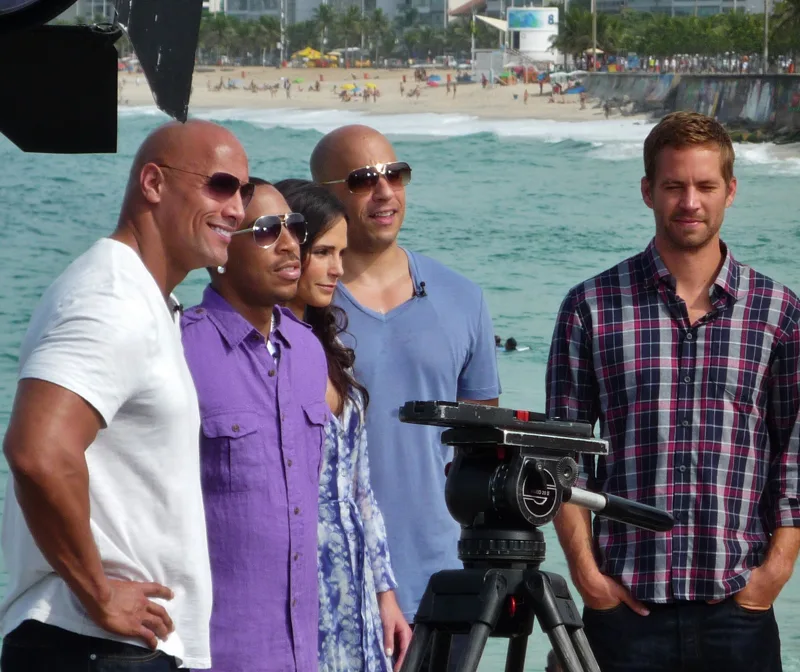
Vin Diesel plays Dominic Toretto, a professional street racer who was banned from competition after a violent attack. Paul Walker plays the undercover officer, and Michelle Rodriguez plays Letty Ortiz, Dom's girlfriend. Jordana Brewster plays Mia Toretto, Dom's sister, who becomes Brian's love interest.
The supporting cast includes Rick Yune as Johnny Tran, a gang leader and rival of Dom, and Chad Lindberg as Jesse, a crew member with a gift for mathematics who dropped out of school. Johnny Strong plays Leon, while Ted Levine and Thom Barry play the police and FBI officials who run the investigation. Rob Cohen appears in a cameo as a Pizza Hut delivery man.
What is the music like?
The score was composed by the producer BT, who mixed electronica with hip-hop and industrial influences. The film came with three soundtrack albums. The first features mostly hip-hop and rap, while the second, More Fast and Furious, leans into alternative metal, post-grunge and nu metal, with a few tracks from BT's score.
BT's original score album was later released by Binary Acoustics in February 2026, giving fans a standalone album of the score. The genre blend suits a film that combines a crime story with a youth-culture backdrop, and the music keeps the street-racing scenes moving.
How did the film perform at the box office?
The film premiered at the Mann Village Theatre on June 18, 2001, and opened in US cinemas on June 22 through Universal Pictures. Its opening weekend earned $40,089,015 and ranked number one, ahead of Lara Croft: Tomb Raider and several other releases.
The film was one of four consecutive Universal releases of 2001 to gross more than $40 million in their openings. Its widest release reached 2,889 theatres. The total gross came to $148,961,825 in North America and $63,686,572 abroad, bringing the worldwide total to $212,648,856 on a $38 million budget.
The home-video market added another layer. The DVD and VHS released on January 2, 2002 sold 2.1 million copies on the first day, the second-highest single-day DVD sales of any film at the time. Its first-week video rental revenue of $18.65 million set a record, and more than 5.5 million home video units had sold by April 2002.
An alternate ending, More Than Furious, was filmed and later included in a collector's bundle. In it, Brian resigns from the LAPD and asks Mia for another chance, though she tells him it is not going to be that simple.
How did critics respond?
Critics were divided. Rotten Tomatoes recorded 56% approval from 159 reviews, with an average of 5.40/10, and Metacritic gave the film 58 from 29 critics. Audiences gave it a B+ on CinemaScore, which suggests they enjoyed the picture more than the critics did.
Not every notice was warm. Owen Gleiberman of Entertainment Weekly gave the film a C, Elvis Mitchell of The New York Times called it a drag, and Susan Wloszczyna of USA Today gave it two and a half stars out of four, praising the director's ability to keep matters moving.
Todd McCarthy of Variety called the film a gritty and gratifying cheap thrill. Louis Leterrier and Jason Statham praised it after seeing it in Paris during a break from filming The Transporter. Rita Kempley of The Washington Post was far harsher, and several reviewers noted that the plot bore a close resemblance to Point Break, the 1991 Kathryn Bigelow film.
What came next for the franchise?
The film's success led quickly to a sequel. 2 Fast 2 Furious was green-lit immediately, but Diesel and Cohen declined to return, choosing instead to develop XXX, which starred Diesel. Universal commissioned new writers for a standalone sequel with Walker in the lead, and John Singleton was brought in to direct.
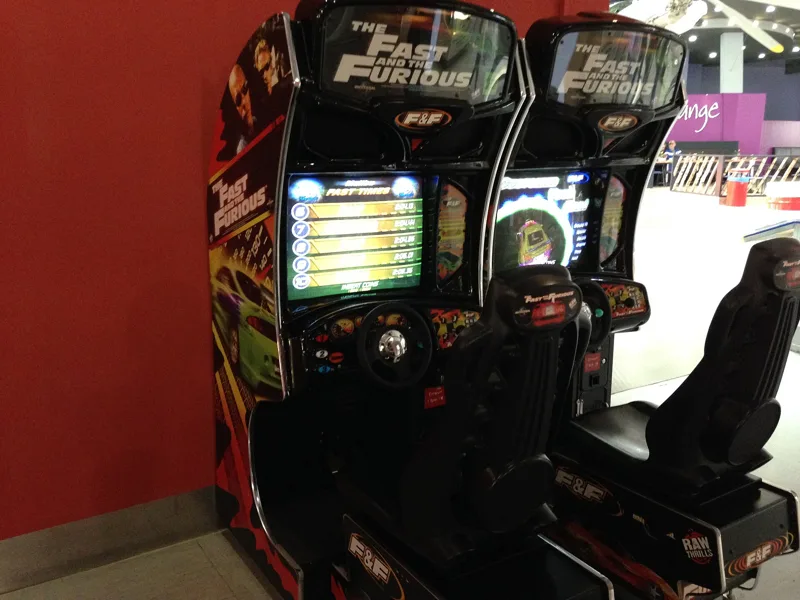
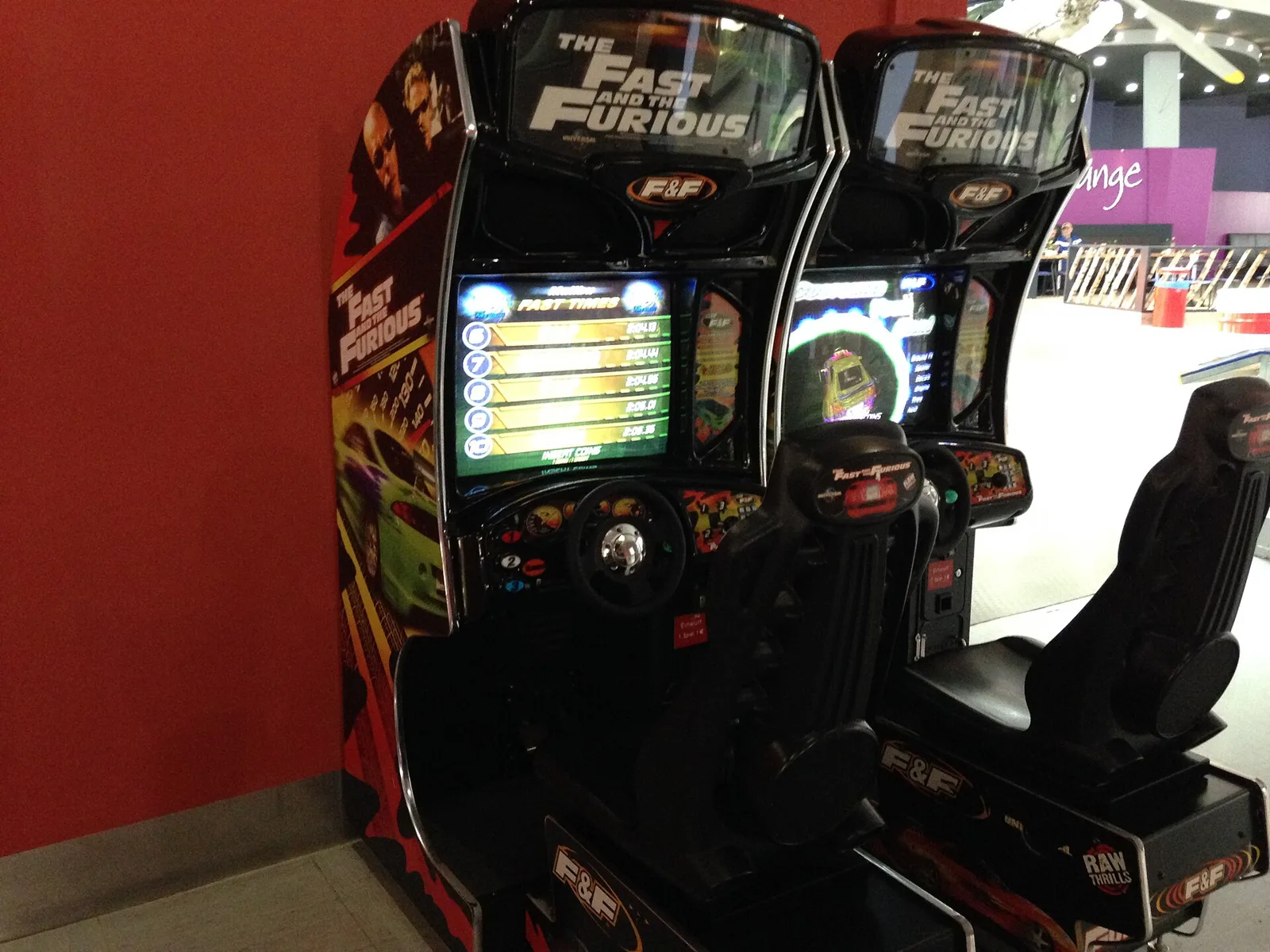
The franchise then grew into nine sequels and a wider universe of spin-offs. A video game was planned for 2003 on the PlayStation 2 and Xbox, and two other games came out in 2004, a mobile version and an arcade game. The arcade game was later ported to the Wii as Cruis'n in 2007.
The Tricked Out Edition DVD, released on June 3, 2003, added The Turbo Charged Prelude, a short film that set the tone for the sequel. The merchandising was extensive too. Racing Champions released diecast replicas in scales from 1/18 to 1/64, RadioShack sold micro RC versions in 2002, and AMT Ertl produced 1/24 plastic model kits of the hero cars.