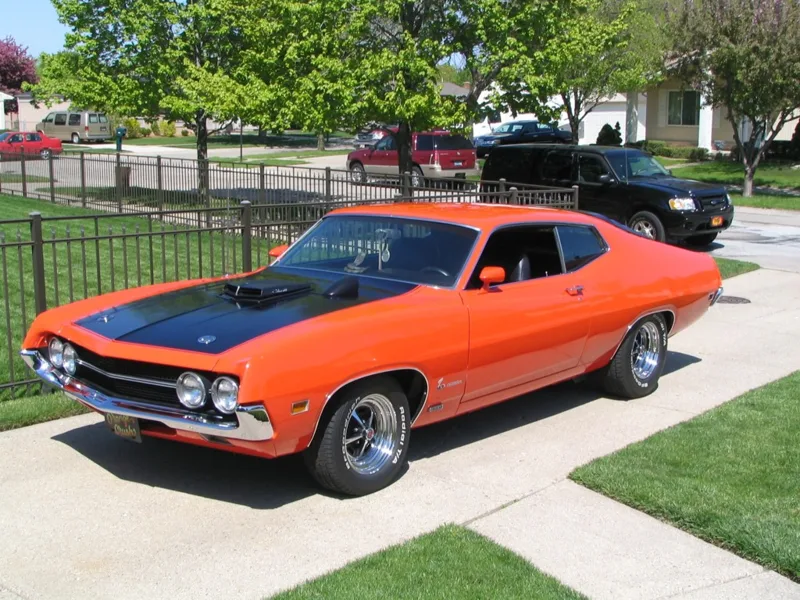
Justin Lin's 2006 move to Tokyo's drift scene, the Silvias, Mustangs and Veilside Mazdas behind it and the box office that made it the series' lowest earner.
Tokyo Drift is a 2006 Justin Lin film set in Japan's drifting scene, starring Lucas Black as a teenager who learns to drift. It is the lowest-grossing film in the franchise, with $158,964,610 worldwide, but it has since gained a devoted following.
Released in 2006, The Fast and the Furious: Tokyo Drift moved the franchise to Japan's drifting scene, with Lucas Black as a teenage racer sent to live in Tokyo. Justin Lin directed, and the film is a standalone story that sits between the earlier films and the later ones. It remains the lowest-grossing entry in the series, with $158,964,610 worldwide, yet it has since won a loyal following.
What is the story about?
Sean Boswell is a car enthusiast and a troublemaker in Arizona, who races a rival and wrecks his own car after a street race. Because of his record, he is packed off to live with his father, a US Navy lieutenant stationed in Tokyo. Sean has no interest in the city at first, but he soon finds its underground drift scene.
Sean meets Twinkie, a military brat who takes him to an underground car meet, where he clashes with Takashi, the so-called Drift King. Sean agrees to race Takashi in a Silvia S15 that Han lends him, a retired drift racer, and he loses badly. To repay the damage, Sean goes to work for Han, who teaches him to drift and gradually becomes his friend.
The stakes rise when Takashi threatens Han, and a chase ends in a crash that appears to kill Han. Sean's loyalty to Han becomes the moral engine of the film. The final act is a downhill race on a mountain pass that only Takashi has mastered, and the winner gets to stay in Tokyo as the new Drift King.
The franchise's odd detour to Tokyo, where a teenage racer learns to drift and a mentor's loss keeps coming back.
Which cars shape the drifting?
The cars mark each stage of Sean's growth, from the Detroit muscle that starts the trouble to the Japanese imports that teach him control. The film is a showcase for compact sports cars, and the Silvia S15 is the most important car in Sean's journey because it is the one he wrecks and then rebuilds in spirit.
| Car | Owner or driver | Role in the film |
|---|---|---|
| 2003 Dodge Viper SRT-10 | Clay | Rams Sean in the opening race in Oro Valley |
| 1971 Chevy Monte Carlo | Sean Boswell | Wrecked in the opening race |
| Nissan Silvia S15 | Han, lent to Sean | Badly damaged in Sean's first drift race |
| 2003 Mitsubishi Lancer Evolution VIII | Sean Boswell | Used to practise drifting |
| 1994 Mazda RX-7 Veilside | Han | Destroyed in the chase, supposedly killing Han |
| 1967 Ford Mustang Fastback | Sean's father's recovered car | Rebuilt for the downhill race |
| 1970 Plymouth Road Runner | Dominic Toretto | Arrives at the end to challenge Sean |
The Silvia's original engine stayed in place on screen, even though the film suggested a swap, and the RB26DETT donated to the Mustang came from the wrecked car. The Veilside-bodied Mazda was built for the 2005 Tokyo Auto Salon before Universal bought it and repainted it for the film. The Road Runner, which closes the film, was built for the SEMA Show.
How was the film shot?
Principal photography ran from August 2005 to November 2005, with filming in Los Angeles and Tokyo. It was the first film in the franchise to use an international location, though the production could not obtain the permits it needed in Tokyo. Lin decided to shoot in Shibuya anyway, a choice that led to a memorable run-in with the police.
Lin later recalled that the police in Shibuya were so polite that it took ten minutes for them to arrive and move the crew along. Lin did not know that the studio had hired a stand-in. When police arrived to make arrests, the stand-in said he was the director and spent the night in a cell. The stunt is one of the film's more colourful pieces of production folklore.
Some of the racing was filmed in a parking lot at Hawthorne Mall in Los Angeles, where crews used street lights and props to recreate the look of Tokyo. Terry J. Leonard coordinated the races and served as second unit director, while the film used almost 250 vehicles. Around 25 were cut up for stunts, and more than 80 were destroyed.
How did the project come together?
Chris Morgan, a fan of the series, pitched a story that sent Dominic Toretto to Tokyo to learn drifting and solve a murder. Universal wanted a high-school story instead, and in June 2005 the studio hired Justin Lin, who was not intimately familiar with drifting, to direct. Lin remembered seeing the first film with a sold-out crowd and wanted to bring that energy to a new chapter.
By 2005 Paul Walker no longer showed interest in the franchise, citing studio politics. Vin Diesel was busy with xXx and The Chronicles of Riddick, so he also turned the role down, and the film was ordered as a standalone reboot. The series was in a precarious state, and the picture could easily have gone straight to video.
Diesel later agreed to a brief cameo as Dominic Toretto in exchange for Universal's rights to the Riddick character, a trade that took the place of a fee. Universal still felt the film needed a star appearance, and the cameo gave the film a link to the earlier films while leaving the story free to stand on its own.
Who helped with the drifting?
The film brought in several notable drifting figures. Keiichi Tsuchiya, a legend of the discipline, made an uncredited cameo, while Rhys Millen and Samuel Hubinette provided and performed drifting and driving stunts. Six more drivers joined the team, since the studio's own stunt crew had no one who could drift.
Toshi Hayama was brought in to keep the Japanese elements accurate. He was contacted through a former high school friend who had starred in Lin's Better Luck Tomorrow, and he checked references, including the rule that nitrous oxide is used on straights but not in turns. He also pushed the production to keep sponsor references to a minimum.
The cultural checks extended to small details. A member of Kamata's gang appears with fingers missing, a practice associated with the yakuza, and the production digitally added the fingers to answer concerns about how the scene would be read. That attention to detail reflects the care the team took with a culture the film was portraying.
The result is a film that feels more like a car-culture documentary than a conventional action picture at times. Lin keeps the camera close to the cars and the drivers, and the drift sequences are framed to show the angles of the cars rather than the chase's destination. That focus is one reason fans still single out the film.
What is the music like?
The film's soundtrack contains twelve songs and came out on June 20, 2006 on Universal Motown. Artists such as Don Omar, Teriyaki Boyz and DJ Shadow appear, alongside Far East Movement and Mos Def. The mix reflects the film's global, streetwise tone.
Brian Tyler's original score was released a week later, on June 27, by Varese Sarabande. The score supports the racing scenes and gives the drift sequences room to breathe. Together the two releases show how the film blends Japanese pop-culture references with American hip-hop and rock.
How did the film perform at the box office?
The film opened on June 16, 2006 through Universal Pictures, and its first day produced $9,731,805. Its opening weekend grossed $23,973,840, which debuted it at number three behind Cars, which took $33.7 million that weekend, and Nacho Libre, with $28.3 million. The film was the first in the series not to open at number one.
Opening weekend polling showed that 58% of moviegoers were male and 60% were under 25. The film ultimately earned $62,514,415 in the United States and Canada, plus $96,450,195 abroad, bringing the worldwide total to $158,964,610. International receipts made up about 61% of the global gross.
In short, the opening day brought $9,731,805, the opening weekend $23,973,840, the domestic run $62,514,415, and the international run $96,450,195, which together make up the franchise's lowest worldwide total.
The film reached DVD and HD DVD shelves on September 26, 2006. A Blu-ray Disc followed on March 24, 2009, and a 4K Ultra HD Blu-ray arrived on October 2, 2018, keeping the film available for new audiences.
How did critics and audiences respond?
Critics were not kind at first. Rotten Tomatoes recorded 38% approval from 141 critics, with an average of 5/10, though users gave the film 69%. Metacritic scored it 45 from 32 critics, and audiences gave it an A- on CinemaScore.
Roger Ebert gave the film three stars out of four, praising Lin for taking an established franchise and making it fresh. Michael Medved was less impressed, giving it one and a half stars. Peter Travers said the film suffered from blurred vision and a plot running on fumes, while the director Rob Cohen, who made the first film, remarked that a viewer watching it alone might never want to see the franchise again.
Attitudes changed over time. In retrospective rankings the film was often placed at the bottom of lists, but it was later ranked second best of the Fast films by several outlets, and Esquire and BuzzFeed News named it the best of the series. Car enthusiasts in particular treat the film as the one most devoted to cars and their culture.
What did the film mean for the series?
The film's most lasting legacy is the return of Han. The character first appeared in a short cameo in Lin's Better Luck Tomorrow, and after Han's apparent death in Tokyo Drift, he was written back into Dominic Toretto's crew for the films set before Tokyo Drift, beginning with the 2009 entry, followed by Fast Five and the 2013 film.
Later films filled in more of Han's story. Fast & Furious 6 revealed that the fatal crash was intentional, and Furious 7 showed that Deckard Shaw, out for revenge over his brother Owen, was driving the Mercedes that hit Han. F9 then revealed that Han's death had been an illusion staged to keep him hidden for the events of Fast X. Fans rallied around the character with the hashtag JusticeForHan.
The film's place in the franchise has been revised upward over the years, and the later reveals kept Tokyo Drift in the conversation. Fans who once dismissed it now point to its car culture focus and its simple story as the reasons they return to it.
Frequently asked questions
Who stars in Tokyo Drift?
Lucas Black plays Sean Boswell, and Bow Wow appears alongside him. Sung Kang plays Han Lue, the retired drift racer who becomes Sean's mentor.
Why is Tokyo Drift the lowest-grossing film in the franchise?
It grossed $158,964,610 worldwide, the lowest total in the series. Its domestic gross was $62,514,415, and international markets provided about 61% of the total.
Is Tokyo Drift connected to the other films?
It is a standalone sequel that later films reference. Han's storyline links it to the films set earlier in the timeline.
What is the film's Japanese title?
In Japan the film was given a limited release under the title Wild Speed 3.