Ubisoft's 2011 sandbox placed players in a recreated San Francisco, where a comatose detective can leap from one car to another mid-chase.
Released on 30 August 2011, Driver: San Francisco is a Ubisoft action game. The fictional city is a recreation of San Francisco, and about 140 licensed cars can be driven. Ubisoft removed it from online stores in December 2016.
Driver: San Francisco is a 2011 action-adventure driving game from Ubisoft Reflections and Ubisoft. It is the fifth main game in the Driver series, and it places the action in a fictional San Francisco and the Bay Area around it. Its signature mechanic lets the hero jump between cars without stopping a mission.
What is Driver: San Francisco?
Driver: San Francisco is a 2011 driving game made by Ubisoft Reflections and published by Ubisoft. Set in a fictional San Francisco, it features about 140 licensed cars and a Shift mechanic that lets players jump between vehicles. It was delisted from online stores in December 2016.
The game acts as a sequel to Driver 3 from 2004 and takes place six months after that game's events. It follows Driver: Parallel Lines from 2006, and it was released for PlayStation 3, Xbox 360, Wii, Microsoft Windows and Mac OS X. The Mac version arrived in March 2012, after the original launch.
Much of the plot unfolds inside a dream world, so the Shift mechanic becomes the main tool for moving through both the city and Tanner's own mind.
A fictional San Francisco, a dream-world plot and a car-hopping mechanic that made the series feel fresh again.
How does Shift work?
Shift is the game's central ability. It lets John Tanner teleport from his current car into any other car in the setting while the mission carries on. The idea was partly inspired by Google Earth, and it replaced the get-out-of-the-car mechanic from Driver 2.
Developers removed the ability to leave a car because many games already offered that kind of feature, and they felt copying it was not desirable. They described the change as a return to the roots of the series. Shift also lets players start or continue missions from another vehicle.
Other tools include a boost on every car, activated by pushing up on the left thumbstick, and a ram attack that uses L1 on PlayStation 3 or the left shoulder button on Xbox 360. Film director mode, which had been absent from Parallel Lines, is back, and players can share their videos through the Driver Club website. The game runs at 60 frames per second.
Tanner's ability to inhabit other people's bodies in the story is the same Shift idea, applied to people rather than cars.
What happens in the story?
John Tanner is a police detective who pursues the criminal Charles Jericho after a prison breakout. Jericho's van forces Tanner into a crash with heavy traffic, and Tanner falls into a coma. While unconscious, he discovers he can Shift into other people's bodies, and the story plays out in a dream world shaped by a TV broadcast he heard.
Tanner wakes in his car, hears voices about an accident and finds himself inside the driver of an ambulance. He realises the body-swapping is part of the dream, and he uses the ability to help people across the city while he keeps investigating Jericho. Jericho, meanwhile, plans a chemical bomb to hold the city to ransom.
Tanner suspects the bomb threat is a hoax that hides a larger crime. Once he is awake, he tells his partner Tobias Jones so, and Jones hands over the key to his car. The real plan was to cover the breakout of Rufus, another inmate, along with several others. Tanner tracks Jericho through the city to a warehouse, where Jones rams him from the side and the two agree on a drink afterwards.
How did the Wii version differ?
The Wii version is a different game. It has no Shift mechanic, it adds guns that can be upgraded, and it works as a prequel to the original Driver. Its story has Tanner go undercover against the gangster Solomon Caine, with Tobias Jones as his new partner.
Tanner wins the trust of Caine's gang by doing jobs, including setting two rival gangs against each other. When a gang member recognises him as the officer who arrested him, Tanner is captured. Jones leads a rescue, and together they set a fake weapons drop that leads to Caine's arrest.
The chase ends when Caine's helicopter crashes on Alcatraz Island. Caine is sentenced to life in prison, then escapes to Chicago. The Wii weapons are an SMG, a pistol, a shotgun, an assault rifle and an RPG, and each has up to four upgrade levels for clip size, reload speed and damage. A second player can take control of the gun, and a Nintendo DS can build roadblocks.
What were the Wii split-screen modes?
The Wii edition added a localised multiplayer mode, in which a second player takes control of the gun. It also offered four-player split-screen with four game variants, and a cops and robbers mode. A Nintendo DS, DSi or 3DS can connect through download play.
In Capture the flag, players grab a flag and drive it to a set location. In Pass the Bomb, players pass a bomb from car to car before a timer runs out. Gold Rush asks players to grab a bag of money and hold on to it for points, and Elimination is a straight race between players.
On the Nintendo DS side, the device could build roadblocks, look for police and buy player one more time through a set of mini-games. Upgrade points for the Wii weapons come from doing tricks and earning awards around the city.
How big is the city and what cars are in it?
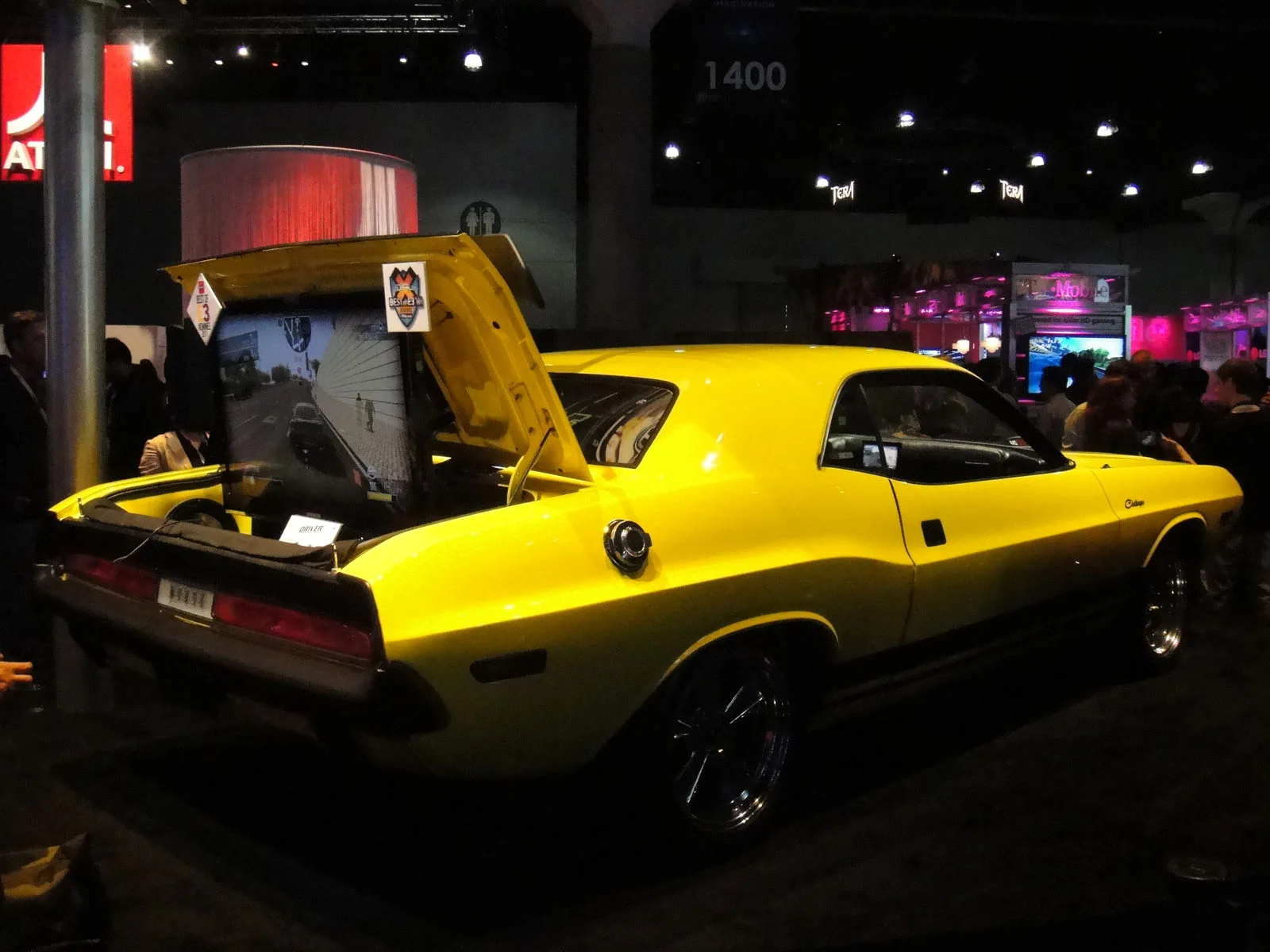
The setting recreates San Francisco and the surrounding Marin County and Oakland, with about 208 miles (335 km) of roads. Around 140 fully damageable licensed cars can be driven, from compact cars to sports cars. The protagonist's own car is a 1970 Dodge Challenger R/T.
Unlike other games in the series, San Francisco uses licensed real-world cars throughout, so the vehicles are modelled on real-life models rather than generic stand-ins.
The map follows the city's geography and landmarks, including the Golden Gate Bridge and the San Francisco-Oakland Bay Bridge. The Wii edition blocks the main bridges, which shrinks its playable area. Licensed marques include Alfa Romeo, Aston Martin, Audi and Bentley, along with Dodge, Ford, McLaren and Shelby.
| Feature | Detail |
|---|---|
| Release | 30 August 2011 in North America; 2 September 2011 in Europe |
| Platforms | PlayStation 3, Xbox 360, Wii, Windows, Mac OS X |
| Developer | Ubisoft Reflections; published by Ubisoft |
| Setting | Fictional San Francisco, Marin County and Oakland |
| Roads | About 208 miles (335 km) |
| Vehicles | 140 fully damageable licensed cars |
| Multiplayer | 19 game modes, split-screen and online |
| Soundtrack | 60 licensed songs at launch, later 76 |
How was the game made?
Development took around five years. Ubisoft confirmed a new Driver game in 2010, after acquiring the series from Atari, and announced it at E3 2010. Five Ubisoft studios worked on it, led by Reflections, with Vancouver, Kyiv, Shanghai and Montreal providing support.
The project had first been slated for Ubisoft's fiscal year ending in March 2011. That target was missed, and the game arrived in the late summer of 2011 instead.
Martin Edmondson, the series creator, returned to Reflections after he had left the games industry in 2004. Ubisoft also registered several domain names in April 2010, including one that pointed to the game's city setting before the reveal. An earlier Driver game for PlayStation 3 had been confirmed at the 2005 Tokyo Game Show, when Sony listed 102 titles.
Driver: San Francisco was the first title in line to use the Uplay Passport online pass. Misprinted codes left buyers of new copies unable to play online, so the pass was waived for the Xbox 360 version. Originally due in early 2011, the release slipped into the next fiscal year.
What multiplayer and music were included?
The game offered split-screen and online multiplayer for the first time in the series, with 19 game modes including Trailblazer, Tag and Sprint GP. The launch soundtrack held 60 licensed songs, and the list was later confirmed at 76. Players on PlayStation 3 and Xbox 360 could also play their own music.
In Trailblazer, players follow the trail of an AI-controlled car to collect points. Tag works in reverse: everyone chases one player, and whoever tags them becomes the new target. The multiplayer service was due to close on 1 September 2022 before the date moved to 1 October 2022.
The original score was written by Marc Canham, who also made a new version of the Driver theme. Audio was mixed at Pinewood Studios, known for the James Bond films. The soundtrack artists include Aretha Franklin, The Black Keys, Beastie Boys and Queens of the Stone Age.
How did critics respond?
Critics gave the game generally favourable reviews on Metacritic on every platform except Wii, which received mixed reviews. Famitsu scored the PlayStation 3 and Xbox 360 versions 33 out of 40. The Daily Telegraph and The Guardian each gave four stars out of five.
The Daily Telegraph praised the game's daft charm and argued that conviction in a bold idea can revive a tired series and genre.
The Guardian praised the sandbox and its exotic machinery but found the storyline perfunctory. The Digital Fix gave the PlayStation 3 version seven out of ten and credited the game for being genuinely different. Its awards included Best Driving Game of E3 2010 from Ripten.
It also won the Best Racing Game award at E3 2011 from Machinima. Ubisoft said in its fall 2011 quarterly report that sales had exceeded targets.
What happened after release?
The game left online stores in December 2016, when its licence expired. Fans then started a petition on Change.org asking Ubisoft to restore it. A mini-series from Wildstorm Productions bridges the gap between Driver 3 and this game, following Tanner's personal vengeance against Jericho.
David Lapham wrote the mini-series and Greg Scott drew it. The first issue came out in August 2011, and a Comic-Con 2010 preview introduced it under the title The Pursuit of Nothingness.
The collector's edition, released in PAL territories, included a replica of the 1970 Dodge Challenger R/T 440 Six Pack. It also carried a map marking 80 dares across the city and three extra multiplayer cars: the 1963 Aston Martin DB5, the 1972 Lamborghini Miura and the 1966 Shelby Cobra 427. Four single-player challenges completed the set.