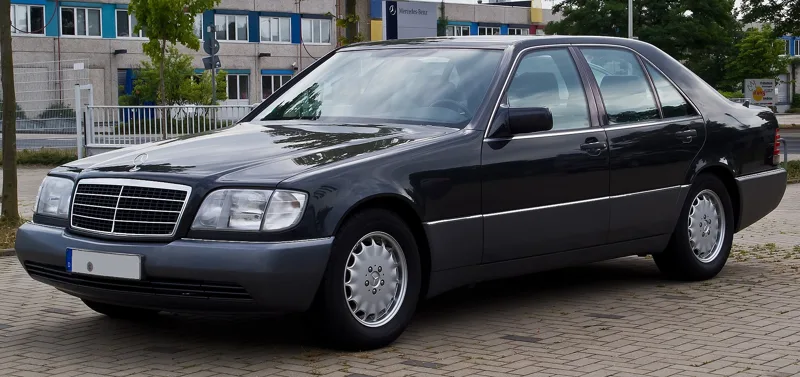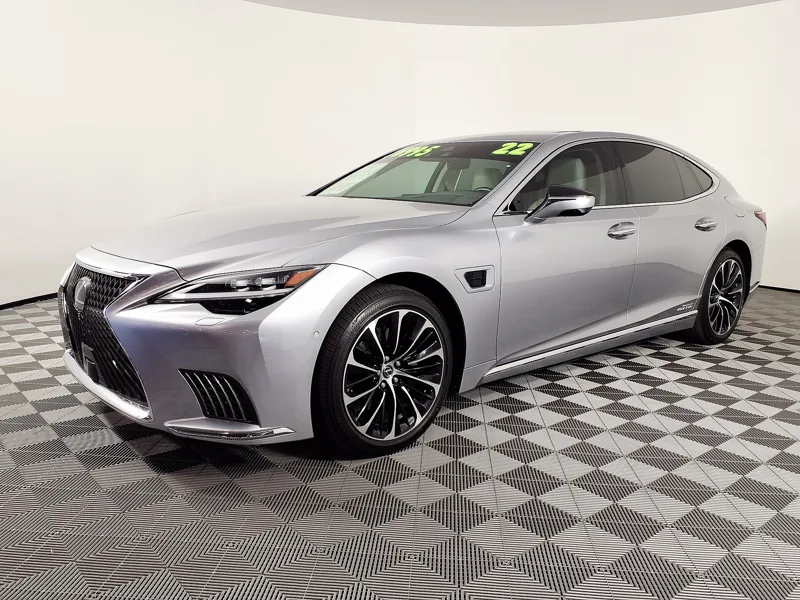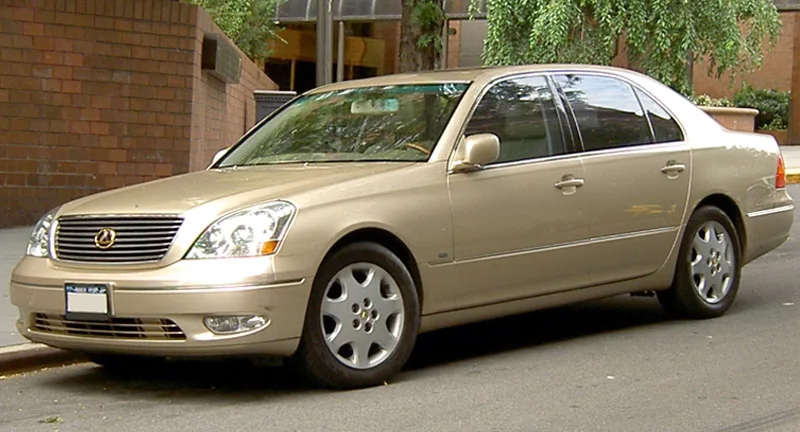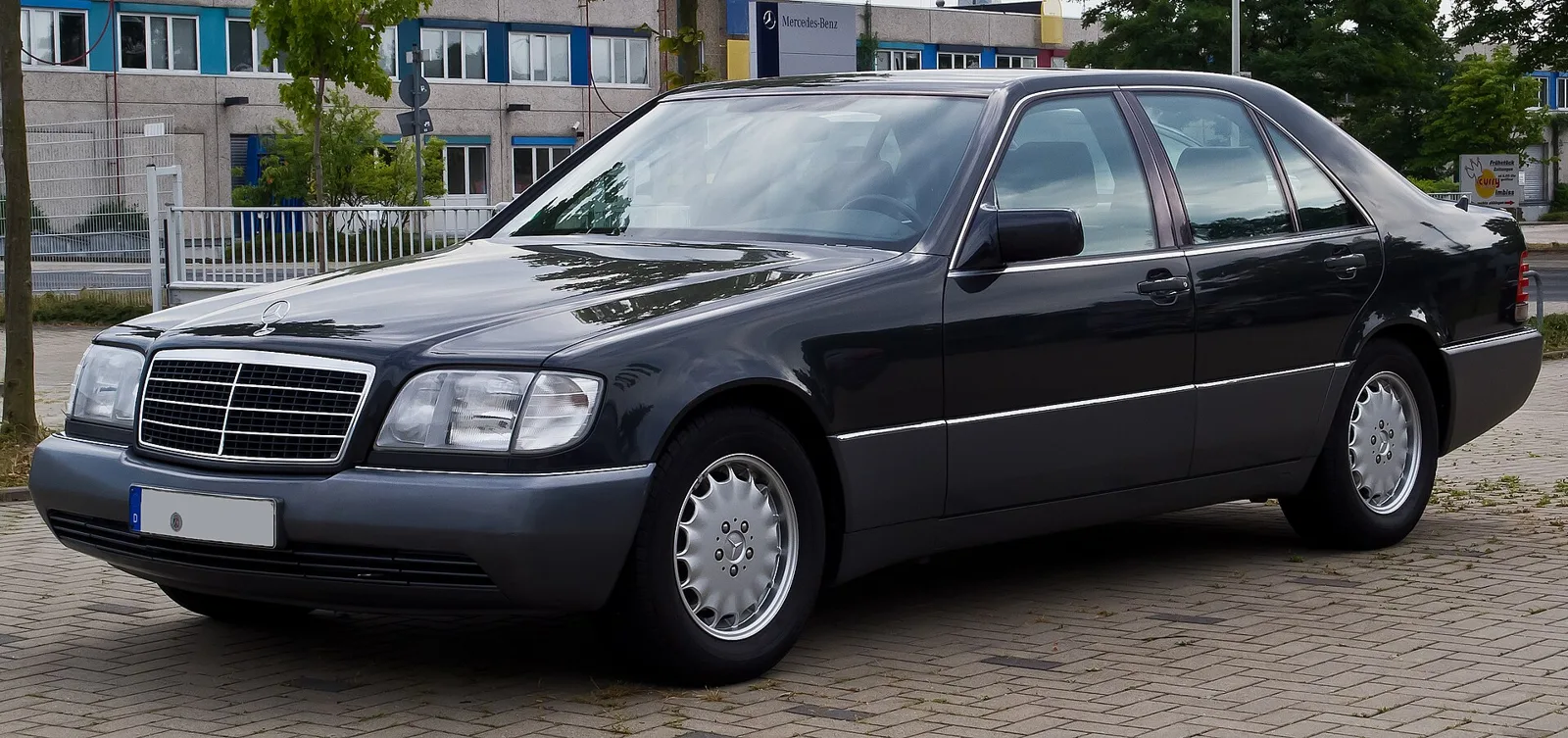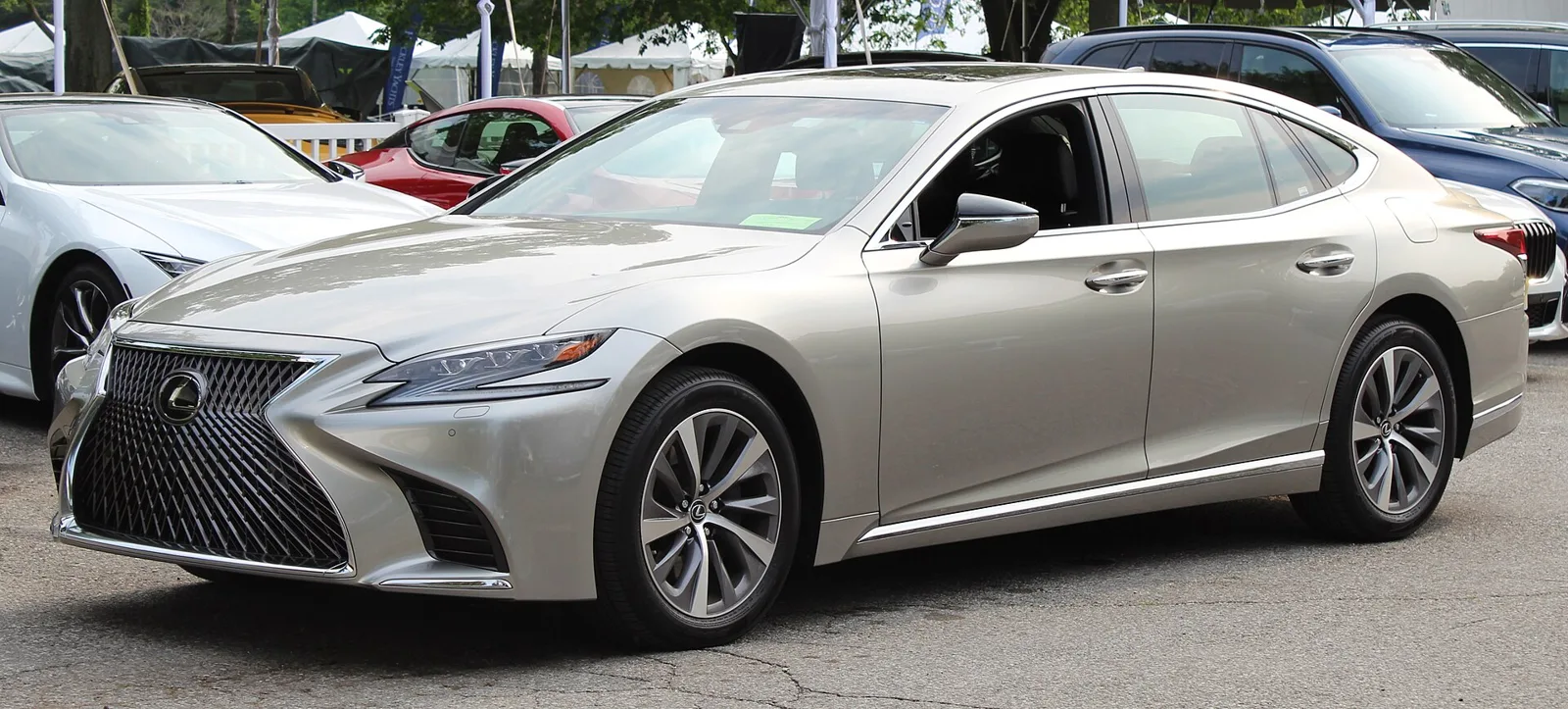
Toyota spent years and more than a billion dollars on a secret flagship, and Mercedes answered with the W140, the last S-Class many enthusiasts consider true to its engineering roots.
The Lexus LS 400 debuted in 1989 with a 245 PS V8 and a US$35,000 price, while the Mercedes-Benz W140 followed in 1991 with V8 and V12 options. The two cars competed for the same buyers, and many W140 customers switched to Japanese rivals on price.
The Lexus LS and the Mercedes-Benz S-Class W140 were built to beat the same class of car, the European full-size luxury sedan. Toyota's Lexus division arrived with the LS 400 in 1989, while the W140 followed in 1991 as Mercedes' answer to a changing market.
The two cars share a clear rivalry. The LS was designed from the outset for export, and the W140 was the Stuttgart flagship that had to hold off a new wave of Japanese luxury sedans in the American market.
Were the LS and the W140 direct rivals?
They were, and the W140's own history makes the point. Many prospective W140 buyers switched to Japanese competitors, including the Lexus LS, because of their lower prices and lower maintenance costs. The LS 400 was also compared with the BMW 735i and the Mercedes-Benz 420 SE, the older W126 generation of the same S-Class line.
The two cars were also priced against each other. The LS 400 launched in the United States at US$35,000, while the six-cylinder 300SE sat at US$71,500 in 1992 against the LS 400's US$44,300 that year.
Two flagships built to challenge European luxury, one from a new Japanese marque and one from the Stuttgart establishment.
Why did Toyota build the LS?
Toyota chairman Eiji Toyoda started the F1 project in August 1983. It was a clandestine effort to make a world-class luxury sedan for international markets, because Toyota's existing flagships, the Crown and Century, had little appeal beyond Japan. The aim was a flagship that could stand against Mercedes-Benz, BMW and Jaguar in export markets.
The project had no fixed budget or time limit, and chief engineer Ichiro Suzuki set out to build an all-new car. The result took five years and more than US$1 billion, with 60 designers and 1,400 engineers in 24 teams building around 450 flagship prototypes and 900 engine prototypes.
Specifications side by side
| Specification | Lexus LS 400 (1989) | Mercedes-Benz S-Class (W140) |
|---|---|---|
| Production | First generation from 15 May 1989 | 1991 to 1998, 432,732 cars in total |
| Engine | 4.0 L 1UZ-FE V8, 245 PS (180 kW; 242 hp) | V8 of 4.2 L or 5.0 L; V12 of 6.0 L |
| Top output | 245 PS (180 kW; 242 hp) | V12: 290 to 300 kW (394 to 408 PS; 389 to 402 hp) |
| Torque | 350 N m (258 lb ft) | V12: 569 to 580 N m (420 to 428 lb ft) |
| Transmission | Four-speed ECT-i automatic | No figure given |
| 0-100 km/h | 8.5 seconds | No figure given |
| Top speed | 250 km/h (155 mph) | No figure given |
| Drag coefficient | Cd 0.29 | No figure given |
| Cabin noise | 58 dB at 100 km/h (62 mph) | No figure given |
| Suspension | Independent double-wishbone with a passive air option | Front double-wishbone, rear multi-link, ADS damping |
| Launch price | US$35,000 base in the US | Six-cylinder 300SE US$71,500 (1992) |
| Reception | Car of the Year Japan at its introduction | Slow sales during the 1990 to 1994 recession |
How did the LS 400 engine perform?
The LS 400's 1UZ-FE was a 4.0-litre, 32-valve V8 making 180 kW (242 hp) and 258 lb ft (350 N m). It was linked to a four-speed automatic with ECT-i electronically controlled shifts and a super-flow torque converter. The engine was new to the car rather than carried over from an earlier model.
The car reached 100 km/h (62 mph) in 8.5 seconds and had a top speed of 250 km/h (155 mph). Its cabin ran at 58 dB at 100 km/h, and its noise level at 200 km/h measured 74 dBA in European tests, the same as a BMW 735i at 150 km/h.
Which V12 did the W140 offer?
The W140's V12 was Mercedes-Benz's first passenger V12 and was introduced in 1991 as a response to BMW's 750i. The 6.0-litre M 120 developed between 290 and 300 kW, with 569 to 580 N m of torque, and the V12 was standard on the top models.
Some V12s were tuned higher. An AMG-prepared M 120 pushed output to 445 PS (327 kW), with 460 lb ft (623 N m) of torque, and it was only offered on the coupe versions, not on the sedans.
How did the W140 come about?
Development of the W140 began in 1981. The design by Olivier Boulay was selected on 9 December 1986, and the design patents were filed in West Germany on 23 February 1988 and in the United States on 23 August 1988. The lead designer Bruno Sacco named Jaguar's XJ40 and BMW's E32 7-Series as major influences.
BMW's new 7-Series with its V12 forced Mercedes-Benz to delay the W140 by eighteen months to 1991. That delay let the company develop its own V12 and rebuild the engine bay to take it, and pilot production ran from June 1990 to January 1991.
What did the Lexus LS launch cost?
The LS 400's base price in the United States was US$35,000, which undercut its competitors by thousands of dollars and drew accusations of selling below cost from BMW. The target had been US$25,000, but a stronger yen pushed the price up.
The W140 was priced far higher. It cost up to 25 percent more than the W126 it replaced, and its six-cylinder 300SE was US$71,500 in 1992 while the LS 400 started at US$44,300 that year.
How did the LS's first generation sell?
Production was limited to about 50,000 cars a year, with 40,000 earmarked for the US, 8,000 for Japan and about 2,000 for the rest. By 1990 US sales of the LS 400 had passed those of its Mercedes-Benz, BMW and Jaguar rivals.
Production of the first-generation LS 400 totalled more than 165,000 units. A voluntary recall of 8,000 cars in December 1989, over wiring and a brake light fault, was handled within 20 days, which helped establish Lexus' service reputation.
Why did the W140 sell slowly?
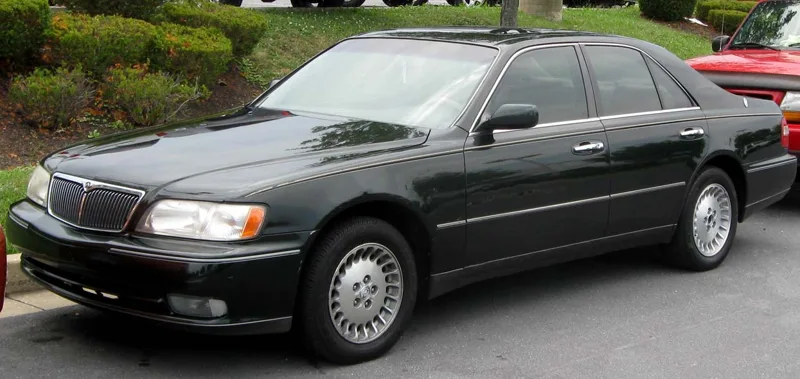
Its sales were slow during the recession of 1990 to 1994, partly because a wave of Japanese luxury cars arrived first. Many prospective W140 buyers chose the LS and the Infiniti Q45 on price, and the car's maintenance costs were lower than the Mercedes.
Mercedes-Benz moved from an engineer's design approach to a market-driven one in the 1990s. Many enthusiasts call the W140 the last true S-Class, and it sold 432,732 cars in total across its run.
What did the second-generation LS 400 change?
The second-generation LS 400 arrived in November 1994 with a longer wheelbase and more than 90 percent new or redesigned content. Its 1UZ-FE V8 made 194 kW (260 hp) and 270 lb ft (366 N m), and the car weighed 95 kg (209 lb) less than its predecessor.
It was the first LS with Skyhook adaptive air suspension and reached 100 km/h in 7.5 seconds. Its fuel economy was slightly better as well.
What safety features did the W140 introduce?
The W140 introduced a number of safety features. Electronic Stability Program first appeared in 1995 on the S 600 Coupe, and Xenon low-beam headlights arrived the same year. Side airbags and seat occupancy sensors followed in 1996 for the 1997 model year, along with Brake Assist.
Parktronic sonar parking came in 1995, and Linguatronic voice control in 1996. The S 600 Coupe was the first Mercedes with GPS navigation, and TELEAID emergency and tracking reached the US in 1997.
How did the LS and W140 handle their suspension?
The W140 used a new front double-wishbone axle and a rear independent multi-link suspension. Its ADS system, introduced in 1991, adjusted shock damping in a Skyhook-type layout and was standard on V12 models. Both cars offered air or adaptive systems, though the layouts and fitting differed.
The LS 400 used an independent double-wishbone system with high-mounted upper arms and twin-tube shock absorbers, with a passive air suspension available as an option. The second generation then moved to Skyhook adaptive air suspension.
How did the LS 400 compare with the BMW and Mercedes rivals?
Set against the 735i from BMW and the 420 SE from Mercedes-Benz, the car had a quieter cabin, a higher top speed, a lower drag coefficient and a lower curb weight than either. It also avoided the US Gas Guzzler Tax.
In a German comparison test by Auto Motor und Sport, the LS 400 finished last behind the BMW 735i L and the Mercedes-Benz 420 SEL. It earned the highest marks for its powertrain but fell behind on bodywork, road holding and comfort.
How was the LS sold in Japan?
The Japanese version was the Toyota Celsior, a right-hand-drive car largely identical to the LS, introduced on 9 October 1989 and sold only at Toyopet Store locations. It came as a basic A, a B with uprated suspension, or a fully equipped C.
Two world firsts came with the Celsior: high-performance twin-tube shock absorbers, and an air suspension paired with Toyota's semi-active Piezo TEMS system. In 1992 it also brought the world's first GPS navigation system with voice instructions, supplied by Aisin.
What changed in the 1992 LS 400 refresh?
The refreshed LS 400 appeared in September 1992 as a 1993 model, with more than 50 changes largely made in response to customer and dealer requests. It had larger disc brakes, wheels and tyres, revised suspension and power steering, and a standard passenger airbag.
By 1994 its US base price had passed US$50,000, a rise that followed steady increases since launch. Customer demand and currency movements both played a part.
When did the LS reach each market?
Limited exports to Australia, Canada and the United Kingdom began in 1990. Some smaller markets did not receive the car until late 1991, close to three years after its debut, because Lexus focused on North America and its home market first.
What engines did the W140 use below the V12?
The M 104 petrol engine arrived in 1992 in two sizes, a 2.8-litre in the S 280 and a 3.2-litre in the S 320, both with double overhead cams and four valves per cylinder. The M 119 V8 came in 4.2-litre and 5.0-litre forms and stayed unchanged for the car's run.
Diesel buyers had the 3.5-litre inline-six OM 603.97x, carried over from the W126, until 1996, when an entirely new 24-valve diesel replaced it. Two rumoured V16 projects were quietly cancelled in the early 1990s.
Which buyer suits each car?
A buyer who wants a quiet, well-equipped flagship at a lower price than the European cars, with a 4.0-litre V8 as its engine. The W140 suits a buyer who values a V12 option and a sedan with the engineering that its enthusiasts praise.
Practicality is only partly covered. Neither car's luggage space or running costs is compared here, though the W140 was offered in two wheelbases and in a Pullman stretch from 1995.
How did the W140 model range develop?
The W140 came as a standard wheelbase sedan, a long-wheelbase sedan and a coupe. The coupe was renamed as the CL-Class in 1996, and the Pullman version with a 4140 mm wheelbase was introduced in 1995 with S 500 and S 600 engines.
The Sultan of Brunei ordered eighteen S 73 T estates with AMG-prepared V12s, and ten were delivered. A one-off S 500 Landaulet was built for Pope John Paul II in 1997.