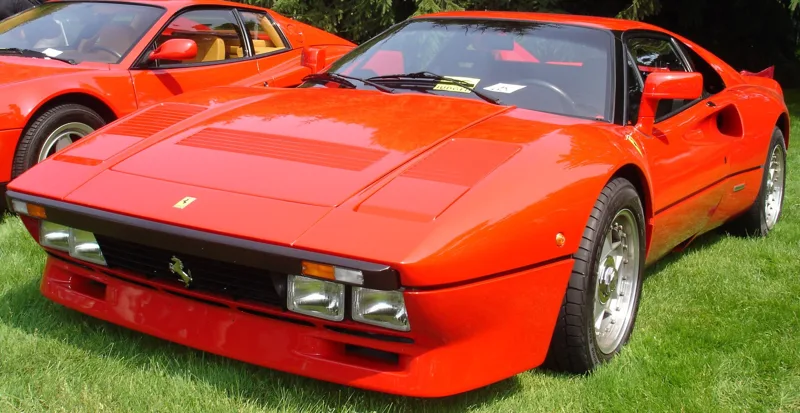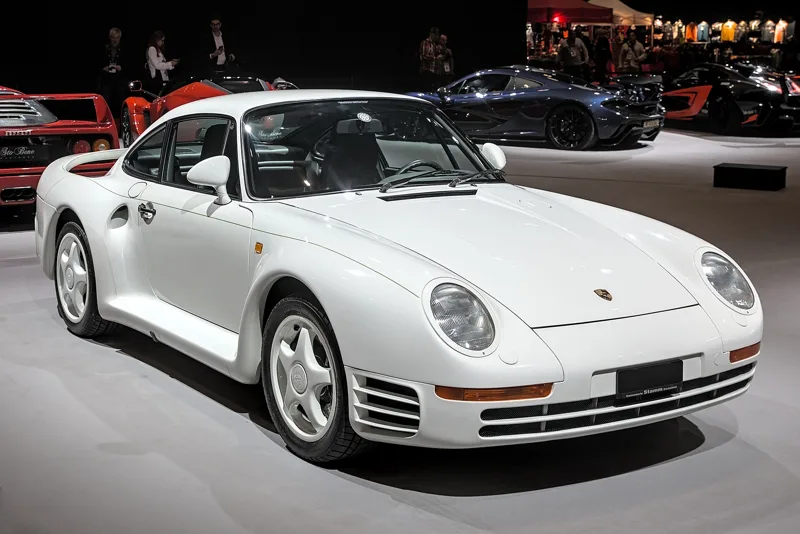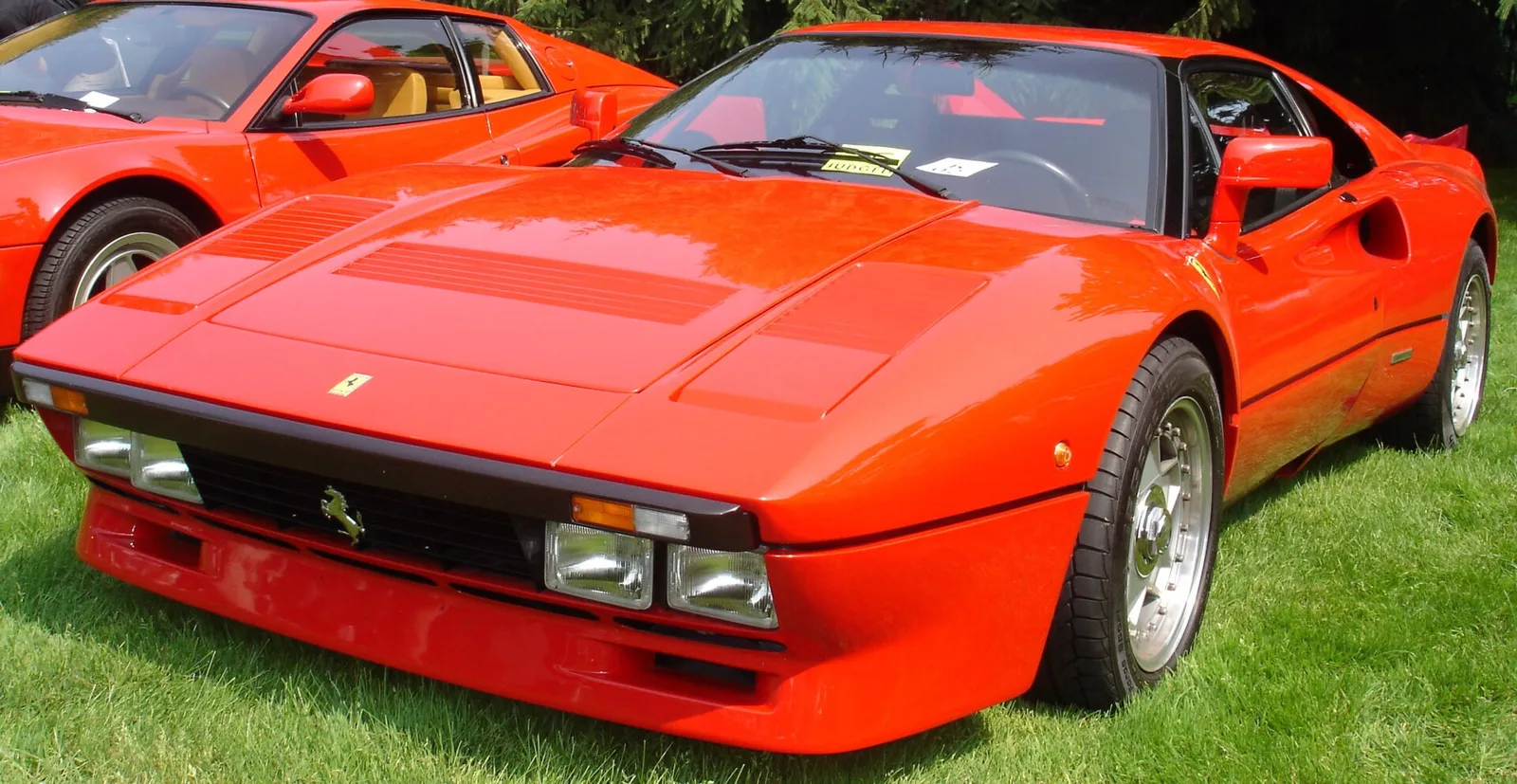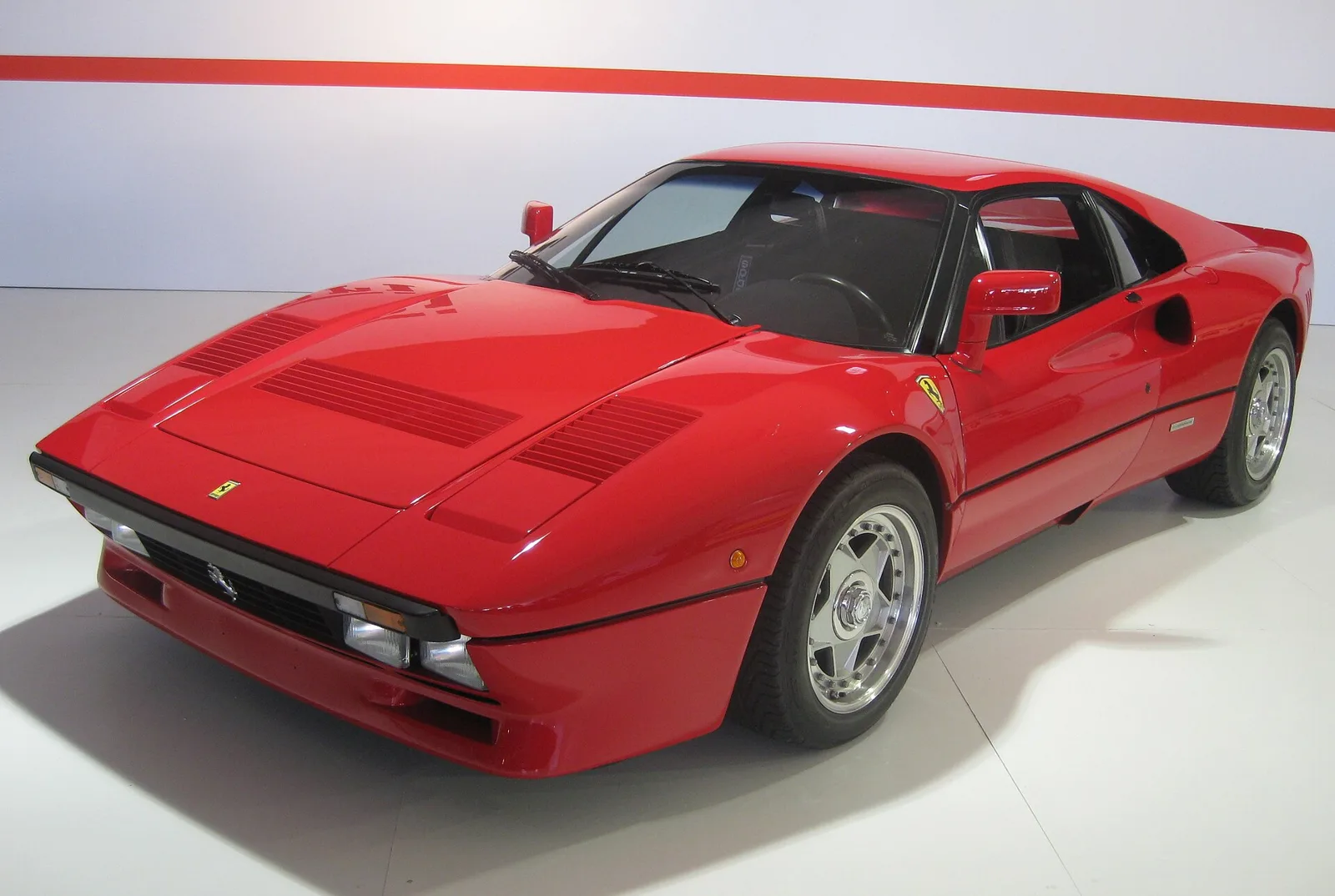
Ferrari's road-going homologation special and Porsche's all-wheel-drive flagship arrived in the same racing era, with very different answers to the same challenge.
The Ferrari 288 GTO was a turbocharged V8 homologation special built at Maranello from 1984 to 1987, with 272 cars made. The Porsche 959 was a twin-turbo flat-six all-wheel-drive car built from 1986 to 1993, designed for Group B before it became a road car.
The Ferrari 288 GTO and the Porsche 959 were built for the same 1980s racing rulebook, and both became landmark road cars as a result. One was a turbocharged V8 derived from a mid-engined Ferrari, and the other a twin-turbo flat-six with all-wheel drive. Set side by side, they show two very different routes to the same goal of a fast, rare road car that could also compete.
Why were the two cars built?
The 288 GTO was built at Maranello from 1984 to 1987 as an exotic homologation version of the 308 GTB. It was not originally conceived for the 1982 Group B circuit series, and Enzo Ferrari did not control the road car division at the time.
Falling road car sales in the early 1980s pushed the division towards a new flagship. Turbocharging had already proved itself in Formula 1 and on the 208 Turbo, so Ferrari looked to a turbocharged 3-litre engine for a road car that could produce around 330 bhp.
The 959 began in 1981, shortly after Peter Schutz became Porsche's managing director. Chief engineer Helmuth Bott proposed a new all-wheel drive system and used Group B rallying as the arena to test it, and the project was approved to build a car for that competition.
Homologation required at least 200 cars for each machine. Ferrari built 272 GTOs, which was well above the minimum, while Porsche's road version was designed to meet the same FIA requirement for 200 units.
Two turbocharged 1980s supercars born from the same racing rulebook, one a rear-drive Ferrari V8 and one an all-wheel-drive Porsche flat-six.
What engines did the two cars use?
The 288 GTO had a 2.8-litre DOHC V8 with IHI twin turbochargers and Behr air-to-air intercoolers, rated 400 PS (395 bhp; 294 kW) at 7,000 rpm. The engine was mounted longitudinally in the space the 308 had used for its rear trunk.
The FIA multiplied the turbocharged capacity by 1.4, which gave the GTO an equivalent capacity of 3,997 cc. That result sat just under the Group B limit of 4.0 litres, which shaped the engine's entire design.
The 959 used a 2,849 cc twin-turbo flat-six with four valves per cylinder, based on the four-camshaft unit from the Porsche 956 and 962 race cars. It produced 450 PS (331 kW; 444 hp) at 6,500 rpm.
The 959's sequential twin turbos were chosen for smooth power delivery, in contrast to the abrupt on-off character of Porsche's earlier turbocharged engines. Torque was 496 N m (366 lb ft) for the GTO and 500 N m (369 lb ft) for the 959, so the two cars were very close on paper.
How did the two cars handle and grip?
The 959's PSK all-wheel-drive system could send as much as 80% of its power to the rear under hard acceleration. It also varied the power split with road surface and grip, which helped maintain traction in all conditions.
Porsche used an aluminium and Kevlar composite for the body panels and chassis, with a Nomex floor in place of steel. The car's drag coefficient was as low as 0.31, and its automatic ride-height adjustment added to its stability.
The GTO was a rear-wheel-drive car with a mid-mounted V8 and a body built from fibreglass for the major panels. Its Kevlar bonnet and Kevlar and carbon roof helped it weigh 2,555 lb (1,159 kg), well below the 3,085 to 3,350 lb of the 308 it came from.
Both cars showed how far their makers would go to save weight. The GTO was the lighter machine, while many observers consider the 959 the most technologically advanced road car of its time, because of its traction system.
How did the two cars perform?
Road & Track measured the GTO at 0 to 60 mph in 5.0 seconds, 0 to 100 mph in 11.0 seconds and a top speed of 179 mph (288 km/h). Ferrari claimed 189 mph (304 km/h) for the car, and an Evoluzione was reported to reach 225 mph with 650 hp.
Road & Track recorded the 959 at 198 mph (319 km/h) and 0 to 60 mph in 3.6 seconds, and Car and Driver also measured 3.6 seconds in Komfort trim. Auto, Motor und Sport recorded 318 km/h (198 mph) and 3.7 seconds for 0 to 100 km/h, figures that Guinness recognised as records for a road-tested car.
The 959 S was a sharper version, and its larger turbochargers lifted output to 515 PS (379 kW; 508 hp). Auto, Motor und Sport tested one at the Nardo Ring in 1988 at 339 km/h (211 mph), and only twenty-nine were built.
How did the two cars fare in Group B and racing?
The 288 GTO's Evoluzione never raced, because Group B circuit racing was suspended at the end of 1986 and the project was shelved. Ferrari had planned 20 cars to meet the homologation rules, but only six Evoluzione models were built.
The 959's racing career was far more active. Development cars based on the 911 finished first, sixth and 25th at the 1984 Paris-Dakar rally, and a 959 went on to win the 1986 event with Rene Metge in first place.
The racing 961 finished first in its class and seventh overall at Le Mans in 1986. In 1987 a 961 suffered a fire after a mis-shift, and the car was later repaired and put on display at the Porsche Museum.
The 288 GTO was never officially sold in America, and grey importers modified individual cars to meet US rules. The 959 faced similar problems, which kept most examples out of the country for years.
How many of each were built, and at what price?
Ferrari built 272 units of the 288 GTO, and the last of them was given to Niki Lauda by Enzo Ferrari himself. Several other Formula One drivers were also offered cars, including Michele Alboreto and Keke Rosberg.
The 959 went into production with a run that ended in 1988 with 292 cars, and 337 were built in total when prototypes and pre-production cars are counted. Porsche added eight more cars in 1992 and 1993 from spare parts.
The 959 cost DM431,550 (US$225,000) at launch, which was less than half what Porsche spent building each car. Its later cars were far more expensive, at DM 747,500 each.
How do the two cars compare side by side?
| Feature | Ferrari 288 GTO | Porsche 959 |
|---|---|---|
| Built | 1984 to 1987 at Maranello; 272 cars | 1986 to 1993; 337 built in total |
| Engine | 2.8 L twin-turbo V8, 400 PS (395 bhp; 294 kW) | 2,849 cc twin-turbo flat-six, 450 PS (331 kW; 444 hp) |
| Torque | 496 N m (366 lb ft) at 3,800 rpm | 500 N m (369 lb ft) at 5,000 rpm |
| Drive | Rear-wheel drive | All-wheel drive with PSK |
| Weight | 2,555 lb (1,159 kg) | Not given |
| Top speed | 189 mph (304 km/h) claimed | 317 km/h (197 mph) when introduced |
| Price | Not given | DM431,550 (US$225,000) at launch |
| Ranking, 2004 | Second on the 1980s list | First on the 1980s list |
How did the 959's development history unfold?
Helmuth Bott knew Porsche needed a sports car it could rely on for years, and he suggested that the rear-engined 911 could be developed further. He proposed researching a new all-wheel drive system, and the company agreed to test it.
The Group B prototype was unveiled at the 1983 Frankfurt Motor Show, and finishing touches were still being applied on the eve of the display. After the first two prototypes, the bodywork gained air vents in the wheel housings and intake holes behind the doors.
The road car first appeared at the 1985 Frankfurt show as a 1986 model, yet many problems pushed production back by over a year. Customer deliveries of the street car began in 1987, after which the car was offered in two trims.
What did the 959's production and options look like?
The 959 was built at Karosserie Baur rather than at Porsche's Zuffenhausen plant, with Porsche inspectors overseeing the finished bodies on the line. Most of the special order leather work was also done at Baur.
The car was offered in Komfort and Sport trims, and a factory upgrade gave customers a further 530 PS (390 kW; 523 hp) if they wanted it. Paul Frere reported that such a car reached a higher top speed with a faster 0 to 100 km/h time.
The later cars of 1992 and 1993, assembled from parts on the shelf, featured a speed-sensitive damper system. Driven first by works personnel, they are now the most sought-after 959 models.
How did the 288 GTO's chassis and wheels compare?
The GTO's wheelbase was 110 mm longer than the 308's, at 2,450 mm (96.5 in), and its track was widened to suit wider Goodyear tyres on 16-inch wheels. The longitudinal engine and transmission gave the car a race-style layout, with quick gear-ratio changes for different circuits.
The 959 used magnesium alloy wheels that were hollow inside, forming a sealed chamber with the tyre and a built-in tyre pressure monitoring system. Its magnesium cam covers and housings were a further weight-saving measure in the engine.
Both cars put a premium on lightness and on the ability to hold the road at speed. Their wheel and chassis solutions show how differently each maker approached that goal.
Which buyer suits each car?
On the facts given, the 288 GTO suits a buyer who valued a rare Ferrari V8 with a famous racing name. The 959 suits a buyer who wanted an all-wheel-drive car that could cope with wet, dry and snowy roads.
GTO buyers were enthusiasts who wanted exclusivity, and Ferrari relied on loyal customers who were willing to pay for the performance and style the car offered. Its low production and Italian drama gave it a special place.
959 buyers could choose the Komfort or Sport trim, and the car's comfort and traction made it suited to long journeys as well as track days. Its engineering was the more unusual of the pair.
Neither car is shown to be better overall, and the figures for the GTO's sales beyond the 272 built are not given. The choice rests on whether a buyer wants Italian drama or German technology.