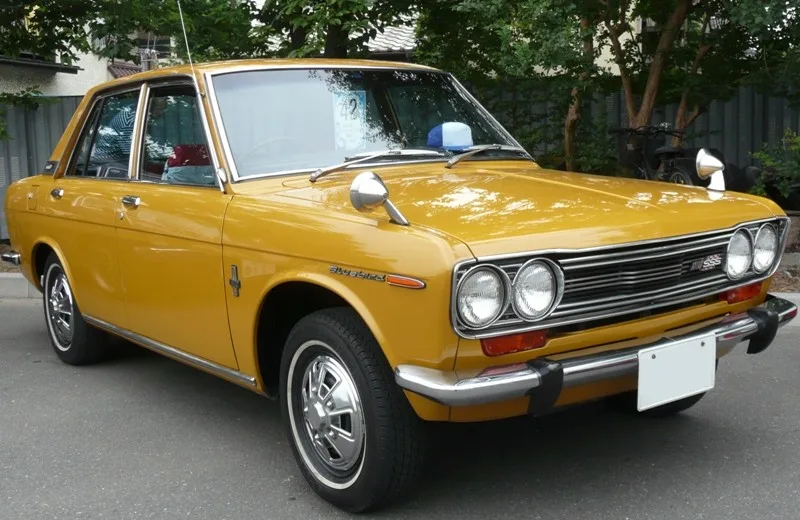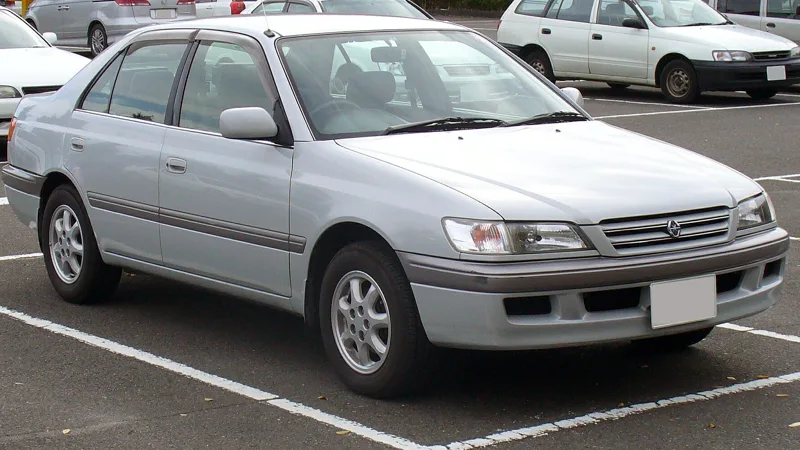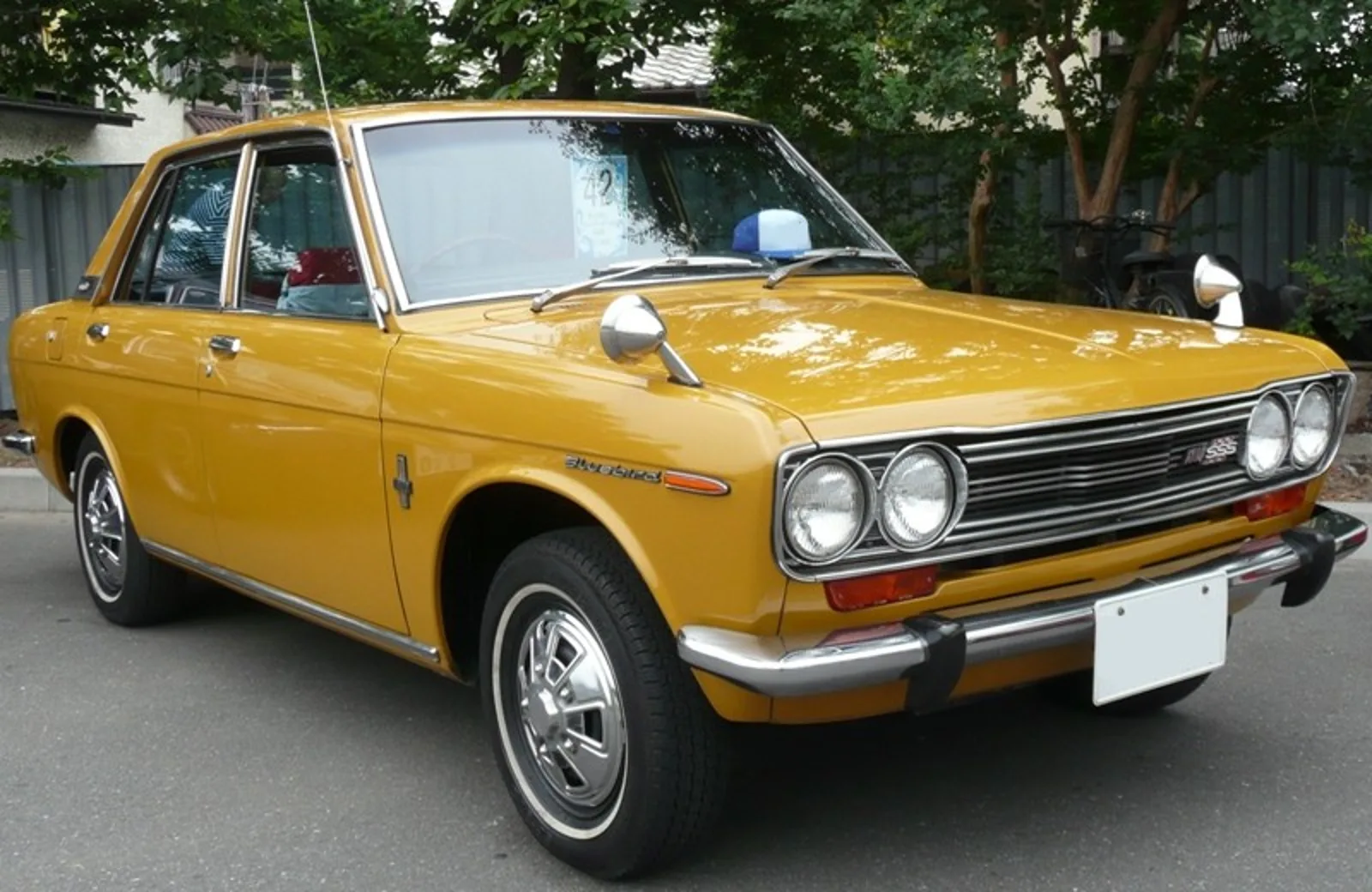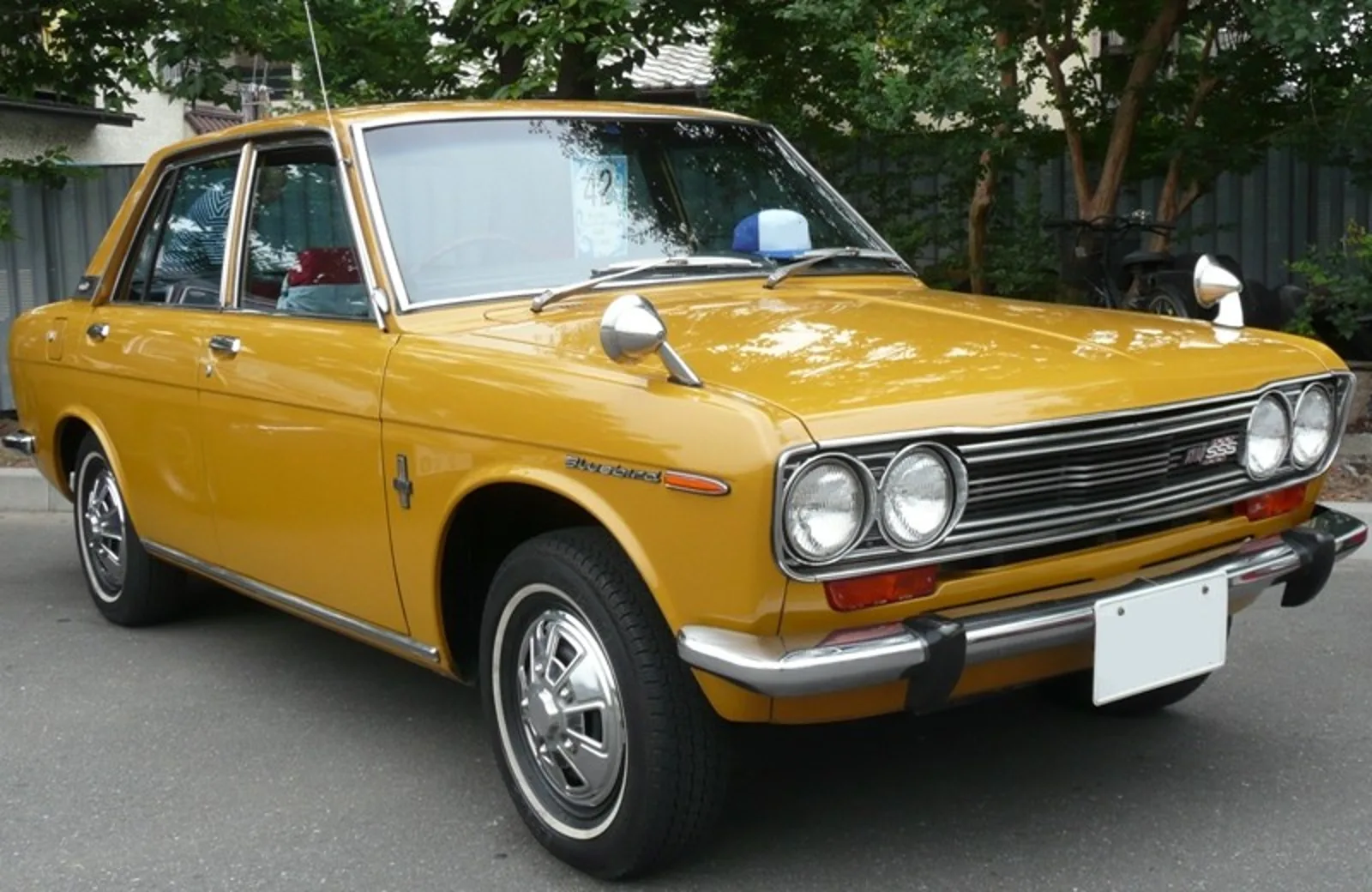
Nissan's Bluebird and Toyota's Corona met head to head in Japan and abroad. Here is how the Datsun 510 and the Corona compare on engines, suspension, motorsport, sales and the buyer each suited.
A rally-proven Datsun with four-wheel independent suspension faced a Toyota family car that carried a live rear axle. This comparison weighs engines, racing records, export sales and which buyer each car suits.
The Datsun 510 and the Toyota Corona were two of the best-known mid-size cars to leave Japan in the 1960s, and the Datsun article itself names the Corona as a rival. The 510 was the third generation of Nissan's Bluebird. The Corona was one of Toyota's first models sold beyond its home market. Both sold well in export markets, and both were later assembled in several countries.
This comparison covers why the two were rivals, how each was developed, their engines and suspension, their motorsport records, how they sold in Britain, Oceania and North America, and which buyer each suited on the facts available. Gaps in the material appear in the table as No figure given, so they stay visible.
Why were the Datsun 510 and Toyota Corona rivals?
The Corona was described in its source material as the traditional competitor of the Nissan Bluebird, and the 510 was the Bluebird's third generation. That placed the two cars head to head in the same mid-size class, where buyers could compare them on size and performance.
The rivalry carried into Japan itself. When the 510 was first shown at the 1967 Tokyo Motor Show, Nissan argued that its 1.3-litre overhead-cam engine was more capable than Toyota's 1.5-litre unit. The little Datsun engine was held back by its three-speed manual gearbox, however.
Export markets were another battleground. The Corona was one of Toyota's first exported models, and the 510 helped Nissan extend its international sales through its rallying successes outside Japan. Both makers used their cars to build a name abroad, which made the rivalry an international one.
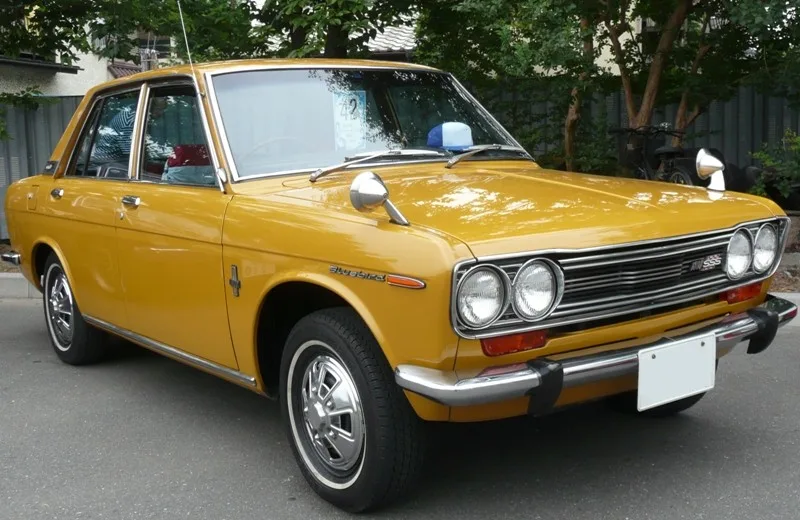
A Datsun with independent rear suspension, set against a Toyota whose live axle was the norm and whose export success helped make a name abroad.
How were the two cars developed?
The 510 drew its engineering from contemporary European sedans, particularly the 1966 BMW 1600-2. It used an overhead-camshaft engine and four-wheel independent suspension, with MacPherson struts at the front and semi-trailing arms at the rear. Its styling is credited to Datsun in-house designer Teruo Uchino. The project originated with the Prince Motor Company, which merged with Nissan in 1966.
The Corona's first generation, the T10 introduced in May 1957, reused parts from the Crown and Master, and many of its body panels were cut down from the Master. It began with an old sidevalve engine of 33 PS (24 kW). The 997 cc OHV P series replaced that unit in October 1959, offering 45 PS (33 kW) at 5,000 rpm. The T10 was also the first Toyota car with a monocoque chassis and independent front suspension using double wishbones, which helped keep it under 1,000 kg (2,200 lb).
The Corona's third generation arrived in September 1964, one month before the 1964 Summer Olympics. It was offered as a sedan, two-door hardtop, van, wagon, coupe utility and five-door hatchback. Toyota tested one over 100,000 kilometres on the Meishin Expressway, sustaining 140 km/h (87 mph) during the demonstration.
What engines and suspension did the two cars use?
The 510's North American engine was a 1.6-litre L16 overhead-cam four with a Hitachi downdraft carburettor, advertised at 96 hp (72 kW) gross and a claimed top speed of 100 mph. Front disc brakes and four-wheel independent suspension came as standard on the sedans, while the station wagons kept a live axle with leaf springs.
Japan first received a smaller 1.3-litre overhead-cam engine rated at a claimed 72 PS (53 kW), married to a three-speed manual. Many Datsun parts were interchangeable, so owners could move a 510 from the L16 to the larger L18 and later to the 2.0-litre L20B. Some markets offered twin Hitachi side-draft carburettors, and SSS models carried upgraded trim that was never sold in North America.
The Corona started with the 997 cc P series engine, and the second generation began with a 1.0-litre version of the same unit. In March 1961 Toyota added the 1.5-litre R series, which came from the Crown, and a 1.9-litre engine arrived in 1964. Later third-generation cars carried a 1,587 cc 4R engine with a twin SU carburettor and 90 bhp (67 kW; 91 PS). Disc brakes were fitted to the front wheels around the same time.
The suspension gap was the sharpest technical difference. The Datsun article describes the Corona, like the Ford Cortina, as having a live, leaf-sprung rear axle, while the 510 used independent rear suspension. That single difference gave the 510 a handling edge that enthusiasts prized for years.
How did the two cars compete in motorsport?
The 510's racing reputation is strongest in the United States. It was competitive in the Trans Am Series' 2500cc class, and John Morton won the 1971 and 1972 championships in a BRE Racing 510 prepared by Pete Brock. The car remains one of the most popular production cars in numerous SCCA amateur classes, helped by Nissan's wide network of replacement parts.
In Australia the Datsun 1600 was very competitive in the Australian Rally Championship, where it recorded outright and class wins. In New Zealand the locally assembled 1600 became popular for modification and racing, and its independent rear suspension helped it stand apart from rivals that still used live axles.
The Corona's competition record is less prominent in the material used. Its sporting highlight was the 1600GT of 1967, a two-door hardtop coupe built on the Corona body with a 110 PS (81 kW) DOHC engine derived from the 2000GT. Only 2,222 were made in 13 months. It inspired a line of later performance coupes, including the Celica GT, and a 2.0-litre DOHC engine stayed available in Corona GT coupes until 1983.
How did the two cars sell?
In Britain the 510 was a modest seller. UK imports were announced at the October 1968 Motor Show, and Nissan brought in about 4,000 510 models. The L14 replaced the L13 in October 1970, and the car stayed on sale until May 1972, when the 610 took its place. The Nissan dealer network was only properly established as the 510 was being discontinued, so the car never really received the marketing and recognition it earned elsewhere.
The Corona's sales story was one of expansion. Toyota's US vehicle sales topped 20,000 units in 1966, a threefold increase, and by 1967 the company had become the third-best-selling import brand in the country. Toyota had withdrawn from North America in 1961 and returned in June 1964 under its own name, with the third-generation Corona leading the way.
The Corona also won the 1969 Road Test Import Car of the Year award in the US. In 2014 the magazine Car and Driver rated it among the finest cars Toyota has built, and it credited the Corona with helping the company prosper in America.
The Datsun 510 sold well in North America too. The two-door sedan became popular and was imported into the United States and Canada in large numbers for five model years. Canada sold the car as the Datsun 1600 rather than under its internal model code.
Both cars later passed to new names. The 510 name returned in Canada and the US from 1974 to 1981, on cars that were quite different, and the 510 itself was replaced in North America by the Stanza in 1982. The Corona was replaced in Japan by the Premio, in Europe by the Avensis, and in the Americas and Asia-Pacific by the Camry.
Which buyer suits each car?
On the facts available, the 510 suits a buyer who wants a rear-wheel drive saloon with independent rear suspension and an overhead-cam engine that responds well to tuning. Its rally and racing pedigree and its strong enthusiast following make it the more sporting of the two.
The Corona suits a buyer who values a wide choice of body styles and a car with a proven record in export markets. Its range ran from van and wagon to five-door hatchback, which was broader than the 510 offered, and it helped build Toyota's reputation in North America.
Neither car is shown to be better across the board. The 510 offers the independent rear suspension and the motorsport record, while the Corona offers the wider body range, the stronger North American sales growth and the 1969 award. A buyer who prefers handling and tuning would look at the Datsun, while one who wants a broader choice of bodies would look at the Toyota.
Specifications at a glance
| Feature | Datsun 510 | Toyota Corona |
|---|---|---|
| Production | 1968 to 1973 as the third-generation Bluebird | 1957 to 2001, eleven generations |
| Launch | Japan 15 August 1967; US October 1967 | First generation May 1957 |
| Early engine | 1.3-litre overhead-cam in Japan at 72 PS (53 kW) | 997 cc OHV P series at 45 PS (33 kW) |
| Later engine | 1.6-litre L16 overhead-cam four | 1,587 cc 4R with twin SU carburettor |
| Power | 96 hp (72 kW) gross in North America | 90 bhp (67 kW; 91 PS) for the 4R |
| Top speed | Claimed 100 mph in North America | 110 km/h (68 mph) for the 1.2-litre |
| Rear suspension | Independent, with semi-trailing arms | Live, leaf-sprung rear axle |
| Front brakes | Front disc brakes | Disc brakes added to the front wheels |
| Gearbox | Four-speed manual or three-speed automatic | Toyoglide automatic on a later version |
| Body styles | Sedan, coupe, five-door wagon | Sedan, hardtop, van, wagon, coupe utility, hatchback |
| UK sales | About 4,000 imported | No figure given |
| North American sales | Two-door sedan imported in large numbers for five model years | More than 20,000 Toyota units in 1966 |
| Motorsport | Trans Am 2500cc class titles in 1971 and 1972 | 1600GT coupe, 2,222 built in 13 months |
| Awards | No figure given | 1969 Road Test Import Car of the Year |