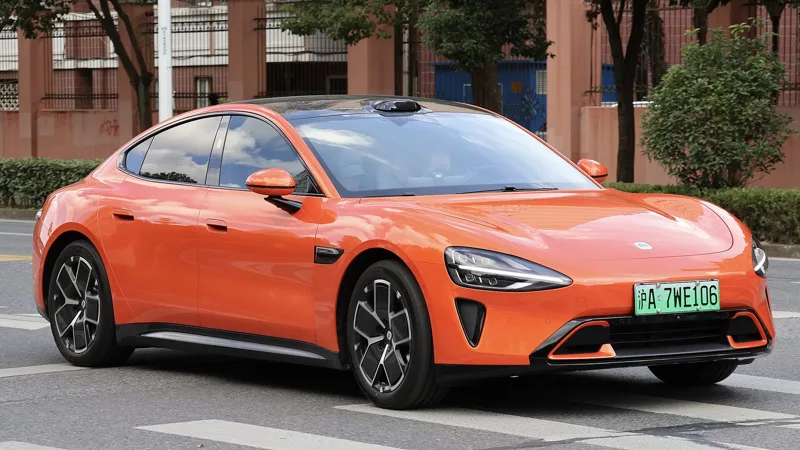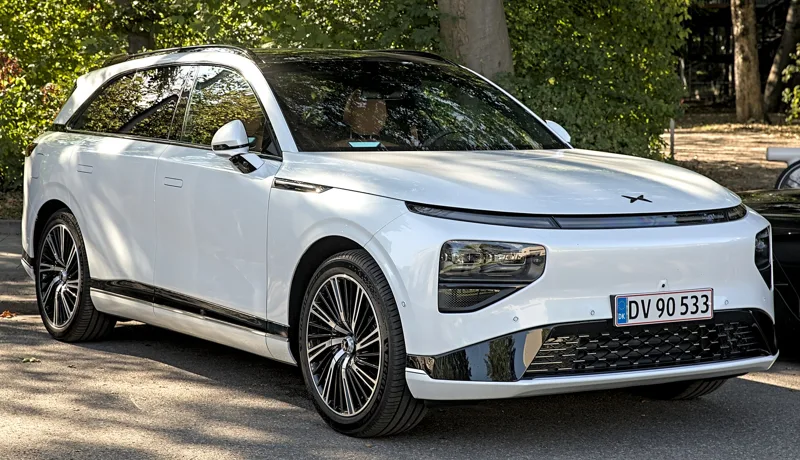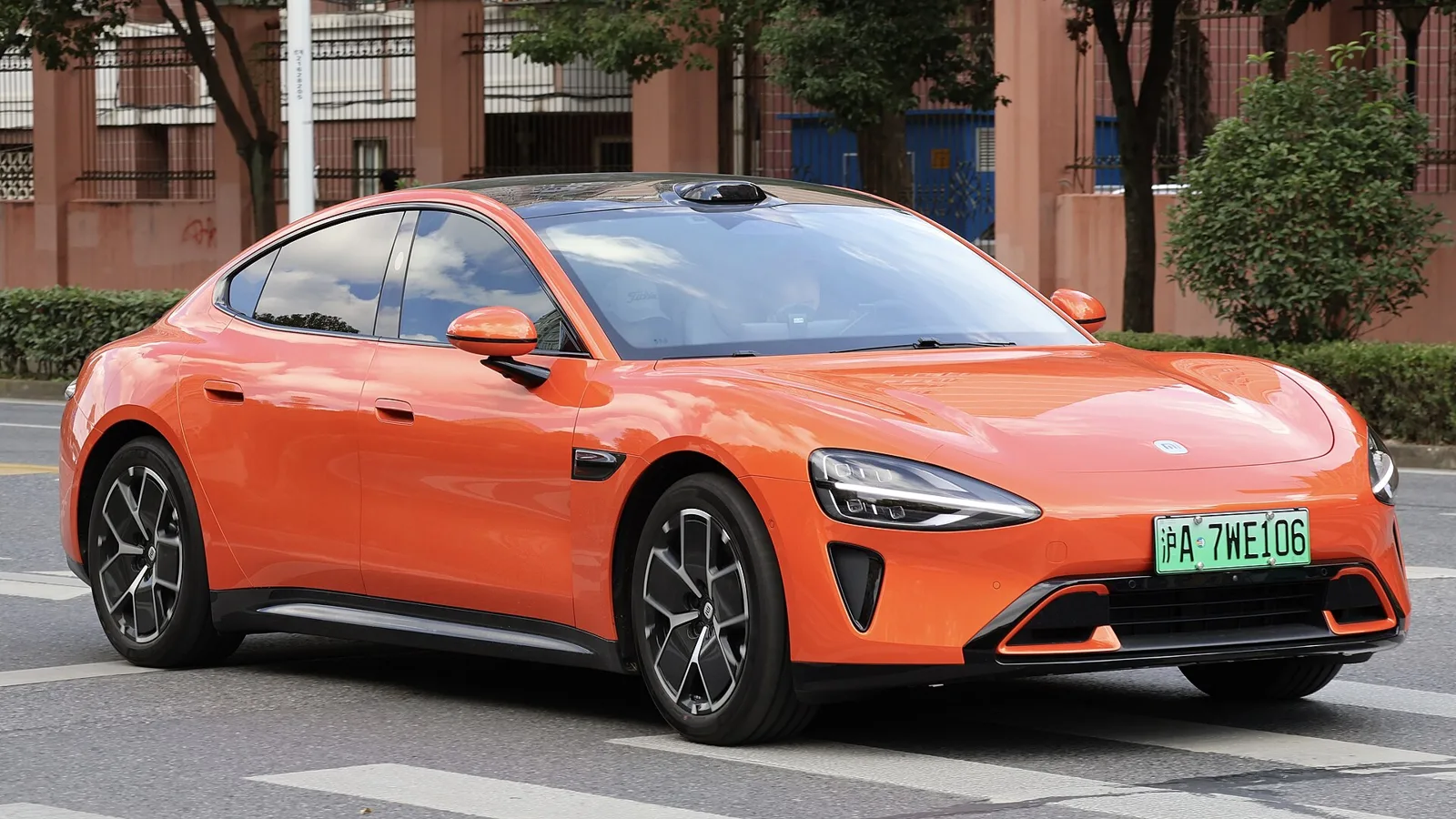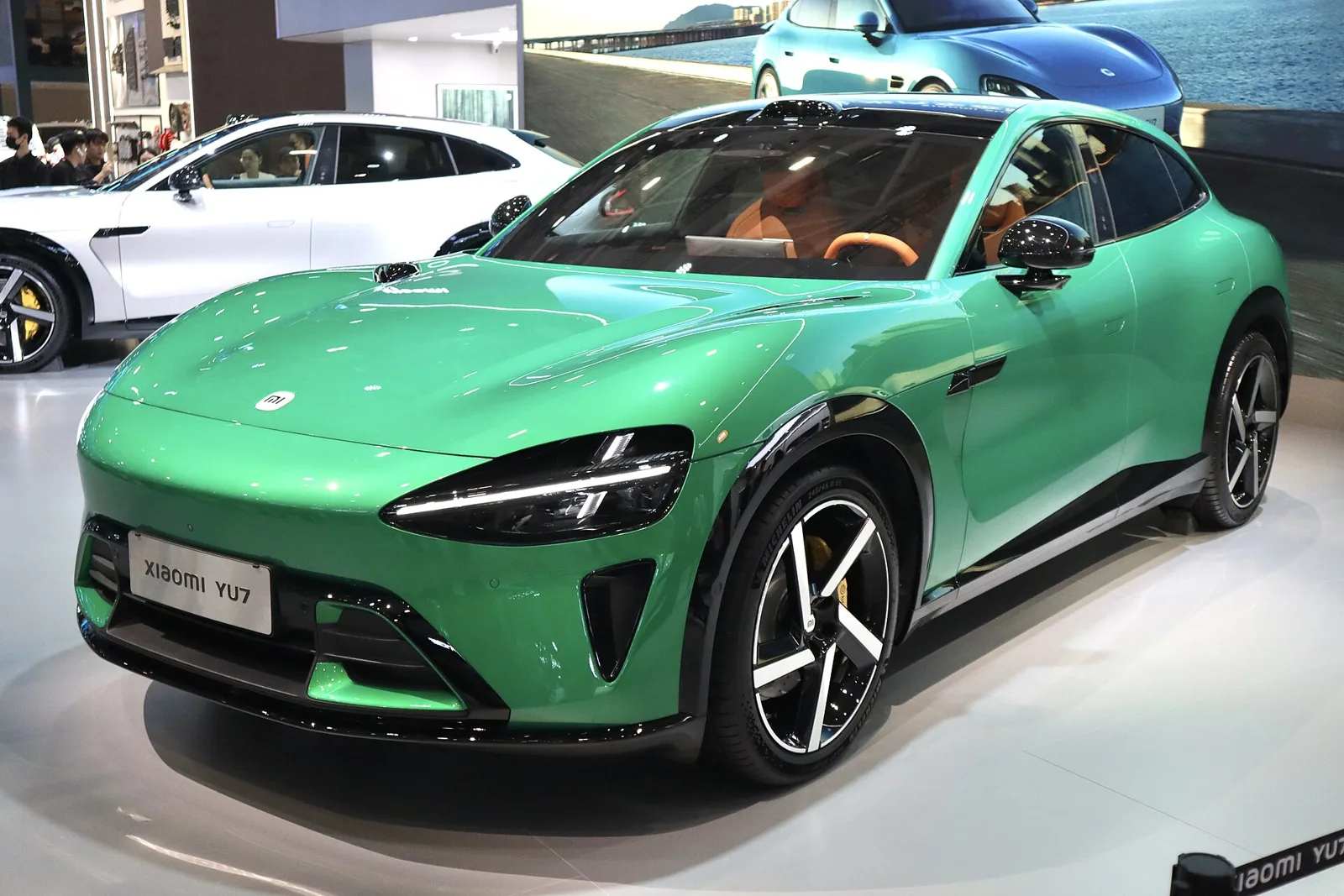
A large electric SUV on the SU7 platform, with a 0.245 Cd body, a panoramic head-up display and a 990 hp GT version.
Xiaomi's YU7 is a mid-size electric SUV from Xiaomi Auto, the electric vehicle arm of the Chinese electronics group. Launched on 26 June 2025, it comes as the YU7, YU7 Pro and YU7 Max, and it was the brand's second car after the SU7.
Xiaomi's first SUV arrived as a large electric crossover built on the platform of its SU7 sedan. Its launch in mid-2025 drew hundreds of thousands of orders within hours, and a performance GT version followed in 2026.
Where does the YU7 fit in Xiaomi's line-up?
The YU7 is Xiaomi's first SUV and its second vehicle after the SU7 sedan. The name draws on a Chinese reading that Xiaomi described in March 2025 as meaning land chariot, riding the wind. Its design shares a platform with that sedan, which helps explain the family resemblance.
The YU7 is expected to challenge Tesla's Model Y in China's premium electric crossover segment. Development cars were spotted in mid-2024, and Xiaomi revealed exterior images on 9 December 2024.
Xiaomi also homologated the car early so that it could be tested in public without camouflage. The company said that helped with NVH work, powertrain efficiency, range and durability testing.
A Xiaomi electric SUV on the SU7 platform, with a 0.245 Cd body and a 990 hp GT version that set a Nurburgring SUV record.
How was the YU7 built and launched?
Production sits at Xiaomi's F2 EV plant in Yizhuang, Beijing, a site due for completion by July 2025. Xiaomi revealed the interior and product on 22 May 2025 alongside the Xiaomi 15S Pro and Pad 7 Ultra. It was then shown at Auto Shenzhen in early June.
The launch was brought forward from July to 26 June 2025, at a Xiaomi full-ecosystem event. Pre-orders followed soon after. The first deliveries of pre-made models began in July 2025, and customised orders were expected to move into production in August.
What does the YU7 look like?
At 5.0 metres (16.4 ft), the YU7 is a mid-large SUV with a clamshell aluminium hood, flush illuminated door handles and a sloping rear. The tail finishes in a 22-degree ducktail lip spoiler, and the car is offered in nine colours.
The clamshell hood measures 1,960 mm by 1,587 mm (77.2 in by 62.5 in), covering 3.11 m2 (33.5 sq ft). Xiaomi says no mass-produced car carries a bigger aluminium hood, and the door handles open through a smartphone connection using UWB.
Xiaomi made more than 40 aerodynamic changes that reduced the coefficient by 78 counts, to 0.245 Cd, adding 59 kilometres (37 mi) to the CLTC range. Active grille shutters alone supplied 18 counts and 14 kilometres (8.7 mi) of that gain.
Colours include Emerald Green Metallic and Lava Orange. The green is a YU7 exclusive, built up through a double-layer spray process using three metallic and pearlescent finishes.
What is inside the cabin?
The cabin is dominated by a 1.1-metre (43 in) HyperVision panoramic head-up display and a 16.1-inch 3K centre touchscreen. A Snapdragon 8 Gen 3 chip runs the displays, and Xiaomi says it allows 1.35-second boot-up times. The air vents are hidden, which keeps the dashboard sparse.
The HyperVision display uses three mini-LED panels with 1200 nits of brightness and 903-zone local dimming. It can show blind-spot cameras and sensor data through customisable widgets, and it doubles as the instrument cluster.
The centre console holds a pair of actively cooled 80-watt wireless charging pads. A 4.6-litre (0.16 cu ft) compartment is available as an option, keeping items between 2 and 50 C, which suits drinks or medication on long drives.
The sound system is 14 speakers as standard, or 25 with Dolby Atmos as an option. Seats are leatherette, with Nappa leather optional, and the front seats offer a 10-point massage and a 123-degree zero-gravity recline.
Cargo capacity is 678 litres (23.9 cu ft), growing to 1,758 litres (62.1 cu ft) when the rear seats are folded. The front trunk, or frunk, offers 141 litres (5.0 cu ft), and a 144-watt powered rail runs across the rear cargo area.
A magnetic wireless button can be placed on any of nine magnetic points in the cabin and programmed for more than 130 functions. Those points also take first-party accessories such as a glasses holder.
What driver assistance does the YU7 have?
Every YU7 uses Xiaomi HAD, a supervised semi-autonomous driving system. The sensor suite includes a roof-mounted 128-line Hesai LiDAR, a 4D mmWave radar, eleven cameras and twelve ultrasonic sensors. The computer runs an NVIDIA DRIVE AGX Thor-U chip rated at 700 TOPS.
The LiDAR has a claimed range of 200 metres (660 ft). Xiaomi's 4-in-1 computing module combines the driver assistance chips, infotainment hardware, dual 5G chips and the vehicle domain controller onto two motherboards in one package.
Xiaomi says that design cuts the number of ECUs by 75 per cent and reduces the module's weight by 47 per cent, dropping from 15.1 lb (6.85 kg) to 7.9 lb (3.6 kg). Each saving helps the car carry more kit without adding bulk.
The chassis uses a double wishbone front and a five-link independent rear. The Pro and Max add air suspension in a dual-chamber layout, with 3.0 in (75 mm) of height adjustment, so the ride can be lifted for rough roads.
Wheels run from 19-inch rims on 245/55 R19 tyres to 21-inch rears on 275/40 R21 tyres. The frontal crumple zone is 659 mm (25.9 in) deep, and Xiaomi says the YU7 passes more than 50 crash tests meeting C-NCAP and C-IASI standards.
Which powertrains and batteries are offered?
The standard YU7 has a rear motor rated 315 hp (320 PS; 235 kW) and a 96.3 kWh LFP battery. The Pro adds a 130 kW (174 hp; 177 PS) front motor for 365 kW (489 hp; 496 PS) in total, and the Max runs dual motors producing 508 kW (681 hp; 691 PS) combined.
CLTC ratings are 835 km (519 mi) for the standard car and 770 km (478 mi) for the Pro. They recharge from 10-80% in 21 minutes and top out at 240 km/h (149 mph).
The Max uses a 101.7 kWh CATL NMC pack for up to 760 km (472 mi) of CLTC range. Its 220 kW (295 hp; 299 PS) front motor and 288 kW (386 hp; 392 PS) rear motor work together, and it tops out at 253 km/h (157 mph), and it can take 620 km (385 mi) of range in 15 minutes.
All versions use HyperEngine V6s Plus motors, which Xiaomi developed itself, on an 871V SiC architecture. The motors are made by UAES, a joint venture between Bosch and Zhong-Lian Automotive Electronics.
What tests did the YU7 go through?
Testing ran for 539 days on real roads, adding up to 6,490,000 km, or 4,030,000 mi. Across all testing, 653 test cars covered 10,620,000 km, or 6,600,000 mi.
Its Max version ran 3,944 km (2,451 mi) during a 24-hour endurance session above 210 km/h (130 mph). The test aimed at high-speed efficiency, battery life, fast charging and cooling.
How well did the YU7 sell?
Xiaomi reported 196,000 deposits and 128,000 locked-in orders in the first two minutes after the presentation closed. Within an hour, pre-orders had reached 289,000.
After 18 hours the total stood at 240,000 non-refundable locked-in orders, and first delivery estimates reached 56 weeks. XPeng founder He Xiaopeng placed an order, and Lei Jun thanked him and promised a quick delivery.
Who is the YU7 GT?
The YU7 GT is a performance version previewed by Lei Jun at the 2026 Beijing Auto Show The launch came in China on 21 May 2026. It is positioned as a sports-car-level SUV for long-distance travel, and its dual motors produce 990 hp (738 kW; 1,004 PS).
The front motor produces 288 kW (386 hp; 392 PS) and the rear motor 450 kW (603 hp; 612 PS). The GT uses the 101.7 kWh battery of the Max, runs 0-97 km/h in 2.92 seconds, and it is claimed to reach 300 km/h (190 mph).
CLTC range reaches 705 km (438 mi). A Track Package version removed the rear seats and added a roll cage, and it set an SUV lap record on the Nurburgring Nordschleife of 7:34.931, ahead of the Audi RS Q8, which managed 7:36.69.
The record fell again the following month, to 7:22.755. On 22 June the GT set a lap of 10:29.483 as the first autonomous vehicle to do so on the circuit.
The production version was shown through MIIT photographs on 6 February 2026. The GT name draws on Gran Turismo, which Xiaomi renders as a great journey in Chinese.
What controversies surrounded the launch?
Two debates followed the launch. An automotive executive apologised after questioning the order volume and the wait times, and critics questioned whether a consumer-grade Snapdragon chip in the cabin was suitable for safety use.
The chip debate centred on ISO 26262, the functional safety standard. Experts argued that an ordinary consumer chip could not clear that certification, which kept the question alive long after the car went on sale.
Which accessories and ecosystem features come with the YU7?
The YU7 carries over the SU7's accessory approach, with threaded mounting points and a 144-watt powered rail in the cargo area. Xiaomi has opened its accessory ecosystem to BYD, GAC Toyota and Zhengzhou Nissan, the first automakers to join.
Apple users get extra features, including home screen widgets and action buttons, CarPlay, UWB compatibility on iPhones and iPad control of rear passenger functions such as climate and seat recline.
Xiaomi YU7 specifications at a glance
| Specification | Detail |
|---|---|
| Body | Battery electric mid-size SUV, 5.0 m (16.4 ft) long |
| Platform | Modena, shared with the SU7 |
| Drag | 0.245 Cd after 40-plus aerodynamic changes |
| Standard YU7 | Rear motor 315 hp (320 PS; 235 kW); 96.3 kWh LFP; 835 km (519 mi) CLTC |
| Pro | 365 kW (489 hp; 496 PS) total; 770 km (478 mi) CLTC |
| Max | 508 kW (681 hp; 691 PS); 101.7 kWh NMC; up to 760 km (472 mi) CLTC |
| YU7 GT | 990 hp (738 kW; 1,004 PS); 0-97 km/h in 2.92 seconds; 300 km/h (190 mph) |
| Cargo | 678 litres (23.9 cu ft), or 1,758 litres (62.1 cu ft) when folded |
| Frunk | 141 litres (5.0 cu ft) |
| Total testing | 10,620,000 km, or 6,600,000 mi, across 653 test cars |