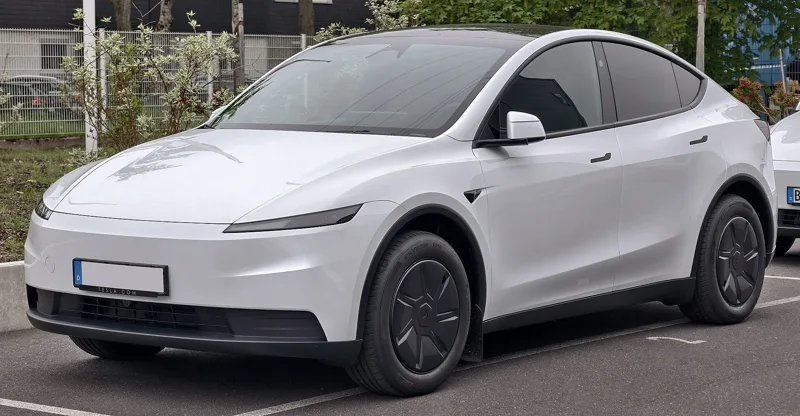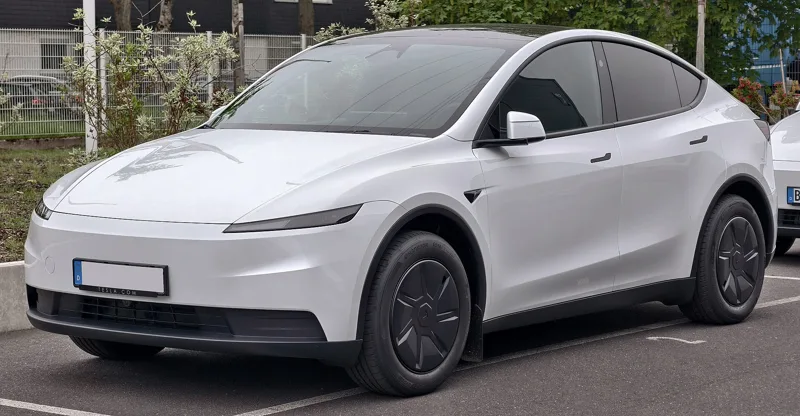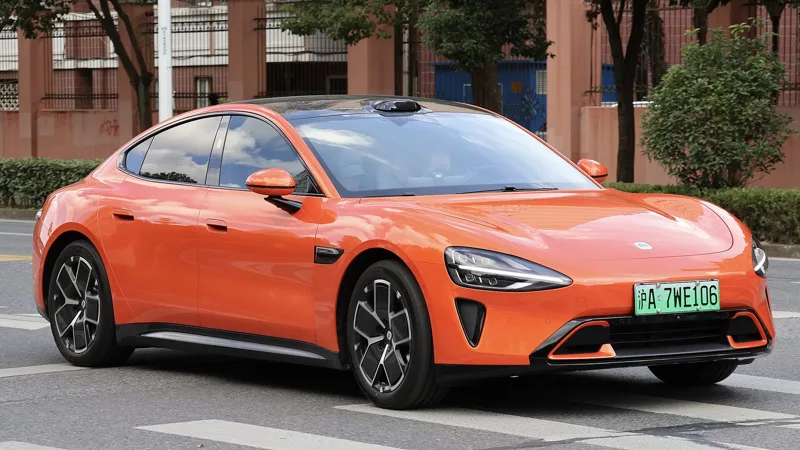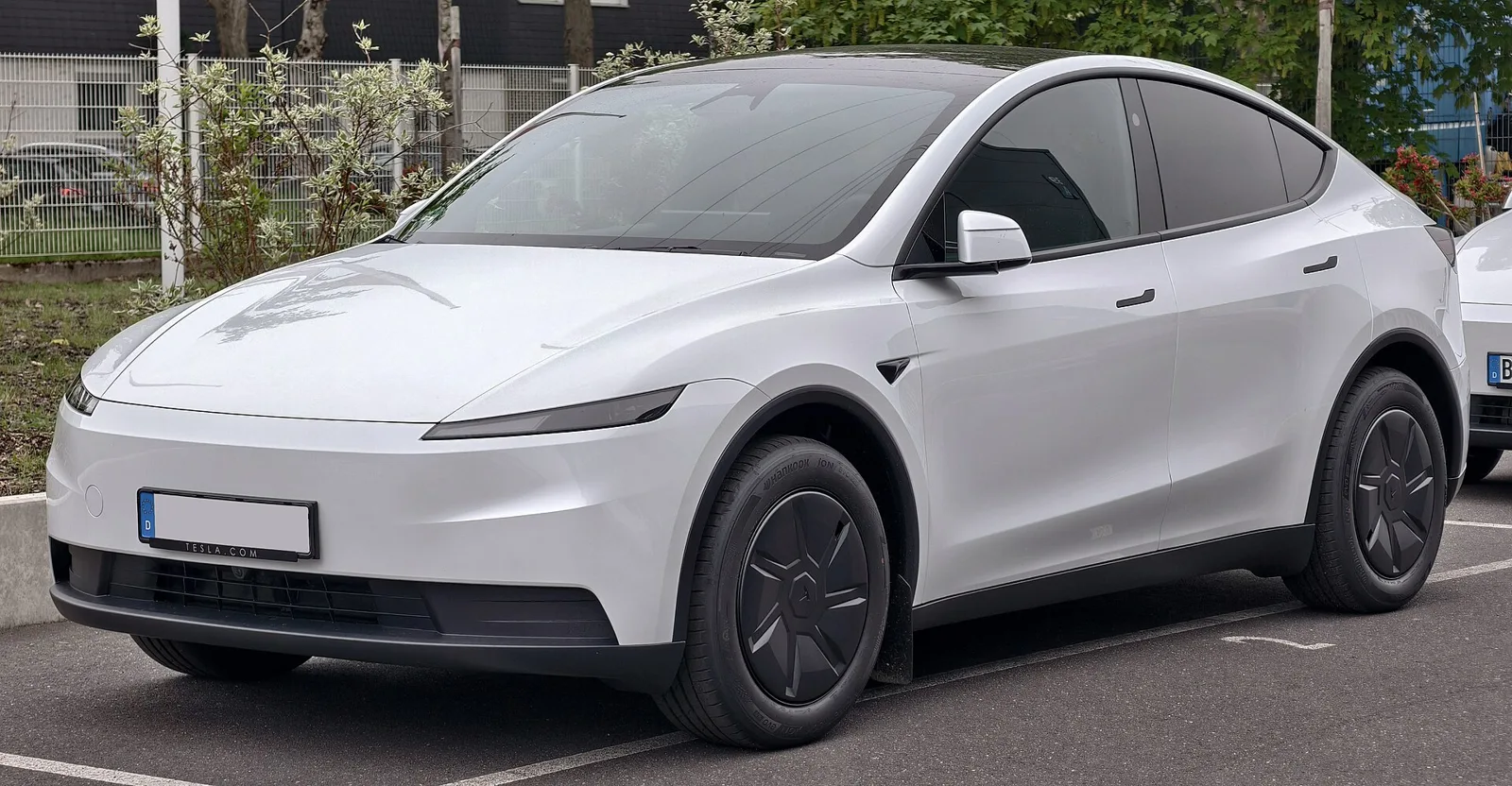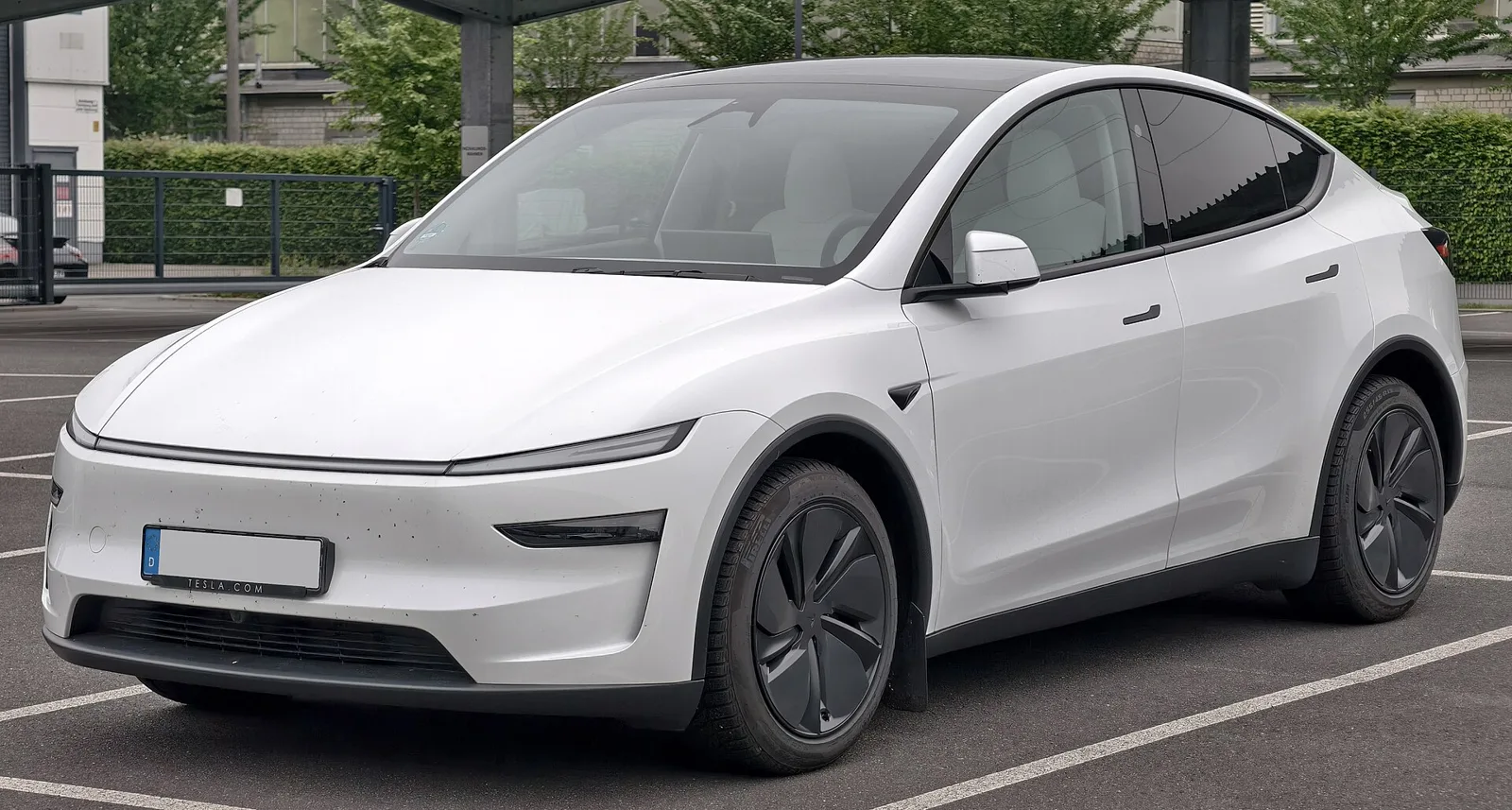
The best-selling electric vehicle of all time against the Chinese newcomer built to take on its premium crossover crown, judged on design, efficiency and performance.
The Tesla Model Y, a compact electric crossover built since 2020, has outsold every other electric car ever made and was the top-selling vehicle worldwide in 2023. The Xiaomi YU7, a mid-size electric SUV launched in June 2025, claims a 0.245 Cd drag figure and up to 990 hp in its GT version.
The Tesla Model Y and the Xiaomi YU7 are both battery electric crossovers aimed at the premium end of the market, and the YU7 was built to challenge the Model Y in its strongest region. The Model Y has sold more than 2.16 million units and was the world's best-selling vehicle in 2023. The YU7, which launched on 26 June 2025, is Xiaomi's first SUV and runs a 0.245 Cd drag figure, while its GT version claims 990 hp.
Why is the YU7 measured against the Model Y?
Xiaomi's car was expected to become the biggest threat to the Model Y's dominance of China's premium electric crossover segment. The Model Y had been the sales leader in that segment since it reached China in 2021, and Xiaomi's new SUV was pitched directly at its buyers.
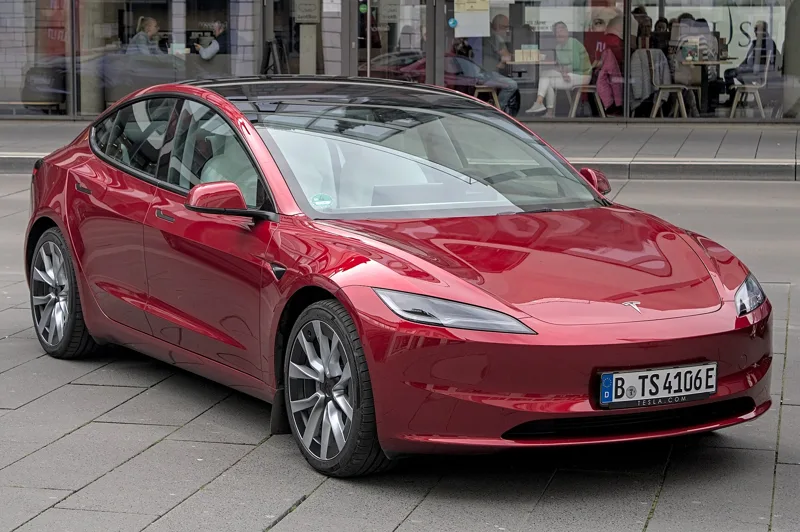
The Model Y is a larger version of the Model 3 sedan, sharing roughly 75% to 76% of its parts with that car. The YU7 is Xiaomi's second vehicle after the SU7 sedan and its first SUV, built on the Modena platform the SU7 also uses.
The best-selling electric vehicle of all time faces a newcomer built to win over its own buyers in China.
How did the two launches differ?
Tesla presented the Model Y at a March 2019 event, then started production at its Fremont factory in January 2020. Xiaomi released exterior images of the YU7 on 9 December 2024, then pre-released the car on 22 May 2025 and moved its launch forward to 26 June.
Tesla built the Model Y across several plants. Giga Shanghai added production in December 2020, Gigafactory Texas began in late 2021, and Berlin-made cars were delivered from March 2022. Its first US deliveries came in March 2020 with the Long Range AWD and Performance versions.
Xiaomi's car is made at its F2 EV factory in Yizhuang, Beijing. Construction began in August 2024, with completion targeted for July 2025. Initial deliveries of limited pre-made cars began in July, and mass production of customised orders was expected from August.
How do their bodies compare for drag?
The Model Y pairs a grilleless front with narrow LED headlamps and a fastback silhouette that brings the car closer to a coupe SUV profile. Its drag coefficient is 0.23, and its door handles are mechanical and flush with the body.
The YU7 is a 5.0-metre mid-large SUV with a clamshell hood that Xiaomi says is the largest aluminium hood on a mass-produced vehicle. The hood measures 3.11 m2 (33.5 sq ft) and is almost half the weight of a steel one, according to the company.
Xiaomi says it made more than 40 aerodynamic changes that cut drag by 78 counts to 0.245 Cd. Active grille shutters alone add 14 km (8.7 mi) of range, and the company credits the aerodynamic work with a 59 km (37 mi) gain on the CLTC cycle.
The YU7's doors are flush and illuminated, and they unlock through a smartphone's UWB connection. It is offered in nine colours, with six wheel options between 19 and 21 inches.
Which car has the stronger heat and efficiency story?
The Model Y was Tesla's first vehicle to use a heat pump rather than electric resistance for cabin heating. Resistance heating can cost an electric car 40% or more of its range below 20 F (-7 C), and Tesla says its heat pump can be up to 300% more efficient than resistance heating.
Tesla's system relies on the Octovalve, which has eight ports that move coolant around the car, and the Super Manifold, where the battery and drivetrain loop meets the refrigerant loop. The system recovers waste heat from the powertrain and battery to warm the cabin. Nissan, Renault, BMW and Kia had already used heat pumps before the Model Y arrived.
Xiaomi's answer is a 4-in-1 computing module that combines the driver assistance chips, infotainment hardware, communications and vehicle controller on two motherboards. Xiaomi says it cuts the number of ECUs by 75% and shaves weight by 47%, with the module dropping from 6.85 kg (15.1 lb) to 3.6 kg (7.9 lb). The company also credits it with 14 km (8.7 mi) of extra range.
How do the batteries and charging compare?
The Model Y's standard-range cars use lithium iron phosphate cells, while Long Range and Performance versions use nickel-based cells. Usable capacity runs from about 60 to 81 kWh, and the Model Y has used several cell formats over its life, including 2170 cells, prismatic LFP cells and 4680 structural packs.
Model Y charging is rated at up to 11.5 kW on AC and up to 250 kW on DC fast chargers, or 225 kW on the Standard trim. The YU7 Max uses a 101.7 kWh battery pack, and Xiaomi's GT version is quoted at a range of up to 705 km (438 mi) on CLTC.
The YU7 runs on an 871V silicon carbide electrical architecture, which Xiaomi uses with its HyperEngine V6s Plus motors. Those motors use segmented magnetic steel to improve efficiency over the original V6s design.
How quick is the GT, and how did it do at the Nurburgring?
The YU7 GT pairs a 288 kW front motor with a 450 kW rear motor for a combined 990 hp (738 kW; 1,004 PS). Xiaomi claims a 0 to 97 km/h time of 2.92 seconds and a top speed of 300 km/h (190 mph).
In April 2026 a YU7 GT with the Track Package, which removed the rear seats and added a roll cage, set an SUV lap record on the Nurburgring Nordschleife at 7:34.931. That beat the 7:36.69 set by the Audi RS Q8, and the car went on to 7:22.755 the following month.
On 22 June the YU7 GT set the first Nurburgring lap record for an autonomous vehicle, at 10:29.483. The Model Y's Performance version reached US buyers in March 2020 with all-wheel drive.
Specifications side by side
| Specification | Tesla Model Y | Xiaomi YU7 |
|---|---|---|
| Launch | Presented March 2019; production from January 2020 | Pre-released 22 May 2025; launched 26 June 2025 |
| Class | Compact electric crossover | Mid-size electric SUV, 5.0 m long |
| Drivetrain | Rear-wheel drive or dual-motor all-wheel drive | Rear-wheel drive or dual-motor all-wheel drive |
| Drag coefficient | 0.23 Cd | 0.245 Cd |
| Battery | About 60 to 81 kWh usable | 101.7 kWh pack on the YU7 Max |
| Charging | Up to 11.5 kW AC; up to 250 kW DC (225 kW Standard) | Not given |
| Cargo | Not given | 678 litres; 1,758 litres with seats folded; 141-litre frunk |
| Main screen | 15.4-inch centre touchscreen | 16.1-inch 3K centre touchscreen |
| Rear screen | 8-inch touchscreen | 6.68-inch removable touchscreen |
| Driver assistance hardware | Tesla Vision cameras; radar on some earlier cars | Roof LiDAR, 4D radar, 11 cameras, 12 ultrasonic sensors, 700 TOPS chip |
| Top output | Not given | GT: 990 hp (738 kW) |
| 0 to 97 km/h | Not given | GT: 2.92 seconds |
| Sales milestone | More than 2.16 million units | Not given |
What is the Model Y's driver assistance story?
The Model Y's driver assistance has been under scrutiny. The NHTSA opened an investigation in February 2022 into phantom braking on Model Ys built without radar, and that inquiry was still open as of May 2024.
Tesla's software update 2022.20.9 moved radar-equipped Model Ys and Model 3s to Tesla Vision and cut steering assist to 85 mph (137 km/h), from 90 mph (140 km/h). Model Ys built from October 2022 also dropped their ultrasonic sensors and rely on cameras alone.
The YU7 carries Xiaomi HAD, a supervised semi-autonomous system built on a roof-mounted 128-line Hesai LiDAR with a 200 m range, a 4D millimetre-wave radar, 11 cameras and 12 ultrasonic sensors. It uses an NVIDIA DRIVE AGX Thor-U chip rated at 700 TOPS.
Xiaomi says the YU7 passes more than 50 crash tests that meet or exceed C-NCAP and C-IASI standards. The chassis is 90.2% high-strength steel and aluminium, with a 659 mm frontal crumple zone and a torsional rigidity of 47,610 N-m/deg.
How do the cabins compare?
The 2025 Model Y refresh brought a 15.4-inch centre touchscreen, ventilated seats, an 8-inch rear touchscreen and powered rear seats. It also adopted double-layer acoustic glass, and its panoramic roof has a silver coating that limits UV and heat.
The YU7's dashboard is sparse, with a 1.1-metre HyperVision head-up display that doubles as the instrument cluster. The front seats offer a 10-point massage and a zero-gravity recline of 123 degrees, and a standard 14-speaker system can be upgraded to 25 speakers with Dolby Atmos.
Tesla kept the turn signal stalk in the 2025 refresh, after customers complained about its absence on other models. The YU7 takes a different approach with a magnetic wireless button that can be stuck to any of nine points and set to more than 130 functions.
Practicality also differs. The YU7 offers 678 litres (23.9 cu ft) of rear cargo space, rising to 1,758 litres (62.1 cu ft) with the seats folded, plus a 141-litre (5.0 cu ft) frunk.
What do the Model Y prices look like?
Tesla's 2025 Launch Series Model Y was priced at about US$60,000 in North America, with a 320-mile battery and Full Self-Driving (Supervised), which is typically an $8,000 upgrade. The older Model Y started at $44,990 for a rear-wheel drive car with a 337-mile (542 km) range.
The Model Y Premium replaced the Long Range badge in North America in October 2025, after the Standard version arrived. Buyers comparing the YU7 should check its current price in their own market.
How strong is each brand's sales position?
The Model Y is the best-selling electric vehicle of all time, with more than 2.16 million units sold worldwide. Berlin-built cars were mainly for European markets, Shanghai served China, and Canadian and Mexican shipments began later in 2020. In 2023 Tesla delivered 1.2 million of them, making it the world's best-selling vehicle that year and the first electric car to claim the title.
The Model Y finished second to the Toyota RAV4 in 2024. The YU7 is expected to be the Model Y's biggest threat in China, where the Model Y has led the premium electric crossover segment.
Which car suits which buyer?
On the figures, the Model Y suits a buyer who wants the most proven electric crossover, a long record of sales and a choice between rear-wheel drive and dual-motor all-wheel drive with a heat pump. The YU7 suits a buyer who wants a larger cabin, a 16.1-inch screen and a GT version with record-setting performance claims.
The YU7 GT's lap times are the most striking figures of the pair, but they belong to a track-prepared SUV with its rear seats removed. Buyers who want that performance will need a different set of expectations from a daily-driven Model Y.
Neither car is the clear winner on every count. The Model Y has the sales record and the heat pump story, while the YU7 has the lower published drag figure and the more powerful GT. The right choice depends on whether a buyer values the proven record or the newer hardware.