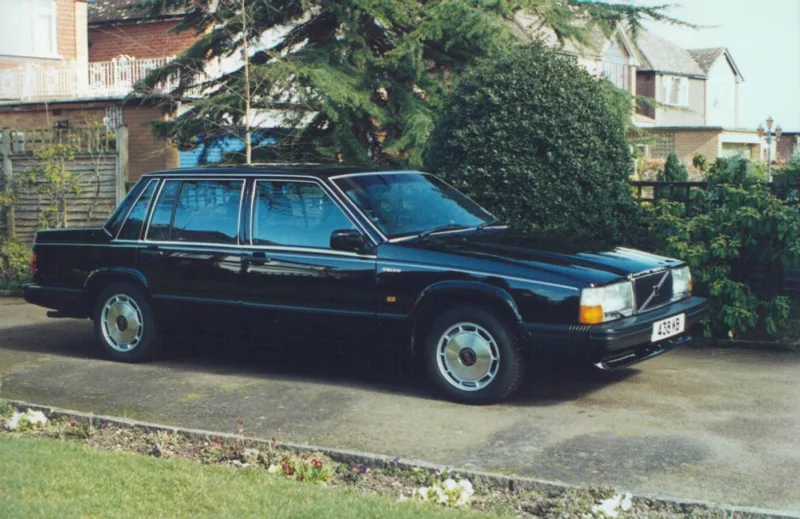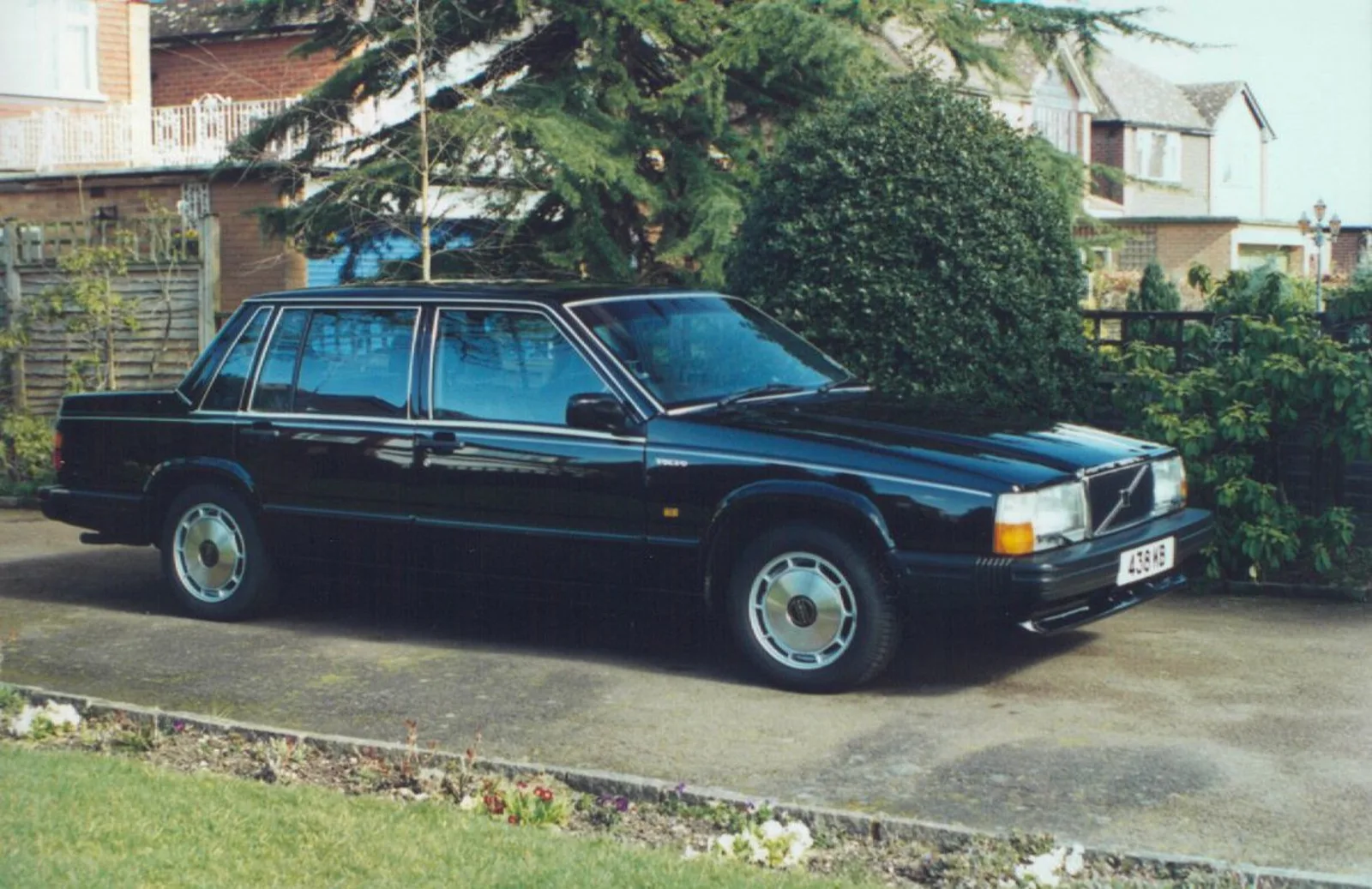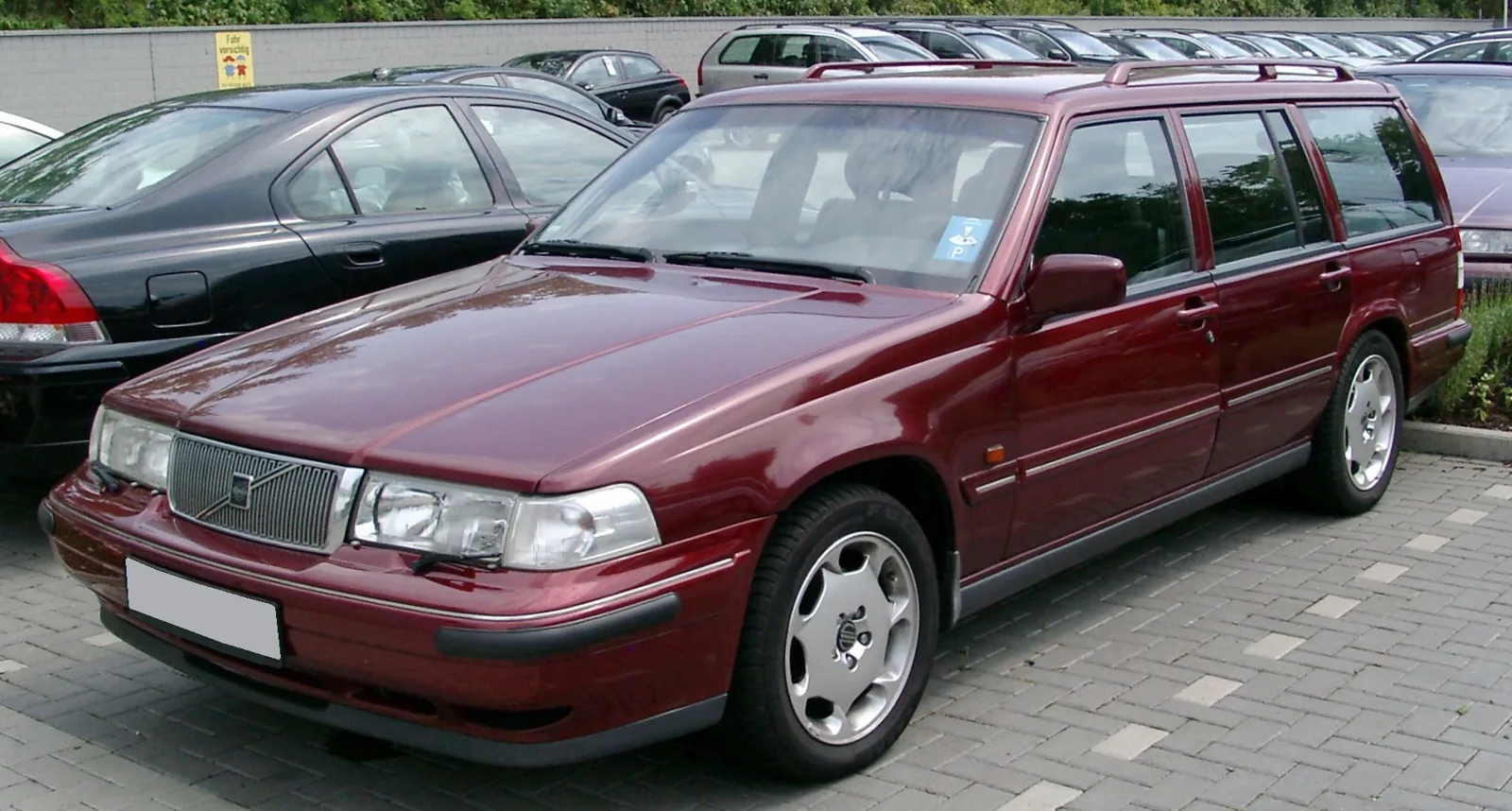
The 940 and the flagship 960 carried Volvo's rear-drive executive image through the 1990s, before the range became the S90 and V90.
The Volvo 900 Series was a range of rear-wheel-drive executive cars that Volvo built from 1990 to 1998. It replaced the 700 Series and comprised the 940 and the flagship 960, which was renamed S90 and V90 from 1996 before production ended.
The Volvo 900 Series was the rear-drive executive range that Volvo built from 1990 to 1998. It was built around the 940 saloon and estate and the flagship 960, and it gave the Swedish brand a traditional upmarket image through the early 1990s.
How did the 900 Series relate to the 700?
The 900 Series was introduced in 1990 to replace the 700 Series, from which it derived. The main visible difference was the redesigned rear styling of the saloon models, while late 700 estates and early 900 estates look identical to one another.
The range was extended in 1991 by the Volvo 850, and the 960 arrived that year with a new family of modular engines. The last 900 was sold in 1998, and a few cars were later turned into chassis for ambulance and hearse bodies once the main run had ended.
A rear-drive executive range that carried Volvo's upmarket image through the 1990s before the S90 and V90 names took over.
What was the 940 and how did it differ from the 740?
The 940 was introduced in September 1990 and was essentially a cosmetic reskin of the 740. The sedan received a completely redesigned rear from the C-pillar back, and the estate followed in May 1991 as an almost identical car to its 740 predecessor.
The dashboard and seats were all new, offering a little more headroom and an integrated child booster seat as an option. The taller trunk reduced rearward vision but gave a larger boot opening. All drivetrains and most options had come from the 740, with the 780 Coupe as the exception.
Which engines powered the 940?
The 940 inherited the 740 engine line, which ran from the 8-valve 2.0-litre B200 and 2.3-litre B230 four-cylinder petrol engines to the 2.4-litre Volkswagen six-cylinder diesel. There were 16-valve petrol versions on some 1991 and 1992 models, including the B204 and B234.
The 2.3-litre turbocharged version produced 165 PS (121 kW), and Volvo sold a chip tuning kit called Turbo+ that lifted the power to 190 PS (140 kW). A 155 PS (114 kW) turbocharged 2.0 was first presented in February 1991, originally for Italy and other markets with tax thresholds at two litres.
The most common engines on 940s were the naturally aspirated B230FB at 131 PS (96 kW) in most markets, the B230FD at 115 PS (85 kW) mainly for the US, the turbocharged B230FK and FT, and the D24TIC diesel at 116 PS (85 kW). Turbodiesels accounted for a much smaller share of 900 Series sales than in earlier years.
How did the 900 Series transmissions change?
Engines were fitted with either a 5-speed M47 or a 4-speed plus overdrive M46 manual, or an automatic. The automatic was either an Aisin-Warner AW70, AW71 or AW72 three-speed plus overdrive, or the ZF 4HP22 four-speed fitted to some B230FB and diesel cars.
In 1995 the manual gearbox was replaced with the full 5-speed M90, and the ZF was abandoned for petrol engines and kept only for diesels. The M90 was derived from the Volvo 850 transmission, and it was later paired with a detuned version of the 3.0-litre six.
What did the SE badge mean on a 940?
The SE emblem meant different things in different countries. In Sweden the 940 SE was an ordinary non-turbo car with extras such as painted mirrors and bumpers. In the UK it was a top trim offered with every engine from 2.0 to 2.3 turbo.
In Australia the 940 SE sat high in the range and offered only the 2.3 Turbo B230FT, with fully painted bumpers. In Thailand it was a Turbo model with leather seats, ABS and an SRS airbag. In the US the SE used the body of the 960, with a different dashboard, firewall and bonnet, combined with the four-cylinder B230FT engine.
How did the 940 sell in North America?
The 1991 US range had three versions. The 940 GLE used a DOHC 16-valve 2.3-litre (B234) with a 6000 rpm redline, the 940 Turbo used the turbocharged B230FT, and the top-end 940 SE added body-coloured trim and premium features such as leather and power seats.
Some 940s were built at Volvo's former plant in Halifax, Nova Scotia. For the 1992 model year the GLE was downgraded to a 114 hp (85 kW) 2.3-litre and sold as the 940 GL, and US sales of the 940 ended in 1995 in favour of the 850 and 960.
What changed with the 960?
The 960 went on sale in the autumn of 1990 for the 1991 model year, replacing the 760. It was an evolution of the 1990 760 and one of the first cars to show the work of the British designer Peter Horbury.
The main change was an all-new aluminium 24-valve DOHC inline six, often called the white block in the Volvo community because of its bare aluminium block. It produced 204 PS (150 kW) at 6,000 rpm. Some markets, including Australia and Japan, kept the 145 PS (107 kW) V6 from the 1990 760 for 1991.
The 960 received incremental changes for 1992, 1993 and 1994. Seats and seat belts were updated, a new gear shifter arrived in 1993, and dual front airbags were introduced in some markets in 1994. In 1994 the US six was tuned for more torque, producing 181 PS (133 kW) at 5,200 rpm and 270 N m (199 lb ft) at 4,100 rpm.
What were the Executive and Royal 960s?
Nilsson, a small coachbuilder based in Laholm, Sweden, stretched 960s on contract for Volvo to make the Executive, and a later Royal version carried a Hermes leather interior. Nilsson offered several lengths and sealed the C-pillar window for more rear privacy.
The Executive had rear doors about 15cm longer, and longer versions had inserts behind the B-pillar. Brake lines, exhaust, doors, floor, roof and electronics were all cut in a straight line and extended to suit the longer body.
Where were the 960s built and when did US cars start?
For North America the 1992 to 1994 960s were built in Kalmar, Sweden, and the first US-market 960 rolled off the line on 12 August 1991 as a 1992 model. The 1995 to 1998 cars were built in Gothenburg, and the first 1995 facelift car was built on 27 June 1994.
How did the 1995 facelift change the 960?
The 1994 facelift for the 1995 model year changed the grille and body-coloured panels, and a smaller 2.5-litre six of 2,473 cc was added. It produced 170 or 163 PS (125 or 120 kW) in the B6244FS form, and the new 960 gained standard daytime running lights, a first for North American cars.
From 1995 only the modular six-cylinder engines were available. The front suspension was redesigned to match the 850 more closely, and the rear used a multi-link independent system with a single fibreglass transverse leaf spring. The estate also received independent rear suspension.
When did the 960 become the S90 and V90?
From 1996 Volvo renamed the 960 in select markets as the S90 saloon and V90 estate, in line with its letter-and-number naming. The change applied to several European countries in late 1996, to North America from late 1996 for the 1997 model year, and to Australia from March 1997.
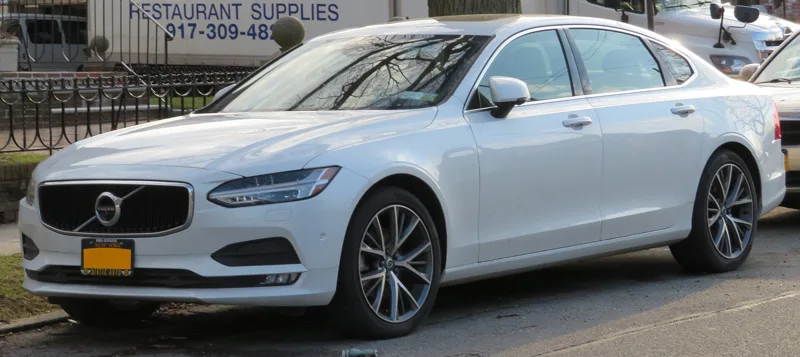
The 960 and its S90 and V90 derivatives ended production in 1998, totalling 112,710 sedans and 41,619 estates. The S90 and V90 nameplates returned when Volvo introduced its flagship in 2016.
How many 900 Series cars were built?
The 940 built 246,704 sedans and 231,677 estates from 1990 to 1998. The 960 and its S90 and V90 successors built 112,710 sedans and 41,619 estates over the same period.
What are the Volvo 900 Series specifications?
| Model | Years | Engine | Output |
|---|---|---|---|
| 940 Turbo | 1990 onwards | 2.3-litre B230FT turbo four | 165 PS (121 kW) |
| 940 with Turbo+ kit | 1990 onwards | 2.3-litre turbo four, tuned | 190 PS (140 kW) |
| 940 D24TIC diesel | 1990 onwards | 2.4-litre six turbodiesel | 116 PS (85 kW) |
| 960 six | 1991 | Aluminium 24-valve DOHC inline six | 204 PS (150 kW) at 6,000 rpm |
| 960 US six | 1994 | 3-litre six, tuned for torque | 181 PS (133 kW) at 5,200 rpm |
| 960 2.5-litre six | 1995 | 2,473 cc six, B6244FS | 170 PS (125 kW) |
| 960 M90 detuned three-litre | 1995 | Detuned 3.0-litre six | 180 PS (132 kW) |