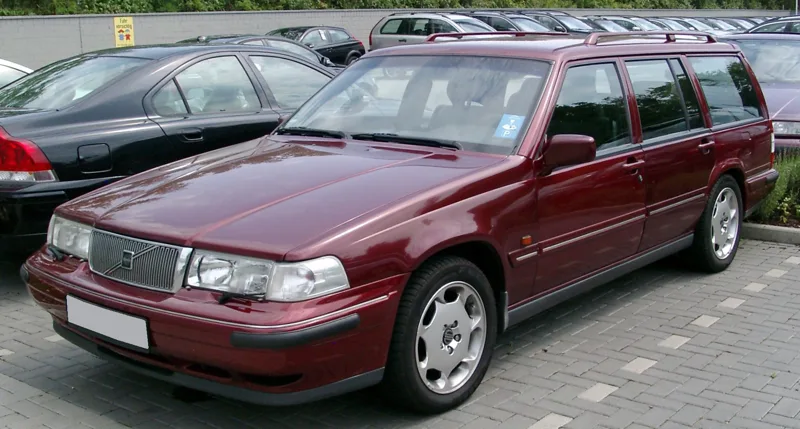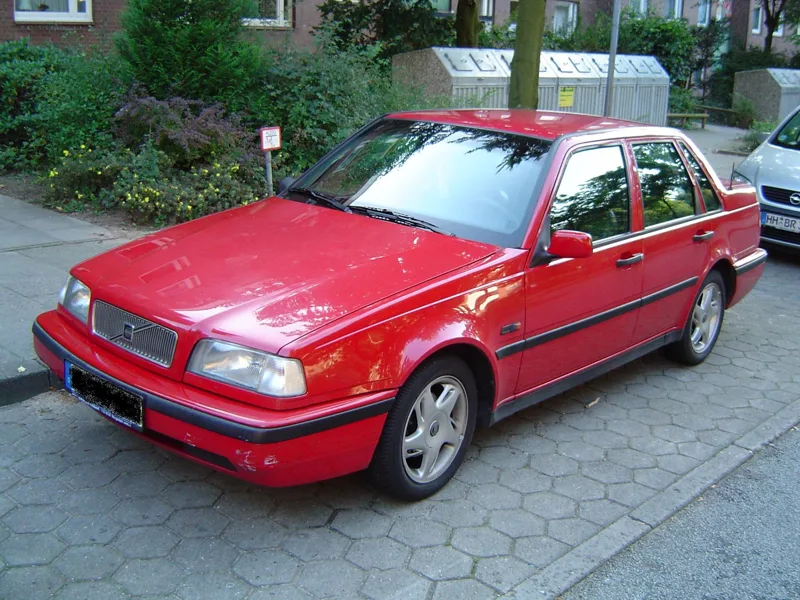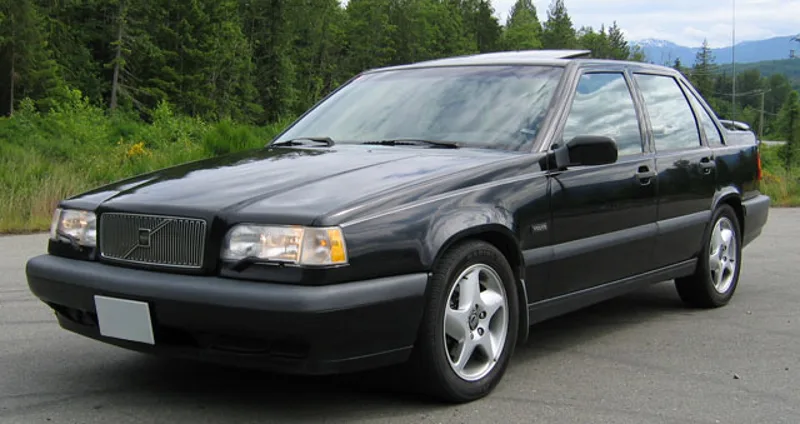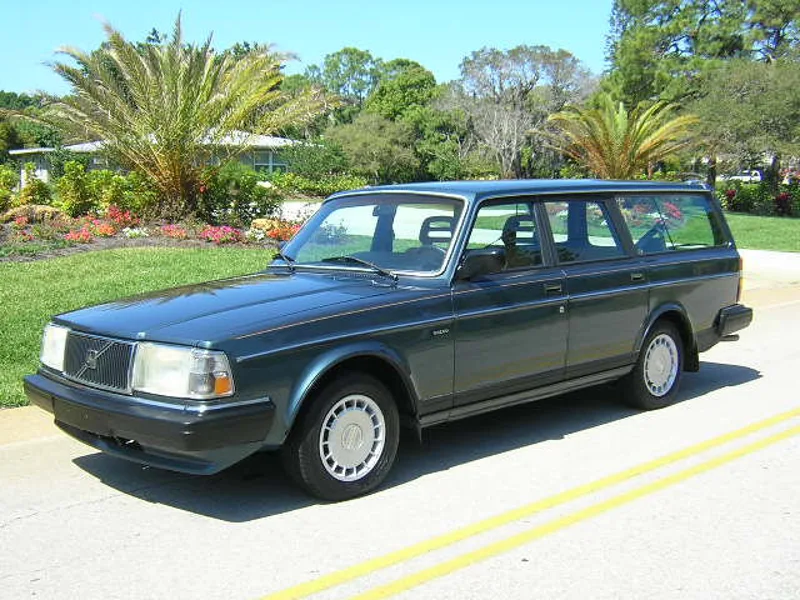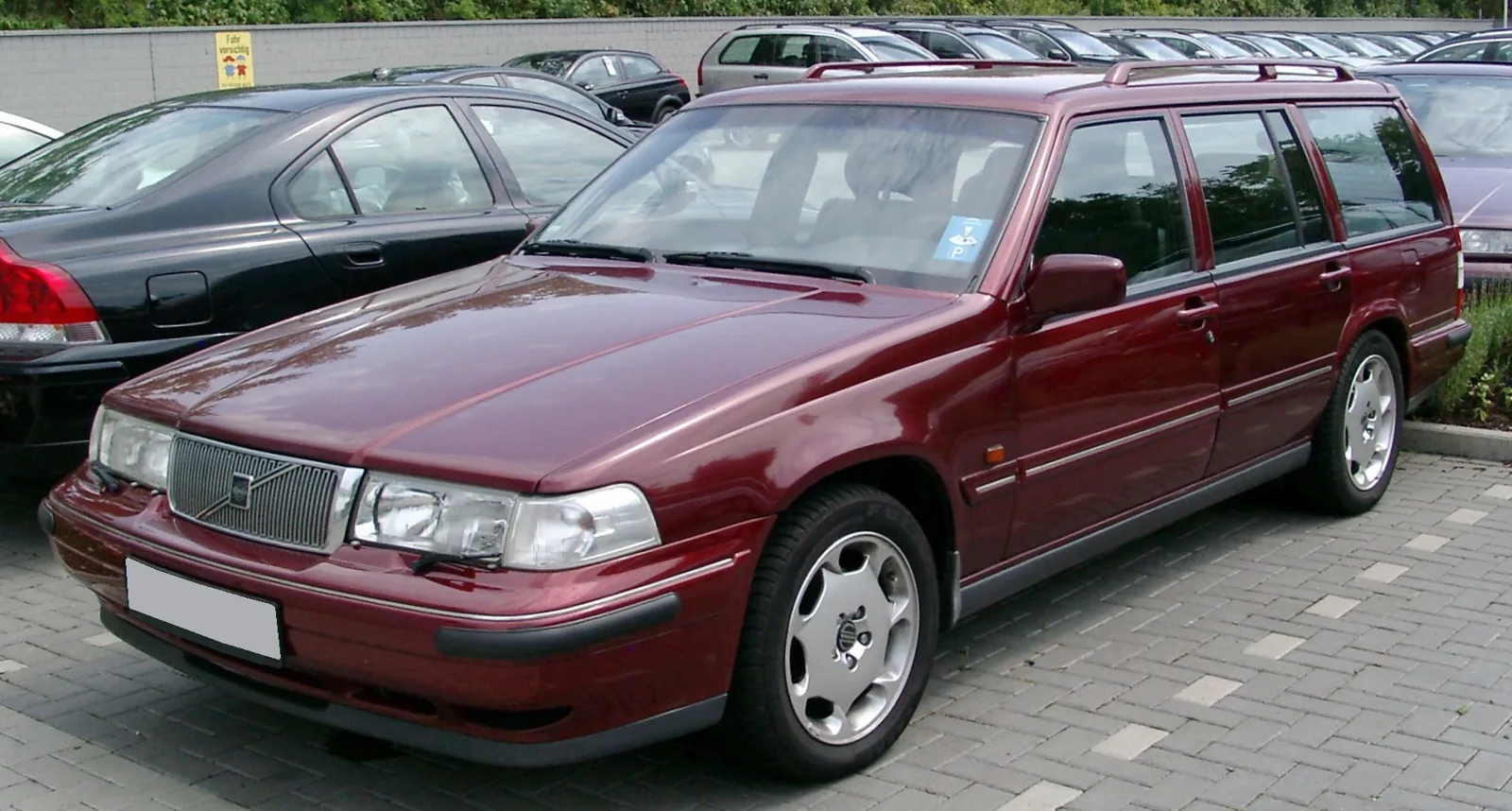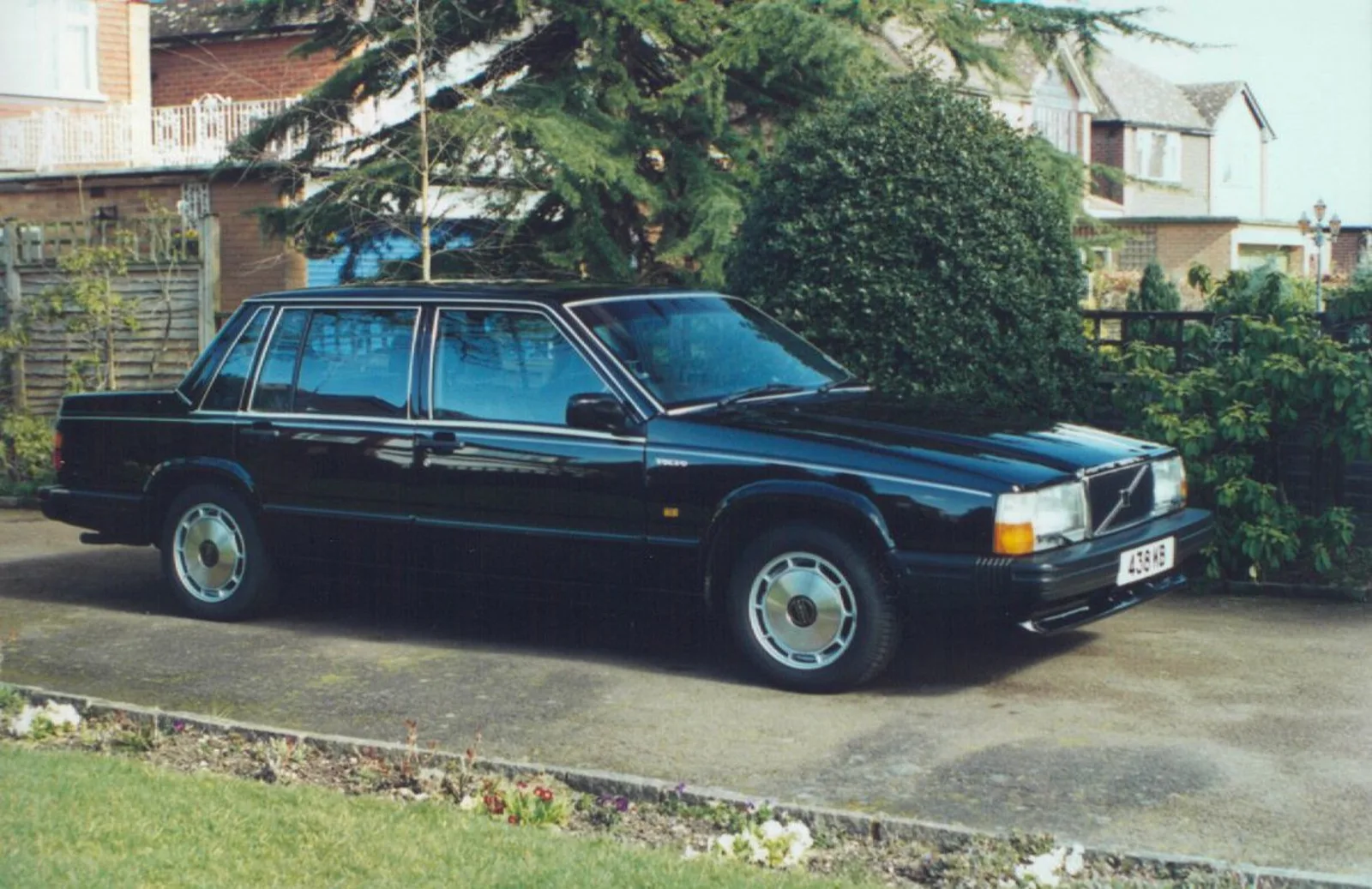
Volvo's mid-size family car with turbo and 16-valve engines, a 1990 facelift and a final year in 1992.
The Volvo 740 was a Swedish executive saloon and estate built from early 1984 until October 1992. It sat beneath the 760 in Volvo's range and offered turbo and 16-valve engines. A 1990 facelift refreshed its looks and mechanicals before the 940 took over most of its underpinnings.
Volvo's 740 was a mid-size executive car that arrived in early 1984 as the more modest partner of the 760. It came as a four-door saloon and a five-door estate, with turbo and 16-valve engines added along the way. Production stopped on 2 October 1992, by which time the 940 had taken over most of its mechanical parts.
When was the Volvo 740 introduced?
The 740 arrived in early 1984, nearly two years after the 760 it was based on. It reached the United States and Australia for the 1985 model year, while the estate premiered at the Toronto and Chicago auto shows in early February 1985.
The 740 was sold as a four-door saloon, sometimes called the 744, and as a five-door estate known as the 745. European buyers had to wait until the autumn of 1985 for the wagon, which was aimed squarely at North American customers at first.
The 1986 model year marked the worldwide introduction of the estate. That year also brought a new font for the 740 badging and new hubcap designs. The intercooled 2-litre turbo introduced for 1985, made for markets such as Italy, produced 160 PS (118 kW) at 5500 rpm, with a claimed top speed of 200 km/h (124 mph).
The 740 proved popular with police forces in several parts of Europe, especially in the Scandinavian countries.
Built beside the 760 and overshadowed by it on paper, the 740 became the volume car that carried Volvo through the late 1980s.
How did the 740 differ from the 760?
The 760 was the flagship, launched in Sweden in February 1982 with a V6 engine and a live rear axle. The 740 was its lower-specification sibling, sharing the same bodywork with less luxurious equipment, and its name no longer signified four cylinders.
Volvo introduced the executive six-cylinder model first, and the 740 followed a few years later. Jan Wilsgaard, head of Volvo's design and styling team, proposed more than 50 designs for the new car. The 760 was criticised when it appeared, and Autocar's Gordon Murray called its styling obscene.
The 760 used a live rear axle, which Volvo called Constant Track Rear Suspension. The axle sat almost entirely behind the passenger compartment inside a sub-frame, and Volvo argued that a well-designed live axle was at least as capable as an independent setup. Its Turbo Diesel version carried 57 percent of the car's weight on the front wheels.
The 760 was built in Kalmar, Sweden, and Ghent, Belgium, and it was also assembled in Halifax, Nova Scotia, and in Clayton, Victoria, Australia.
Unlike the 740, the 760 received standard anti-lock brakes on many models. East German leader Erich Honecker also used a 760 in his governmental car pool.
The turbo and 16-valve engines
The 740 range used a broad selection of engines, with fuel injection provided by Bosch. The B234, a 16-valve version of the larger B230 engine, arrived with the 1989 model year after a showing at the 1988 Geneva Motor Show. It offered nearly as much peak power as the turbo, and it was Volvo's first multi-valve engine.
The B230FT turbo was rated at 160 PS across most of its life, and the 1990 to 1992 cars produced 162 PS. The naturally aspirated B234F delivered 153 hp in the GLE and GLT of 1989 and 1990.
The B230F, a fuel-injected and catalysed version of the 2.3-litre engine, was rated at 114 hp. It was used in the GLE from 1985 to 1988 and in the GL from 1989 to 1990.
The 740 Turbo 16V took the 2-litre B204FT engine from the 780 coupe. It was sold mainly in Italy, along with Portugal and Belgium, and it came with the 780's electronic climate control as standard.
Where did the 740 and 760 sell best?
The diesel versions found a strong market in Italy, where 740 and 760 diesel sales in the first half of 1984 exceeded those of Mercedes-Benz W123 diesels and BMW 524d models put together. Sweden received air conditioning and power windows as standard equipment from 1983, and a larger 82-litre (22 US gal; 18 imp gal) fuel tank was gradually introduced.
The Turbo Diesel was less successful in the United States, where it was offered only with a five-speed manual gearbox. The diesel market there then collapsed, which made the gearbox a minor issue. Volvo had focused its diesel launch on markets where diesels already had a high market penetration. The heavy diesel engine gave the car a pronounced front weight bias.
Turbocharged and intercooled 760 variants were added in 1984, while the 740 arrived for the 1985 model year as the cheaper car. Electronic traction control was introduced in 1985 as well.
What changed in the 1990 facelift?
The 1990 facelift brought smaller composite headlamps and tail lights borrowed from the 780. The B200 and B230 engines received larger 13 mm (0.5 in) connecting rods, and the turbo changed from a Garrett T3 unit to a Mitsubishi TD04 for quicker response at low revs.
The fuel injection moved from Bosch LH-Jetronic 2.2 to 2.4. The upgrade came in 1988 for naturally aspirated cars and in 1990 for turbocharged cars, and the later system added on-board diagnostics that could be read from the engine bay without special equipment.
In 1991 both the 740 and the new 940 received an updated dashboard, similar in appearance to the one in the 760. The 1992 model year replaced the mechanical engine cooling fan with an electric unit, and production of the 740 ceased on 2 October 1992.
Trim levels and the 740 SE
Trim levels were 740, 740 GL, 740 GLE, 740 SE, 740 GLT and 740 Turbo, with a few exceptions in continental markets. The Turbo 16V was the main exception, and the other versions followed the same trim structure across the world.
Most markets received the 740 Turbo with the 2.3-litre eight-valve turbo engine. The Turbo 16V, with the 2-litre B204FT, was sold mainly in Italy and also in Portugal and Belgium.
Late in 1991 Volvo introduced the 740 SE, standing for special equipment, in red, black or white. Mechanically it matched the 740 Turbo, but it added a power sunroof, leather seats and a colour-keyed body kit with a spoiler on the saloon. The SE and the Turbo saloon were both dropped for 1992.
What did the 1988 update change on the 760?
For the 1988 model year the 760 received more than 2,000 changes, most visibly to the front sheet metal. The new parts included an aluminium hood, recessed windscreen wipers and aerodynamic headlights, and the cabin gained a dashboard angled towards the driver.
Saloons received the multi-link independent rear suspension that had first appeared on the 780. The estate kept its live rear axle, because the new rear suspension weighed about 40 kg (88 lb) more and Volvo judged the loss of payload too high for the comfort gain. The new layout also needed a saddle-shaped fuel tank, which shrank to 80 L (21.1 US gal; 17.6 imp gal).
The top versions gained an electronic climate control unit, standard on cars sold in the United States. For 1990 the 760 received taillights in the style of the 780 and minor interior changes, before the run came to an end.
How did the 700 series fit together?
The 700 range was designed by Jan Wilsgaard, and it was originally meant to replace the 200 series, although the 200 remained in production into the early 1990s. The range was eventually supplanted by the 900 series in 1993, and the 900 remained on sale until 1998.
The 780 coupe was the sporting flagship of the family. Marc Deschamps designed it and Bertone built it in Turin, and it debuted at the Geneva show in 1985 before reaching Europe in 1986. Volvo's official production total is 8,518 cars built between 1986 and 1991, and the final 1991 cars were rebadged as the Volvo Coupe.
The 780's first engines were the B280F V6 and a Volkswagen-built D24TIC diesel for Italy. The V6 produced roughly 150 PS (110 kW), but the car weighed nearly 3,400 lb (1,500 kg). Volvo therefore added the B230FT+ with its Turbo+ boost controller, lifting output to 175 PS (129 kW) and then 188 PS (138 kW) the following model year.
What replaced the 740?
The 940 arrived in September 1990 and inherited the 740's engine, transmission and chassis, differing mainly at the rear of the saloon. The 900 series then took over the whole 700 range in 1993, and sales of the last 900s ran to 1998.
The 760 ended on 27 June 1990, replaced by the 960, which updated the 760 chassis. The 740 outlived it by two years and was discontinued in 1992, only after the 850 had been launched.
The most visible difference between the 700 and 900 series was the rear of the saloon. The 900 had a much more sloping rear greenhouse, where the 740 and 760 had extremely square, upright C-pillars. The 900 also had more rounded body corners and a somewhat better-appointed interior.
Seen as a whole, the 740 bridged the gap between the 200 series and the 900 series, carrying executive-style engineering into a more modest package.
Specifications at a glance
| Specification | Detail |
|---|---|
| Introduced | Early 1984, after the 760 |
| Body styles | Four-door saloon (744); five-door estate (745) |
| Designer | Jan Wilsgaard, who led the 700 series design |
| Turbo engine | B230FT 2.3-litre, 160 PS; 162 PS from 1990 |
| 16-valve engine | B234F 2.3-litre, 153 hp (1989 and 1990 GLE and GLT) |
| Fuel injection | Bosch LH-Jetronic 2.2, upgraded to 2.4 |
| Gearboxes | M46 manual with overdrive; M47 five-speed; AW70 and AW71 four-speed automatics |
| Facelift | 1990: composite headlamps and 780-style tail lights |
| Special edition | 740 SE, late 1991 |
| Production ended | 2 October 1992 |
| Successor | 940 from September 1990; 900 series in 1993 |