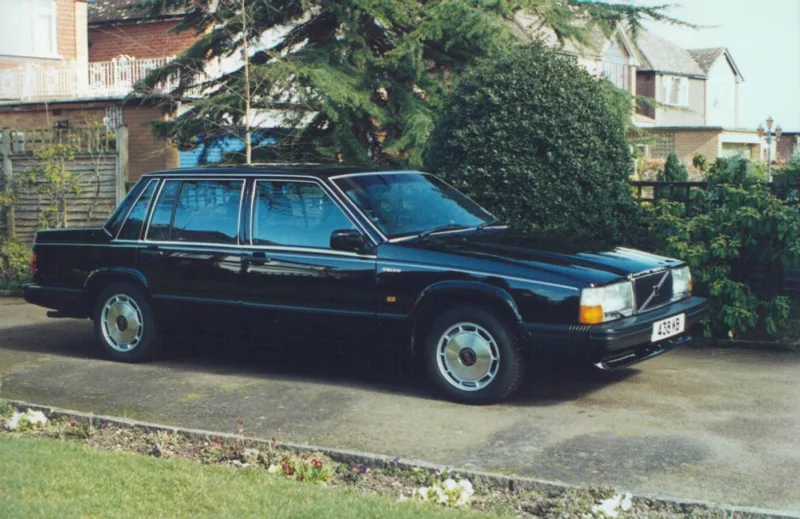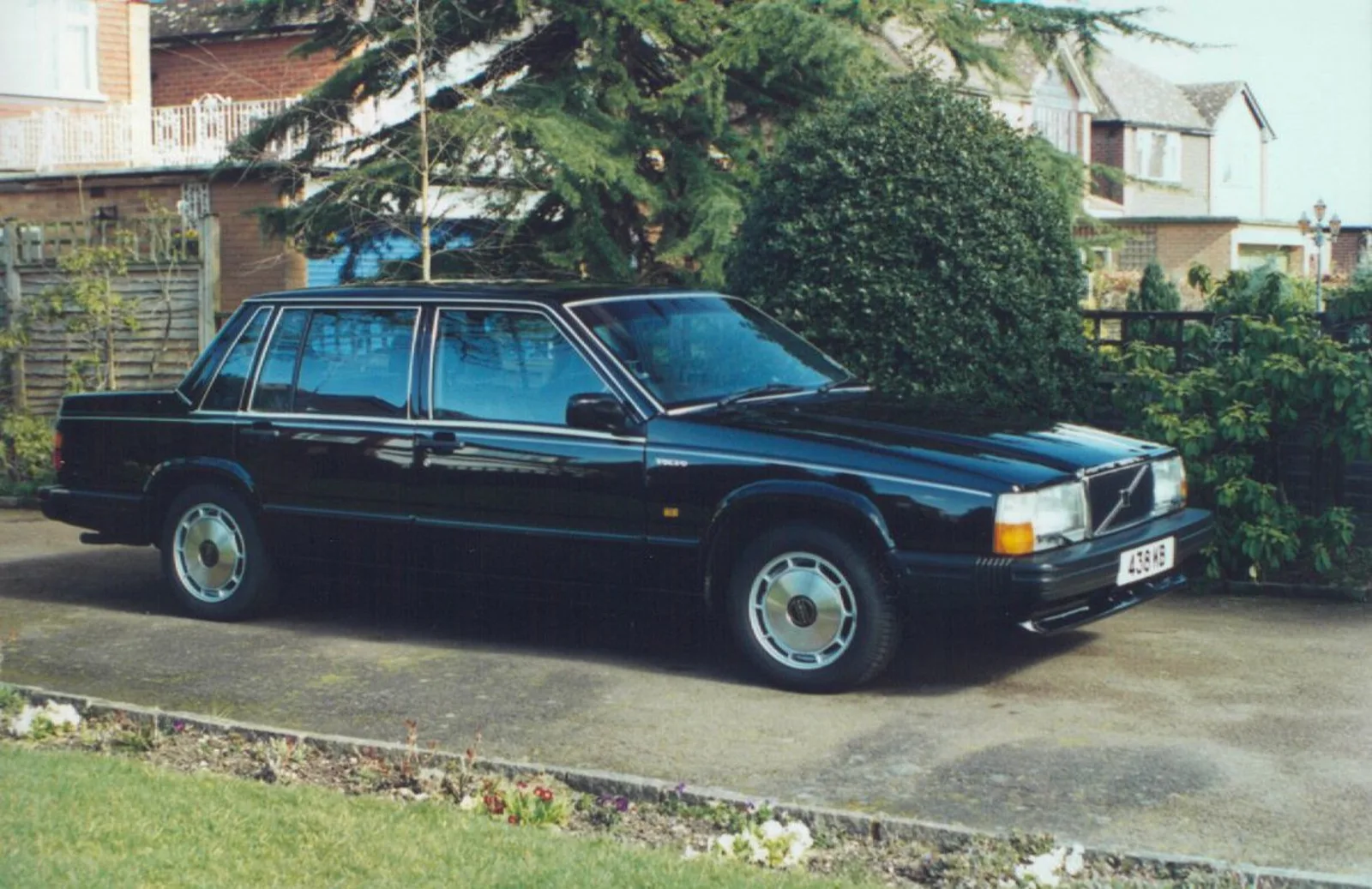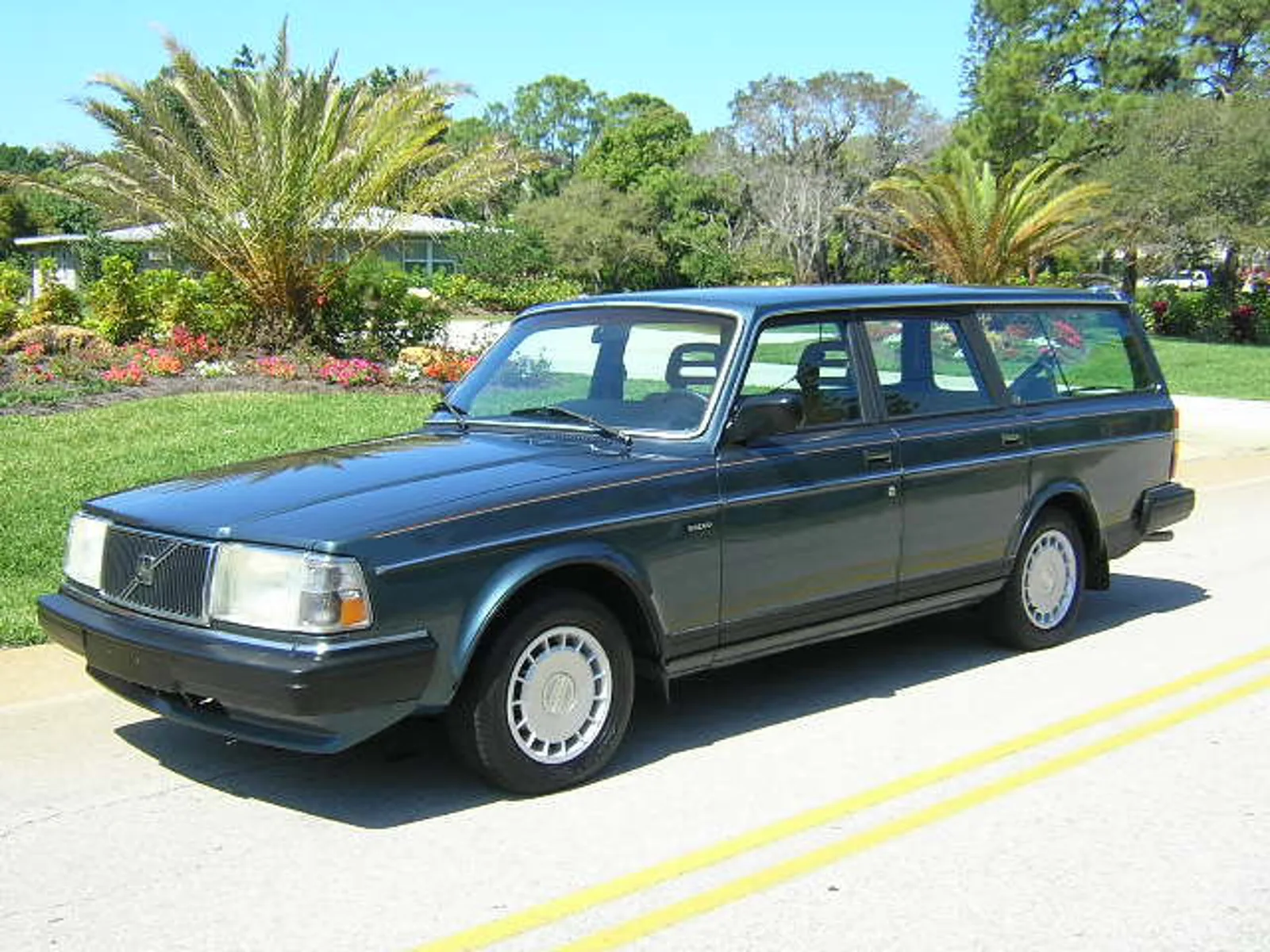
Jan Wilsgaard's shovel-nosed family car earned Volvo a safety reputation over nearly two decades of production, racing and special editions.
Built by Swedish carmaker Volvo from 1974 to 1993, the 200 Series came as 240 and 260 models. Jan Wilsgaard designed it on the 140 Series structure, adding safety crumple zones, and more than 2.8 million were made in its 19-year run.
The Volvo 200 Series was a family of mid-size cars that Volvo built from 1974 to 1993, sold as the 240 and 260 models. Designed by Jan Wilsgaard, it reused the body of the earlier 140 Series and added crash protection ideas from an experimental Volvo safety car. Over 2.8 million units were built, which made it one of the company's most successful model lines.
Where did the Volvo 200 Series come from?
The 200 Series arrived in the autumn of 1974, developed from the 140 Series and built as the 240 and 260 models. It drew on the VESC experimental safety car from 1972 and was penned by Jan Wilsgaard. The 260 Series ended in 1984, but the 240 carried on until 1993.
Engineers kept the body shell of the 140 and 160 from the bulkhead rearward, so the visible change came mostly at the front. The nose was reshaped into a shovel form that closely resembled the VESC prototype, and very large front and rear crumple zones were meant to protect occupants in a crash. The 200 looked new, yet it rested on a familiar foundation.
The estate arrived in the autumn of 1975 as the 265 DL, and it was the first production Volvo estate with a six-cylinder engine. That made the wagon a more powerful choice from the start.
The 700 Series arrived in 1982, so the two families ran side by side for a few years.
A family car that built Volvo's safety reputation, shaped from one familiar shell across nearly two decades.
How was the car styled and built differently?
The 200 Series adopted MacPherson strut front suspension, which freed up room around the engine bay. Its steering moved to rack-and-pinion, and the rear suspension was adapted from the 140. Braking changes, particularly to the master cylinder, rounded out the mechanical update.
Power steering came as standard on the 244GL, 264DL and 264GL. The dashboard gained slatted egg-crate air vents in place of the round eyeball type used on the 140 and 160, while the nose took the shovel shape of the VESC prototype.
The 1978 facelift redesigned the sedan rear with wraparound taillights and a lipped trunk opening. The 1979 update went further, with flush square headlamps on DL models and rectangular lamps on GL and GLE cars.
Taken together, these changes made the 200 Series a noticeably different car from the 140 it replaced, even though much of the structure carried over. The front end, steering and dashboard all moved on, while the bulkhead and rear end stayed close to the older design.
What engines did the 200 Series use?
Most cars used Volvo's overhead-cam four-cylinder engines, which were based on the earlier B20 design. The B21 displaced 2,127 cc, and the fuel-injected B21E in the 244GL produced 123 PS (90 kW). The B230F replaced the B21A in 1985 at 114 hp SAE (85 kW; 116 PS).
The carburetted B21A gave 97 PS (71 kW), while the B19A that arrived for 1977 replaced the B20A in most markets with 90 PS (66 kW). Lambda Sond, an oxygen sensor developed with Bosch, reached North America in late 1976 and gave the fuel injection feedback for finer tuning.
Both the carburetted and fuel-injected B21 versions shared the same 2,127 cc displacement, so the difference lay in how the fuel was delivered. Fuel injection suited the emissions and fuel economy goals that Volvo was pursuing at the time.
Turbocharging came later. The B21FT entered the range in late 1980 and was sold from the 1981 model year at 126 hp SAE (94 kW; 128 PS), and it rose to 131 hp SAE (98 kW; 133 PS) by 1984.
Was there a diesel or V6 option?
Yes. The 260 used a 90-degree V6 of 2,664 cc, developed by Peugeot, Renault and Volvo, which gave 140 bhp (100 kW) in the 264DL and 264GL. Volkswagen supplied the diesel engines, including a six-cylinder D24 producing 82 PS (60 kW).
The engine was a three-company project, with Peugeot, Renault and Volvo sharing the development work on a single design that Volvo later enlarged.
The PRV V6 had an aluminium alloy block, and Volvo later enlarged it to 2.8 litres in 1980. The diesel line-up was smaller, with a five-cylinder D20 rated at 68 PS (50 kW) alongside the D24. That five-cylinder took 24.4 seconds to reach 100 km/h, and in North America the diesel was discontinued after the 1985 model year.
How did the trim levels and facelifts change?
Volvo dropped the DL and GLE labels for 1983 and sold the cars simply as 240s, but buyers protested and the grades returned for 1984. Facelifts in 1978 and 1979 reworked the rear and front respectively, and the sporty range grew with new models in between.
The 1980 GLT, a naturally aspirated sporty model, arrived with 15-inch Virgo alloy wheels. The GLT Turbo followed in 1981 as the turbocharged version of that sporty idea, and it remained on sale until 1985.
For the 1993 model year, air conditioning moved from R-12 to R-134a, which marked a final change to the car.
What special editions and variants were built?
The range included the sporty 242 GT, the GLT and GLT Turbo, a Bertone-built 262C coupe and a string of limited editions. Anniversary cars marked Volvo's fiftieth and sixtieth years, and the 240 Classic was limited to 1,600 North American cars in 1993.
The 242 GT ran from 1978 to 1980 with tuned sport suspension and fuel injection. Its springs were 30% harder than those of a regular DL, and only 200 black examples were made.
The 262C coupe, built by Bertone between 1978 and 1981, had a chopped roof that set it apart from the sedans.
The GLT and GLT Turbo shared a sporty look, but only the Turbo carried a turbocharger. Buyers who wanted that extra pace chose the turbo model, which produced 131 hp SAE (98 kW; 133 PS) by 1984.
Export models included the 244 DLS, sent to East Germany in about 1,000 units between 1977 and 1978. The 244 Thor, from 1979 to 1980, had around 300 examples for the UK market, and later special editions such as the Torslanda wagon, with tinted windows and plastic trim, arrived in 1992 and 1993.
How did the 240 Turbo perform in racing?
The 240 Turbo raced in Group A touring car competition during the 1980s. Volvo built 500 Evolution cars in 1983 to meet FIA homologation requirements, and the 240 Turbo won the Zolder round in 1984. Volvo quit Group A racing after the 1986 season.
The Evolution kits were stowed in the boot of each car and fitted in the United States, with 270 cars processed at Long Beach and 230 at Chesapeake Bay. After FIA inspection, most of the kit was removed and the cars were sold to the public.
On track, the Group A 240T weighed 1,065 kg (2,348 lb) and produced about 350 bhp (261 kW; 355 PS). It could reach about 260 km/h (162 mph) on the faster tracks of the period.
Eggenberger Motorsport went on to win the 1985 European Touring Car Championship with the car, turning the 240 Turbo into a title winner.
Why did the 200 Series last so long?
The 200 Series lasted because it built a reputation for safety and durability, and many cars stayed in service for decades after production ended. Volvo planned to end the line from the early 1980s, yet sales held up because the design kept selling well.
Ingvar Kamprad, founder of IKEA, owned a 1993 240DL and stopped driving it after being told its safety design was outdated. It is a telling example of how quickly expectations moved on during the car's long life.
East German leaders used 264 TE limousines, and the public nicknamed them Wandlitz Volvograd. The 264 TE was stretched to a 3,430 mm (135.0 in) wheelbase, and Bertone lengthened the raw bodies at Grugliasco.
The last regular car was a blue Polar Italia wagon built on 14 May 1993, and it now sits in the Volvo World Museum.
How practical were the station wagons?
About a third of 240s sold were station wagons. They offered 1.2 cubic metres (41 cubic feet) of cargo space, and an optional rear-facing jumpseat turned them into seven-passenger cars. Three-point belts and a reinforced floor section came with that seat.
The estate was no afterthought. A large share of 240 buyers chose it, so Volvo treated the load area as a core part of the product.
The rear-facing jumpseat sat in the passenger area on a reinforced floor section, which gave the seat a sturdier base than an ordinary bench. Anyone comparing a wagon with a sedan should note that the seat was an extra, not a standard fitment.
What gearboxes and safety features were offered?
Each car could be had with a four-gear manual, or with a three-speed automatic instead. The 264GL and 265GL also offered a five-speed manual, and a driver airbag appeared in the US from 1990. ABS became standard in the US in 1993, the last year of production.
The five-speed manual was limited to the 264GL and 265GL, so every other model relied on the four-speed manual or the automatic.
Airbags entered the US range in 1990, and ABS followed as standard equipment in 1993. Those dates applied to the American market, so the same model could be specified differently elsewhere.
What are the Volvo 200 Series specifications?
The 200 Series rode on a 2,649.22 mm (104.3 in) wheelbase and weighed 1,288.2 kg (2,840 lb) in 1989 US 240 form, fully fuelled with no driver. The two-door coupe was built only until 1984, while the sedan and station wagon ran to 1993.
| Specification | Detail |
|---|---|
| Production | 1974 to 1993 as the 240 and 260 models |
| Production volume | 2,862,053 units |
| Body styles | Sedan and station wagon 1974 to 1993; two-door coupe 1974 to 1984 |
| Wheelbase | 2,649.22 mm (104.3 in) |
| Length, Europe 1975 to 1980 | 489 cm (192.5 in) |
| Length, Europe 1981 to 1993 | 479 cm (188.6 in) |
| Weight | 1,288.2 kg (2,840 lb), 1989 US 240, fully fuelled, no driver |
| Fuel-injected B21E (244GL) | 123 PS (90 kW) |
| PRV V6 (264DL and 264GL) | 2,664 cc, 140 bhp (100 kW) |
| Final car | Blue Polar Italia wagon, 14 May 1993 |